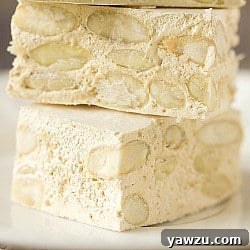
Homemade Torrone: Crafting Authentic Italian Nougat at Home
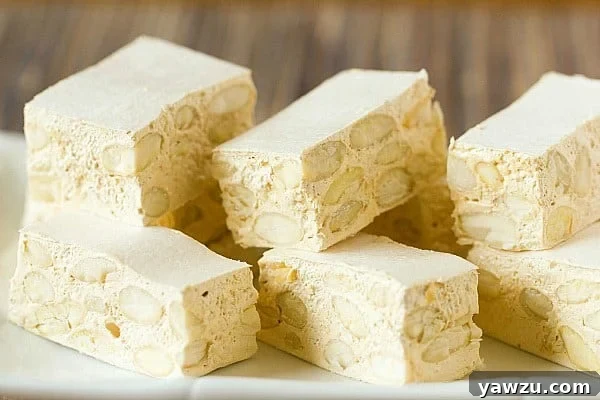
For many, the word “torrone” might conjure images of exotic holiday treats, but in an Italian household like mine, it was as commonplace as potato chips or pretzels. This traditional Italian nougat, with its sweet, chewy texture and abundance of nuts, was a pantry staple, deeply woven into the fabric of our family’s culinary heritage. My mother often recounted how my grandfather, who arrived in America from Italy at the young age of eighteen, always ensured two items were never missing from his pantry: vibrant boxes of torrone and a large bottle of Brioschi. A true testament to his enduring Italian spirit! I was always captivated by the beautifully designed, colorful boxes that held these individual candies, each a little work of art. Inside, neatly cut rectangular pieces of sweet nougat were generously studded with nuts. While the most classic version features crunchy almonds, I’ve also encountered delightful variations incorporating pistachios, or simply infused with aromatic notes of lemon, vanilla bean, or orange. Torrone isn’t just a candy; it’s a sweet, tangible piece of Italian culture, a flavor that speaks of festive gatherings, family warmth, and timeless tradition.
The Journey to Homemade Torrone: Rediscovering a Classic
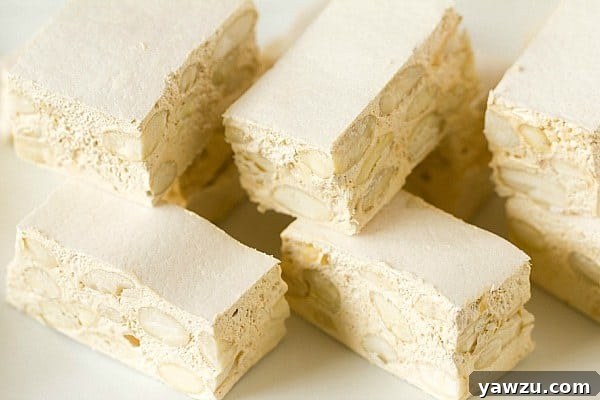
While I’ve savored torrone intermittently since childhood, my appreciation for this delightful confection has deepened considerably in recent years. Oddly enough, it never crossed my mind to attempt making it myself until a fortuitous flip through America’s Test Kitchen’s new DIY Cookbook changed everything. There, on a glossy page, was a recipe for homemade almond torrone. I was not only thrilled to find it but utterly astonished by how straightforward the process appeared. The initial excitement was quickly followed by the realization that a couple of specialized ingredients were required: edible wafer paper and blanched almonds. Since these weren’t standard fare at my local grocery store, I sourced them online (you can find links in the recipe notes below for convenience). While regular, unblanched almonds could technically work, my goal was to craft the most authentic torrone possible, mirroring the quality and appearance of those cherished childhood treats. Once these key components were in hand, the path to creating this Italian delicacy became incredibly smooth and enjoyable.
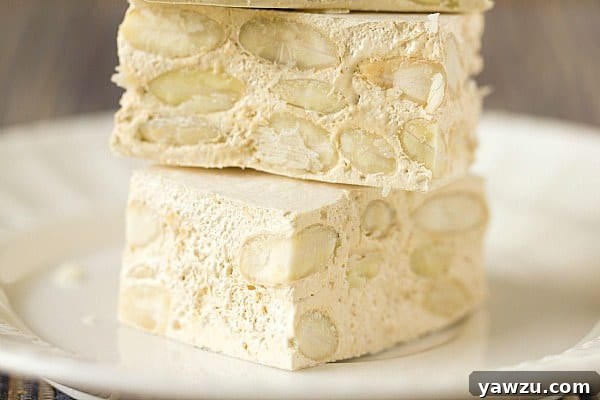
There’s a unique satisfaction that comes with recreating a beloved treat from scratch, especially one so steeped in family history. The process itself, from whipping egg whites to achieving the perfect amber caramel, felt like a culinary adventure. The anticipation grew with each step, culminating in the moment I took my first bite. And what a bite it was! The taste was unmistakably authentic, perfectly capturing the delicate sweetness and nutty crunch I remembered. It was a revelation. From that moment, I knew there was no going back to store-bought. Homemade torrone offers an incomparable freshness and a personal touch that elevates it far beyond mass-produced versions. It’s a truly rewarding experience, transforming a simple dessert into an edible labor of love.
Why Homemade Torrone is a Must for Your Holiday Table
Making torrone from scratch isn’t just a fun cooking project; it’s an opportunity to create something truly special, particularly for the holidays. The festive season often calls for unique, heartfelt gifts and memorable treats, and homemade torrone fits the bill perfectly. Imagine the delight of friends and family receiving a beautifully packaged box of your handcrafted Italian nougat – it adds an extra layer of warmth and thoughtfulness to any celebration. This year, I’m especially looking forward to my Chief Culinary Consultant’s dad arriving for Christmas. He absolutely adores torrone, and I’ve already prepared a generous container with his name on it. There’s something incredibly fulfilling about sharing a piece of your culinary passion, especially when it’s a recipe that carries such personal and cultural weight.
Beyond gifting, homemade torrone also provides a wonderful talking point and a delicious addition to any holiday dessert spread. Its elegant appearance and unique texture stand out amongst traditional cookies and cakes. It’s also surprisingly versatile; while almonds are classic, experimenting with different nuts like hazelnuts or pistachios, or infusing the nougat with citrus zests or spices, can lead to exciting new family favorites. This recipe offers a foundation for endless creativity, allowing you to tailor the torrone to your personal taste or to suit specific dietary preferences (though always ensure proper ingredient substitutions are made). The rich history and delightful flavors of torrone make it more than just a sweet; it’s an experience, a memory in the making, and a delicious way to connect with a cherished Italian tradition.
Looking for more delicious baking inspiration? You might also enjoy these timeless recipes:
- One year ago: Sticky Toffee Pudding – A rich and comforting British classic.
- Three years ago: Date Nut Spice Bread – A warmly spiced, hearty bread perfect for any time of year.
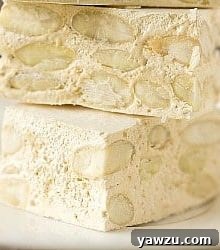
Homemade Torrone
Yield:
16 to 20 pieces
Prep Time:
30 mins
Cook Time:
30 mins
Total Time:
1 hr
A timeless recipe for homemade torrone – an authentic Italian nougat candy traditionally made with honey, egg whites, and almonds.
Ingredients
- 2 to 3 edible wafer papers, see note below
- 3 egg whites
- ¼ teaspoon cream of tartar
- ½ cup (169.5 ml) honey
- 2 cups (400 g) granulated sugar
- ⅛ teaspoon salt
- 3 cups (375 g) whole blanched almonds (see note below), (15 ounces)
- 1 teaspoon vanilla extract
Instructions
-
Preheat oven to 350 degrees F (175°C). Lightly spray an 8-inch square baking pan with non-stick cooking spray. Carefully line the bottom and sides of the pan with edible wafer paper, trimming pieces as needed to ensure a snug fit. Set the prepared pan aside.
-
In the bowl of a stand mixer fitted with the whisk attachment, combine the egg whites and cream of tartar. Do not whisk yet; simply set this aside.
-
Place the honey in a medium saucepan. Gently pour the granulated sugar and salt into the center of the pan, avoiding stirring. Cook this mixture over medium heat. Continue heating, without stirring, until the honey begins to bubble around the edges of the pan, which should take approximately 5 minutes.
-
Once the honey begins to boil, reduce the heat to medium-low. Continue to cook, gently swirling the pan occasionally, until the sugar has completely dissolved and the mixture develops a rich, dark amber color. Crucially, use a candy thermometer to monitor the temperature until it reaches 320 degrees F (160°C). This stage typically takes between 8 to 12 minutes. Immediately remove the pan from the heat and allow the bubbles to subside for about 30 seconds.
-
While the honey mixture is cooking, when it reaches approximately 270 degrees F (132°C), begin whipping the egg whites and cream of tartar in your stand mixer on medium-low speed. Whip until the mixture becomes foamy, about 1 minute. Increase the mixer speed to medium-high and continue whipping until soft peaks form, typically another 2 to 3 minutes.
-
Once soft peaks are achieved, reduce the mixer speed to low. Very carefully and slowly, pour the hot honey mixture into the whipped egg whites. Try to avoid letting the hot syrup hit the sides of the bowl or the whisk directly. Mix until the hot syrup is fully incorporated. Increase the speed to medium and whip vigorously, scraping down the sides of the bowl twice during this process, until the mixture transforms into a pale, very thick, and stiff nougat. This crucial step usually takes about 10 to 12 minutes.
-
While the candy mixture is whipping, spread the blanched almonds evenly on a rimmed baking sheet. Heat them in the preheated oven for about 5 minutes, or until they are warm and just subtly fragrant. Remove the baking sheet from the oven, keeping the almonds on it to maintain their warmth.
-
With the mixer still on low speed, add the warm almonds and vanilla extract to the thick nougat mixture. Work quickly to incorporate them. Immediately scrape the entire candy mixture evenly into the prepared wafer-lined pan, using a rubber spatula that has been lightly sprayed with non-stick cooking spray to prevent sticking. Cover the top surface of the candy with a single piece of edible wafer paper, trimmed to fit the pan perfectly. Place a piece of parchment paper on top of the wafer paper, then press down very firmly with another 8-inch square baking pan to compact the candy and eliminate any air bubbles. Allow the pan to cool completely to room temperature, which takes about 1 hour. For best results, refrigerate until the torrone is very firm, approximately 2 hours.
-
Once firm, discard the parchment paper. Use a small paring knife to carefully trim any excess edible wafer paper from the edges of the torrone. Invert the candy onto a clean cutting board. Using a sharp, lightly oiled knife (or one dipped in hot water and wiped dry), cut the torrone into individual pieces, roughly 1×2-inches in size. Store the torrone at room temperature or refrigerated in an airtight container for up to 2 weeks, using parchment paper to line the container and separate layers to prevent sticking.
Notes & Tips for Perfect Torrone
Here are links to the specialty items essential for this torrone recipe:
- Edible Wafer Paper (Amazon.com) – This is crucial for achieving the traditional look and preventing sticking.
- Whole Blanched Almonds (Nuts.com) – Blanched almonds provide a smoother texture and a more refined appearance, characteristic of authentic torrone.
Tips for Success:
- Candy Thermometer is Key: Precision with sugar syrup temperatures is vital for the correct torrone texture. Invest in a reliable candy thermometer.
- Working Quickly: Once the almonds and vanilla are added, the nougat stiffens rapidly. Be prepared to scrape it into the pan and press it down without delay.
- Clean Equipment: Ensure your stand mixer bowl and whisk are completely grease-free. Any trace of fat can prevent the egg whites from whipping properly.
- Storage: Torrone can be quite sticky. Storing it with parchment paper between layers prevents pieces from fusing together.
- Cutting: A sharp, heavy knife is best for cutting torrone. Heating the blade under hot water and wiping it dry between cuts can make the process easier and cleaner.
Nutritional values provided are based on one serving.
Nutrition Information
Calories:
277
kcal
,
Carbohydrates:
39
g
,
Protein:
5
g
,
Fat:
12
g
,
Sodium:
46
mg
,
Potassium:
176
mg
,
Fiber:
2
g
,
Sugar:
34
g
,
Vitamin C:
0.1
mg
,
Calcium:
57
mg
,
Iron:
0.9
mg
Share Your Torrone Creation!
Did you make this delightful Homemade Torrone recipe? We’d love to hear about it! Please leave a review below to share your experience. Don’t forget to snap a picture of your beautiful nougat and tag @thebrowneyedbaker on Instagram so I can admire your culinary masterpiece!
Author:
Michelle Lettrich
Course:
Snack, Dessert, Confectionery
Cuisine:
Italian, European, Mediterranean