Dreaming of homemade ice cream but don’t own a machine? This guide is for you!
Crafting Creamy Homemade Ice Cream Without a Machine: Your Ultimate Guide
The sheer delight of a perfectly scooped, rich, and creamy homemade ice cream is undeniable. But what if that delicious vision is clouded by the thought, “I don’t have an ice cream maker?” It’s a question we hear all too often from enthusiastic home cooks, especially as temperatures rise and the craving for a refreshing treat becomes irresistible. The good news? You absolutely can create exquisite homemade ice cream without any specialized equipment. Just like baking a delectable loaf of bread doesn’t always require a bread machine (our ancestors certainly proved that!), crafting luxurious ice cream can be achieved with a little patience and the right technique.
While modern ice cream makers have become more affordable and accessible, often priced under $50, we understand that kitchen gadget priorities can shift. Perhaps you’re testing the waters of homemade ice cream making, or maybe space is a premium, or simply, you prefer a more hands-on approach. Whatever your reason, this comprehensive guide will walk you through proven methods to achieve wonderfully creamy results, sans machine. Prepare to unlock a world of bespoke flavors and satisfying textures, all from the comfort of your kitchen, using tools you likely already own.
The Magic Behind Machine-Free Ice Cream: Understanding the Science
Before we dive into the methods, let’s briefly touch upon the science. The primary challenge in making ice cream without a machine is preventing the formation of large ice crystals. When an ice cream base freezes slowly and without agitation, water molecules bind together, forming noticeable, crunchy ice crystals that detract from the smooth, creamy texture we all desire. Ice cream makers work by continuously churning and scraping the mixture as it freezes, breaking up these crystals as they form. Our manual methods aim to replicate this agitation, albeit with a bit more elbow grease.
By regularly stirring or beating the freezing mixture, we disrupt the ice crystal formation, ensuring they remain small and imperceptible. This results in that velvety, melt-in-your-mouth texture that rivals machine-made varieties. The key ingredients – a rich custard base (or a no-churn equivalent with heavy cream and condensed milk) and consistent agitation – are your allies in this culinary adventure.
Two Proven Methods for Manual Ice Cream Freezing
There are two primary approaches to manually freeze your ice cream base. Both require commitment but promise delicious rewards. We’ll detail each, providing expanded steps and tips for success.
Method A: The Hand Mixer Technique for Velvety Smoothness
This method leverages the power of a hand mixer to achieve a wonderfully smooth and aerated ice cream. It’s ideal for those who have a hand mixer and are looking for a slightly less labor-intensive approach than fully manual stirring.
- Prepare Your Ice Cream Base: Begin by preparing your chosen ice cream custard base exactly as your recipe directs. This typically involves cooking eggs, sugar, and dairy to create a rich mixture. Crucially, ensure the base is thoroughly chilled in the refrigerator for at least 4-6 hours, or preferably overnight. A very cold base is essential for successful freezing and minimizing ice crystal formation.
- Initial Freeze and Transfer: Once your custard is perfectly chilled, give it a gentle stir with a rubber spatula to ensure it’s homogenous. Transfer the mixture into a wide, shallow, freezer-safe bowl or container. A wider container allows for more surface area to freeze, which can speed up the process slightly. Cover the container tightly with plastic wrap, pressing it directly onto the surface of the custard to prevent a skin from forming and to reduce freezer burn. Alternatively, use an airtight lid. Place it in the coldest part of your freezer for approximately 2 hours.
- First Agitation: After 2 hours, carefully remove the container from the freezer. You’ll notice the edges starting to freeze solid, and the center will be slushy. This is exactly what we want! Using your hand mixer on a medium-low setting, beat the mixture thoroughly for 1-2 minutes. The goal here is to break up any ice crystals that have begun to form and to incorporate air, which contributes to a lighter texture. Scrape down the sides of the bowl to ensure everything is evenly mixed. Re-cover the bowl tightly and return it to the freezer for another 2 hours.
- Second Agitation and Thickening: Remove the mixture from the freezer again after the next 2-hour interval. The ice cream should now be significantly thicker, resembling a soft-serve consistency. Beat it once more with your hand mixer for 2-3 minutes, increasing the speed to medium. Continue to break up any ice crystals and thoroughly combine the freezing components. At this stage, the ice cream should be thick but still too soft to scoop neatly. If it feels too liquidy, return it to the freezer for an additional 30-60 minutes before beating again. If the consistency is correct, this is the perfect moment to fold in any desired “add-ins” – think chocolate chips, cookie chunks, chopped nuts, or fruit pieces. Gently stir these in with a spatula; avoid beating with the hand mixer after add-ins are incorporated to prevent them from breaking down too much.
- Final Freeze and Setting: Carefully pour the semi-frozen ice cream into a clean, airtight plastic freezer container. Ensure you leave at least ½-inch of space at the top to allow for slight expansion during the final freeze. Cover the container securely. For best results and the firmest scoop, place the container in the coldest part of your freezer and allow it to freeze undisturbed for a minimum of 4-6 hours, or ideally overnight. Your patience will be rewarded with perfectly scoopable, creamy homemade ice cream!
Source: Adapted from RecipeTips.com’s guide on making homemade ice cream without a machine.
Method B: The Fully Manual Approach – A Labor of Love
For those who prefer a truly hands-on experience or don’t have a hand mixer, this method relies solely on vigorous manual stirring. It requires a bit more physical effort but yields equally impressive results. Think of it as an old-fashioned technique, perfected over generations.
- Prepare and Chill Your Base: Just as with Method A, prepare your ice cream base according to your chosen recipe and ensure it is thoroughly chilled in the refrigerator. This step is non-negotiable for optimal results. A cold base kickstarts the freezing process effectively.
- Initial Freeze and Transfer: Remove your cold custard from the refrigerator and give it a good stir with a rubber spatula. Transfer the mixture to a deep, freezer-safe bowl or container. A metal bowl, if available, can help speed up the freezing process due to better thermal conductivity. Place it into the freezer for approximately 45 minutes to an hour.
- First Manual Agitation: After the initial freezing period, the edges of the mixture will begin to solidify, while the center remains liquid. Remove the bowl from the freezer. Now, with a sturdy fork or a whisk, stir the mixture vigorously. The key word here is “vigorously”! Scrape down the frozen edges and thoroughly break up any ice crystals that have started to form. Integrate the frozen parts into the liquid center. This step is crucial for preventing large crystal formation. Return the bowl to the freezer.
- Repeat Agitation for Creaminess: Continue this process, removing the bowl from the freezer and stirring vigorously every 30 minutes. Each time, scrape down the sides, break up all frozen sections, and ensure the mixture is as smooth and uniform as possible. This repetitive stirring is your manual “churning.” Depending on your freezer’s temperature and the depth of your bowl, this process can take anywhere from 2 to 3 hours, sometimes longer. You’re aiming for a consistency that is thick, soft, and uniformly frozen, similar to soft-serve.
- Final Mix-ins and Setting: Once the ice cream reaches the desired soft-serve consistency after repeated stirring, you can fold in any desired add-ins using your fork or whisk. Gently incorporate them into the semi-frozen mixture.
- Final Freeze and Enjoy: Transfer the ice cream to an airtight plastic freezer container, leaving some space at the top. Cover tightly and place it back in the freezer for at least 4-6 hours, or until it’s firm enough to scoop. The more consistent your stirring, the creamier your final product will be!
*Note: While fully manual stirring is effective, incorporating a handheld mixer or even an immersion (stick) blender during the agitation phases (especially in steps 3 and 4) can significantly improve the creaminess and reduce the effort, if you have access to one.
Source: Adapted from David Lebovitz’s guide on making ice cream without a machine.
Essential Tips for No-Churn Ice Cream Success
Regardless of which manual method you choose, a few universal tips will elevate your homemade ice cream from good to extraordinary:
- Chill Thoroughly: Always start with a very cold ice cream base. This speeds up the freezing process and minimizes large ice crystal formation.
- High-Quality Ingredients: Since there are no artificial stabilizers, the quality of your dairy (heavy cream, whole milk, eggs) makes a noticeable difference in flavor and texture.
- Airtight Storage: Always store your finished ice cream in an airtight container to prevent freezer burn and maintain freshness. Press plastic wrap directly onto the surface before sealing for an extra layer of protection.
- Patience is a Virtue: Manual ice cream making takes time. Don’t rush the freezing or the agitation steps. The consistent effort is what delivers that coveted creamy texture.
- Experiment with Flavors: The beauty of homemade ice cream is customization! From classic vanilla bean to exotic fruit blends, feel free to experiment with extracts, fresh fruit purees, chocolate, coffee, and more.
- Optimal Serving Temperature: For the best texture and flavor, allow your homemade ice cream to sit at room temperature for 5-10 minutes before scooping. This allows it to soften slightly and become perfectly scoopable.
Considering an Ice Cream Maker? Recommendations for Future Investments
While this guide focuses on machine-free methods, it’s worth noting that if you fall in love with making homemade ice cream and plan to do so regularly, investing in an ice cream maker can be a worthwhile decision. It offers convenience and consistent results with less manual effort. Here are a few highly-regarded options:
- KitchenAid Ice Cream Maker Attachment ($60): If you already own a KitchenAid stand mixer, this attachment is an excellent and space-saving choice. It leverages your existing mixer’s motor, making the process incredibly easy. It consistently receives high ratings and is often recommended by culinary experts like Cook’s Illustrated.
- Cuisinart Automatic Ice Cream, Frozen Yogurt, and Sorbet Maker ($42): For those without a stand mixer, a standalone unit like this Cuisinart model is a fantastic option. It’s user-friendly, efficient, and delivers great results for various frozen treats. Cook’s Illustrated also highly recommends this model, which is a reliable endorsement for kitchen equipment.
An Essential Resource for Every Ice Cream Enthusiast
Whether you’re churning with a machine or mastering the manual methods, expanding your knowledge and recipe repertoire is always a good idea. One highly recommended resource is:
- The Perfect Scoop by David Lebovitz ($13): This isn’t an ice cream maker, but it’s often considered “the bible” for ice cream lovers. It’s packed with not only incredible recipes but also invaluable insights into ingredients, equipment, and the science behind achieving the perfect scoop. A must-have for serious homemade ice cream makers.
Inspiring Flavors: Delicious Ice Cream Recipes to Get You Started
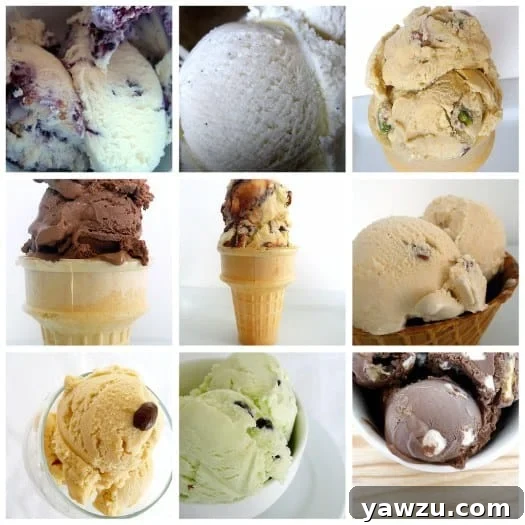
Now that you’re armed with the knowledge to make ice cream without a machine, here are some delightful recipes to spark your creativity. These are perfect for adapting to the manual methods described above:
- Blueberry Cheesecake Ice Cream
- Classic Vanilla Bean Ice Cream
- Pistachio Nut Ice Cream
- Decadent Chocolate Ice Cream
- Tin Roof Ice Cream
- Rich Butter Pecan Ice Cream
- Bold Espresso Ice Cream
- Refreshing Mint Chocolate Chip Ice Cream
- Classic Rocky Road Ice Cream
Embrace the Art of Homemade Ice Cream
Making homemade ice cream without a machine is a rewarding culinary endeavor that reconnects you with traditional methods and allows for unparalleled customization. It’s a testament to the fact that you don’t always need fancy gadgets to create something truly delicious and impressive. With a little time, a few basic kitchen tools, and these detailed instructions, you can transform simple ingredients into creamy, dreamy ice cream that will delight your family and friends. So, clear a spot in your freezer, choose your favorite recipe, and get ready to scoop up some homemade happiness!