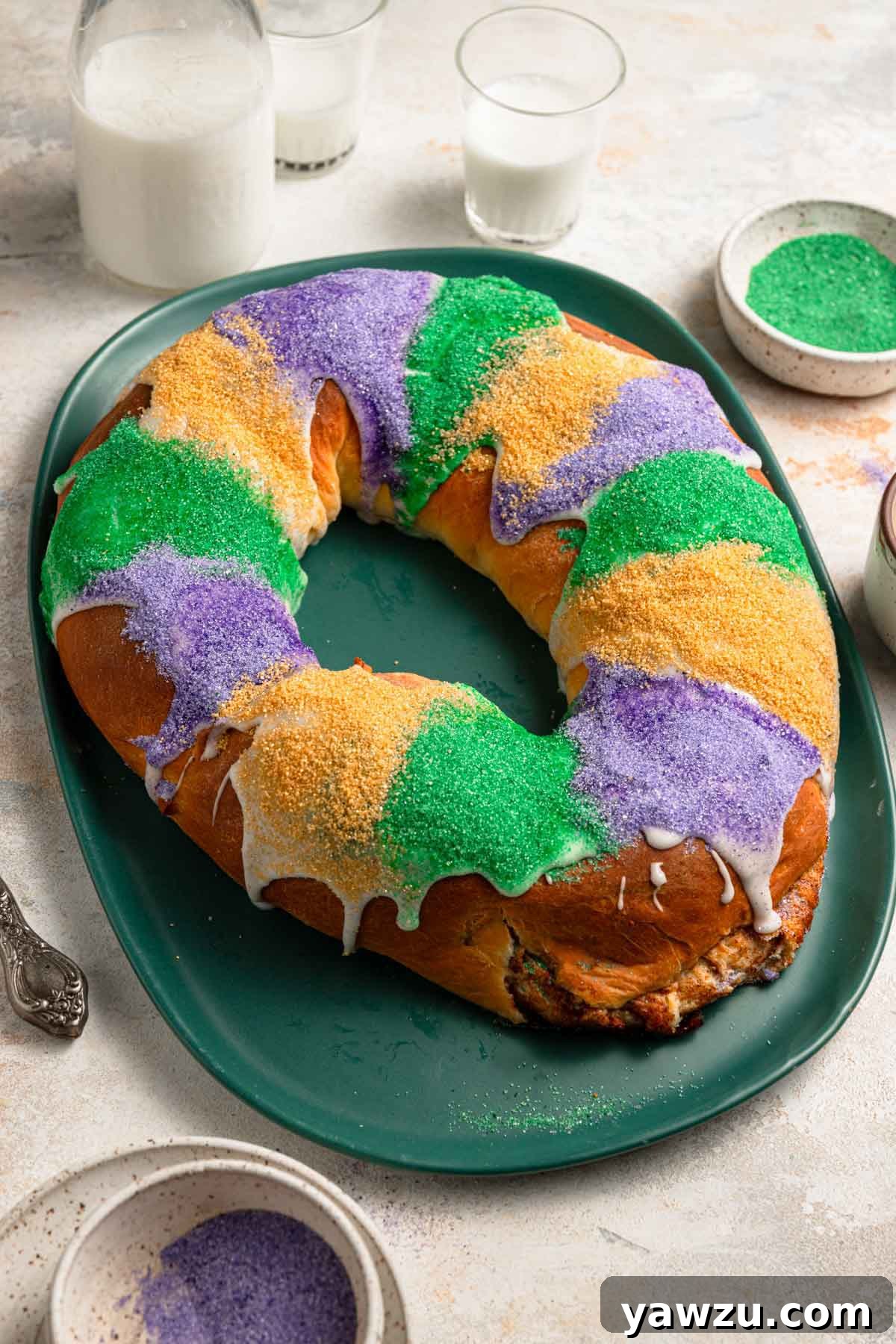
Step into a world of vibrant celebration and culinary delight with this exquisite homemade King Cake recipe. Perfect for Epiphany, Mardi Gras, or any occasion that calls for a touch of sweet festivity, this traditional sweet bread ring is a true masterpiece of flavor and tradition. Infused with a luscious cinnamon-sugar swirl, crowned with a simple yet elegant glaze, and adorned with the iconic purple, green, and gold sprinkles, this King Cake promises to be a memorable centerpiece for your next gathering.
Originally shared in March 2011, this beloved recipe has been meticulously refined to offer even clearer instructions, enhanced visuals, and a wealth of expert tips to ensure your baking success. Prepare to create a King Cake that’s not only visually stunning but also irresistibly delicious!
Discover the Rich History and Sweet Traditions of King Cake
The King Cake, or “Galette des Rois” as it is known in some cultures, boasts a fascinating history stretching back to the Middle Ages. Its origins are deeply rooted in religious celebrations, specifically Epiphany on January 6th, also known as Three Kings Day. This day commemorates the biblical visit of the Three Wise Men to the infant Jesus. As European settlers migrated to the New World, this culinary tradition journeyed with them, reportedly arriving in Louisiana sometime in the 1800s. There, the King Cake found a new, vibrant home and became an inseparable part of the lively Mardi Gras celebrations.
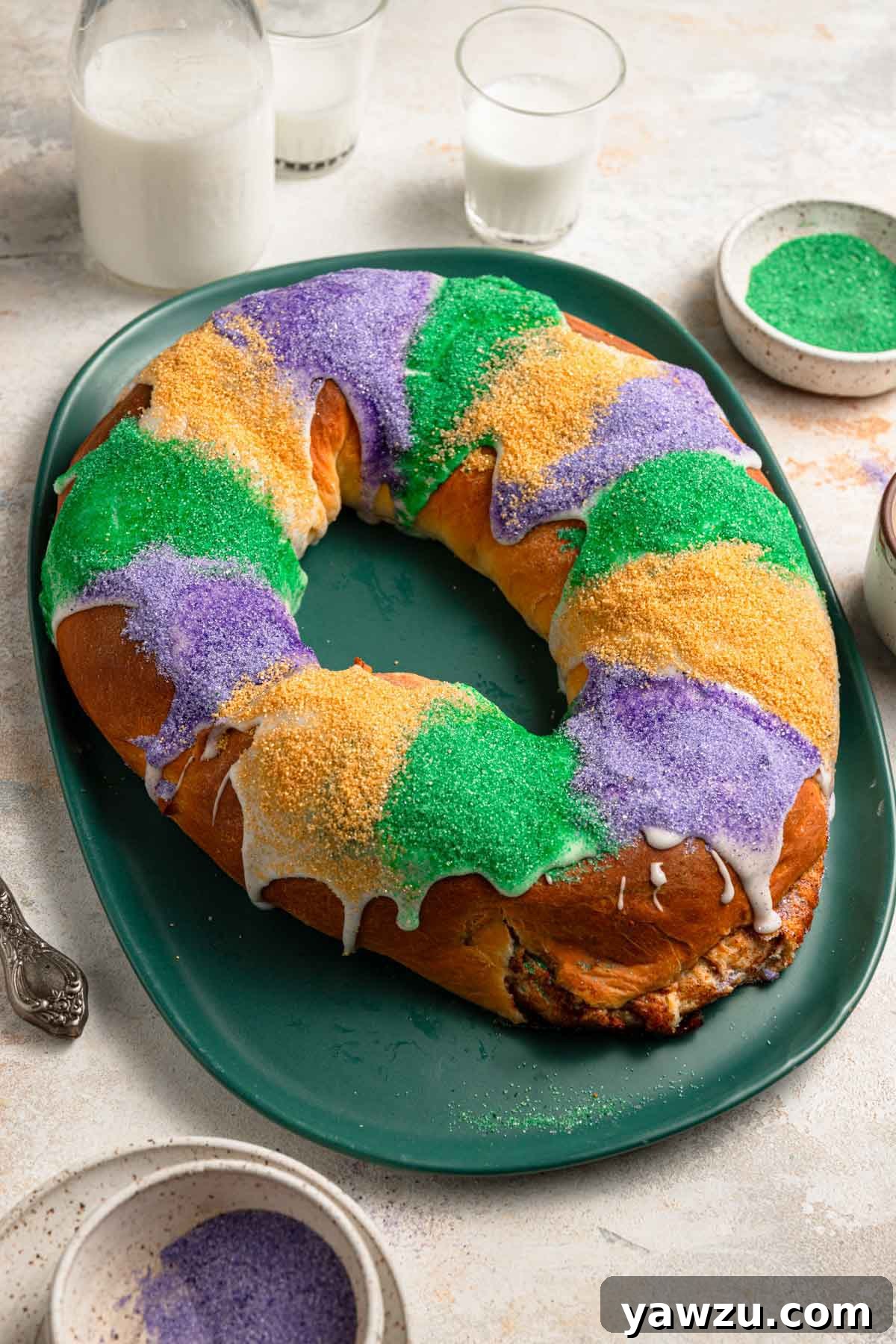
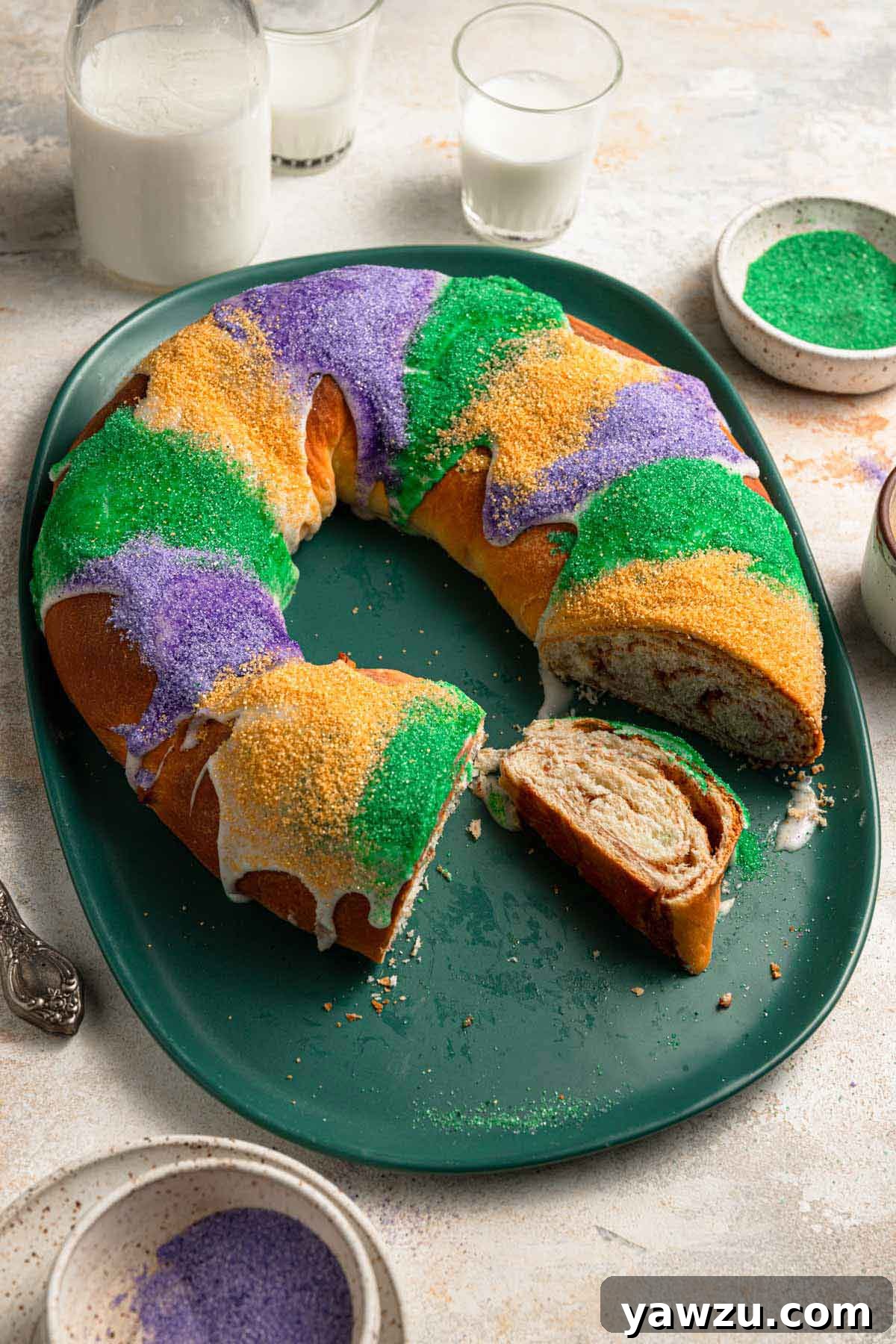
At its heart, a King Cake is a triumph of yeasted sweet dough, baked to golden perfection. The dough is tender and rich, providing the perfect canvas for its signature filling. Typically, this involves a generous spread of aromatic cinnamon-sugar, which is then carefully rolled up and shaped into an iconic oval or ring. This method creates a beautiful swirl of spice and sweetness within each slice, reminiscent of other beloved yeasted pastries. Once baked and cooled, the cake is generously coated with a smooth powdered sugar glaze, often enhanced with a hint of vanilla or lemon. The final, crucial touch is the vibrant decoration: alternating strips of purple, green, and gold sanding sugars. These colors are not merely decorative; they hold profound symbolic meaning for Mardi Gras: purple represents justice, green signifies faith, and gold embodies power.
A cherished, playful tradition associated with the King Cake involves hiding a small plastic baby or a dried bean within the cake before serving. This tiny token carries multiple interpretations. For some, it symbolizes the Baby Jesus, connecting the cake back to its Epiphany roots. For others, it’s a simple good luck charm, bringing fortune to whoever discovers it in their slice. The unwritten rule in many circles is that the fortunate person who finds the baby is responsible for hosting the next King Cake party or bringing the next cake. Regardless of its specific meaning, the search for the baby adds an exciting element of surprise and communal fun to the celebration. Indeed, for many, the Carnival season in New Orleans simply wouldn’t be complete without indulging in a delicious slice of King Cake, a treat that embodies the spirit of joy, community, and tradition.
Your Guide to Crafting a Perfect Homemade King Cake
Baking a King Cake at home is a rewarding experience that brings the festive spirit right into your kitchen. While this is a traditional two-rise yeast recipe, it’s designed to be approachable and enjoyable, even for those new to yeast baking. Our detailed instructions walk you through each step, making the process straightforward. This recipe is primarily written for mixing by hand, allowing you to truly feel the dough and connect with the baking process. However, for convenience, you can certainly adapt it for a stand mixer using both the paddle attachment for initial mixing and the dough hook for kneading.
Let’s embark on this delicious journey together, step by step:
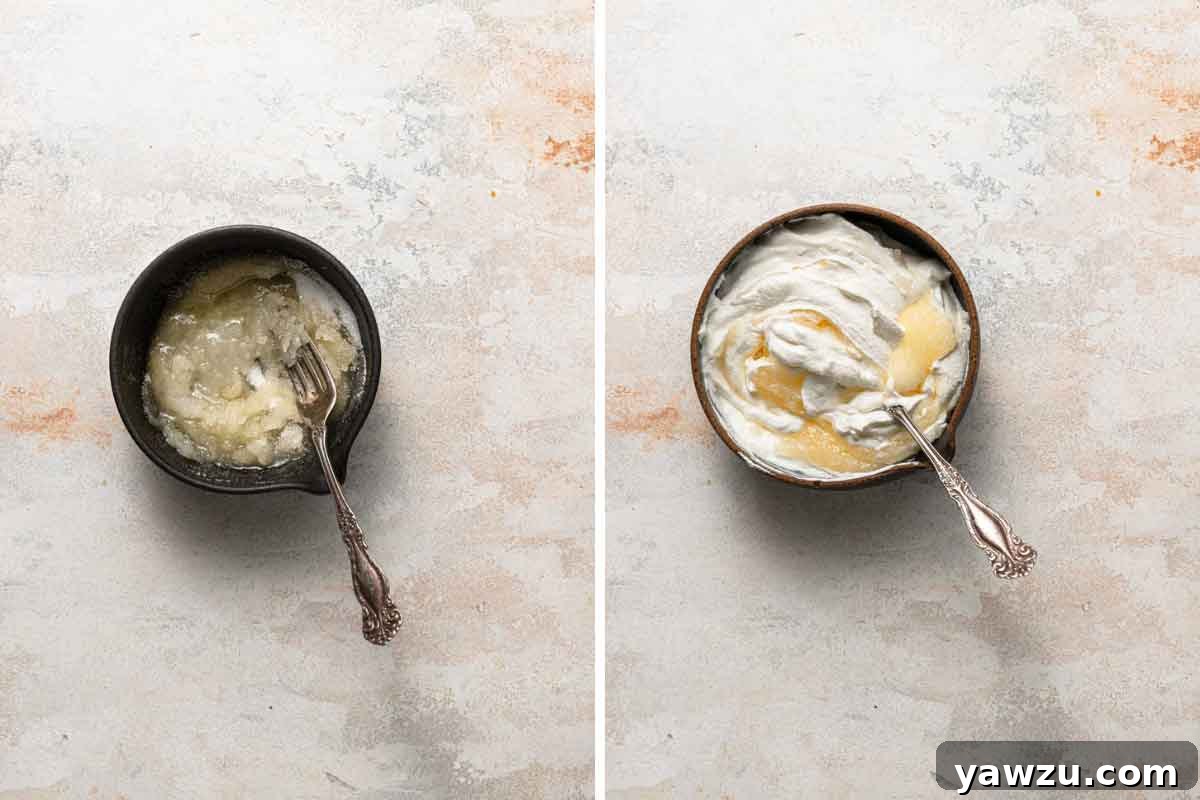
Step #1: Prepare the Dough Base – Begin by whisking together the melted butter and a portion of the granulated sugar in a small bowl until the sugar fully dissolves. In a separate, larger mixing bowl, combine the warm water, instant yeast, and the remaining tablespoon of sugar. Stir gently and allow this mixture to sit undisturbed for about five minutes. This crucial step, known as “blooming” the yeast, confirms its activity; you should see a foamy, bubbly layer forming on the surface, indicating your yeast is alive and ready to work its magic. This ensures your dough will rise beautifully.
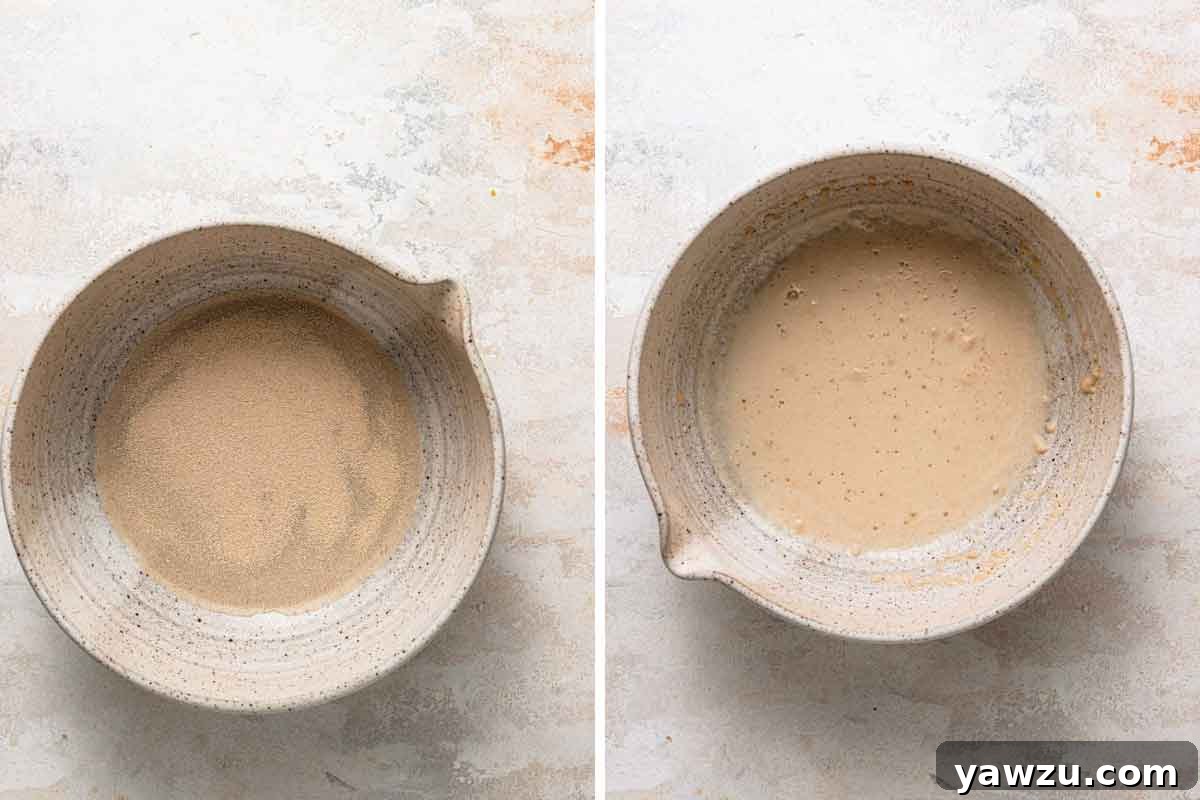
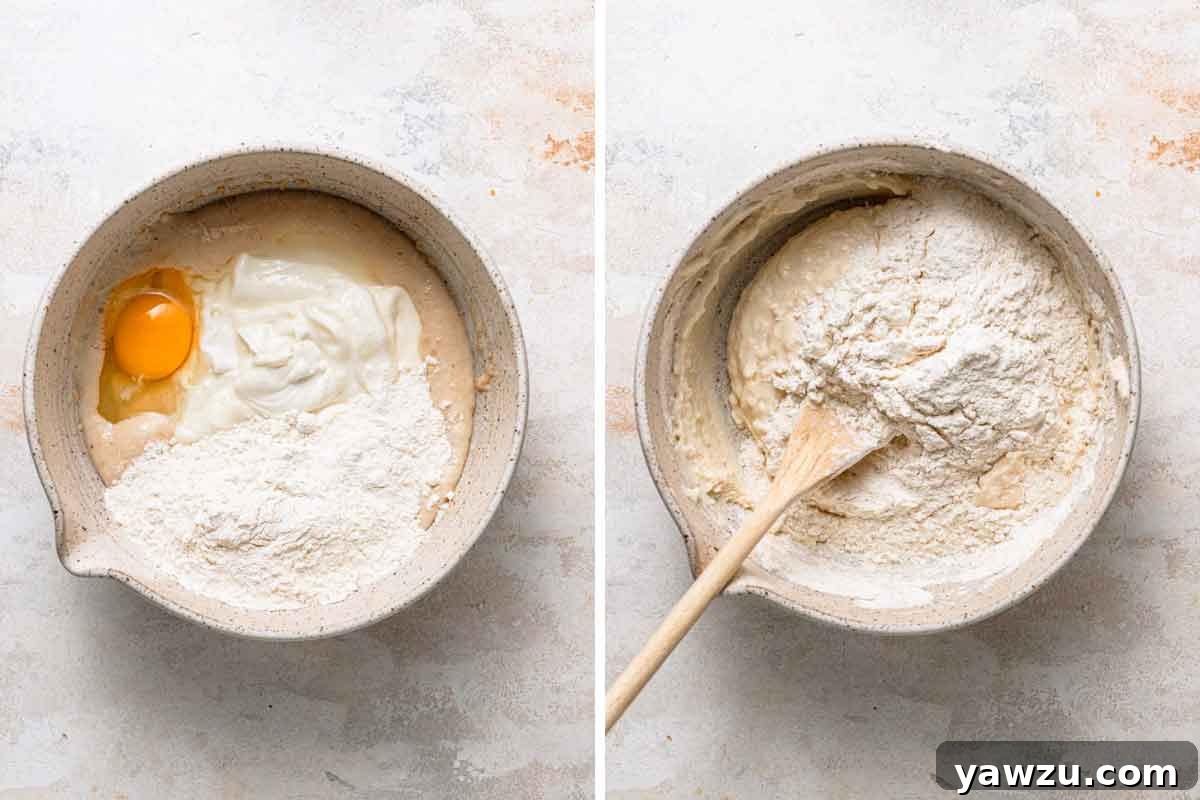
Next, gently incorporate the butter-sugar mixture into the bloomed yeast mixture. Add the egg and one cup of all-purpose flour. Whisk these ingredients until a smooth batter forms. Gradually, a quarter to half a cup at a time, begin mixing in the remaining flour using an oiled wooden spoon or your hands. Continue adding flour until a soft, pliable dough comes together. The ideal consistency is tacky to the touch, meaning it will lightly stick to your fingers but easily release, rather than being overly sticky or dry. This soft dough is key to a tender King Cake.
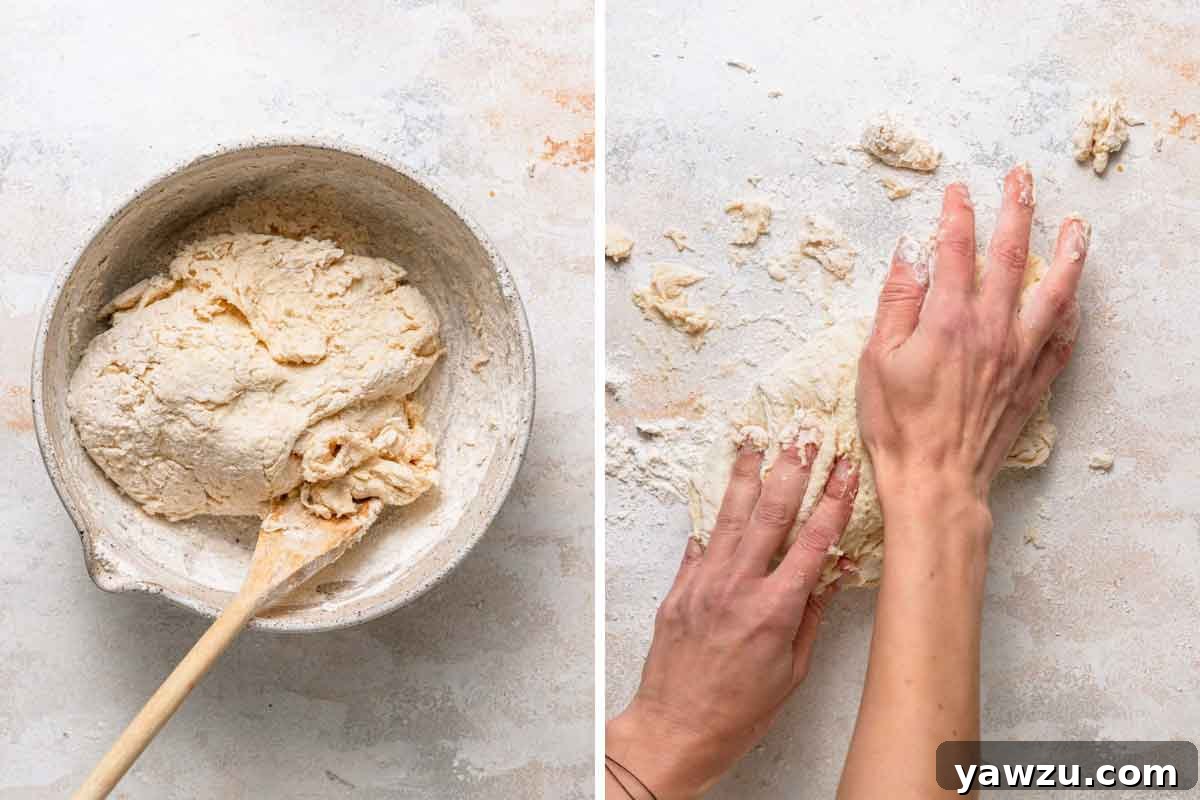
Step #2: Knead the Dough for Perfection – Transfer the dough onto a lightly floured surface. Now comes the therapeutic part: kneading! Gently fold, push, and turn the dough, adding just a tiny bit more flour as needed to prevent sticking. Knead for approximately 5 to 10 minutes, or until the dough transforms into a smooth, elastic ball. Properly kneaded dough will spring back slowly when poked and will have a uniform, supple texture, crucial for developing the gluten that gives the King Cake its characteristic chew and structure.
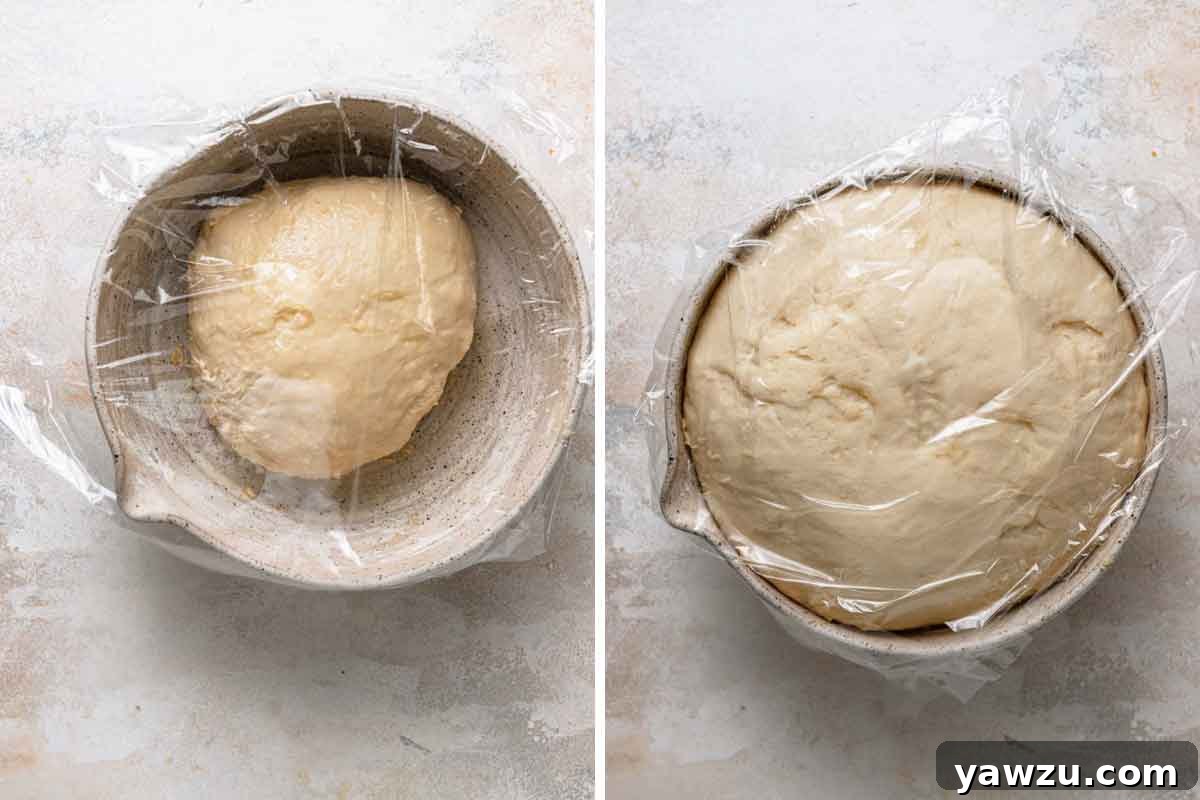
Step #3: The First Dough Rise – Place the kneaded dough into a large, well-oiled bowl, turning the dough once to ensure all its surfaces are lightly coated with oil. This prevents it from drying out and sticking. Cover the bowl tightly with plastic wrap (also lightly oiled on the side touching the dough) and then drape a kitchen towel over it for extra insulation. Find a warm, draft-free location in your kitchen—this could be a slightly warm oven (turned off!), near a sunny window, or just on your countertop if the room is warm. Allow the dough to rise until it has visibly doubled in size, which typically takes about 1 hour, depending on your room temperature and yeast activity.
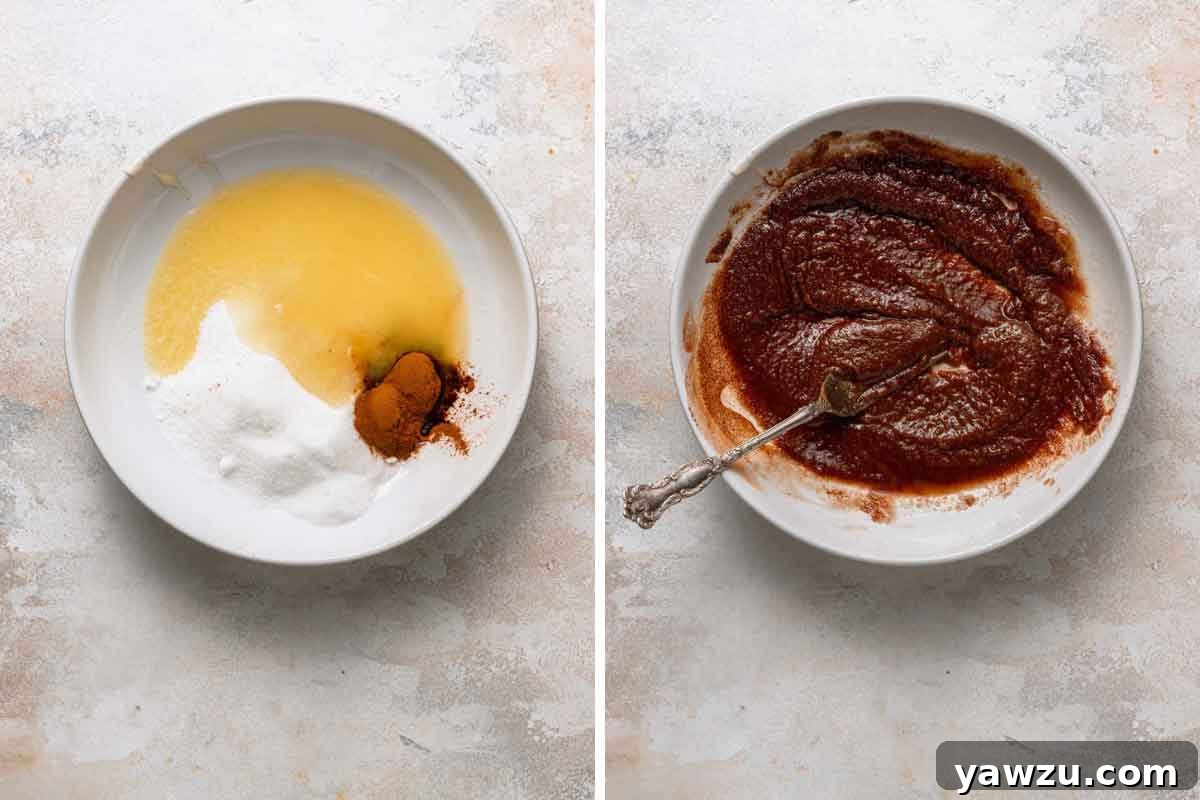
Step #4: Craft the Aromatic Filling – While your dough is undergoing its first rise, prepare the delightful cinnamon-sugar filling. In a small bowl, combine the melted butter, ground cinnamon, and granulated sugar. Stir these ingredients thoroughly until they form a fragrant, sandy paste. This simple yet potent mixture will infuse your King Cake with its signature sweet spice.
Step #5: Roll, Fill, and Shape the Cake – Once the dough has doubled in size, gently punch it down to release the air. Turn the dough out onto a lightly floured surface. Using a floured rolling pin, roll the dough into a large rectangle, approximately 14 inches wide by 18 inches long. Aim for an even thickness to ensure uniform baking. Evenly spread the cinnamon-sugar filling over the entire surface of the dough, making sure to leave a 1-inch border clear around all the edges. This border will help seal the dough later. Beginning from one of the long sides, carefully roll the dough up tightly into a cylinder, creating a beautiful spiral of filling. Pinch the seam along the entire length to seal it completely, preventing any filling from escaping during baking.
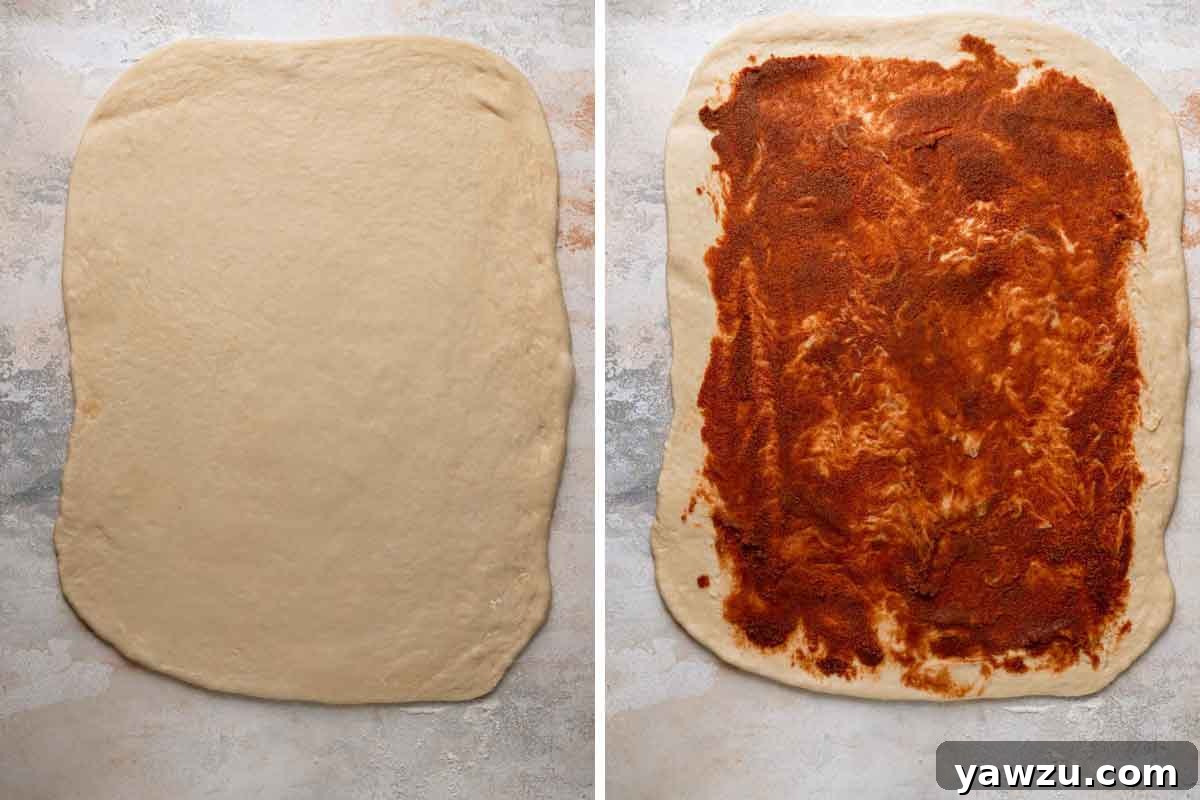
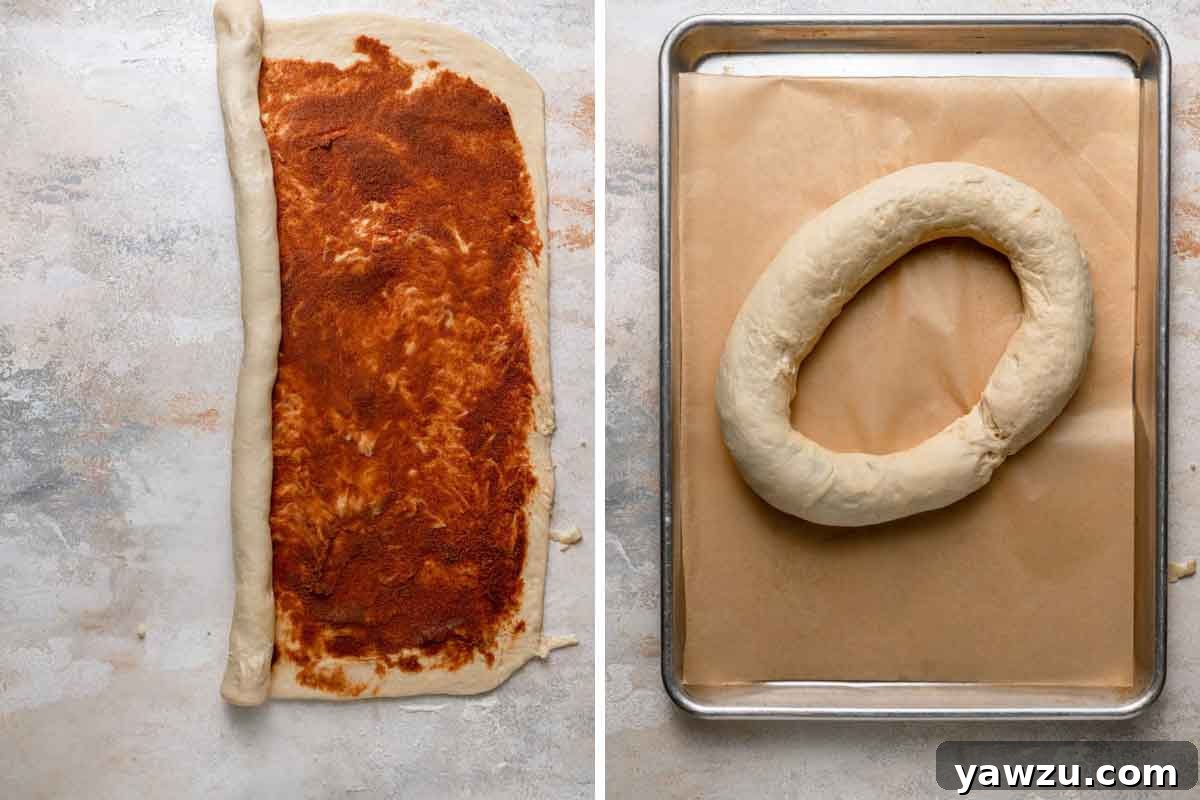
Step #6: The Second Dough Rise for Ultimate Fluffiness – Carefully transfer the rolled dough cylinder to a parchment-lined baking sheet, placing it seam-side down. Bring the two ends of the cylinder together to form an oval shape, gently pinching and sealing them tightly to create a continuous ring. This oval shape is characteristic of traditional King Cakes. Cover the formed dough ring with lightly oiled plastic wrap and a clean kitchen towel. Allow it to rise again for another 30 minutes in a warm, draft-free spot. This second rise contributes significantly to the cake’s light and tender texture.
Step #7: Bake Your Festive Masterpiece – While the cake is undergoing its second rise, preheat your oven to 375 degrees F (190 degrees C). Once the 30 minutes have passed, remove the plastic wrap and towel. Bake the King Cake in the preheated oven for approximately 25 minutes, or until it achieves a beautiful golden-brown color on top and sounds hollow when lightly tapped. Keep an eye on it to prevent over-browning. Immediately after removing it from the oven, carefully transfer the cake (still on the parchment paper) to a wire cooling rack. This allows air to circulate around the cake, preventing the bottom from becoming soggy. Allow the cake to cool for at least 20 minutes before proceeding to the icing and decorating stage. This cooling time is crucial for the glaze to set properly.
Step #8: The Grand Decoration and Hidden Surprise – While the cake is cooling, prepare your simple yet delightful glaze. In a medium bowl, whisk together the powdered sugar, milk, vanilla extract, and a pinch of salt until the mixture is smooth and easily pourable, but not too thin. If it’s too thick, add a tiny bit more milk; if too thin, a spoonful of powdered sugar will do the trick. Now, for the fun part: gently pour or drizzle the prepared glaze evenly over the top of the cooled cake, allowing it to artfully drip down the sides. Work relatively quickly because before the icing has a chance to set, you’ll need to sprinkle on alternating strips of purple, green, and gold colored sanding sugars. This creates the iconic Mardi Gras look. At this point, if you’re participating in the tradition, carefully insert a small plastic baby or dried bean into the bottom of the cake. Serve your magnificent King Cake warm or at room temperature, and enjoy the collective joy it brings!
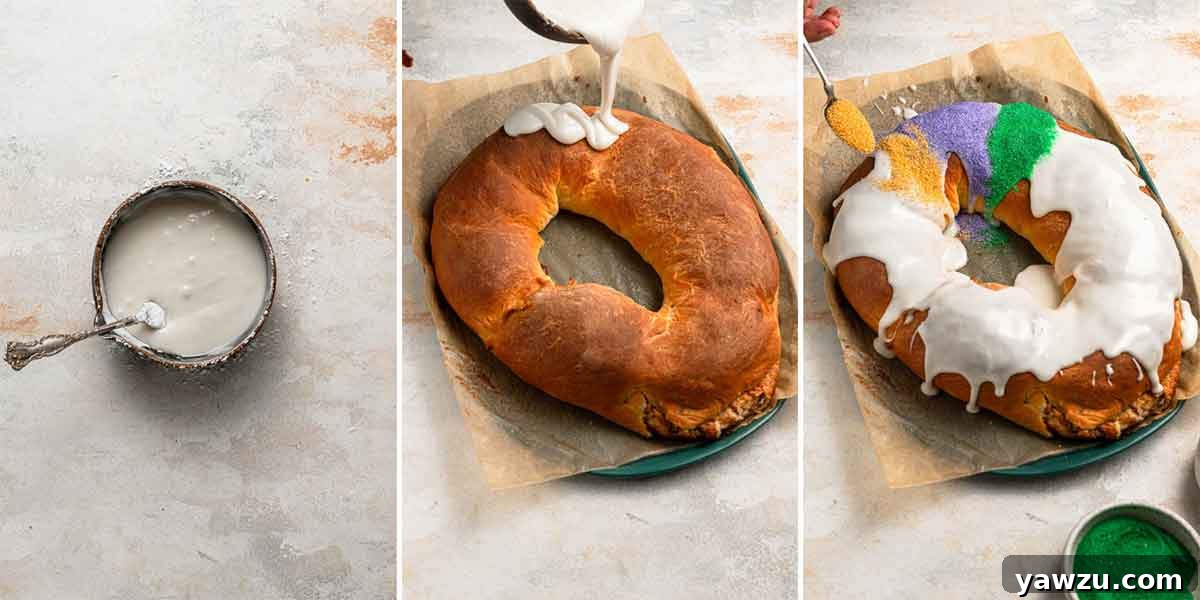
Your homemade King Cake is now ready to be savored! Whether enjoyed with family and friends or as a special treat, its rich flavors and festive appearance are sure to be a highlight.
Storing Your King Cake for Lasting Freshness
To keep your leftover King Cake as delicious as possible, store it in an airtight container or wrap it tightly with plastic wrap. It will remain fresh and delightful at room temperature for up to 3 days. This helps maintain its tender crumb and prevents it from drying out. Enjoy slices at room temperature, or if you prefer a warm, comforting bite, simply reheat a slice in the microwave for about 15 seconds. The gentle warmth will soften the bread and slightly melt the glaze, enhancing its flavors.
Freezing Instructions: Preserve Your King Cake for Later
King Cake can be successfully frozen, allowing you to prepare it in advance or save leftovers for a future craving. However, it is crucial that the cake is frozen BEFORE icing. Once your baked King Cake has cooled completely to room temperature, wrap it first in a double layer of plastic wrap, ensuring every surface is sealed to prevent freezer burn. For an extra layer of protection, place the wrapped cake into a large freezer-safe ziploc bag. If you don’t have a freezer bag large enough, an additional layer of aluminum foil around the plastic wrap will suffice. Properly wrapped, the King Cake can be stored in the freezer for up to 2 months without compromising its quality.
When you’re ready to enjoy it, thaw the frozen cake at room temperature. This will take several hours, so plan accordingly. Once completely thawed, proceed with preparing and applying the icing and decorating with sanding sugars as per the recipe instructions. This ensures the glaze is fresh and vibrant, and the cake’s texture remains optimal.
Expert Tips for King Cake Success
To ensure your King Cake turns out perfectly every time, consider these valuable recommendations and insights:
- Sour Cream’s Role: The sour cream in the dough is a secret weapon, providing unparalleled richness and moisture that results in an incredibly tender crumb. If you don’t have sour cream on hand, plain Greek yogurt can be substituted in equal measure for a similar effect, though it might lend a slightly tangier note.
- Understanding Yeast: This recipe calls for instant yeast, which can be added directly to the dry ingredients. However, you can easily substitute active dry yeast without altering the recipe. When using active dry yeast, simply ensure it is properly bloomed in warm water (100-110°F or 38-43°C) with a pinch of sugar for 5-10 minutes until foamy before incorporating it into the other ingredients.
- Sweetening the Filling: While traditional granulated sugar is specified for the filling, experimenting with brown sugar can elevate the flavor profile. Brown sugar introduces a deeper, more molasses-like sweetness and adds extra moisture, making for an even more pronounced and caramel-like cinnamon swirl.
- Creative Filling Alternatives: While the classic cinnamon-sugar swirl is king, many modern King Cake recipes feature delicious variations. For a decadent cream cheese filling, simply combine 8 ounces of room temperature cream cheese with 1 cup of powdered sugar and 1 teaspoon of vanilla extract. For a bright, citrusy twist, fold in 1 teaspoon of fresh lemon zest (or 1 tablespoon of lemon juice) to the cream cheese mixture. This provides a delightful tang that balances the sweetness.
- Mastering Decorations with Sanding Sugars: The visual appeal of a King Cake is almost as important as its taste. My favorite way to achieve the iconic festive look is by using colored sanding sugars in vibrant purple, green, and gold. These colors hold significant meaning: purple represents Justice, green symbolizes Faith, and gold embodies Power. You can easily find these specialty sugars online or in baking supply stores. Their larger crystals catch the light beautifully, giving your cake a dazzling finish.
- Ingredient Temperatures are Key: Always ensure your liquids for yeast (water) are warm, not hot. Water that is too hot will kill the yeast, while water that is too cold will inhibit its activation. Similarly, using room temperature eggs and sour cream allows for better incorporation into the dough, resulting in a more uniform and smooth consistency.
- Dough Consistency Matters: When making the dough, aim for a consistency that is tacky but not sticky. This means it should feel slightly adhesive to the touch but pull away cleanly from your hands or the bowl. If it’s too sticky, add flour a tablespoon at a time; if too dry, add a teaspoon of water. This balance is crucial for a tender, easy-to-handle dough.
- Patience During Rising: Yeast doughs are living things, and their rising times can vary. Factors like ambient room temperature and humidity play a role. Don’t rush the process. Let the dough rise until it has truly doubled in size, even if it takes a little longer than the specified time. A proper rise contributes significantly to the cake’s light and airy texture.
- Even Baking for a Flawless Finish: To ensure your King Cake bakes evenly, consider rotating the baking sheet halfway through the baking time. This helps achieve a consistent golden-brown color across the entire surface of the cake.
- Cooling Before Icing: Resist the urge to ice your King Cake immediately after it comes out of the oven. Allowing it to cool for at least 20 minutes on a wire rack is essential. Applying glaze to a hot cake will cause it to melt and run off, creating a messy rather than a beautifully coated finish.
More Festive Mardi Gras and Fat Tuesday Recipes
Embrace the vibrant spirit of Carnival season with these additional delectable recipes perfect for Mardi Gras and Fat Tuesday celebrations:
- Homemade Paczki (Polish Doughnuts) – A rich, fried pastry perfect for indulgence before Lent.
- Old-Fashioned Bread Pudding – A comforting, classic dessert with a touch of Southern charm.
- Creole Shrimp and Grits – A savory, flavorful dish embodying the essence of Louisiana cuisine.
- New Orleans Beignets – Pillowy, fried dough covered in powdered sugar, a true New Orleans staple.
- Pecan Pralines – Sweet, nutty confections that melt in your mouth, a Southern delight.
- Shrimp and Sausage Jambalaya – A hearty, spicy one-pot meal packed with authentic Creole flavors.
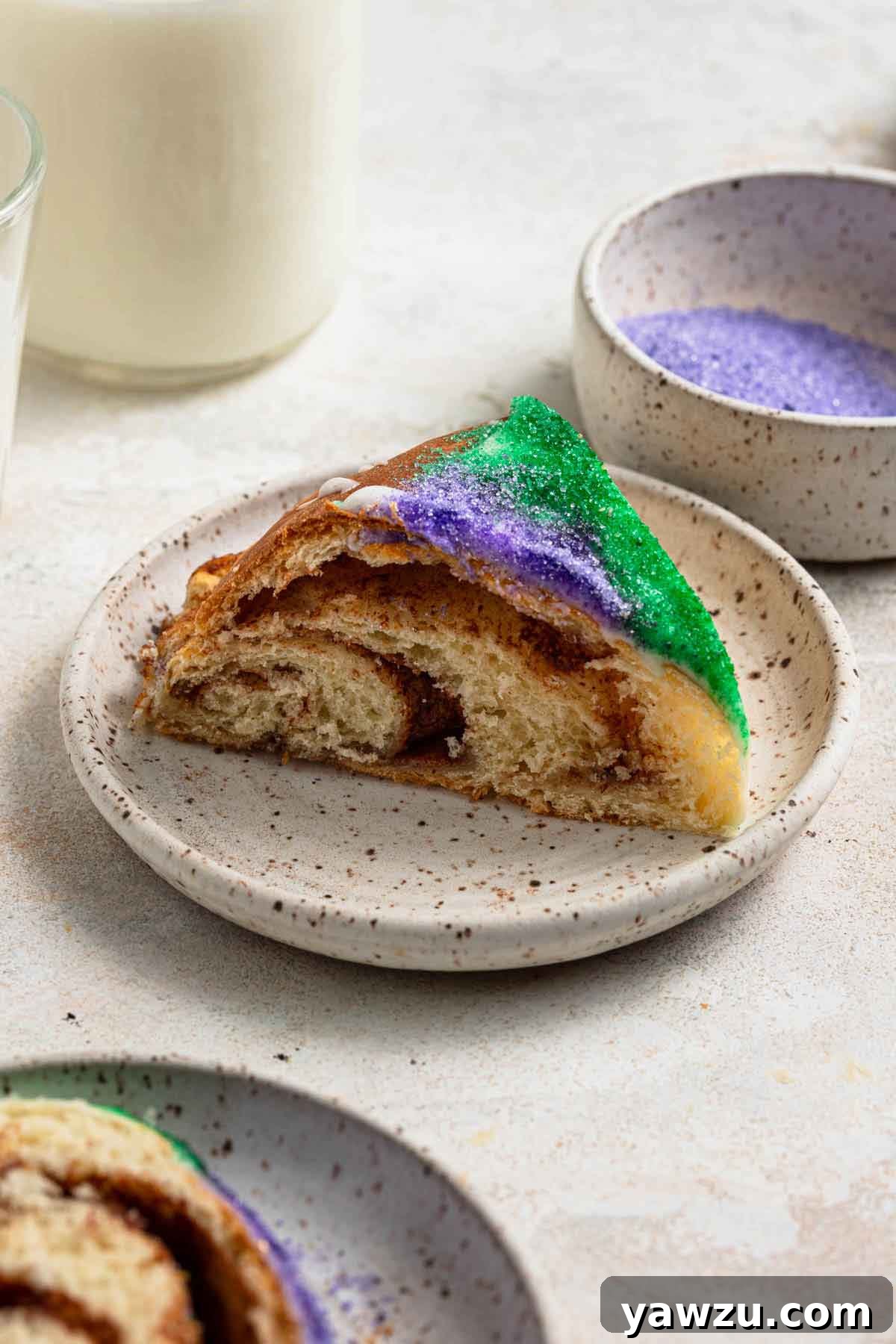
If this King Cake recipe brings joy to your kitchen and your taste buds, please consider stopping back to leave a 5-star rating. Your feedback helps fellow bakers discover and enjoy this festive treat! ❤️️
King Cake Recipe
Pin
Rate
Ingredients
For the Dough:
- 2 tablespoons (28 g) unsalted butter, melted and still warm
- 5 tablespoons granulated sugar, divided into 4 tablespoons & 1 tablespoon
- Pinch of salt
- 8 ounces sour cream
- 2¼ teaspoons instant yeast
- ¼ cup (60 ml) warm water, between 100 and 110 degrees F (38-43 C)
- 1 large egg
- 3 to 3½ cups (390 to 455 g) all-purpose flour
- Oil for your hands and the bowl
For the Filling:
- 2 teaspoons ground cinnamon
- ½ cup (99 g) granulated sugar
- 4 tablespoons (57 g) butter, melted
For the Icing:
- 2 cups (227 g) powdered sugar
- 3 tablespoons (30 ml) whole milk
- ½ teaspoon vanilla extract
- Pinch salt
- Sanding sugar in yellow, purple, and green
Instructions
-
Prepare the Dough: In a medium bowl, whisk together the melted butter and 4 tablespoons of the granulated sugar until the sugar has fully dissolved. Then, stir in the pinch of salt and the sour cream until the mixture is smooth and well combined. Set this bowl aside for a moment.
-
In a separate, larger mixing bowl, add the ¼ cup of warm water (ensuring it’s between 100 and 110 degrees F), the instant yeast, and the remaining 1 tablespoon of granulated sugar. Stir these ingredients gently to combine. Allow the yeast mixture to sit undisturbed for about five minutes; you should see it become foamy and bubbly, indicating that the yeast is active and ready to use.
-
Pour the warm butter and sour cream mixture into the yeast mixture. Add the egg and 1 cup of the all-purpose flour to the bowl. Whisk everything together thoroughly until you have a smooth, uniform batter. Using an oiled wooden spoon or your clean hands, gradually begin mixing in the remaining flour, adding it in small increments (about ½ cup at a time). Continue mixing until a soft dough forms; it should be tacky to the touch but not overly sticky. You’ll likely use about another 2 to 2½ cups of flour in this stage.
-
Turn the dough out onto a clean surface that has been lightly dusted with flour. Begin kneading the dough by hand, folding it over itself, pushing down, and rotating. Continue kneading until the dough feels smooth, supple, and elastic, which typically takes between 5 to 10 minutes. If the dough becomes too sticky during kneading, add a tiny amount of flour (a teaspoon at a time) to your surface, but avoid adding too much, as this can make the cake dry.
-
Shape the kneaded dough into a ball and place it into a large, well-oiled bowl. Turn the dough over once or twice to ensure its entire surface is lightly coated with oil; this prevents it from drying out during the rise. Cover the bowl tightly with oiled plastic wrap, then drape a hand towel over the top for extra warmth. Place the bowl in a warm, draft-free area (like a turned-off oven or a sunny spot) and allow the dough to rise until it has visibly doubled in size, which should take approximately 1 hour.
-
Prepare the Filling: While your dough is rising, take this opportunity to prepare the delicious cinnamon-sugar filling. In a medium bowl, combine the melted butter, ground cinnamon, and granulated sugar. Stir all these ingredients together thoroughly until they are fully combined and form a consistent, fragrant mixture. Set aside.
-
Roll Out and Fill the Dough: Once the dough has successfully doubled in size, gently punch it down to release the accumulated gases. Turn the dough out onto a lightly floured surface. Lightly flour both the dough and your rolling pin. Roll the dough into a large, even rectangle, approximately 18 inches long by 14 inches wide. Aim for a consistent thickness across the entire surface.
-
Evenly spread the prepared cinnamon-sugar filling mixture over the entire rolled-out dough rectangle. Make sure to leave a clear 1-inch border around all the outside edges of the dough; this clean border will help you seal the cake effectively later.
-
Starting from one of the long sides, carefully and tightly roll the dough up, jellyroll-style, forming a long cylinder with the filling spiraled inside. Once rolled, pinch the seam along the entire length of the dough firmly to seal it shut, ensuring the filling stays contained during baking.
-
Carefully transfer the rolled dough cylinder to a parchment-lined baking sheet, making sure the sealed seam is facing down. Bring the two ends of the cylinder together to form an oval shape, which is the traditional King Cake form. Press the edges together firmly to completely seal the cake into a continuous oval ring.
-
Once again, cover the shaped cake loosely with lightly oiled plastic wrap, followed by a hand towel. Allow it to undergo a second rise for another 30 minutes in a warm, draft-free location. This second proofing will give the cake a lighter, more tender texture.
-
Bake the Cake: While your cake is undergoing its second rise, preheat your oven to 375 degrees F (190 degrees C). This ensures the oven is at the correct temperature for even baking.
-
After the 30-minute second rise, carefully remove the plastic wrap and hand towel from the cake. Place the baking sheet in the upper third of your preheated oven. Bake until the cake turns a beautiful golden brown color, which typically takes about 25 minutes. Keep an eye on it to prevent over-browning. Once baked, immediately transfer the cake (still on its parchment paper) to a wire cooling rack. Allow the cake to cool for at least 20 minutes before proceeding with icing and decorating; this cooling time is essential for the glaze to set properly without melting.
-
Prepare the Icing: Once the cake has cooled for approximately 15 minutes, it’s time to prepare the delectable icing. In a medium bowl, whisk together the powdered sugar, whole milk, a pinch of salt, and the vanilla extract. Continue whisking until the mixture is completely smooth and free of lumps. The desired consistency should be able to drizzle easily but not run off the cake too quickly. If your icing appears too thin, gradually whisk in a little more powdered sugar until it thickens. Conversely, if it’s too thick, add a tiny touch more milk, a few drops at a time, until you reach the perfect drizzling consistency.
-
Decorate Your King Cake: Carefully move the cooled King Cake from the wire rack to your chosen serving platter. To catch any stray icing drips and colored sugar, gently slide several pieces of wax paper or parchment paper underneath the edges of the cake. Now, for the cherished tradition: carefully insert a dried bean or the small plastic baby figurine into the bottom of the cake. In Louisiana, finding the baby traditionally means you’re responsible for bringing the next King Cake! Elsewhere, it’s a delightful sign of good luck.
-
Generously drizzle the prepared icing evenly over the top of the cake, allowing it to gracefully ooze down the sides, creating a beautiful glazed effect. Before the icing has a chance to set, quickly sprinkle on alternating strips of the yellow, purple, and green colored sanding sugars. This vibrant decoration is a hallmark of the King Cake. Once the icing has lightly set, carefully slide out the wax paper pieces from underneath the cake and discard them. Your magnificent King Cake is now ready to be served and enjoyed, either warm or at room temperature. Any leftover cake should be wrapped tightly in plastic wrap or stored in an airtight container at room temperature for up to 3 days to maintain its freshness.
Did you make this recipe?
Leave a review below, then snap a picture and tag @thebrowneyedbaker on Instagram so I can see it!
Photography by Dee Frances