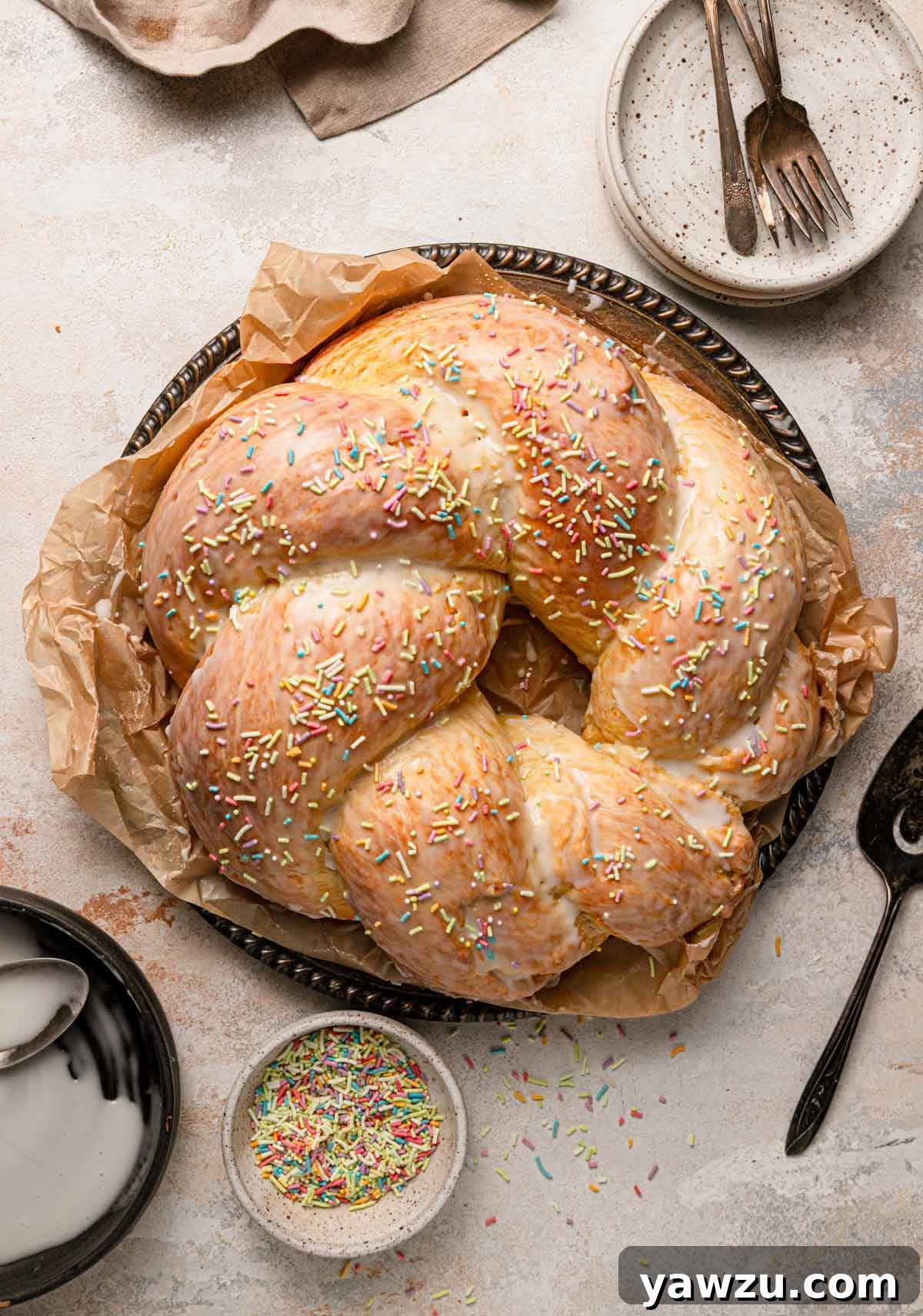
As the joyous season of Easter approaches, kitchens across the world fill with the inviting aromas of cherished traditions. Among these, few are as enchanting or as deeply rooted in cultural heritage as Italian Easter Bread, known gracefully as Pane di Pasqua. This isn’t just any bread; it’s a culinary embrace, a sweet brioche-style masterpiece born from generations of family recipes. Infused with the bright zest of orange and the warm, distinct notes of anise, each loaf is lovingly glazed and adorned with vibrant sprinkles, transforming it into a true feast for the eyes and the palate. This magnificent holiday bread is more than just a treat; it’s a centerpiece, perfect for your Easter brunch spread or simply to savor in the anticipation of the festive days.
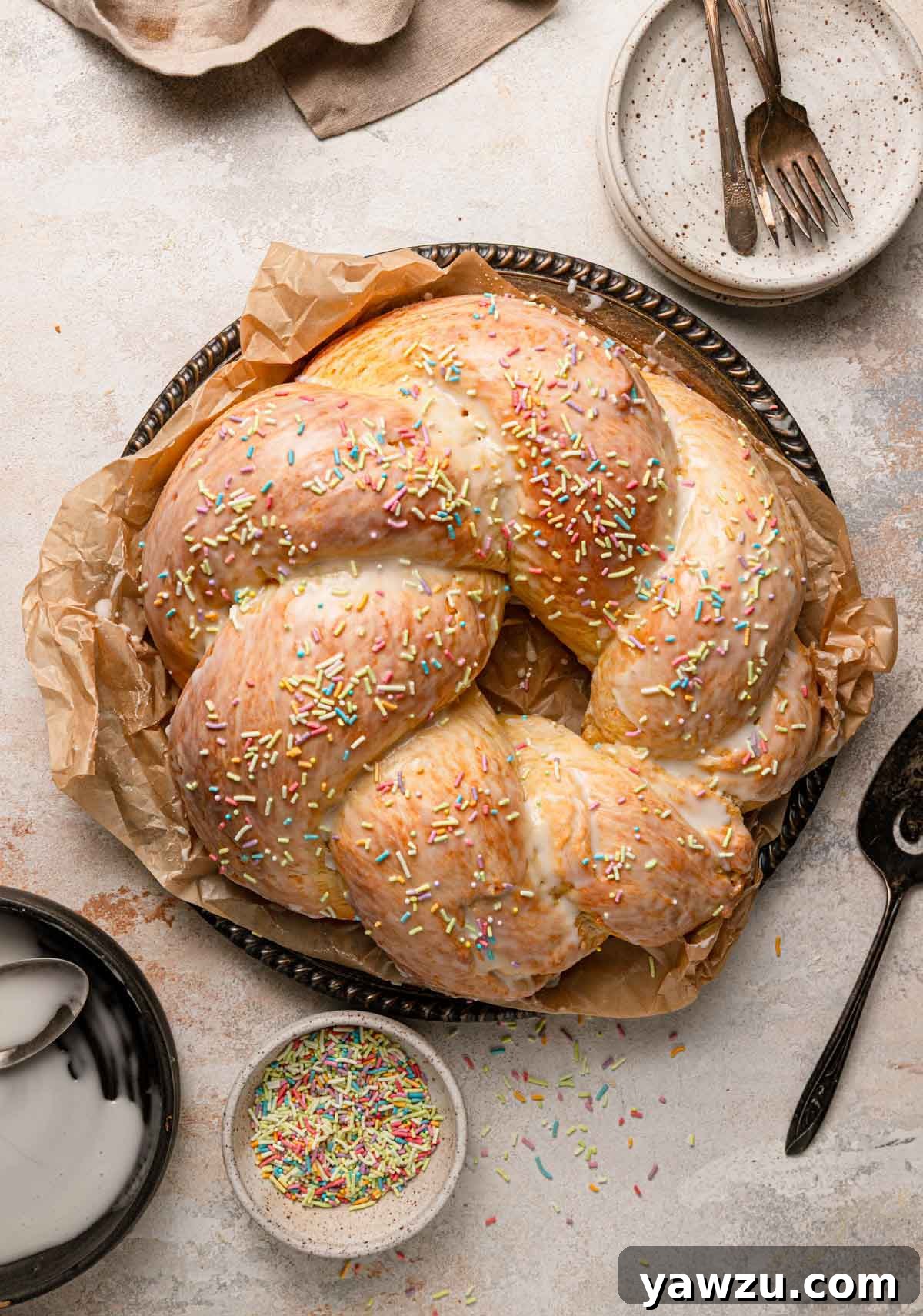
A Timeless Family Tradition: Discovering Pane di Pasqua
My journey with this remarkable Italian Easter bread began years ago, a delightful discovery intertwined with the early days of my relationship with my husband. His father often spoke with fond nostalgia about his Nana’s Easter bread—a unique creation celebrated for its distinctive orange and anise flavors. It struck me as almost unbelievable that a bread so apparently beloved had never graced my own family’s table, or at least, had never been introduced to me. I had certainly never tasted anything quite like it.
This bread, in every sense, is a culinary marvel. It boasts a rich, slightly sweet profile, yet remains wonderfully light and fluffy, an ideal texture for a festive treat. The harmonious blend of zesty orange and aromatic anise creates a flavor that is both comforting and exquisitely memorable. My father-in-law, a true guardian of this family treasure, was kind enough to share his Nana’s authentic recipe with me. This generous act allowed me to recreate this special bread, not just for our family, but to extend this delightful tradition to all of you.
A surprising twist in this bread’s story emerged when I shared my homemade Pane di Pasqua with my mother. Her eyes lit up with recognition; she confirmed that my very own grandmother had indeed baked this exact bread! She even recounted how Grandma would meticulously set beautifully dyed eggs into the dough, a classic touch. However, my mother revealed that my grandfather was the sole member of the family who truly adored this particular bread. Consequently, when he passed away, the tradition faded from our immediate family. While I felt a pang of disappointment at having missed out on it during my childhood, there was an even greater thrill in knowing that this exquisite bread had once been a cherished part of my family’s heritage, a culinary tribute to my grandpap’s tastes. It transformed a new discovery into a rediscovered legacy.
The Rich History and Symbolism of Pane di Pasqua
Before embarking on my first attempt to bake this delightful Italian Easter bread, I delved into its historical roots and culinary nuances. What I discovered was a fascinating tapestry of tradition woven throughout Italy. While regional variations abound, a common thread in most authentic Italian Easter Bread recipes is the bright inclusion of citrus — typically orange or lemon zest and juice — paired with the distinctive warmth of anise, often in the form of oil or seeds. These flavors are not merely incidental; they are foundational to the bread’s identity and its place in Easter celebrations.
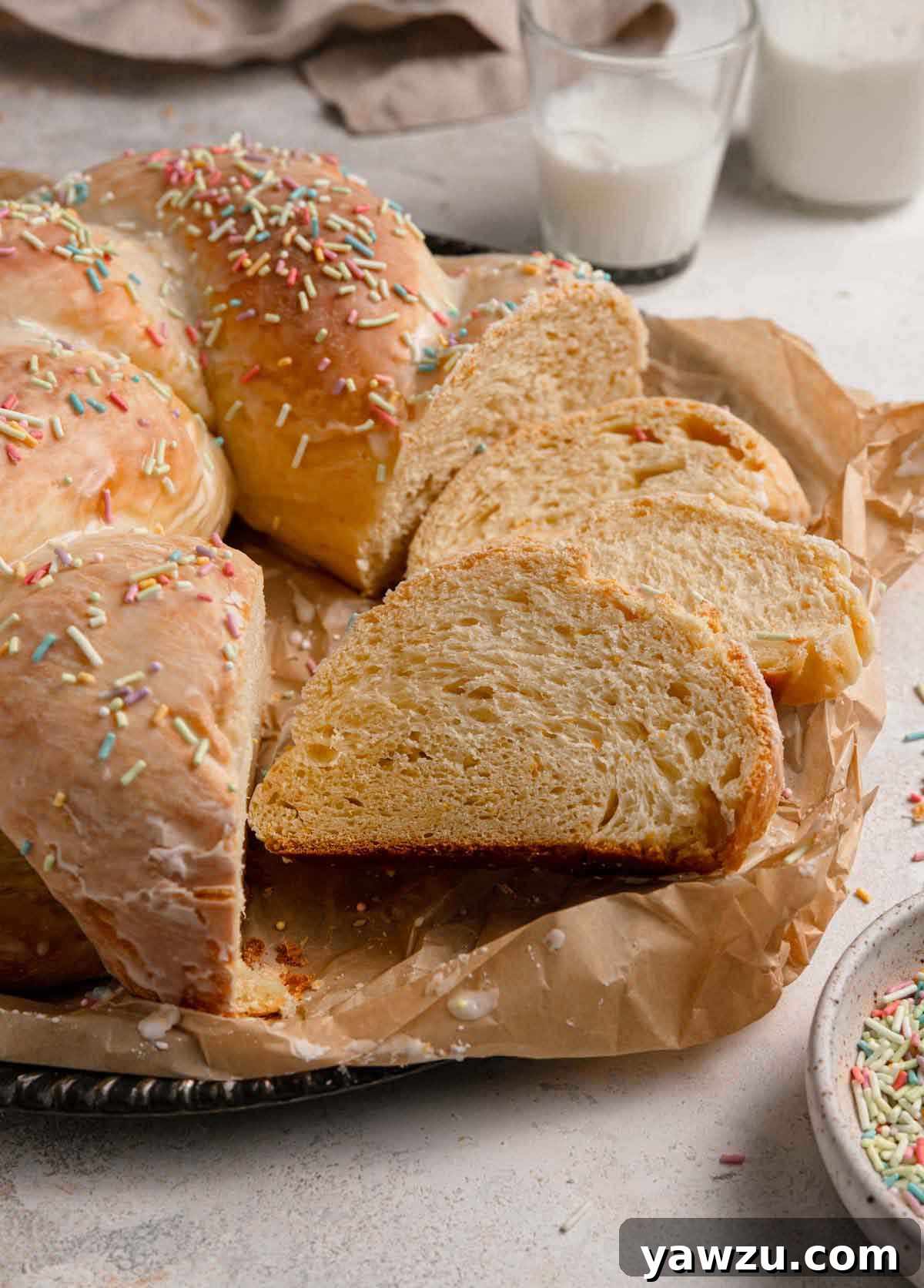
Beyond its taste, Pane di Pasqua carries profound symbolism. Its traditional wreath or ring shape is a powerful visual representation, echoing the crown of thorns from the Passion of Christ, a poignant reminder of the Easter narrative. This shape also signifies renewal and eternity, fitting for a holiday celebrating rebirth. Furthermore, the loaves are traditionally braided, often with beautifully dyed eggs nestled within the intricate twists of the dough. These eggs symbolize new life, fertility, and the resurrection itself, adding another layer of meaning and vibrant color to the festive bread. While I opted to skip the inclusion of the dyed eggs in my version—a personal preference that doesn’t diminish its deliciousness—I meticulously followed the classic approach with braided loaves, a delicate sweet glaze, and, of course, a generous scattering of colorful sprinkles, a playful nod to the joy of the season.
This bread is more than just food; it’s a piece of edible history, a cultural artifact that brings families together and connects them to generations past. Its presence at the Easter table is a testament to the enduring power of tradition and the simple beauty of shared meals.
Essential Ingredients for Authentic Italian Easter Bread
Crafting the perfect Pane di Pasqua relies on a harmonious blend of both pantry staples and a few star ingredients that truly define its unique character. While you’ll undoubtedly utilize baking basics like all-purpose flour, granulated sugar, fresh eggs, and a pinch of salt, it’s the following key components that elevate this bread from good to truly incredible:
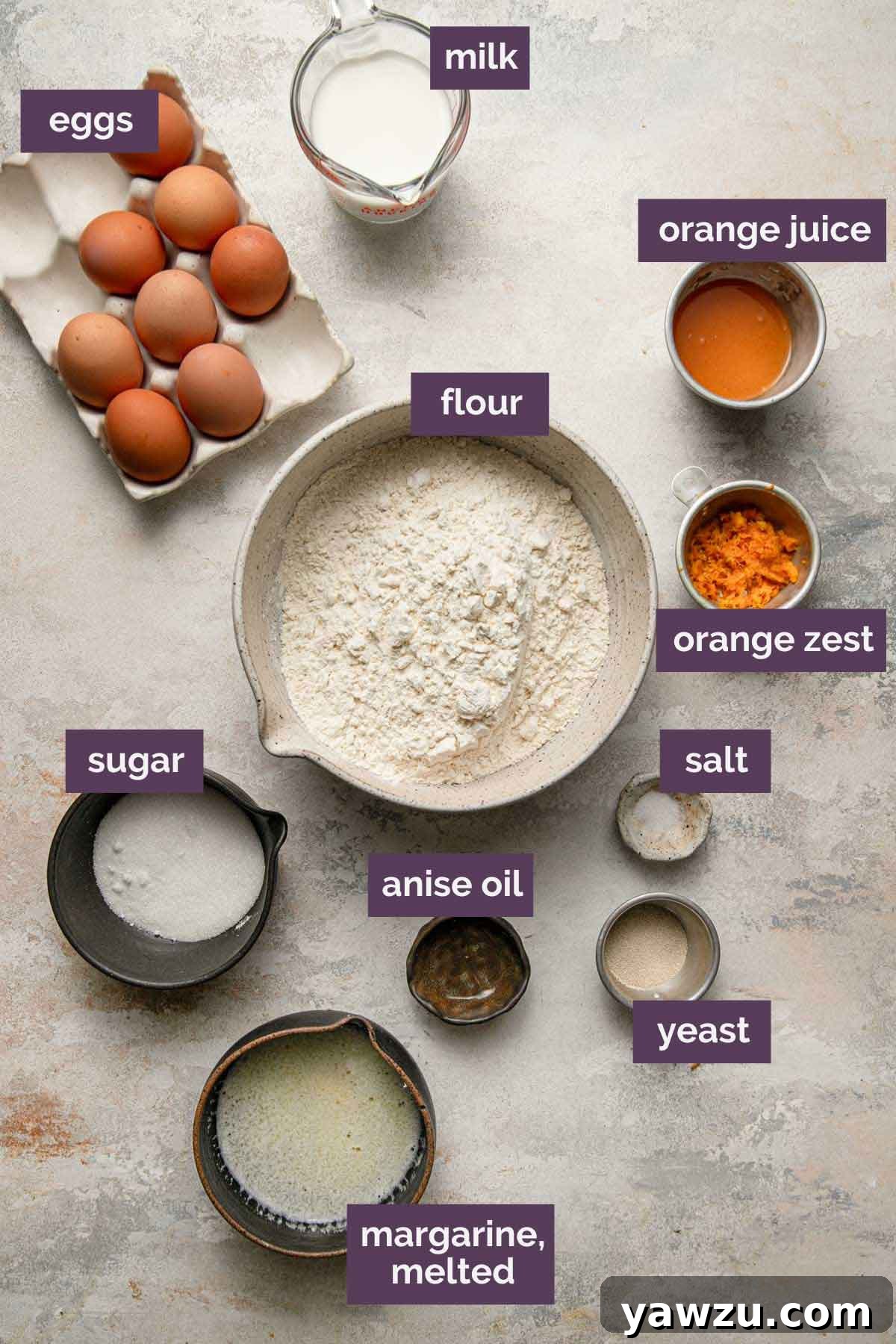
- Whole Milk: For a bread that is exceptionally rich, tender, and flavorful, I wholeheartedly recommend using whole milk. Its higher fat content contributes significantly to the brioche-like texture and deepens the overall taste. However, if whole milk isn’t available, 2% milk can be a suitable substitute, though the final richness might be slightly diminished.
- Fresh Oranges: The vibrant soul of this bread comes from fresh oranges. You will be utilizing both the aromatic zest and the bright, tangy juice from two medium-sized oranges. For effortless zesting, I swear by a good microplane, which ensures you get only the fragrant outer layer without any bitter white pith. To extract every last drop of juice while catching any pulp or seeds, a simple citrus juicer is invaluable. If you’re feeling adventurous or prefer a different citrus profile, fresh lemon zest and lemon juice make an excellent alternative, offering a brighter, more tart flavor.
- Active Dry Yeast: This is the leavening agent that gives our bread its wonderful rise and airy texture. Ensure your yeast is fresh for optimal results. If you happen to have instant yeast on hand, you can easily substitute it directly without needing to make any other adjustments to the recipe’s quantities or process.
- Margarine (or Butter): The original family recipe specifically calls for margarine, contributing to the bread’s unique texture and flavor. However, if you prefer, high-quality unsalted butter can be used as a direct substitute. Using unsalted butter allows you to control the overall saltiness of the bread more precisely.
- Anise Oil: This ingredient provides the signature, subtly licorice-like aroma and taste that is classic in traditional Pane di Pasqua. Anise oil is quite potent, so a little goes a long way. If anise oil is hard to find, you can substitute with anise extract. Just remember that extract is less concentrated, so you’ll need to use approximately 2 teaspoons of extract for every ½ teaspoon of oil specified in the recipe to achieve a comparable flavor intensity.
While the addition of brightly colored, dyed eggs nestled in the dough is a beautifully traditional and symbolic touch for Italian Easter bread, please don’t fret if you typically don’t dye Easter eggs! The bread remains absolutely delicious and festive without them. Our family, for instance, often chooses to omit them, focusing on the bread’s exquisite taste and delightful appearance.
Baking Perfection: A Step-by-Step Guide to Italian Easter Bread
Creating this traditional Italian Easter bread is a truly rewarding experience, culminating in a tender, aromatic loaf that embodies the spirit of the holiday. This recipe follows the classic two-rise method, which contributes to its incredible flavor and light texture. While I personally enjoy the meditative process of mixing the dough in a bowl with a sturdy wooden spoon and kneading it by hand, you can absolutely opt for the convenience of a stand mixer fitted with a dough hook attachment. Either method will yield fantastic results!
Follow these detailed steps to bring your own Pane di Pasqua to life:
- Prepare the Yeast Mixture: Begin by placing your all-purpose flour in a large mixing bowl; set this aside for a moment. Gently warm the whole milk in a small saucepan over low heat, stirring occasionally. The goal is for it to be warm to the touch, not hot—ideally between 110 and 115 degrees F (43-46°C) if you’re using an instant-read thermometer.
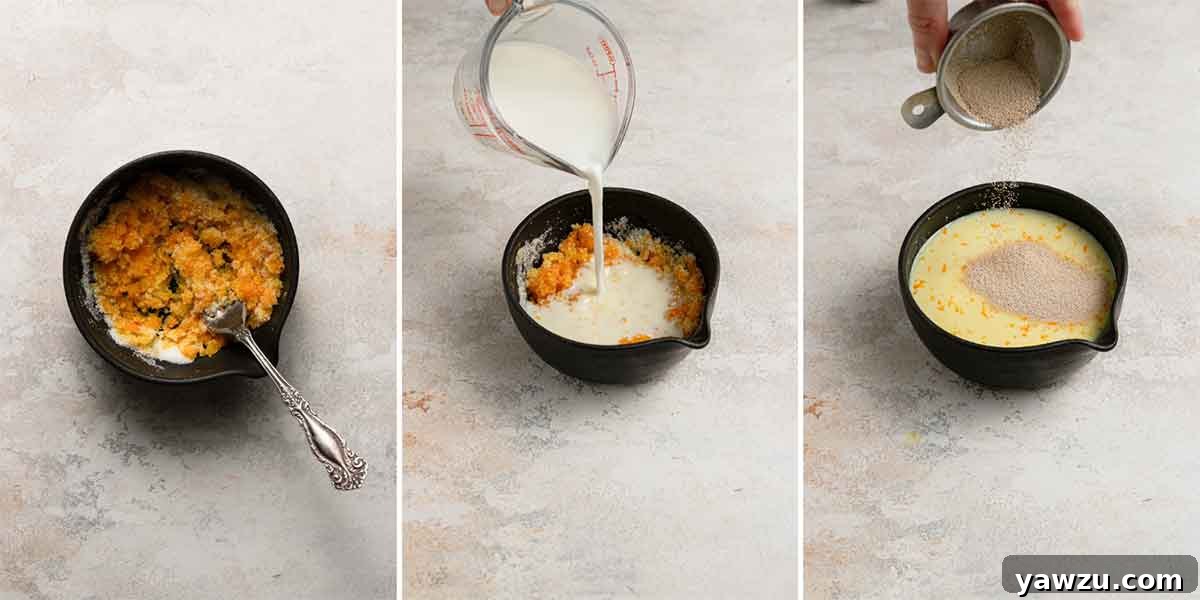
- Infuse the Sugar: While the milk warms, take your granulated sugar and orange zest and combine them in a small, separate bowl. Using your fingertips, rub the zest into the sugar vigorously. This simple technique, known as ‘zesting into sugar,’ helps release the essential oils from the orange zest, deeply infusing the sugar with its bright, citrusy aroma and flavor. Continue until the sugar is fully moistened and fragrant.
- Activate the Yeast: Once your milk reaches the correct temperature, pour it into the bowl with the orange-infused sugar and stir thoroughly until the sugar is completely dissolved. Then, sprinkle the active dry yeast over the surface of the milk mixture. Give it a gentle stir and let it sit undisturbed for about 10 minutes. During this time, the yeast should become foamy and active, indicating it’s alive and ready to work its magic.
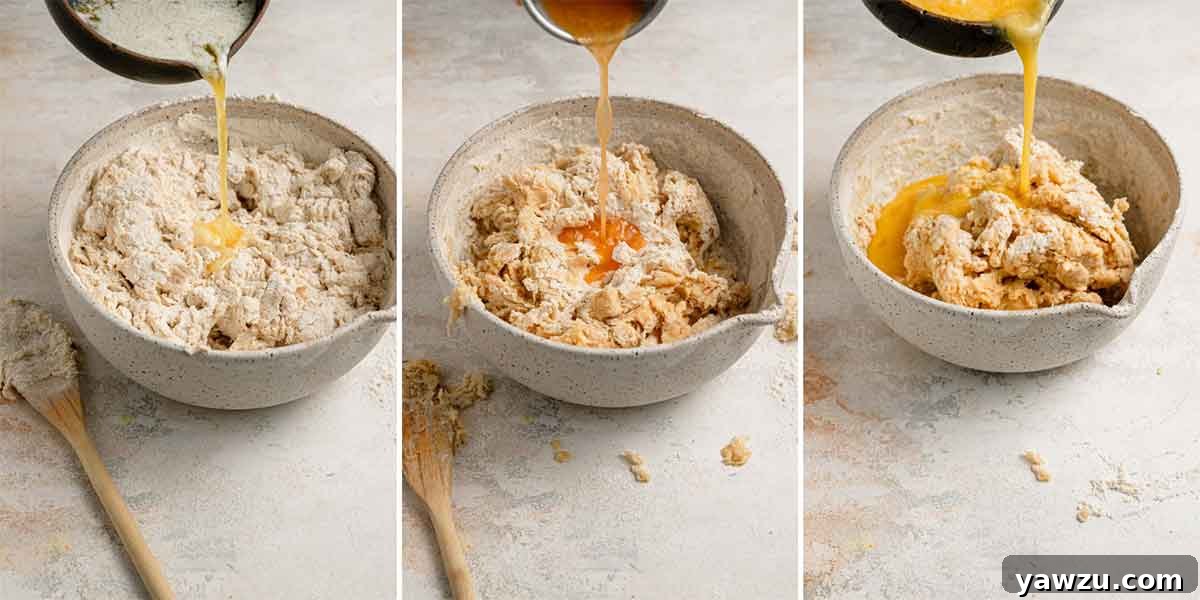
- Combine the Dough Elements: Pour the activated milk and yeast mixture into the large bowl with the flour. Begin to mix, either with your wooden spoon or stand mixer, until a shaggy, somewhat coherent dough starts to form. Next, incorporate the melted margarine (or unsalted butter) and continue mixing until it’s well distributed. Finally, add the fresh orange juice to the dough and mix until fully combined.
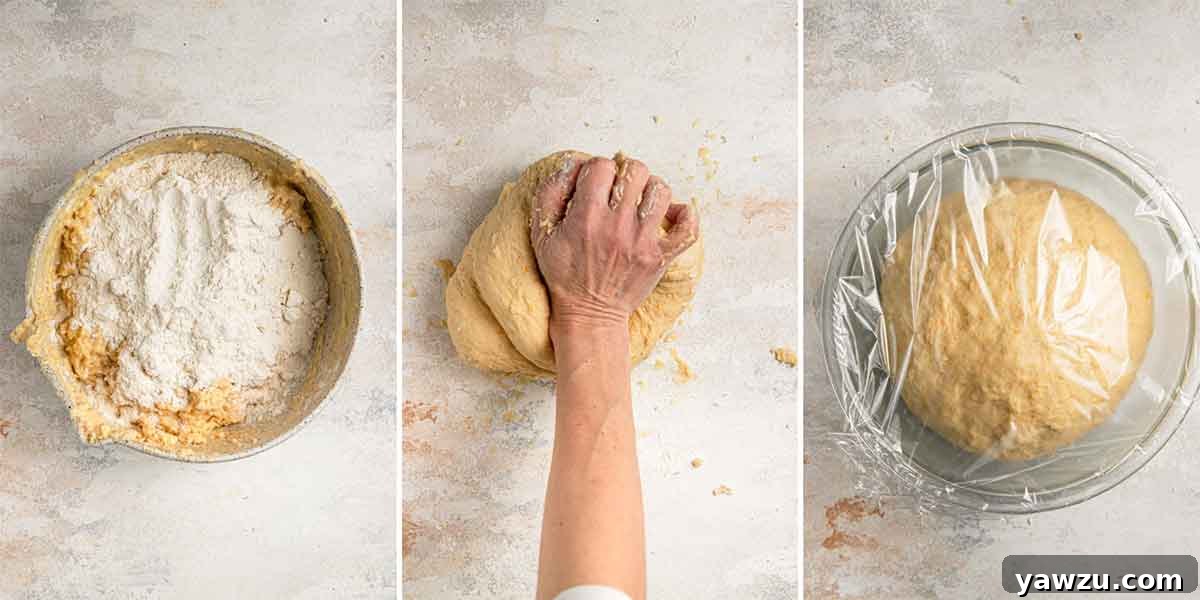
- Enrich and Knead: In a separate small bowl, lightly whisk together the eggs, salt, and anise oil with a fork. Add this fragrant egg mixture to your dough and continue mixing until everything is thoroughly incorporated. At this stage, the consistency of the dough can vary depending on the juiciness of your oranges and ambient humidity. Don’t hesitate to add a little more flour, a tablespoon at a time, until the dough comes together into a sticky ball. Turn this sticky dough out onto a lightly floured surface and knead for approximately 5 minutes. As you knead, add small amounts of flour only as needed to prevent excessive stickiness, aiming for a smooth, elastic, and slightly tacky ball of dough.
- First Rise: Lightly oil a clean large bowl, then place your kneaded dough inside, turning it once to coat all sides with oil. This prevents it from sticking. Loosely cover the bowl with plastic wrap and place it in a warm, draft-free spot. Allow the dough to rise until it has visibly doubled in size, which typically takes about 1 hour. While it’s rising, prepare your baking sheets by lining two of them with parchment paper, and set them aside.
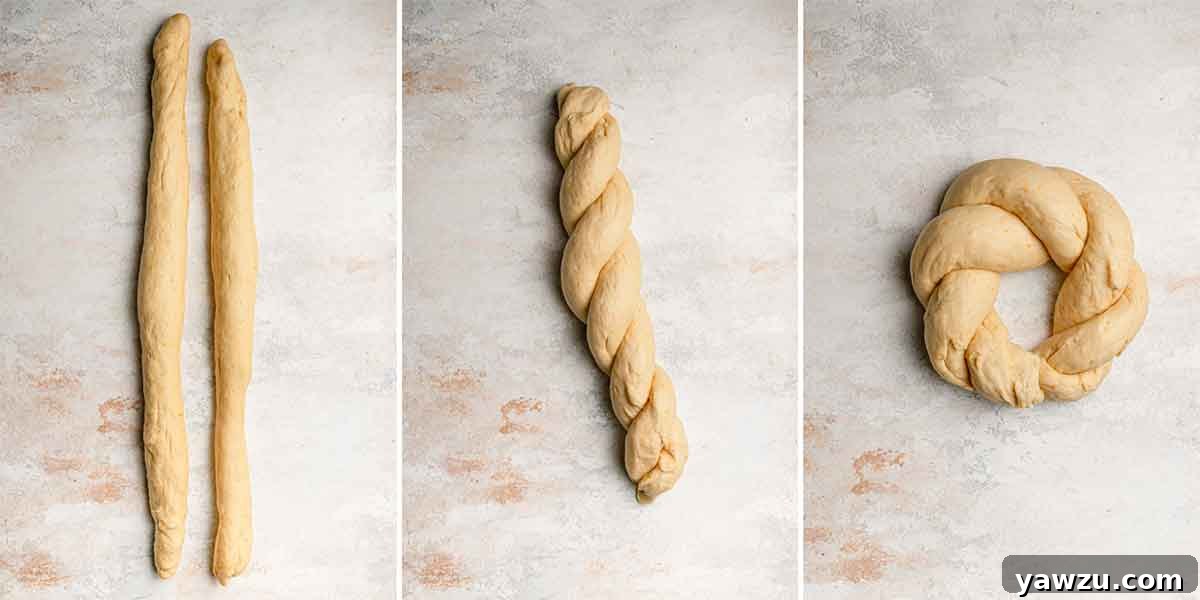
- Shape the Festive Loaves: Once the first rise is complete, gently punch down the dough to release the air. Turn it out onto a clean, lightly floured surface. This recipe yields two beautiful loaves of Italian Easter bread, so divide the dough into two equal halves. Then, divide each half into two again, giving you four roughly equal pieces of dough. You’ll work with two pieces at a time to form one loaf. Roll two of these pieces into long ropes, each about 24 inches in length. Loosely twist these two ropes together to create a braid. Carefully transfer this braided rope to one of your prepared baking sheets. Bring the ends of the braid together to form a wreath or ring shape, twisting and firmly pinching the ends to seal them securely. Repeat this process with the remaining two pieces of dough to create your second braided, circular loaf.
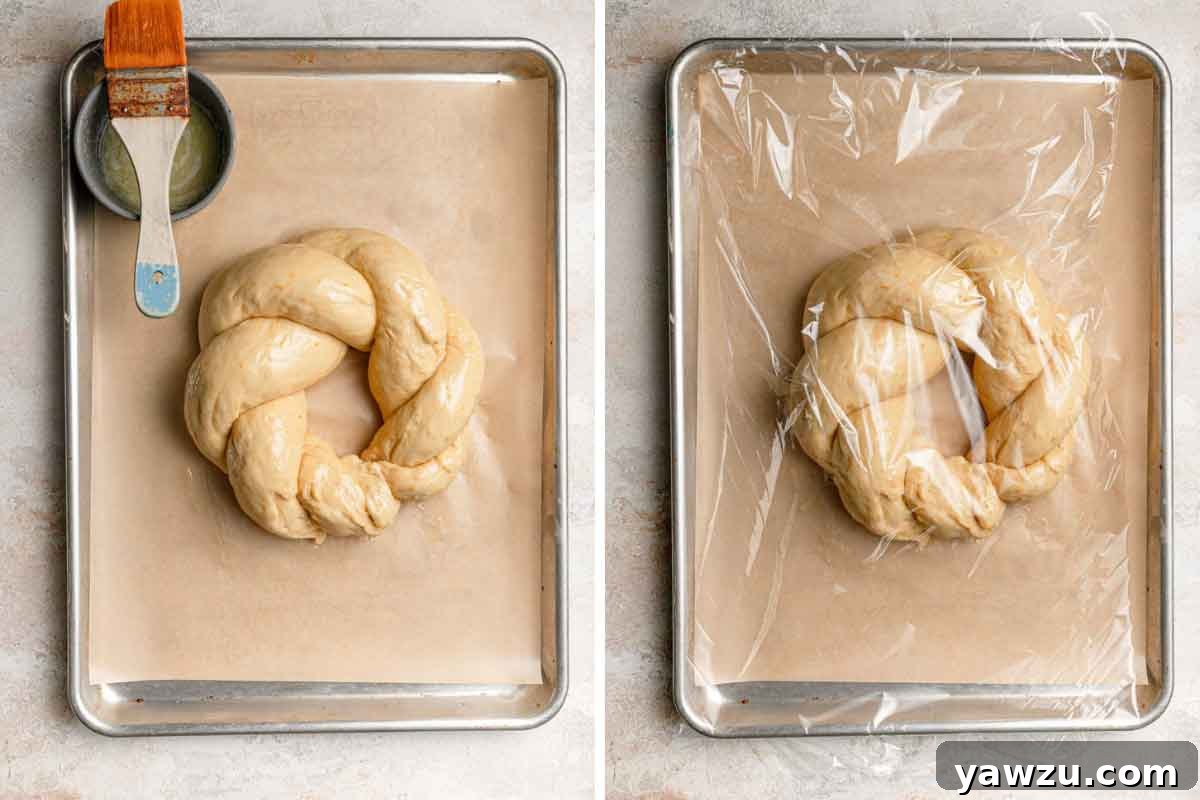
- Second Rise: Gently brush the tops of your shaped loaves with melted unsalted butter. This adds flavor and helps with browning. Loosely cover both loaves with plastic wrap and let them rise again in a warm, draft-free area until they have nearly doubled in size, which usually takes between 45 minutes to 1 hour. This second rise is crucial for developing the bread’s light texture and rich flavor.
- Bake to Golden Perfection: While your loaves are undergoing their second rise, preheat your oven to 350 degrees F (175°C). For best results and even baking, I recommend baking the loaves one at a time, unless your oven is large enough to accommodate both without crowding, ensuring consistent heat distribution. Bake each loaf until it turns a beautiful golden brown on top, which typically takes about 30 to 40 minutes. Keep an eye on them towards the end to prevent over-browning. Once baked, carefully remove the loaves from the oven and transfer them to a wire rack to cool completely. Allowing them to cool fully before glazing is essential to prevent the glaze from melting.
- Glaze and Decorate: Once the Italian Easter breads have cooled to room temperature, it’s time for the festive finishing touch! In a small bowl, whisk together the powdered sugar and milk until you achieve a smooth, pourable glaze. Using a pastry brush, artfully brush the glaze over the tops and sides of each loaf. While the glaze is still wet, generously sprinkle your chosen colorful sprinkles over the bread for that iconic holiday look. This bread is truly best enjoyed at room temperature, allowing all its delicate flavors to shine.
Storage and Freezing Tips for Your Pane di Pasqua
To ensure your homemade Italian Easter Bread stays delightfully fresh and delicious for as long as possible, proper storage is key. Any leftover bread should be wrapped tightly in plastic wrap to prevent it from drying out. For an extra layer of protection against air exposure, consider placing the plastic-wrapped loaf or slices into an airtight container or a large ziploc bag. Stored this way at room temperature, your Pane di Pasqua will remain fresh and enjoyable for up to 3 days. This bread is wonderful eaten plain at room temperature, or for a delightful breakfast treat, try toasting a slice and spreading it with your favorite jam or fruit preserves.
If you wish to extend the life of your Italian Easter bread and enjoy it weeks or even months later, freezing is an excellent option. For freezing an entire loaf, first wrap it thoroughly in plastic wrap, ensuring no surface is exposed. Then, add another protective layer by wrapping the plastic-wrapped loaf in aluminum foil. If you prefer to freeze individual slices, simply wrap each slice tightly in plastic wrap. Once wrapped, place the whole loaf or the individual slices into a freezer-safe ziploc bag. This bread can be stored in the freezer for up to 3 months without compromising its quality.
When you’re ready to enjoy your frozen Pane di Pasqua, individual slices can be easily thawed at room temperature within an hour or two. For a whole loaf, I recommend planning ahead: transfer the wrapped loaf from the freezer to the refrigerator a full day in advance to allow it to thaw slowly and evenly before serving. Once thawed, you can gently warm it in a low oven for a few minutes to bring back that freshly baked aroma and tenderness.
Frequently Asked Questions about Italian Easter Bread
- What makes Italian Easter Bread (Pane di Pasqua) unique?
Pane di Pasqua stands out for its rich, brioche-like texture, typically flavored with citrus (orange or lemon) and anise. Its distinctive wreath shape and often includes dyed eggs, symbolizing renewal and new life, making it a truly festive and culturally significant bread for the Easter holiday. - Can I prepare the dough ahead of time?
Yes, you can! After the first rise, you can punch down the dough, place it in an oiled bowl, cover it tightly with plastic wrap, and refrigerate it overnight (up to 24 hours). The next day, let it come to room temperature for about 30-60 minutes before proceeding with shaping and the second rise. - What can I use if I don’t have anise oil?
If anise oil is unavailable, anise extract is a good substitute. Since extract is less concentrated, use 2 teaspoons of anise extract for every ½ teaspoon of anise oil called for in the recipe to achieve a similar flavor profile. - Is it necessary to include the dyed eggs?
While dyed eggs are a beautiful and traditional symbolic element, they are not strictly necessary for the bread’s flavor or structure. Many families, including ours, choose to omit them. The bread will be just as delicious and festive without them. - What should I serve with Italian Easter Bread?
Pane di Pasqua is wonderfully versatile! It’s perfect on its own for breakfast or brunch, perhaps with a cup of coffee or tea. It also pairs beautifully with fresh fruit, preserves, honey, or even a light spread of cream cheese. For a more savory option, some enjoy it alongside cured meats or cheeses, though its sweetness usually makes it a standalone treat.
Explore More Festive Easter Breads
- Paska (Polish Easter Bread)
- Greek Easter Bread (Tsoureki)
- Hot Cross Buns
- Grandma’s Bacon and Cheese Easter Bread
If you make this Italian Easter bread recipe and fall in love with its charm and flavor, please consider returning to our site to give the recipe a 5-star rating! Your feedback is invaluable and helps other passionate bakers discover this wonderful tradition. ❤️️
Italian Easter Bread Recipe
This traditional Italian Easter Bread is flavored with orange and anise, brushed with icing and decorated with sprinkles.
Ingredients
For the Dough
- 8 cups (1040 g) all-purpose flour
- 1½ cups (360 ml) whole milk
- ½ cup (99 g) granulated sugar
- 2 oranges, zested & juiced
- 4½ teaspoons (2 envelopes) active dry yeast
- 1 cup (227 g) margarine, melted (or unsalted butter)
- 8 eggs
- 1 teaspoon salt
- ½ teaspoon anise oil (or 2 teaspoons anise extract)
- 2 tablespoons unsalted butter, melted (for brushing loaves)
For the Glaze
- 2 cups (227 g) powdered sugar
- ¼ cup (60 ml) whole milk
- Sprinkles, if desired
Instructions
- Make the Dough: Place the flour in a large mixing bowl; set aside.
- Heat the milk in a small saucepan over low heat, stirring occasionally, until it is warm to the touch (110-115 degrees F / 43-46°C).
- While the milk is warming, place the sugar in a small bowl and add the orange zest. With your fingertips, rub the zest into the sugar until it is completely incorporated and the sugar is moistened.
- Once the milk reaches the correct temperature, stir in the sugar and zest mixture, stirring to dissolve the sugar. Add the yeast, stir, and let sit for 10 minutes until foamy.
- Add the milk and yeast mixture to the flour and begin to mix it into a shaggy dough.
- Next, add the melted margarine and continue to mix. Then, add the orange juice to the dough and mix to combine.
- In a small bowl, use a fork to lightly beat together the eggs, salt, and anise oil. Add to the dough and continue mixing.
- At this point, you may need to add more flour to the dough, depending on how much juice you get out of your oranges and ambient humidity. Add a little more flour at a time until a sticky ball of dough has formed. Turn it onto a floured surface and knead for about 5 minutes, adding small amounts of flour as needed, until the dough is soft and elastic but still slightly tacky.
- Place the dough in an oiled bowl, turn to coat, then cover loosely with plastic wrap and place in a warm, draft-free spot until doubled in volume, about 1 hour. Meanwhile, line two baking sheets with parchment paper and set aside.
- Shape the Bread: Turn the dough out onto a clean surface and divide in two. Divide each half into two (you will have four pieces of dough). Roll two pieces of dough into 24-inch long ropes. Loosely twist the ropes together. Transfer the braided rope to one of the prepared baking sheets and bring the ends together to form a ring, twisting and pinching the ends together to seal. Repeat with the remaining two pieces of dough to create the second loaf. Brush the tops of each with the melted butter, loosely cover with plastic wrap, and let rise until nearly doubled in size, about 45 minutes to 1 hour.
- While the dough is rising, preheat the oven to 350 degrees F (175°C). Bake one loaf at a time (unless your oven allows for even baking of both simultaneously) until golden brown on top, 30 to 40 minutes. Remove from the oven and transfer to a cooling rack to cool completely.
- Glaze the Bread: Once the breads are cooled to room temperature, whisk together the powdered sugar and the milk until smooth. Use a pastry brush to apply the glaze onto the top and sides of the bread, then decorate with sprinkles. The bread is best served at room temperature.
Notes
- Equipment: While this recipe can be mixed and kneaded by hand, a stand mixer fitted with a dough hook can certainly be used for convenience.
- Milk: For the richest bread, whole milk is recommended, but 2% milk can be substituted if necessary.
- Oranges: You will need the zest and juice from two oranges. A microplane is ideal for zesting, and a simple juicer works well for extracting juice. Lemon zest and juice can be used for a flavor variation.
- Yeast: Active dry yeast is specified, but instant yeast can be substituted without any recipe modifications.
- Margarine: The traditional recipe uses margarine, but unsalted butter is an excellent substitute.
- Anise Oil: If using anise extract instead of oil, use 2 teaspoons for every ½ teaspoon of oil, as extract is less concentrated.
- Scaling: To make a single loaf, simply halve all ingredient quantities.
- Storage: Store leftover bread tightly wrapped in plastic wrap at room temperature for up to 3 days.
- Freezing: Wrap whole loaves or individual slices tightly in plastic wrap, then foil for whole loaves. Store in a freezer-safe bag for up to 3 months. Thaw whole loaves overnight in the refrigerator; thaw slices at room temperature.
Nutritional values are based on one serving:
Calories: 327 kcal, Carbohydrates: 49g, Protein: 7g, Fat: 11g, Saturated Fat: 3g, Cholesterol: 58mg, Sodium: 216mg, Potassium: 133mg, Fiber: 1g, Sugar: 16g, Vitamin A: 500IU, Vitamin C: 5.8mg, Calcium: 42mg, Iron: 2.3mg
Did you make this recipe?
Leave a review below, then snap a picture and tag @thebrowneyedbaker on Instagram so I can see it!
Photography by Dee Frances