Bake a Taste of Tradition: The Ultimate Anadama Bread Recipe
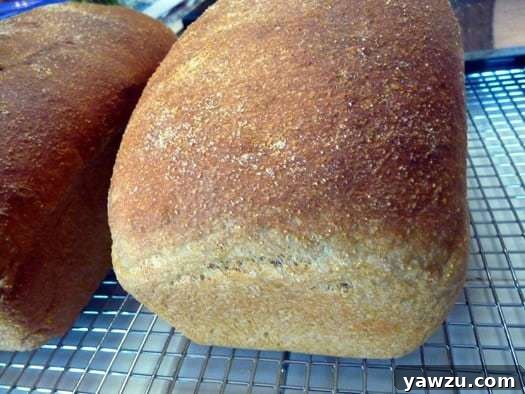
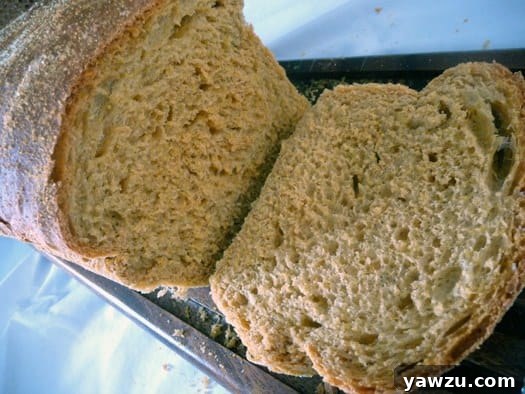
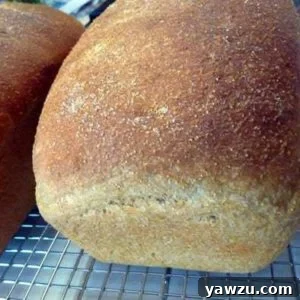
Embark on a culinary journey to New England with Anadama Bread, a beloved classic that promises a symphony of complex flavors and a satisfyingly hearty texture. This exceptional loaf is more than just bread; it’s a testament to simple, wholesome ingredients transformed into something extraordinary. Its distinctive dark coloring might lead you to believe it’s a whole wheat bread, but don’t be mistaken! That beautiful, deep hue is a direct result of the subtle inclusion of molasses in the dough, which also infuses the bread with a delicate, slightly sweet undertone. Adding to its unique character, fine cornmeal is incorporated into the mix, providing a delightful crunch to the crust and contributing to the bread’s full-bodied and robust texture. The final product is a soft, versatile, sandwich-style bread that pairs equally well with savory lunch meats as it does with the timeless comfort of peanut butter and jelly. For a truly indulgent breakfast, slather a warm slice with rich butter and your favorite fruit preserves.
Anadama Bread: A Versatile Loaf for Every Occasion
The charm of Anadama Bread extends far beyond the breakfast table. Its robust flavor and sturdy yet tender crumb make it an incredibly adaptable foundation for a myriad of meals. Imagine crafting a gourmet sandwich that truly highlights its unique profile. Consider, for instance, a fabulous creation featuring thinly sliced prosciutto, creamy fresh mozzarella, and vibrant roasted red peppers. The subtle sweetness of the molasses and the earthy notes of the cornmeal provide a perfect counterpoint to the salty, savory, and tangy elements of these fillings, resulting in a harmonious burst of flavor in every bite. This bread’s substantial structure ensures it can hold up to even the most generous and moist sandwich fillings without becoming soggy or falling apart, making it an excellent choice for elaborate picnic fare or a satisfying weeknight dinner.
But the possibilities don’t stop there. Anadama Bread also makes exquisite croutons for salads, provides a sturdy base for open-faced melts, or can be toasted and served alongside a hearty soup or stew, soaking up all the delicious broths. Its unique flavor profile means it can transition effortlessly from sweet applications to savory ones, proving itself to be an indispensable staple in any home baker’s repertoire. Whether you’re seeking comfort food or an elegant accompaniment, Anadama Bread consistently delivers.

Prosciutto, Mozzarella, & Roasted Red Peppers on Anadama Bread
The Secret to Depth: Harnessing the Power of Fermentation
For serious bread enthusiasts and novices alike, understanding the magic of fermentation is key to unlocking truly exceptional flavor. Many revered recipes, including those championed by baking guru Peter Reinhart in his seminal work The Bread Baker’s Apprentice, advocate for extended fermentation periods. Reinhart, a firm believer in the power of time, argues that an overnight fermentation of a portion of the dough significantly deepens and improves the bread’s overall flavor complexity. While this might sound daunting, requiring heavy preparation the night before, this Anadama Bread recipe ingeniously simplifies the process.
Instead of a full overnight dough fermentation, this recipe calls for an overnight “soaker” – a simple mixture of cornmeal and water. This minimal effort the night before involves nothing more than stirring these two ingredients together with a spoon and setting them aside at room temperature. This crucial step allows the cornmeal to fully hydrate and soften, preparing it to integrate seamlessly into the dough and develop its inherent sweetness and texture. The primary “bulk fermentation” of the main dough, where the yeast works its magic to develop gluten and flavor, is then completed on the same day the bread is baked. This thoughtful approach alleviates the need for extensive night-before labor, making the joy of baking this flavorful bread accessible even on a busy schedule. The slight sour notes and nutty undertones that emerge from this controlled, unhurried development process contribute immensely to the bread’s character, setting it apart from quickly made loaves.
The Journey from Ingredients to Golden Loaf: A Baker’s Timeline
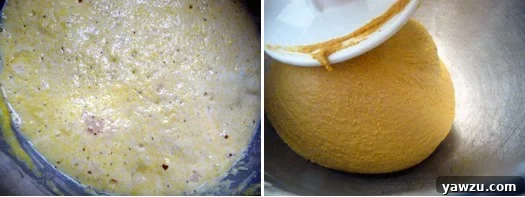
Observing the transformation of simple ingredients into a beautiful loaf is one of the most satisfying aspects of home baking. The progression of Anadama bread is particularly rewarding. Below, you can see key stages in its development: first, the vibrant activity of the bulk fermentation, clearly showing the vigorous bubbling that signifies healthy yeast activity and flavor development. Following this is an image of the dough after it has been perfectly kneaded in my Kitchen Aid mixer, smooth, elastic, and ready for its next rise. From the initial mixing of the soaker to the final moment the golden loaves emerge from the oven, this recipe typically requires approximately five hours to complete. This comprehensive timeframe includes all the critical rising periods and the essential baking duration. While it demands a certain commitment of time, much of this is passive, allowing you to attend to other tasks while your dough slowly transforms. The patience invested at each stage directly contributes to the bread’s exquisite texture and depth of flavor, making every bite a testament to your careful craftsmanship.
The Virtue of Patience: Why Cooling Your Bread is Non-Negotiable
Among the cardinal rules of bread baking, none is perhaps more challenging to adhere to, yet more crucial for success, than the directive to allow your freshly baked bread ample time to cool before slicing. Bakers universally recommend a minimum cooling period of one hour after the loaf leaves the oven. This rule often feels like an agonizing test of willpower, especially when the irresistible aroma of warm, just-baked bread fills your kitchen, beckoning you to cut into it immediately. After all, isn’t that steamy, soft, fresh-from-the-oven slice the very epitome of comfort and culinary delight? While the temptation is immense, and I, too, often struggle with this self-imposed restraint (especially if there’s pasta waiting for an Italian bread companion!), there’s a profound scientific reason behind this seemingly cruel waiting game.
The cooling phase is absolutely vital for the internal structure of the bread to properly set. During baking, moisture within the dough transforms into steam, creating the airy pockets we cherish in a good loaf. As the bread cools, this steam gradually dissipates, and the starches within the crumb undergo a process known as retrogradation. This is when the starch molecules reorganize and firm up, leading to the resilient yet tender texture we expect. If you prematurely cut into a warm loaf, the interior is still undergoing this crucial transformation. The result is often a softer, denser, and sometimes “gummy” or “mushy” texture. The crumb hasn’t had the opportunity to fully stabilize, and the bread’s ultimate quality is compromised. So, for the sake of perfect texture and an unparalleled eating experience, I implore you to summon all your self-discipline. Resist the urge to slice too soon, and allow your beautiful Anadama Bread to cool for at least an hour on a wire rack. This patience will be richly rewarded with a perfectly textured loaf that truly sings.
Classic Anadama Bread Recipe
A traditional yeast bread from New England, celebrated for its unique flavor profile derived from molasses and the satisfying texture provided by cornmeal. Perfect for sandwiches or a comforting breakfast.
Pin Recipe
Ingredients
Soaker (Prepare the day before)
- 1 cup (159 g) cornmeal (6 ounces)
- 1 cup (250 ml) water, at room temperature (8 ounces)
Dough
- 4½ cups (562.5 g) unbleached bread flour (20.25 ounces)
- 2 teaspoons instant yeast
- 1 cup water, lukewarm (90° to 100° F / 32° to 38° C) (8 ounces)
- 1½ teaspoons (1.5 teaspoons) salt
- 6 tablespoons molasses (4 ounces)
- 2 tablespoons unsalted butter, at room temperature
- Cornmeal for dusting, optional
Instructions
-
1. Prepare the Cornmeal Soaker (The Day Before): In a small bowl, thoroughly combine the cornmeal and water. Mix until no dry spots remain. Cover the bowl tightly with plastic wrap and let it rest at room temperature overnight. This step is crucial for hydrating the cornmeal and enhancing the bread’s texture.
-
2. Initiate the Dough (The Next Day): The following day, in a large mixing bowl or the bowl of an electric stand mixer, combine 2 cups of the unbleached bread flour, the instant yeast, the prepared cornmeal soaker, and 1 cup of lukewarm water (between 90° and 100° F). Stir until a rough, shaggy dough forms. Cover the bowl with a clean towel or plastic wrap and allow it to ferment at room temperature for 1 hour, or until the “sponge” mixture becomes visibly bubbly and active.
-
3. Incorporate Remaining Ingredients: To the fermented sponge, add the remaining 2½ cups of flour, salt, molasses, and the softened unsalted butter. If using an electric mixer, attach the paddle and mix on low speed until all ingredients are fully combined and form a cohesive ball of dough. If mixing by hand, stir vigorously with a wooden spoon or your hands. Should the dough appear too stiff or dry, add additional water, one teaspoon at a time, until the mixture forms a soft, slightly sticky mass.
-
4. Knead to Perfection: Lightly dust your countertop with flour and transfer the dough onto it. Begin kneading by hand, or if using a stand mixer, switch to the dough hook attachment and knead on medium speed. Continue kneading, gradually sprinkling in more flour as necessary, until the dough is tacky but no longer sticky. The desired consistency is firm, supple, and pliable. This process typically takes about 10 minutes by hand or 6 to 8 minutes in a mixer. The dough should successfully pass the windowpane test (stretching thin enough to see light through it without tearing) and register an internal temperature between 77°F to 81°F (25°C to 27°C).
-
5. First Rise (Bulk Fermentation): Lightly grease a clean, large bowl. Transfer the kneaded dough to the bowl, turning it over once to coat its surface with oil. Cover the bowl securely with plastic wrap to prevent drying. Allow the dough to ferment at room temperature for approximately 90 minutes, or until it has visibly doubled in size.
-
6. Shape the Loaves: Gently remove the risen dough from the bowl and place it onto a lightly floured work surface. Divide the dough into either 2 equal pieces (approximately 24 ounces each for standard 9×5-inch loaf pans) or 3 equal pieces (about 16 ounces each for smaller 8½x4½-inch pans). Carefully shape each piece into a neat, uniform loaf. Place the shaped loaves into bread pans that have been lightly oiled or misted with cooking spray. Lightly mist the tops of the loaves with spray oil and loosely cover them with plastic wrap.
-
7. Second Rise (Proofing): Allow the covered loaves to proof (undergo their second rise) at room temperature for 60 to 90 minutes. They are ready when they have fully crested and risen beautifully above the tops of their respective pans.
-
8. Prepare for Baking: While the loaves are proofing, preheat your oven to 350°F (175°C) and place an oven rack in the middle position. Once the loaves are fully proofed, carefully place the bread pans onto a large sheet pan. Gently remove the plastic wrap from the tops of the loaves. For a crisper crust, lightly mist the tops with a fine spray of water and, if desired, dust them with a light sprinkle of cornmeal.
-
9. Bake the Bread: Transfer the sheet pan with the loaves into the preheated oven. Bake for an initial 20 minutes. Then, rotate the sheet pan 180 degrees to ensure even baking and consistent browning. Continue baking for an additional 20 to 30 minutes, or until the loaves are deeply golden brown on top, sides, and bottom. To confirm doneness, an instant-read thermometer inserted into the center of a loaf should register between 185°F to 190°F (85°C to 88°C). Additionally, when a loaf is carefully removed from its pan and thumped on the bottom, it should produce a hollow sound.
-
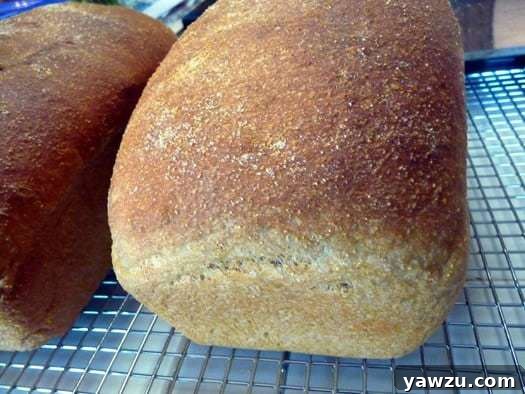
10. Cool Completely: Immediately upon removing the loaves from the oven, turn them out of their pans onto a wire cooling rack. Allow them to cool completely for at least 1 hour before attempting to slice or serve. This critical cooling period allows the internal structure of the bread to set properly, preventing a gummy or mushy crumb and ensuring the perfect texture.
Nutrition Information (per serving)
Carbohydrates: 34g,
Protein: 5g,
Fat: 2g,
Cholesterol: 3mg,
Sodium: 198mg,
Potassium: 170mg,
Fiber: 1g,
Sugar: 5g,
Vitamin A: 40IU,
Calcium: 18mg,
Iron: 0.9mg
We’d Love to See Your Anadama Bread Creations!
Have you baked this delightful Anadama Bread? We’re eager to hear about your experience! Please consider taking a moment to leave a review below and share your insights or any personal tips with our baking community. Once your beautiful loaves are ready, don’t forget to capture their charm with a photo and tag @thebrowneyedbaker on Instagram. We can’t wait to see your homemade bread!
Essential Tips for Anadama Bread Baking Success
Baking a perfect loaf of Anadama bread is an incredibly rewarding endeavor, bringing the authentic taste of New England into your home. To help ensure your baking process is smooth and your results are spectacular, here are some key tips to keep in mind:
- Start with Fresh, Quality Ingredients: The foundation of any good bread is fresh ingredients. Always check the expiration date on your instant yeast; active yeast is crucial for proper rising. High-quality unbleached bread flour provides the optimal protein content for developing strong gluten, which gives the bread its structure and chew.
- Mind the Temperature: Yeast is a living organism, sensitive to temperature. Ensure your lukewarm water for the dough is between 90°F to 100°F (32°C to 38°C). Water that’s too hot will kill the yeast, while water that’s too cold will inhibit its activation, leading to a poor rise. An accurate internal dough temperature (77°F to 81°F) post-kneading is also a good indicator of ideal conditions for fermentation.
- Patience During Proofing: The rising times provided in the recipe are general guidelines. Factors such as the ambient room temperature, humidity, and the specific activity of your yeast can all influence how quickly your dough proofs. Always rely on visual cues – the dough doubling in size for the first rise, or cresting beautifully above the pans for the second – rather than adhering strictly to the clock.
- Thorough Kneading is Key: Proper gluten development through adequate kneading is paramount for a light, airy, and tender crumb. If you’re kneading by hand, be patient and consistent with your technique. For stand mixer users, ensure the dough hook is effectively working the dough. The windowpane test is an invaluable method to confirm that your gluten has developed sufficiently.
- Calibrate Your Oven: Oven temperatures can vary significantly from one appliance to another. Investing in an inexpensive oven thermometer can help you verify that your oven is truly maintaining the set temperature of 350°F (175°C), which is crucial for consistent and evenly baked results.
- Consider Adding Steam for Crust: While misting the loaves with water as per the recipe contributes to a nice crust, some bakers like to introduce a small amount of steam into the oven during the initial baking phase for an even crispier, more artisan-like crust. This can be achieved by placing a shallow pan of hot water on the bottom rack of your oven while it preheats.
- Proper Storage for Freshness: Once your Anadama bread has cooled completely, store it at room temperature in an airtight bread box or wrapped in plastic for 3-4 days to maintain its freshness. For longer storage, slice the cooled bread and freeze the slices in an airtight freezer bag. This allows you to pull out individual slices as needed, perfect for toasting directly from frozen.
Embrace the Joy of Baking Your Own Anadama Loaf
In an era dominated by convenience, the act of baking your own Anadama bread transcends mere cooking; it’s a comforting ritual, a connection to culinary history, and a deeply satisfying creative endeavor. The warm, inviting aroma that fills your kitchen—a delightful blend of sweet molasses and earthy corn—is reason enough to embark on this baking adventure. But beyond the sensory pleasure, homemade bread offers unparalleled freshness, the ability to control every ingredient, and the profound satisfaction of nourishing your loved ones with something crafted by your own hands.
This Anadama loaf, with its distinct flavor profile and wonderfully robust texture, is more than just a staple; it’s a piece of New England tradition, a comforting presence at any meal, and a testament to the simple yet profound joys of baking from scratch. Whether you are a seasoned baker looking for a rewarding project or a beginner eager to explore the world of yeast and flour, this Anadama Bread recipe is an excellent choice. Its unique characteristics make it truly stand out, and the process, while requiring a touch of patience, is incredibly rewarding. So, gather your ingredients, set aside some dedicated time, and prepare to bring a truly exceptional American classic to your home kitchen. Enjoy the journey, and savor every delicious slice!