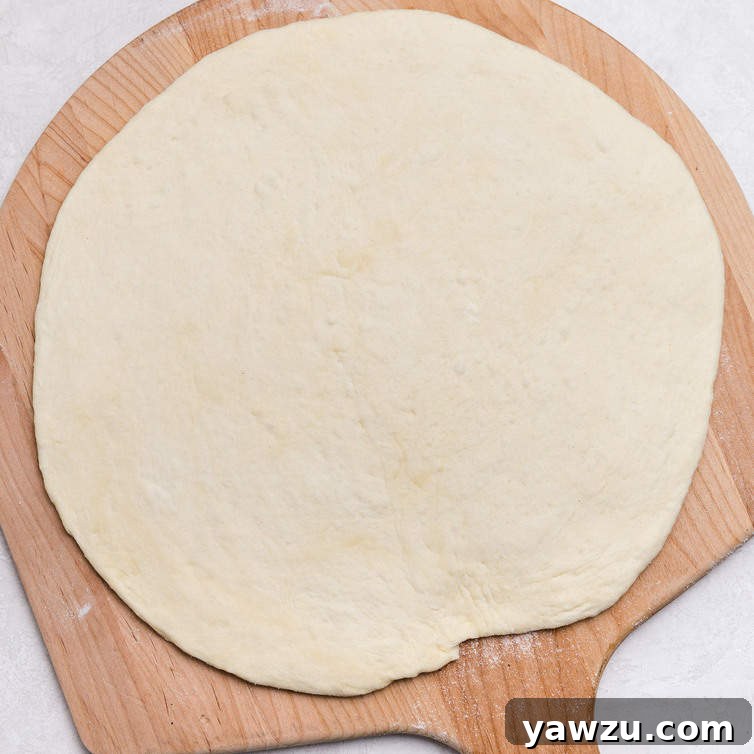
Experience the unparalleled joy of homemade pizza with this ultimate pizza crust recipe. Forget soggy, store-bought bases; our method guarantees a crust that’s wonderfully crisp on the outside and delightfully chewy on the inside. Prepare for pizza night perfection that will consistently impress!
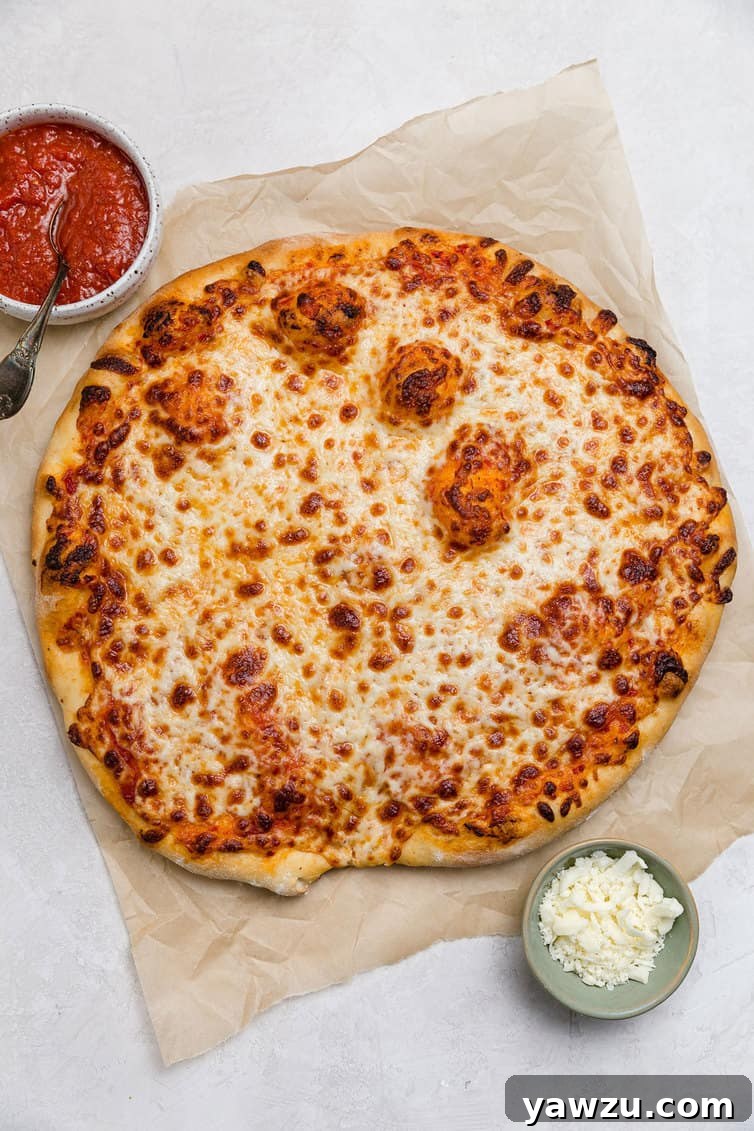
After countless attempts and extensive experimentation with various pizza dough recipes over the years, I’ve finally perfected the one that truly stands out. This isn’t just another recipe; it’s our cherished family tradition for Friday pizza nights, a reliable choice that has never once disappointed. It consistently delivers the ideal balance: a light, airy interior with that satisfying chew, encased in a beautifully crisp exterior crust.
I first developed this method almost 15 years ago, and through continuous refinement, I’ve streamlined the process to be incredibly simple. What once involved complex food processor steps has now been simplified to the classic “bowl and spoon” approach, making it accessible for home bakers of all skill levels. If your quest for an easy, absolutely perfect pizza dough – one that’s neither too thick nor too thin – has been fruitless, your search ends here. This recipe promises a homemade pizza experience that rivals your favorite pizzeria, offering a depth of flavor and texture that mass-produced crusts simply cannot match.
Crafting the Perfect Pizza Crust: A Step-by-Step Guide
Creating this incredible pizza crust is a rewarding culinary journey that transforms simple ingredients into a masterpiece. This recipe yields enough dough for three medium or two large pizzas, making it perfect for family dinners or entertaining friends. While the process is straightforward, remember that the dough requires approximately 90 minutes for its crucial first rise, so be sure to allocate ample time in your schedule to achieve the best possible results. The patience invested in the rising process is key to developing the rich flavor and airy texture that defines an outstanding pizza crust.
Why Homemade Pizza Dough is Always Best
There’s an undeniable magic to homemade pizza that simply cannot be replicated by frozen or takeout options. Crafting your own dough allows for complete control over the ingredients, ensuring freshness and quality that translates directly into superior flavor. Beyond the taste, the act of making pizza from scratch is a fun and interactive activity, perfect for engaging the whole family. It’s also often more cost-effective than frequenting pizzerias, and the sense of accomplishment you feel when pulling a perfectly baked, bubbling pizza from your oven is truly unmatched.
The Secret to a Crispy and Chewy Crust
The quest for the ideal pizza crust often ends with a desire for both crispness and chewiness. This recipe meticulously balances these two coveted textures. The secret lies in a combination of carefully selected ingredients, precise water temperature for yeast activation, and a strategic kneading and rising process. Using bread flour is a game-changer, providing the necessary gluten structure for that satisfying chew, while optimal hydration ensures a light, airy crumb. High-heat baking on a pizza stone then delivers the glorious golden-brown, irresistibly crisp exterior.
Essential Ingredients for Your Pizza Crust
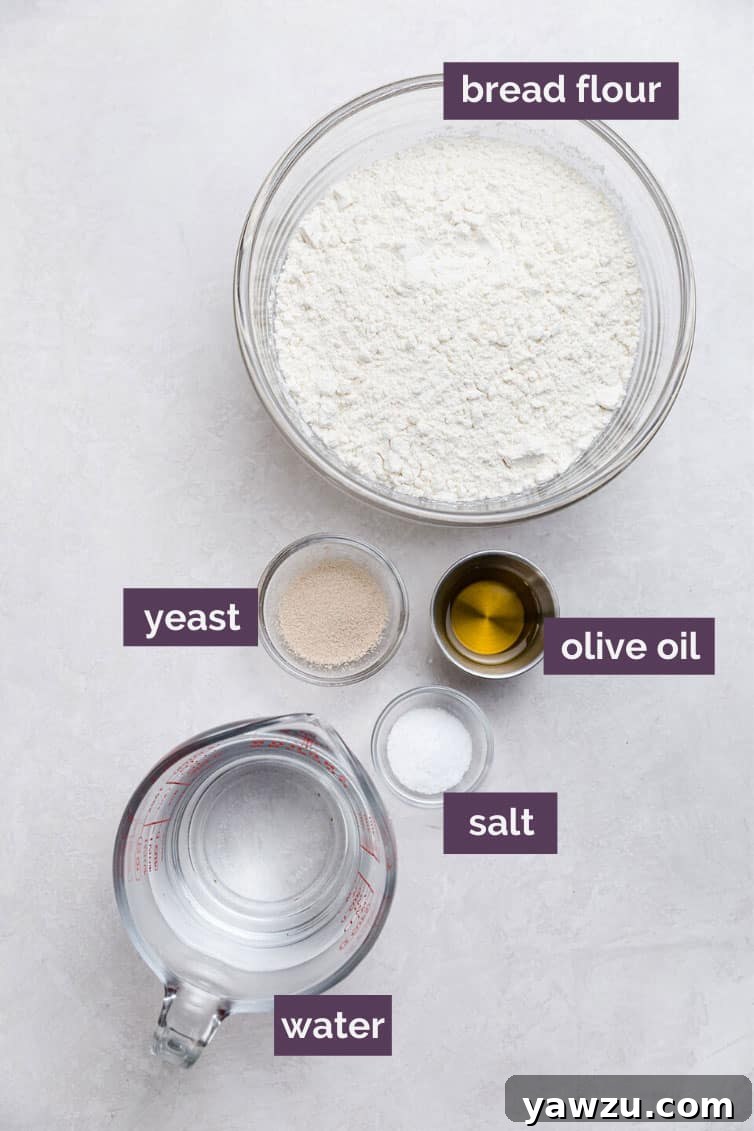
Quality ingredients are the foundation of any great recipe, and homemade pizza dough is no exception. Each component plays a vital role in achieving the desired texture, flavor, and rise. Here’s a closer look at what you’ll need to create your delicious, perfect pizza crust:
- Warm Water: Precision is key when it comes to water temperature. You’ll need water around 110 degrees Fahrenheit (43 degrees Celsius) to properly activate the yeast. Water that’s too cold won’t wake up the yeast, leading to a flat dough, while water that’s too hot can kill it, yielding similar disappointing results. The generous amount of warm water in this recipe also contributes to a softer, more pliable dough that’s easier to work with and shape.
- Instant Yeast: This recipe is designed for the convenience of instant yeast, which can often be added directly to dry ingredients without prior proofing. However, our method involves a quick proofing step to ensure maximum activation, resulting in a robust rise and a single, efficient proofing period. If you only have active dry yeast on hand, please refer to the recipe notes for specific instructions on how to adjust your approach.
- Extra-Virgin Olive Oil: Don’t skimp on quality here! A good extra-virgin olive oil not only adds a wonderful depth of flavor to your dough but also contributes to its tenderness and a beautiful golden hue during baking. It helps create a more supple dough and can even aid in preventing sticking.
- Bread Flour: This is truly the “secret ingredient” that elevates this pizza crust from good to extraordinary. Unlike all-purpose flour, bread flour has a higher protein content, which translates to a greater gluten development. This gluten network is what gives the pizza crust its signature chewy interior while simultaneously allowing for that desirable crispy exterior. It’s what makes the crust strong enough to hold your favorite toppings without becoming dense or biscuity.
- Salt: More than just a seasoning, salt plays a critical role in controlling yeast activity and enhancing the overall flavor of your pizza dough. Use a fine-textured salt, such as table salt or finely ground sea salt, to ensure it dissolves evenly throughout the dough, promoting consistent flavor distribution.
- Semolina: This coarse durum wheat flour is traditionally used by pizzerias to dust the pizza peel. Its fine, gritty texture acts like tiny ball bearings, making it incredibly easy to slide your prepared pizza smoothly from the peel onto a hot pizza stone or baking steel. If semolina isn’t readily available, cornmeal makes an excellent substitute, offering similar non-stick properties and a delightful faint crunch.
Step-by-Step Instructions for Your Perfect Pizza Dough
Follow these detailed steps to create a versatile and delicious pizza dough that will become your go-to recipe for homemade pizza nights.
1. Prepare and Proof the Yeast Mixture
Begin by measuring out a portion of the warm water (typically ½ cup) into a liquid measuring cup. Sprinkle the instant yeast over the water. Allow it to sit undisturbed for about 5 minutes until the yeast fully dissolves, swells, and becomes foamy. This bubbling action confirms your yeast is active and ready to work. Next, stir in the extra-virgin olive oil and the remaining warm water, ensuring everything is well combined.
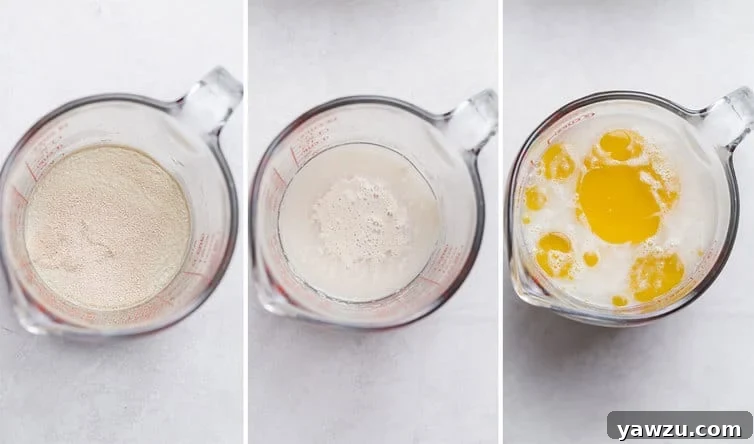
Expert Tip: While instant yeast often doesn’t require separate proofing, doing so in this recipe guarantees its activity and allows us to achieve a beautiful, fluffy crust with just a single rise, saving you valuable time.
2. Combine Dry and Wet Ingredients
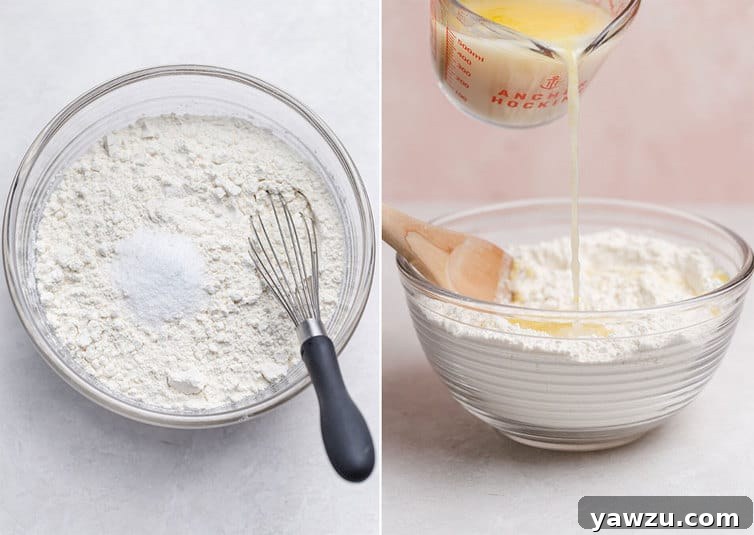
In a large mixing bowl, thoroughly whisk together the bread flour and salt. Create a well in the center of the dry ingredients. Gradually pour the yeast and oil mixture into the well, stirring continuously with a wooden spoon or a sturdy rubber spatula. Mix until the dough comes together into a shaggy, cohesive mass. It might appear slightly sticky, but should be mostly moistened. You might not need all the liquid, so hold back a few tablespoons and only add if the dough appears too dry.
3. Knead the Dough
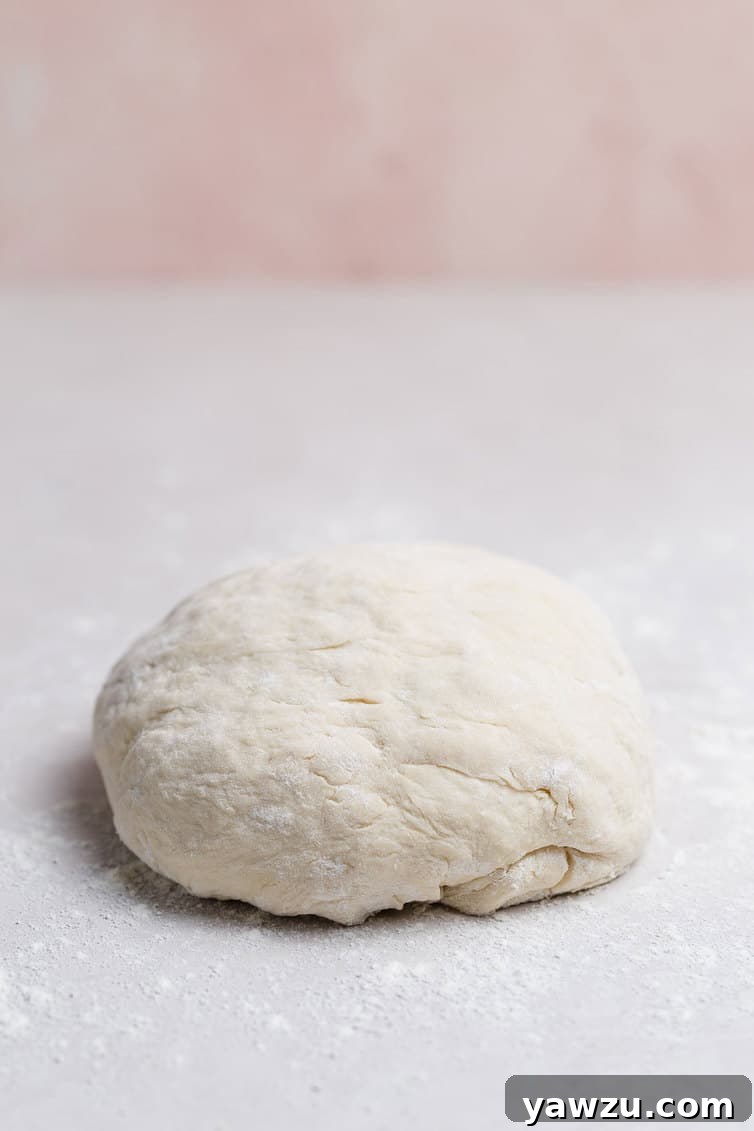
Lightly dust your clean work surface with a small amount of flour. Turn the shaggy dough out onto the floured surface. Knead the dough by hand for several minutes. Use a push-fold-turn motion, working it until it transforms into a smooth, elastic, and round ball. The dough will be quite soft and pliable, which is exactly what we want for a tender crust.
4. First Rise (Proofing)
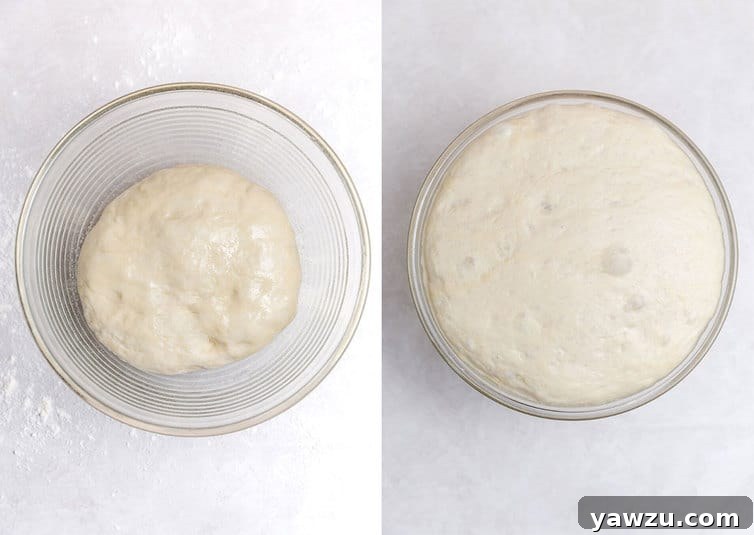
Lightly oil a clean bowl. Transfer the kneaded dough into the oiled bowl, turning it once to ensure it’s fully coated. This prevents the dough from sticking as it rises. Cover the bowl tightly with plastic wrap to create a humid environment, which aids in proofing. Place the covered bowl in a warm, draft-free area of your kitchen. Let the dough rise until it has doubled in size, which typically takes about 1½ hours, depending on the warmth of your room. A good indicator is when you gently poke the dough with a floured finger, and the indentation remains.
5. Preheat Your Oven and Stone
While the dough is rising, position a pizza stone or baking steel on a rack in the lower third of your oven. Preheat your oven to its maximum temperature, ideally 500°F (260°C). Allow it to preheat for at least 30 minutes, or even up to an hour, after it reaches temperature. This ensures the stone is thoroughly heated, which is crucial for achieving a crispy crust.
6. Deflate and Divide the Dough
Once the dough has doubled, gently remove the plastic wrap. Lightly press down on the dough with your fingertips to deflate it, releasing the trapped gases. Turn the dough out onto a lightly floured work surface. Using a chef’s knife or a dough scraper, divide the dough into the desired number of pieces (two for large pizzas, three for medium). Form each piece into a smooth, round ball. Cover these dough balls with a clean, damp cloth and let them rest and relax for at least 10 minutes. This resting period allows the gluten to relax, making the dough much easier to shape. Do not let it sit for longer than 30 minutes, or you risk a flat, dense crust after baking.
7. Prepare Toppings and Shape the Crust
While your dough is resting, prepare your favorite pizza sauce, cheeses, and toppings. Having everything ready will make the assembly process seamless. Working with one piece of dough at a time (keeping the others covered), gently stretch and shape it into a circular crust of your desired thickness, typically around 12-14 inches in diameter. You can use your hands, a rolling pin, or a combination of both. The size will depend on whether you are making medium or large pizzas.
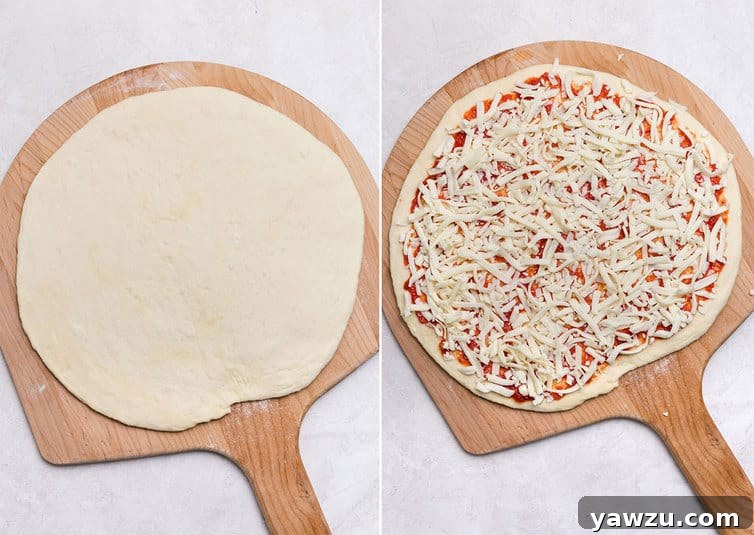
Lightly dust a pizza peel with semolina or cornmeal. Carefully transfer the shaped raw pizza crust onto the dusted peel. This crucial step ensures a smooth transfer to the hot oven.
8. Assemble and Bake Your Pizza
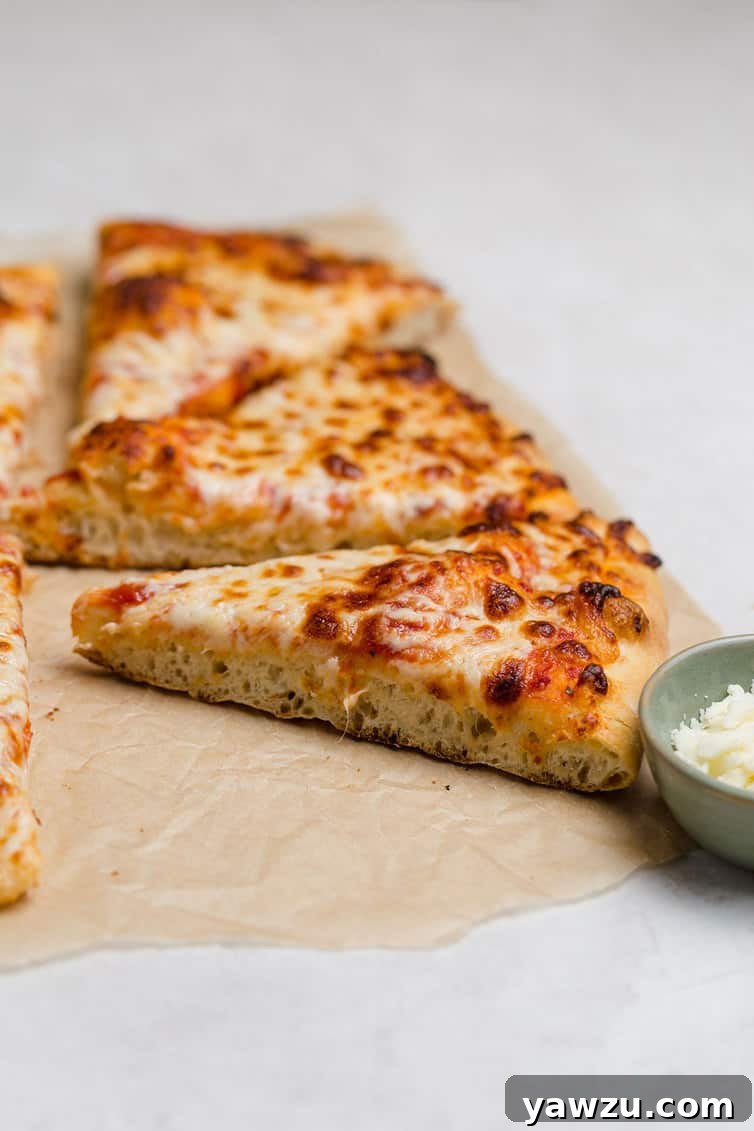
Once the crust is on the peel, quickly add your preferred toppings. Don’t overload it, as too many toppings can make the crust soggy. Carefully slide the topped pizza from the peel onto the preheated pizza stone in the oven. Bake at 500°F (260°C) until the edges of the crust are golden brown, the cheese is bubbly and melted, and any toppings are cooked through, typically 8 to 12 minutes. Keep an eye on it as oven temperatures can vary.
Looking for a fantastic homemade pizza sauce? My favorite recipe can be found here!
9. Serve and Enjoy!
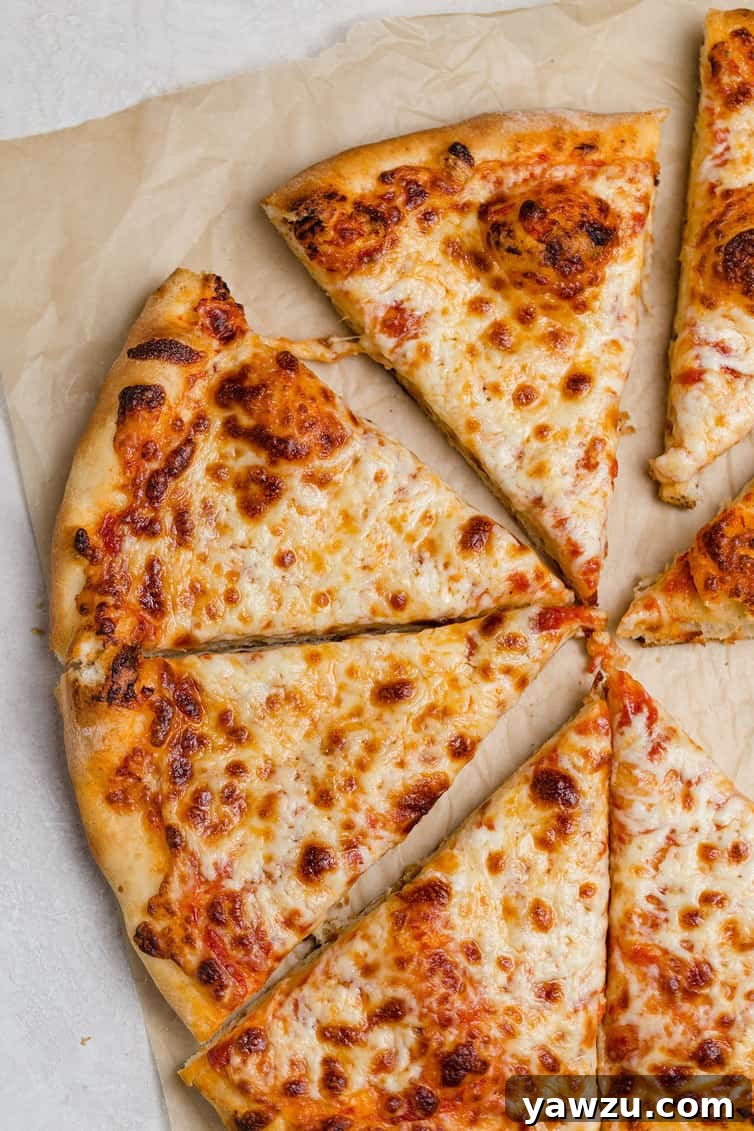
Carefully remove the baked pizza from the oven using your pizza peel. Transfer it to a cutting board, slice it into wedges, and serve immediately. There’s nothing quite like fresh, hot, homemade pizza straight from the oven!
Recipe Tips for Pizza Perfection
Mastering homemade pizza dough takes a little practice, but these tips will help you achieve outstanding results every time:
- Flour Alternatives: While bread flour is highly recommended for its superior chew and crispness, you can substitute all-purpose flour in this pizza crust recipe. Be aware that using all-purpose flour will result in a slightly softer crust texture, as it contains less protein for gluten development.
- Yeast Swaps: If instant yeast isn’t available, you can absolutely use active dry yeast. The process remains largely the same: proof it in warm water first. However, active dry yeast generally requires a longer rise time. Simply keep an eye on your dough and wait until it has visibly doubled in size before moving on to the next step.
- Alternate Mixing Methods: For those who prefer mechanical assistance, this easy pizza dough can also be made successfully in a food processor (using the dough blade) or a stand mixer fitted with a dough hook. Follow the same ingredient ratios and steps, adjusting mixing times as needed until a smooth, elastic dough forms.
- Semolina Alternatives: If you don’t have semolina for dusting your pizza peel, cornmeal is an excellent and widely available substitute. It provides a similar non-stick surface and adds a subtle, pleasant texture to the bottom of the crust.
- Essential Pizza Equipment: To truly elevate your homemade pizza game, consider investing in a pizza stone or baking steel and a pizza peel. A pizza stone retains and distributes heat evenly, creating that desired crispy crust, while a pizza peel allows for effortless transfer of your pizza to and from the scorching hot stone. If these aren’t in your kitchen arsenal, a simple trick is to use parchment paper on top of an upside-down baking sheet for transfer.
- Freezing Instructions: This pizza crust recipe is perfect for meal prep, as it freezes exceptionally well! Follow the recipe through the step where you divide the dough into balls. Tightly wrap any dough balls you won’t be using in plastic wrap, then transfer them to a zippered freezer bag. They can be stored in the freezer for up to 3 months. When you’re ready to make pizza, simply move the frozen dough to the refrigerator the morning you plan to use it (or the night before) to allow it to thaw gradually. Let it come to room temperature before shaping.
More Pizza Night Inspiration
Once you’ve mastered this versatile pizza crust, the possibilities for creative pizza nights are endless. Explore different styles and topping combinations to keep your culinary adventures exciting:
- Neapolitan Pizza: For a classic, thin-crust Italian experience.
- Sicilian Pizza: Indulge in a thick, rectangular crust with a tender crumb.
- Thin Crust Pizza: Perfect for those who love a lighter, crispier base.
- Chicago-Style Deep-Dish Pizza: A hearty, sauce-on-top pizza that’s a meal in itself.
- Portobello Pesto Pizza: A flavorful vegetarian option with earthy mushrooms and vibrant pesto.
If you’ve tried this incredible pizza crust recipe and fallen in love with it, please take a moment to leave a rating below. Your feedback is greatly appreciated!
Pizza Crust Recipe
This pizza crust recipe creates delicious crust—crisp outside and chewy inside. Make this for pizza night instead of using store-bought!
Ingredients
- 1¾ cups (125 ml) warm water, about 110 degrees F (43 C), divided
- 2¼ teaspoons (1 packet) instant yeast
- 2 tablespoons extra-virgin olive oil
- 4 cups (500 g or 22 ounces) bread flour
- 1½ teaspoons salt
Instructions
- Measure ½ cup of the warm water into a 2-cup liquid measuring cup. Sprinkle in the yeast and let stand until the yeast dissolves and swells, about 5 minutes. Add the remaining 1¼ cups water and oil and stir to combine.
- In a large bowl, whisk together the flour and salt. Stir with a wooden spoon or rubber spatula while you gradually pour in the liquid mixture. The dough should come together into a shaggy mass and be mostly moistened; you may not need all of the liquid, so hold back a few tablespoons and then add if necessary.
- Turn the dough out onto a lightly floured work surface. Knead by hand for a few minutes to form a smooth, round ball (it will be a very soft dough). Put the dough into an oiled bowl, turn to coat the dough, and cover the bowl with plastic wrap. Place in a draft-free area and let rise until doubled in size, about 1½ hours.
- Place a pizza stone on a rack in the lower third of the oven. Heat the oven to 500°F (260°C) for at least 30 minutes.
- Press the dough to deflate it, then turn the dough out onto a lightly floured work surface. Use a chef’s knife or dough scraper to divide the dough into two pieces. Form each piece of dough into a smooth, round ball and cover it with a damp cloth. Let the dough relax for at least 10 minutes but no more than 30 minutes.
- Meanwhile, get your sauce and toppings ready.
- Working with one piece of dough at a time and keeping the other covered, shape the dough into a 14-inch circle, then transfer it to a pizza peel that has been lightly dusted with semolina.
- Top your pizza as desired and slide the dough onto the heated stone. Bake until the crust edges brown and the cheese is golden brown in spots, 8 to 12 minutes. Remove the pizza from the oven, cut into wedges, and serve immediately. Repeat with the remaining piece of dough.
Notes
- Flour: You can substitute all-purpose flour for the bread flour in this pizza crust recipe, but the crust will have a slightly softer texture.
- Yeast: If you don’t have instant yeast, you can substitute active dry yeast. Follow the recipe as directed, but be aware that the rise time will likely be longer. Just watch for it to double in size and then you’re ready to go.
- Alternate Mixing Methods: You can also make this easy pizza dough in a food processor or stand mixer instead.
- Semolina Alternative: If you don’t have semolina to dust the pizza peel, you can also use cornmeal.
- Special Equipment: To make amazing pizza, invest in a pizza stone and a pizza peel, which allows you to easily transfer your pizza to and from the stone. If you don’t have these, you can use parchment paper on top of an upside-down baking sheet.
- Freezing Instructions: This pizza crust recipe freezes extremely well! Follow the recipe through the step where you divide the dough. Wrap any dough balls you won’t be using in plastic wrap and transfer to a zippered freezer bag. Store in the freezer up for up to 3 months. When you’re ready to use the dough, put it in the refrigerator the morning you will use it (or the night before) so it can thaw.
Nutritional values are for one entire pizza (crust only, without toppings).
Carbohydrates: 187g,
Protein: 35g,
Fat: 19g,
Saturated Fat: 3g,
Sodium: 1767mg,
Potassium: 379mg,
Fiber: 10g,
Sugar: 1g,
Calcium: 44mg,
Iron: 3mg
Did you make this recipe?
Leave a review below, then snap a picture and tag @thebrowneyedbaker on Instagram so I can see it!
(Recipe adapted from Baking Illustrated)
[photos by Ari of Well Seasoned]