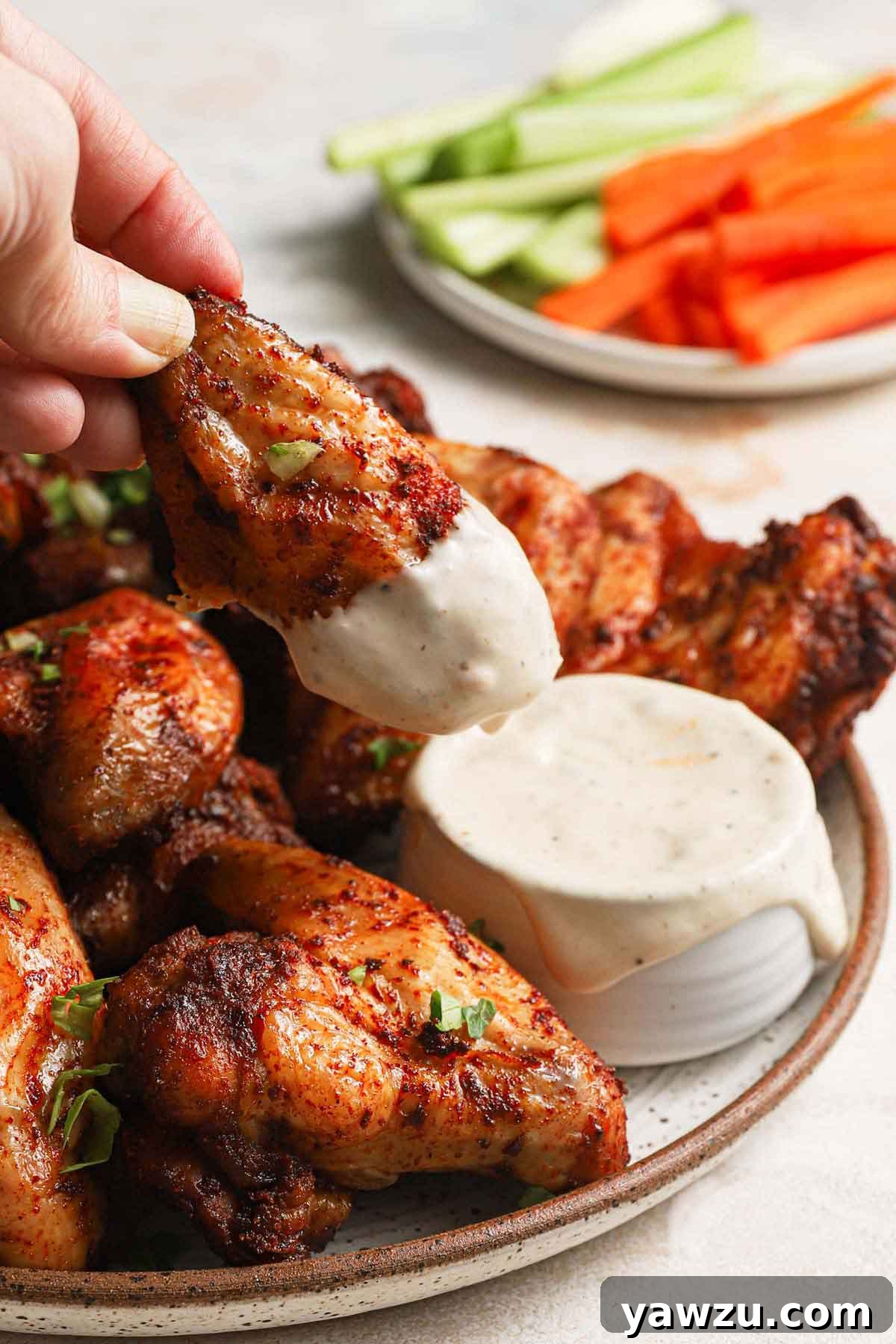
Prepare to be amazed! These oven-baked chicken wings will redefine your expectations of homemade wings. Boasting incredibly crispy skin, irresistibly tender, fall-off-the-bone meat, and coated in a sensational dry rub, they are simple to prepare and an absolute crowd-pleaser. Whether you prefer them plain or generously coated in your favorite sauce, these wings are destined to be the star of your next game-day party, family dinner, or casual get-together.
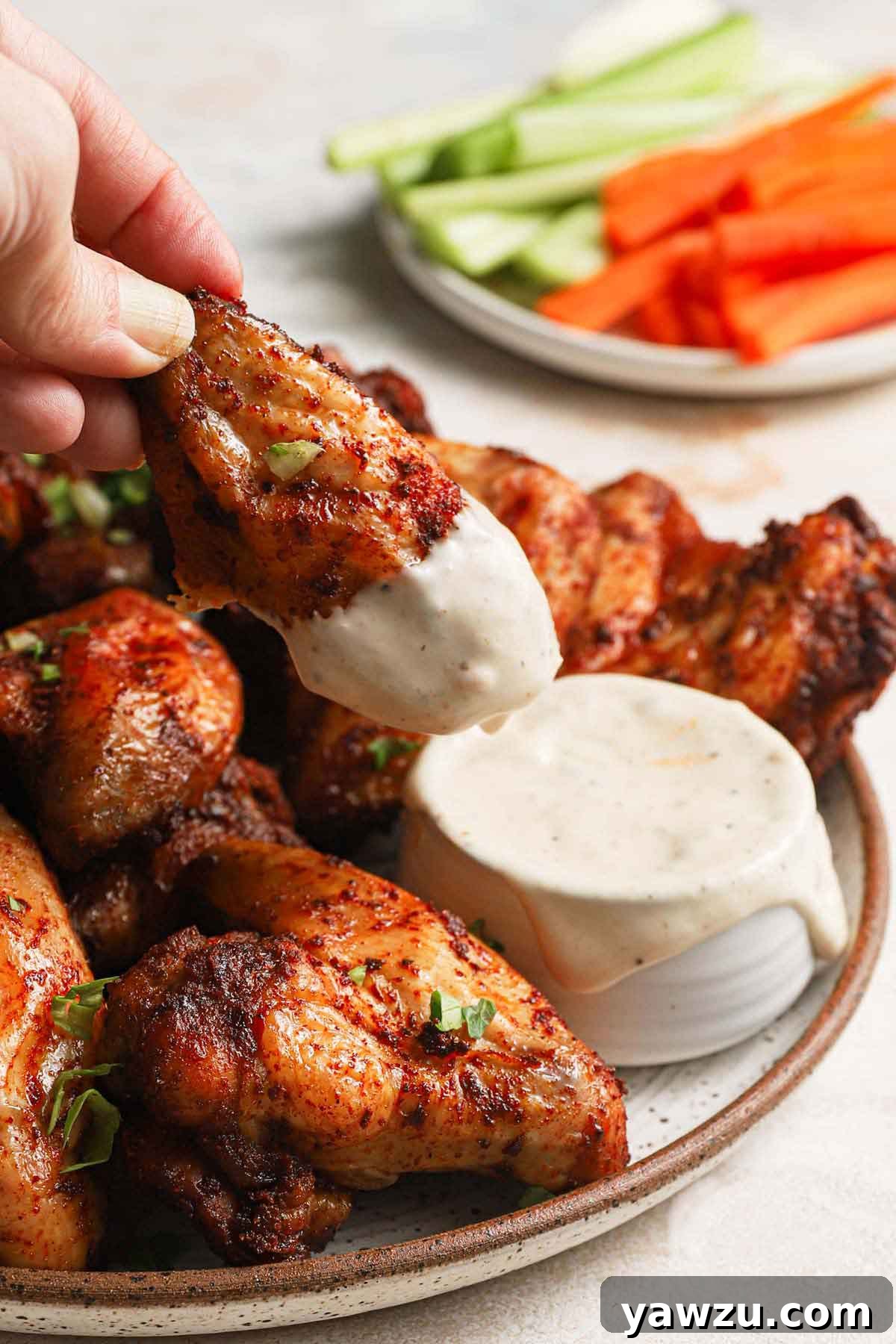
For years, chicken wings remained a tantalizing restaurant treat that I longed to recreate perfectly in my own kitchen. The thought of achieving that ideal balance of crispy skin and juicy interior without the hassle of deep frying seemed like a distant dream. I, like many, assumed that truly delicious wings necessitated a deep fryer, complete with the inevitable oil splatters and cumbersome cleanup. However, fueled by a desire for a healthier, less messy alternative, I embarked on a culinary quest that led me to this revolutionary oven-baked method. And let me assure you, the results were not just good; they were extraordinary!
This recipe proves unequivocally that you absolutely CAN make restaurant-quality chicken wings at home with minimal effort and maximum flavor. Forget the deep fryer; your oven is about to become your new best friend for crafting wings that are so tender they practically melt in your mouth, with a skin that crunches perfectly with every bite. My husband, a connoisseur of all things chicken wing, was skeptical until his first taste. He confidently declared that if he hadn’t known these were baked, he would have sworn they were traditionally fried, dry-rubbed wings. That’s the kind of endorsement that makes this recipe a keeper!
What makes this baked chicken wing recipe truly stand out is its simplicity and incredible adaptability. With just about 10 minutes of active prep time, you can have these flavor-packed wings ready for the oven. From there, the magic happens with a low-and-slow baking process that ensures maximum tenderness, followed by a final crisping stage. Plus, they are a blank canvas for your culinary creativity; easily customized with your favorite dry rubs or sauces to suit any palate or occasion.
Simple, Flavorful Ingredients for the Perfect Dry Rub
Our journey to crispy, tender perfection begins with a carefully selected seasoning blend that imparts incredible depth of flavor. While sauced wings are undeniably popular, there’s a unique satisfaction that comes from a perfectly seasoned, dry-rubbed wing. My husband, in particular, has a strong preference for dry-seasoned wings, and this rub was crafted to hit all the right notes: a harmonious blend of sweet, smoky, and a touch of heat. Here’s what you’ll need to transform your chicken wings:
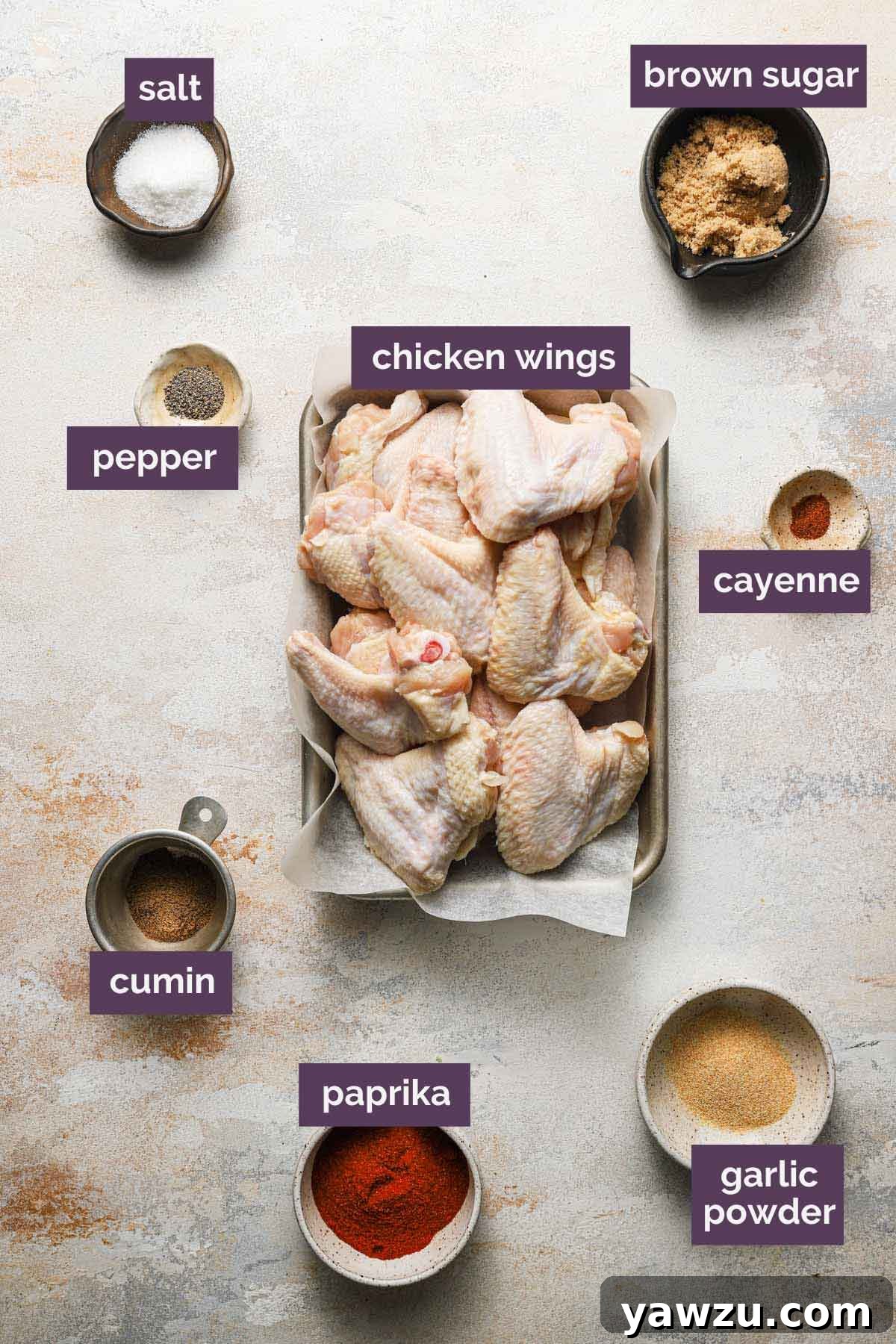
- Chicken Wings: Start with 3 pounds (approximately 1.36 kg) of fresh chicken wings. For tips on how to prepare and cut them, refer to the detailed section below. The quality of your chicken is fundamental to the final taste and texture.
- Brown Sugar: This is key for achieving that lovely caramelization and a hint of sweetness that balances the savory spices. It also contributes to the beautiful golden-brown color of the finished wings.
- Salt and Black Pepper: The foundational seasonings that enhance all other flavors. Use a good quality kosher salt for best results.
- Smoked Paprika: Don’t underestimate the power of paprika! Smoked paprika adds a fantastic depth, a subtle earthiness, and a beautiful reddish hue to the dry rub, creating an enticing aroma as the wings bake.
- Garlic Powder: A culinary essential, garlic powder provides a savory, aromatic foundation that complements chicken perfectly.
- Ground Cumin: Adding a warm, earthy, and slightly pungent flavor, cumin elevates the rub beyond basic seasonings, giving it a more complex profile.
- Cayenne Pepper (Optional): For those who love a fiery kick, a touch of cayenne pepper is your secret weapon. Adjust the amount to your preferred spice level, or omit it entirely if you prefer a milder flavor.
This dry rub creates a flavor profile that is wonderfully balanced – a little sweet from the brown sugar, smoky from the paprika and cumin, and optionally spicy with cayenne. However, the beauty of this recipe lies in its flexibility. If you’re planning to douse your wings in a rich sauce, you can opt for a simpler base seasoning of just salt and pepper. This allows the sauce to truly shine in the last 30 minutes of baking.
Understanding and Preparing Your Chicken Wings
Before seasoning and baking, you need to decide on the presentation of your wings. Chicken wings typically come in two main forms from the grocery store:
- Whole Wings: These are the entire wing section, including the drumette, the flat (wingette), and the wing tip, all still attached.
- “Party Wings”: These are whole wings that have already been separated into drumettes and wingettes (often referred to as “flats”), with the wing tips usually removed. They are ready for seasoning and cooking straight out of the package.
For convenience, especially when feeding a crowd, pre-cut “party wings” are a fantastic option. However, I often purchase whole wings for a few reasons: they are generally more economical, and I sometimes prefer to cook them whole for a more substantial bite. If you’re aiming for that classic, smaller-sized wing that’s easier to handle and perfect for dipping, cutting whole wings yourself is a simple process that saves money and gives you more control.
Step-by-Step Guide to Cutting Whole Chicken Wings:
- Locate the Joints: Hold the whole chicken wing with the drumette section in one hand. You’ll feel two distinct joints: one connecting the drumette to the flat, and another connecting the flat to the wing tip.
- Separate the Drumette from the Flat: Bend the wing at the joint between the drumette and the flat until it stretches open slightly. Using a sharp chef’s knife, carefully slice straight through this joint. You should feel the knife pass through smoothly, indicating you’ve hit the cartilage rather than bone.
- Separate the Flat from the Wing Tip: Now, take the remaining section (flat and wing tip). Bend the flat at the joint connecting it to the wing tip, similar to the previous step. Slice straight down through this joint with your knife.
Once separated, you’ll have three pieces: the meaty drumette, the two-boned flat (wingette), and the small, bony wing tip. The wing tips, while not typically eaten, are packed with collagen and flavor. Don’t discard them! They are excellent additions to your next batch of homemade chicken stock, adding richness and body. Proper preparation ensures consistent cooking and an enjoyable eating experience for everyone.
Mastering the Oven Temperature for Ultimate Crispy Wings
When I first delved into the world of oven-baked chicken wings, I discovered there were two distinct philosophies regarding baking temperature. Each method claimed to deliver crispy results, but they approached it in very different ways:
- High-Temperature, Short-Time Baking: This method typically involves baking wings at a very high temperature (around 400-450°F / 200-230°C) for a relatively short duration, usually around 20-30 minutes. The idea is that the intense heat quickly crisps the skin.
- Low-and-Slow Baking: The alternative approach suggests baking at a much lower temperature (200-300°F / 95-150°C) for an extended period, often 3-4 hours. Proponents argue this method renders the fat slowly, leading to incredibly tender meat and eventually, a crispier skin.
My culinary intuition, honed by years of perfecting slow-cooked stews and braised meats, leaned heavily towards the low-and-slow method. I knew from experience that cooking meat at a gentle temperature over several hours results in unparalleled tenderness and allows flavors to deepen beautifully. I suspected this approach would be key to achieving that coveted “fall-off-the-bone” texture in chicken wings.
After experimenting, I landed on a hybrid method that perfectly combines the best of both worlds. We start with a genuinely low temperature to render the fat and tenderize the meat, then gradually increase the heat to achieve that irresistible crispiness. This progressive temperature increase is crucial: I begin the wings at a gentle 200°F (95°C), allowing them to slowly cook and the fat to render for a significant period. Over the course of approximately three hours, the temperature is gradually raised, finishing at 300°F (150°C). This meticulous process ensures the meat is supremely tender and juicy, while the skin becomes wonderfully crisp without drying out the chicken. It’s a method that consistently delivers perfect results, balancing succulence and crunch in every bite.
Your Step-by-Step Guide to Crispy Baked Chicken Wings
Getting these wings into the oven is surprisingly quick, requiring less than 15 minutes of active preparation. The key to success lies in a few simple steps that ensure maximum flavor and crispy perfection. Here’s a breakdown of our tried-and-true method:

- Prepare Your Workspace: Begin by preheating your oven to 200°F (95°C). Line a large, rimmed baking sheet with aluminum foil for easier cleanup. This step is a game-changer when it comes to post-cooking tidiness. Then, place a wire cooling rack inside the foil-lined baking sheet. The rack is essential for air circulation and crispiness, as detailed in the next section.
- Pat the Wings Dry – Crucial Step! This is perhaps the most critical step for achieving truly crispy skin. Using paper towels, thoroughly pat each chicken wing completely dry. Any excess moisture on the skin will steam rather than crisp, resulting in a rubbery texture. Don’t rush this step!
- Seasoning Blend Prep: In a small bowl, combine all your dry rub ingredients: brown sugar, salt, pepper, paprika, garlic powder, cumin, and cayenne pepper (if using). Stir them together well to ensure an even distribution of flavors.
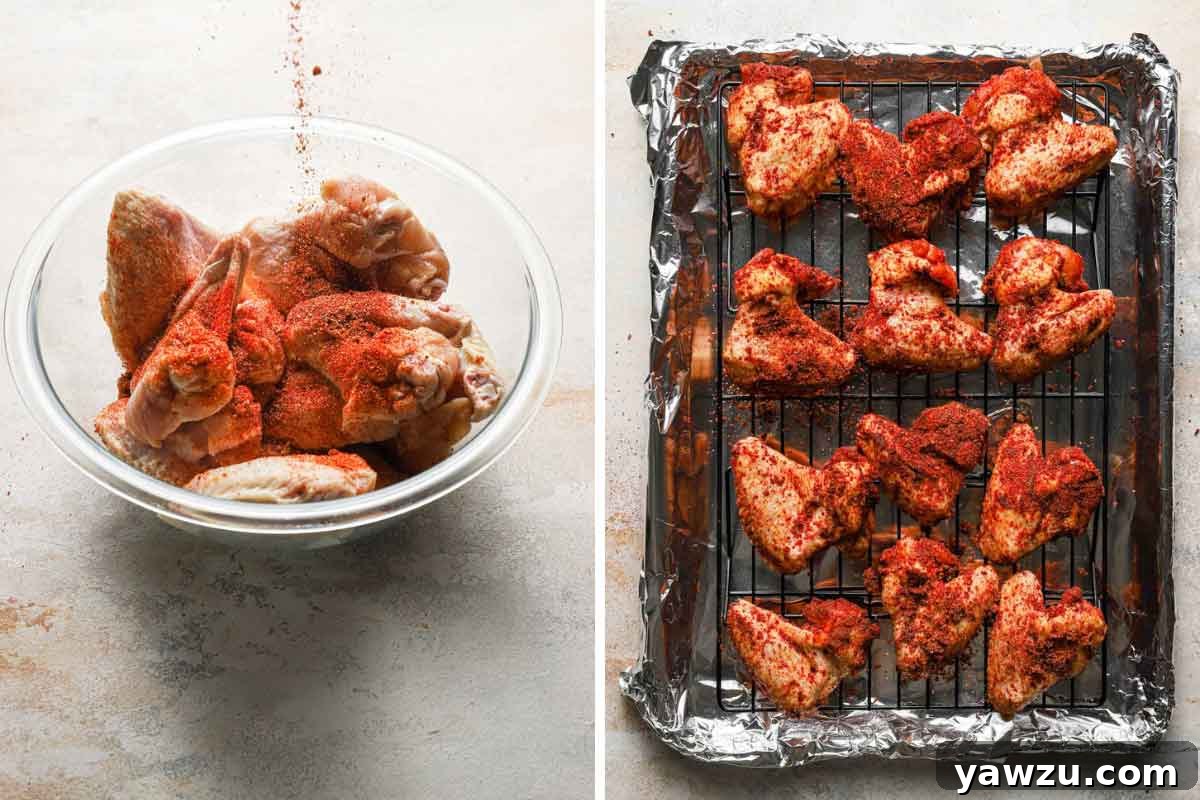
- Coat the Wings Evenly: Place the thoroughly dried chicken wings into a large mixing bowl. Generously sprinkle the prepared seasoning blend over the chicken. Now, get your hands in there! Use your hands to thoroughly mix and rub the seasoning into every nook and cranny of each wing. Ensure that all surfaces are evenly coated for maximum flavor penetration.
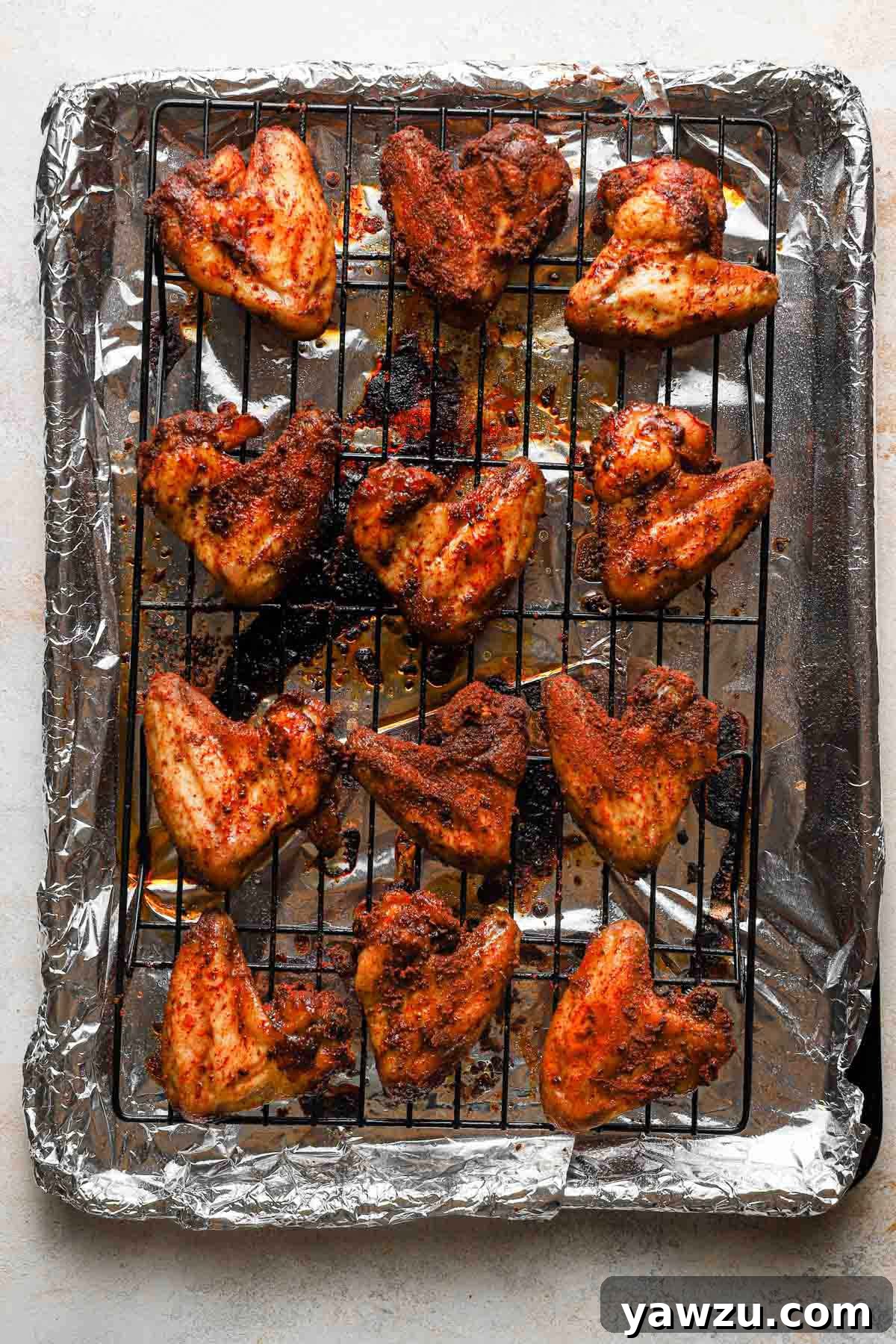
- Arrange on the Rack: Transfer the seasoned wings from the bowl and arrange them in a single layer on the prepared wire rack. Make sure there is ample space between each wing to allow for proper air circulation. Overcrowding the pan will lead to steaming instead of crisping.
- Bake to Perfection (Low and Slow Method): Place the baking sheet with the wings into your preheated 200°F (95°C) oven. Bake for 1 hour and 15 minutes.
- Increase Temperature & Continue Baking: After the initial baking period, carefully turn each wing over using tongs. Increase the oven temperature to 250°F (120°C) and continue baking for another 1 hour and 15 minutes.
- Final Crisp & Serve: For the grand finale, turn the wings over one last time. Increase the oven temperature to 300°F (150°C) and bake for an additional 30 minutes. This final burst of higher heat is what gives the skin its ultimate crispness. Once done, remove from the oven and serve warm, or at room temperature. If you plan to add sauce, this is the perfect time to do so (see the “Sauce Options” section below for details). Enjoy these unbelievably crispy and tender homemade wings!
The Undeniable Secret to Achieving Super Crispy Oven Baked Wings
The quest for truly crispy oven-baked chicken wings can feel like a culinary holy grail. Many have tried, only to be met with disappointing, rubbery results. However, there’s a simple, non-negotiable technique that guarantees that satisfying crunch without any deep-frying: baking on an elevated wire rack. This humble kitchen tool is the true MVP of this recipe.
Here’s why a wire rack is indispensable for crispy wings:
- Unrestricted Air Circulation: When wings sit directly on a baking sheet, the bottom surface is deprived of circulating hot air, leading to a steamed, soggy texture. A wire rack allows hot air to circulate completely around each wing, ensuring even cooking and consistent crisping on all sides.
- Fat Drainage: As chicken wings bake, they release rendered fat. If the wings are sitting in this fat, they will inevitably become greasy and soft. The wire rack elevates the wings, allowing the rendered fat to drip down onto the foil-lined baking sheet below. This prevents the wings from braising in their own juices and ensures the skin can crisp up beautifully.
For convenience and efficiency, I highly recommend using cooling racks that fit perfectly inside your half sheet pans. This setup is ideal for handling the rendered fat and makes cleanup significantly easier. Always remember to line your baking sheet with aluminum foil or parchment paper underneath the rack to catch any drips and expedite post-meal chores!
While some recipes suggest tossing wings in baking powder or baking soda before seasoning and baking to enhance crispiness, my personal experience hasn’t shown a significant difference in results with this particular low-and-slow method. The combination of thorough drying, proper spacing, and the wire rack proves to be more than sufficient for achieving that coveted crunch without the need for additional ingredients.
Elevate Your Wings with Delectable Sauce Options
While our dry rub delivers phenomenal flavor on its own, sometimes you crave that irresistible saucy coating. The beauty of these baked wings is how perfectly they lend themselves to a myriad of sauce options. If you choose to add sauce, the timing is crucial for optimal adherence and flavor. You’ll want to toss your wings in your chosen sauce during the last 30 minutes of baking. For those who prefer an extra-saucy experience, a second toss immediately after they come out of the oven will ensure every wing is generously coated.
The world of wing sauces is virtually limitless, and modern grocery stores offer an incredible variety of bottled versions, making customization effortlessly simple. Here are some of our all-time favorite sauce inspirations:
- Classic Buffalo Sauce: For traditionalists who adore that tangy, spicy kick, a good buffalo sauce (or your favorite hot sauce mixed with butter) is a must.
- Sweet & Smoky BBQ: From classic tangy BBQ to a rich honey BBQ, these sauces offer a comforting and universally loved flavor profile.
- Savory Teriyaki: A glaze of sweet and savory teriyaki sauce provides an Asian-inspired twist that is always a hit.
- Rich Garlic Parmesan: Creamy, garlicky, and cheesy, this sauce offers a luxurious and deeply satisfying coating.
- Zesty Honey Garlic: A perfect balance of sweet honey and pungent garlic creates a sticky, flavorful glaze that’s hard to resist.
- Lemon Pepper Wet: For a vibrant, zesty option, a lemon pepper butter sauce brings a bright and aromatic finish.
- Spicy Gochujang Glaze: For adventurous palates, a Korean gochujang-based sauce offers a unique blend of sweet, savory, and spicy.
Feel free to experiment with combinations or create your own signature sauce! Remember, the goal is to coat them evenly and allow the sauce to bake on slightly, forming a delicious glaze.
Perfect Pairings: How to Serve Your Irresistible Wings
Chicken wings are the quintessential party food, but they’re equally delightful as a casual meal or a hearty appetizer. While they can certainly stand alone, pairing them with the right accompaniments elevates the entire experience. They shine beautifully alongside a vibrant spread of other dips and appetizers, making them ideal for any gathering. Traditionally, crispy chicken wings are served with a few classic partners that perfectly complement their rich flavor:
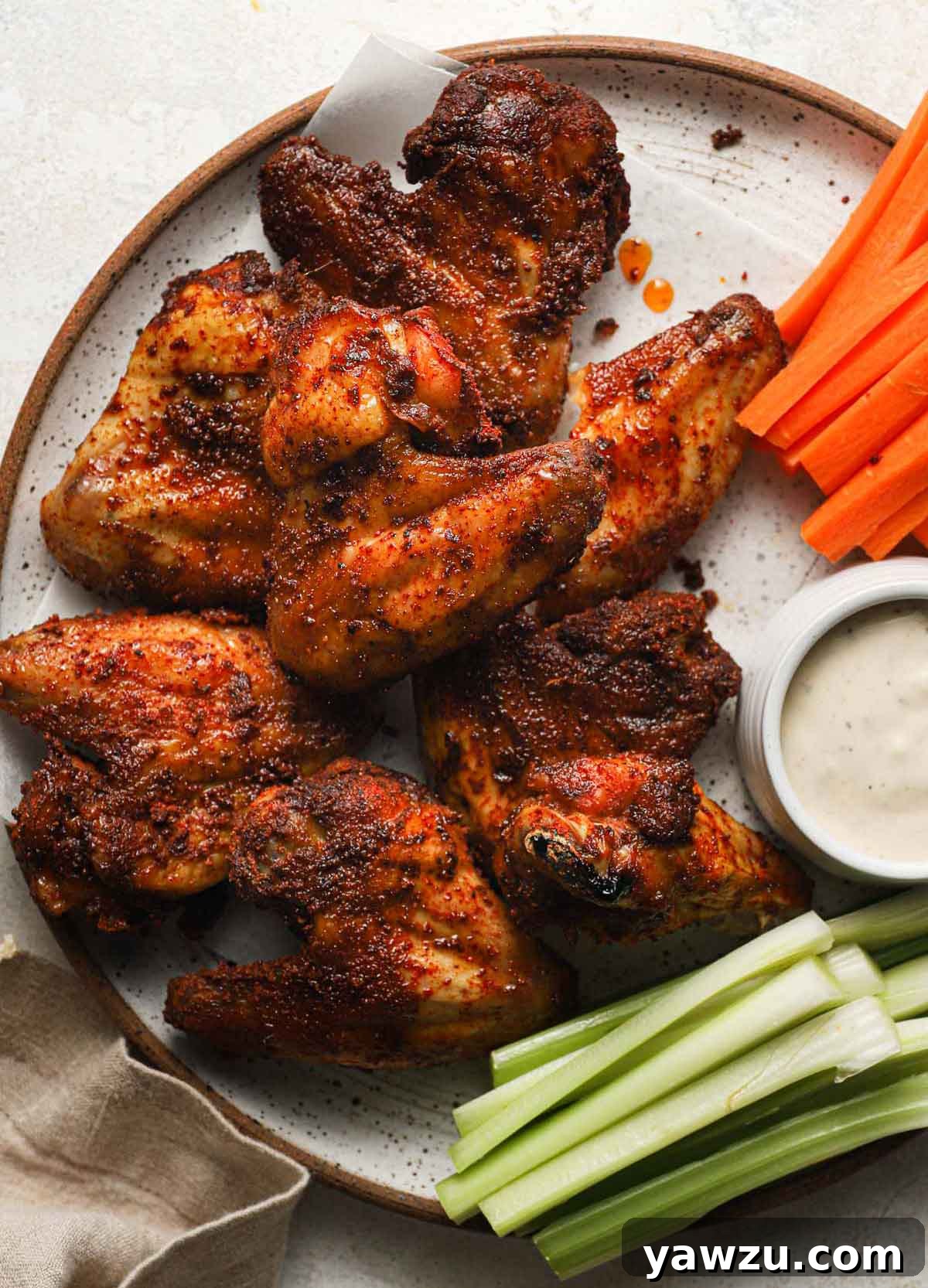
- Fresh-Cut Veggies: Crisp carrot and celery sticks are the ultimate palate cleanser and provide a refreshing counterpoint to the rich chicken. Their crunch is also a welcome texture contrast.
- Cool Ranch Dressing: The creamy, herb-infused goodness of ranch dressing is a universally beloved dipping sauce for wings, offering a cooling balance to any spice.
- Tangy Blue Cheese Dressing: For those who appreciate a bolder flavor, a robust blue cheese dressing provides a pungent, creamy, and wonderfully tangy dip that pairs exceptionally well with wings, especially buffalo-style.
Beyond these classics, consider serving your wings with a side of coleslaw for added crunch and tang, or even a simple green salad for a lighter touch. For a more substantial meal, a side of crispy potato wedges or sweet potato fries would be a fantastic addition. No matter how you choose to serve them, these crispy baked chicken wings are guaranteed to disappear quickly!
Essential Recipe Tips & FAQs for Crispy Baked Chicken Wings
To ensure your homemade crispy baked chicken wings turn out perfect every single time, and to help you manage any leftovers, here are some invaluable tips and frequently asked questions:
- The Golden Rule for Crispy Wings: Always, always ensure the chicken wings are thoroughly patted dry with paper towels before seasoning. Moisture is the enemy of crispiness. Additionally, baking them on a wire rack over a baking sheet is non-negotiable. This allows air to circulate around the entire wing, preventing sogginess from rendered fat and promoting even crisping.
- Storing Leftovers: Should you be fortunate enough to have any leftover wings, they can be stored in an airtight container in the refrigerator for up to 3 days. Ensure they are completely cooled before storing to prevent condensation.
- Reheating Instructions:
- Oven (Recommended for Crispiness): For the best results and to regain that coveted crisp skin, reheat leftover chicken wings in a 350°F (175°C) oven for about 12-15 minutes, flipping them halfway through. A quick spritz of water before reheating can help keep them moist and aid in re-crisping the skin.
- Air Fryer (Excellent Alternative): An air fryer is another fantastic option for reheating. Place wings in a single layer in the air fryer basket at 350°F (175°C) for 8-10 minutes, flipping once, until heated through and crispy. A light spray of oil can enhance crisping.
- Microwave (For Speed, Not Crispness): While convenient, reheating in a microwave will warm the wings but will not make them crispy. It’s best reserved for times when speed is paramount and crispness isn’t the priority.
- Freezing Instructions: Cooked chicken wings freeze remarkably well, especially if they haven’t been sauced. Arrange them in a single layer on a baking sheet and freeze until solid, then transfer them to an airtight freezer-safe container or a heavy-duty ziploc freezer bag. They will keep for up to 3 months. Thaw frozen wings overnight in the refrigerator before following the reheating instructions above. Freezing unsauced wings allows you to add fresh sauce when you reheat them, ensuring the best texture and flavor.
- Can I use frozen raw wings? Yes, but ensure they are fully thawed in the refrigerator before patting dry and seasoning. Trying to season and bake partially frozen wings will lead to uneven cooking and less crispy skin.
- How do I know the wings are cooked through? Chicken wings are safely cooked when their internal temperature reaches 165°F (74°C). A meat thermometer inserted into the thickest part of the drumette (avoiding the bone) will give you an accurate reading.
By following these tips, you’ll ensure your crispy baked chicken wings are always a triumph, whether you’re making a fresh batch or enjoying delicious leftovers!
Want to See How it’s Done?
While an embedded video player is not included in this article for optimal performance, you can often find visual guides and demonstrations for making crispy baked chicken wings on popular video platforms. Searching for “Crispy Baked Chicken Wings Tutorial” will yield many helpful resources to guide you through the process step-by-step!
If you make these baked wings and love them as much as we do, please consider stopping back and giving this recipe a 5-star rating. Your feedback helps others discover and enjoy this fantastic recipe! ❤️️
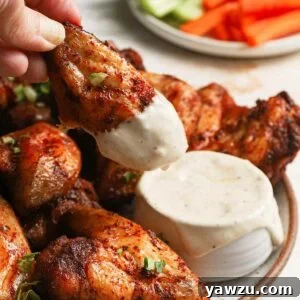
Crispy Baked Chicken Wings
Pin
Rate
Ingredients
- 3 pounds (1.36 kg) chicken wings
- 3 tablespoons paprika
- 2 tablespoons light brown sugar
- 1 tablespoon salt
- ½ tablespoon (0.5 tablespoon) black pepper
- 1 teaspoon garlic powder
- 1 teaspoon ground cumin
- ¼ teaspoon (0.25 teaspoon) cayenne, optional
Instructions
-
Preheat oven to 200 degrees F (95°C). Place a wire cooling rack inside a rimmed baking sheet that has been lined with foil.
-
Pat chicken wings completely dry using paper towels. Place the wings in a large bowl.
-
In a small bowl, stir together the paprika, brown sugar, salt, pepper, garlic powder, cumin and cayenne pepper (if using).
-
Sprinkle the seasoning mix evenly over all of the chicken wings, then use your hands to rub evenly all over the chicken. Place the wings on the cooling rack in a single layer, ensuring space between each.
-
Bake at 200 degrees F (95°C) for 1 hour 15 minutes. Turn the wings over, increase the oven temperature to 250 degrees F (120°C) and bake for 1 hour 15 minutes. Turn the wings over again, increase the oven temperature to 300 degrees F (150°C) and bake for an additional 30 minutes until crispy and cooked through. Serve warm or at room temperature, with or without your favorite sauce.
Notes
- Wings: You can bake the wings whole or separate them into drumettes and wingettes (or buy a bag of “party wings” that are already separated). For best results, ensure wings are patted dry before seasoning.
- Flavors: Easily adapt this recipe by using a simple seasoning of salt and pepper. For sauced wings, toss them in your chosen sauce before the last 30 minutes of baking.
- Ensure Crispy Wings: Thoroughly dry wings before seasoning and bake on a wire rack to allow air circulation and fat drainage.
- Storing Leftovers: Extra wings can be kept in the refrigerator in an airtight container for up to 3 days.
- Reheating Instructions: Leftover chicken wings are best reheated in a 350-degree oven for 12-15 minutes, flipping halfway. A spritz of water helps retain moisture and re-crisp skin. Air fryer (350 degrees for 8-10 minutes) is also excellent. Microwave for speed, but they won’t be crispy.
- Freezing Instructions: Cooked wings can be frozen for up to 3 months (best if unsauced) in an airtight container. Thaw overnight in the refrigerator, then follow reheating instructions.
Nutritional values are based on one serving and are approximate.
Did you make this recipe?
Leave a review below, then snap a picture and tag @thebrowneyedbaker on Instagram so I can see it!
This recipe was originally published in January 2018, with significant updates and enhancements for optimal flavor and crispiness.
Photography by Dee Frances.