
Meyer Lemon-Raspberry Scones: A Zesty & Sweet Spring Delight
There’s a special kind of excitement that washes over me when I discover Meyer lemons gracing the shelves of my local grocery store. These culinary gems are a fleeting treasure, making their brief appearance each spring, and I never hesitate to seize the opportunity to bring their unique flavor home. Their rarity makes them all the more precious, as I know that if I don’t grab them immediately, they’re likely to vanish by my next visit.
While I generally don’t consider myself a fervent citrus enthusiast, Meyer lemons are an exception. Their distinct sweetness, a delightful fusion of a traditional lemon’s tang and a mandarin orange’s subtle honeyed notes, sets them apart. This hybrid nature gives them a softer, less acidic profile than conventional lemons, making them incredibly versatile and appealing for both sweet and savory applications.
The Allure of Meyer Lemons: A Citrus Story
Originating in China, Meyer lemons (Citrus × meyeri) are believed to be a cross between a true lemon and a mandarin orange or a common orange. Unlike the more common Lisbon or Eureka lemons, Meyer lemons boast a thinner, smoother, deep yellow-orange skin, and their flesh is a vibrant, egg-yolk yellow. Their aromatic zest and sweeter juice are highly prized by chefs and home cooks alike, offering a nuanced flavor that can elevate a wide range of dishes, from delicate desserts to bright main courses.
Their seasonal availability from late fall through early spring creates a sense of urgency and appreciation. When these luminous fruits finally appear, it’s a clear sign that brighter, warmer days are on their way. They encourage creativity in the kitchen, inspiring recipes that celebrate their unique character. A few weeks ago, spotting a bag of these beauties in the produce section, I knew they were destined for something special. The challenge was deciding what that “something” would be.

A Match Made in Heaven: Lemon and Raspberry
After much contemplation, a brilliant idea sparked: a combination I adore—lemon and raspberries. It’s a classic pairing, much like orange and raspberries, where the bright, zesty notes of citrus perfectly complement the juicy, slightly tart sweetness of fresh berries. This harmony of flavors promised to be a magnificent accompaniment to the Meyer lemons’ gentle acidity and floral undertones. The thought immediately brought to mind the delicate, buttery texture of scones, making them the perfect canvas for this vibrant flavor duo.
Scones, with their crumbly exterior and tender interior, are a quintessential treat, ideal for breakfast, brunch, or an afternoon tea. Infusing them with the aromatic zest of Meyer lemons and speckling them with ruby-red raspberries would create a pastry that’s both comforting and sophisticated. The vision was clear: sweet, tender, and buttery scones, brimming with the essence of spring.
Celebrate Special Moments: Perfect for Mother’s Day and Beyond
With Mother’s Day rapidly approaching – indeed, it’s this very Sunday – the timing felt impeccable. This special day, dedicated to celebrating mothers and maternal figures, often revolves around heartfelt gestures and indulgent meals. What better way to honor mom than with a homemade extraordinary breakfast or brunch? These Meyer Lemon-Raspberry Scones fit the bill perfectly, offering a touch of elegance and homemade warmth that speaks volumes.
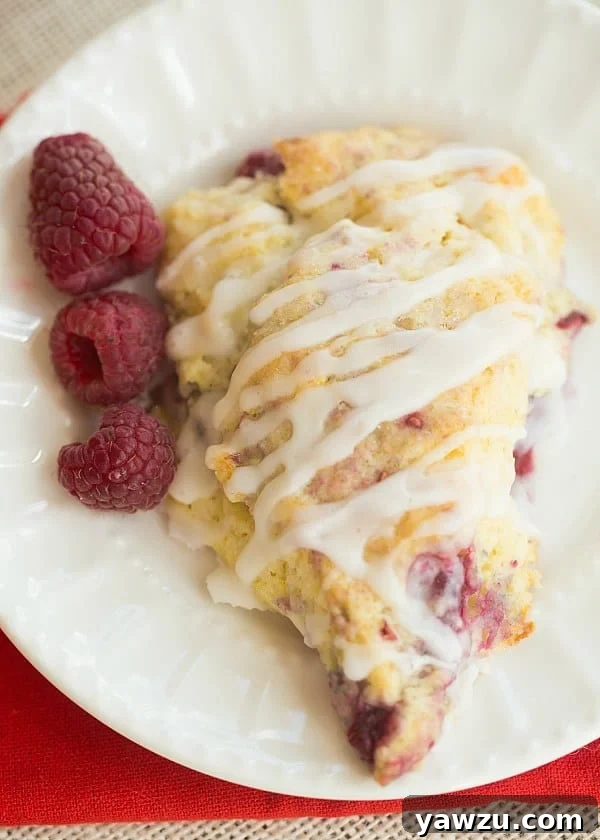
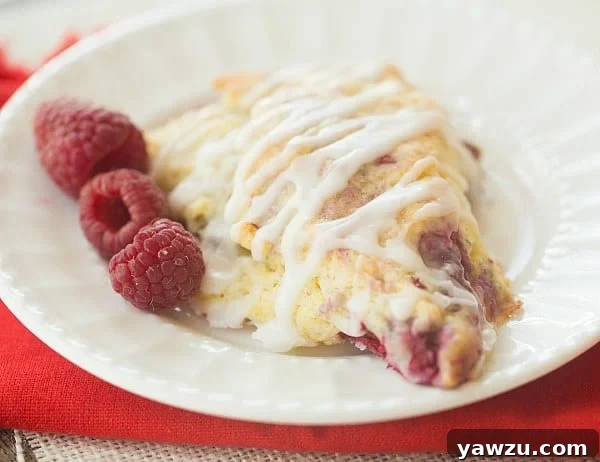
Beyond Mother’s Day, these exquisite scones are wonderfully suited for any spring celebration. Imagine serving them at an Easter brunch, a bridal shower, a garden party, or simply as a luxurious weekend treat. Their beautiful appearance, with the vibrant raspberries peeking through the golden-brown crust and the glistening lemon glaze, makes them a showstopper. But it’s their incredible flavor – the bright lemon, the sweet raspberries, and the rich, buttery scone – that truly makes them unforgettable.
Each scone is a symphony of flavors and textures. The delicate crumb melts in your mouth, leaving behind the invigorating tang of Meyer lemon zest, softened by the burst of fresh raspberries. A final drizzle of a bright glaze, made simply from powdered sugar and Meyer lemon juice, adds an extra layer of citrusy sweetness, tying all the components together in a harmonious blend. These aren’t just scones; they’re an experience, a delightful bite that embodies the freshness and joy of spring.
Crafting the Irresistible Scone: Tips for Success
Making scones from scratch might seem daunting, but it’s a surprisingly straightforward process that yields incredibly rewarding results. The key to light, flaky scones lies in a few crucial steps, primarily handling the butter and avoiding overworking the dough. Here are some essential tips to ensure your Meyer Lemon-Raspberry Scones turn out perfect every time:
- Keep Ingredients Cold: Cold butter is non-negotiable for tender, flaky scones. When cold butter pieces melt in the oven, they release steam, creating pockets of air and a light texture. Cubing the butter and chilling it, along with your heavy cream, before you begin will make a significant difference.
- Don’t Overmix: Once you add the liquid, mix the dough just until it comes together. Overmixing develops gluten, which can lead to tough, dense scones. A light touch is all that’s needed.
- Handle Gently: When patting out the dough and cutting the scones, work quickly and with gentle hands. Excess handling can warm the butter and make the dough less manageable.
- Measure Flour Correctly: For baking, it’s always best to weigh your flour. If you don’t have a scale, spoon flour into your measuring cup and then level it off with a straight edge, rather than scooping directly from the bag, which can compact the flour and lead to too much flour in your recipe.
- Even Baking: Ensure your oven is preheated to the correct temperature. A hot oven helps the scones rise quickly and develop a beautiful golden crust. Baking on parchment paper also prevents sticking and helps with even browning.
- Fresh vs. Frozen Raspberries: While fresh raspberries are ideal, frozen ones can be used. If using frozen, do not thaw them. Add them directly to the dough to prevent them from breaking down too much and coloring the dough.