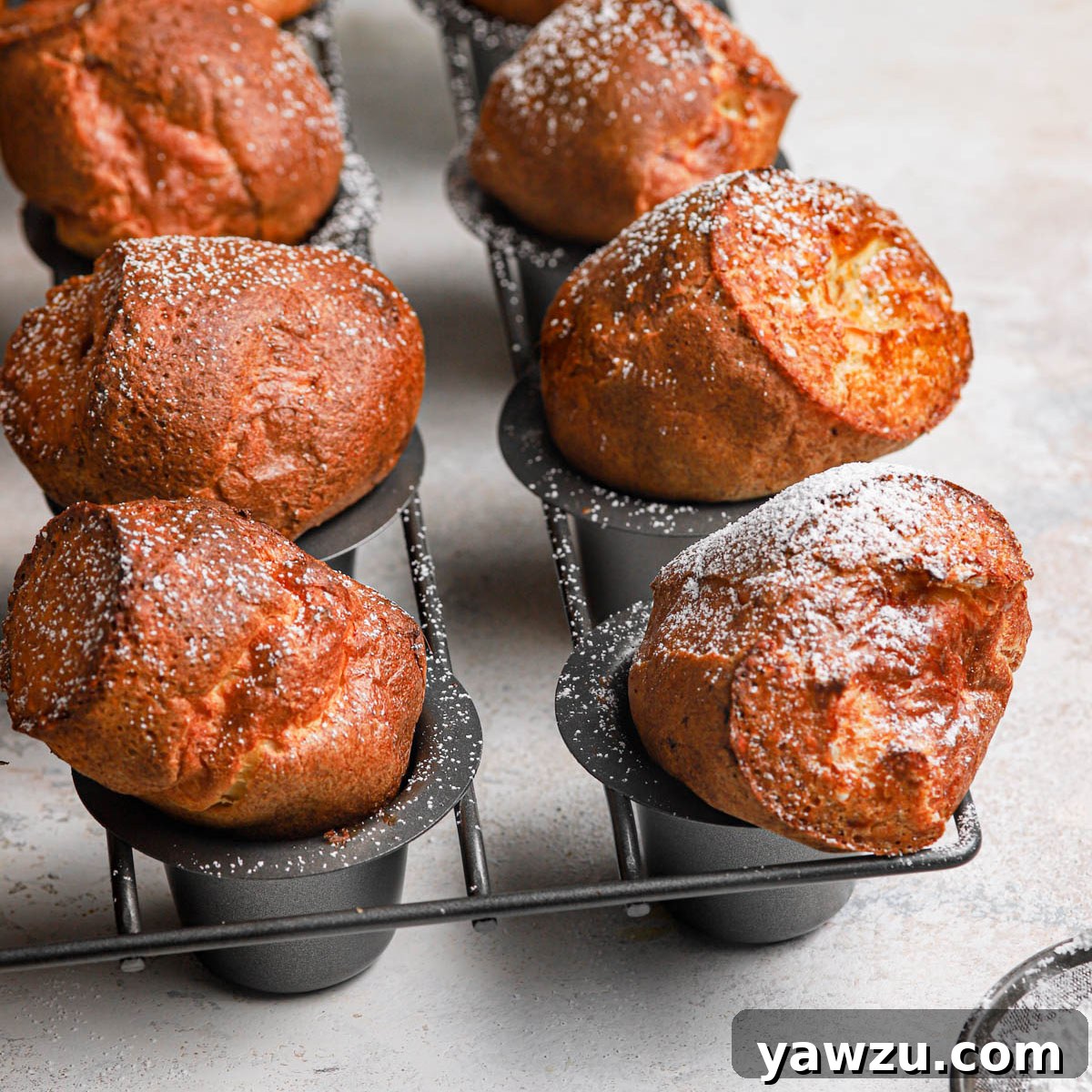
Welcome to a culinary journey that promises to transform your breakfast or brunch into an extraordinary experience without requiring extensive effort. If you adore light, airy, and utterly delicious breakfast pastries, then prepare to fall in love with this incredibly easy popovers recipe! Crafted with just five simple ingredients and requiring only about 30 minutes of baking time, these seemingly sophisticated treats are surprisingly straightforward to prepare. Imagine serving them warm, fresh from the oven, with a luscious dollop of butter and a spoonful of your favorite fruit jam or jelly. These homemade popovers are not just a meal; they’re an experience, guaranteed to impress and delight everyone at your table.
The Journey to Perfect Popovers: A Personal Inspiration
My culinary adventure with popovers began years ago with a phone call from my grandmother. She and my grandfather had just returned from a visit to his brother in Arizona, where his wife had served them popovers that my grandma described as nothing short of “outstanding.” Intrigued by her enthusiastic review and eager to recreate the magic at home, she realized she lacked both a recipe and the essential popover pan. Coincidentally, mastering popovers had long been on my personal baking “to-do” list, making her request the perfect catalyst for me to finally tackle this delightful pastry.
Driven by her excitement and my own curiosity, I decided to surprise her. I purchased a dedicated popover pan for both of us and embarked on developing a reliable, delicious recipe. The result was phenomenal – a testament to how simple yet profoundly satisfying homemade popovers can be. The experience not only allowed me to share a wonderful new recipe with my grandmother but also introduced me to a world of light, airy goodness that I now can’t imagine my breakfast repertoire without.
What Exactly Are Popovers? Unveiling a Culinary Delight
At their core, popovers are a distinctly American interpretation of the renowned British Yorkshire pudding. These beloved pastries are celebrated for their incredible lightness, delicate crispness, and rich, buttery flavor. They are typically made from a remarkably simple batter consisting of flour, salt, eggs, milk, and butter. While traditional British Yorkshire puddings often incorporate beef fat and are served alongside roast meat, American popovers usually feature whole milk and softened butter, making them ideal for sweet or savory breakfast and brunch presentations.
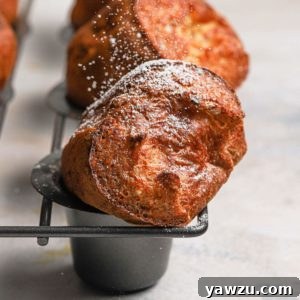
The magic of a popover lies in its unique texture: a wonderfully crispy, golden-brown exterior that gives way to a soft, custardy, and almost hollow interior. This creates a fascinating contrast, resembling ribbons of delicate pastry rather than a dense bread. Despite their elegant appearance, the simplicity of their ingredients and preparation makes them accessible to even novice bakers. My personal touch includes a hint of powdered sugar in the batter, lending a subtle sweetness that perfectly complements various toppings.
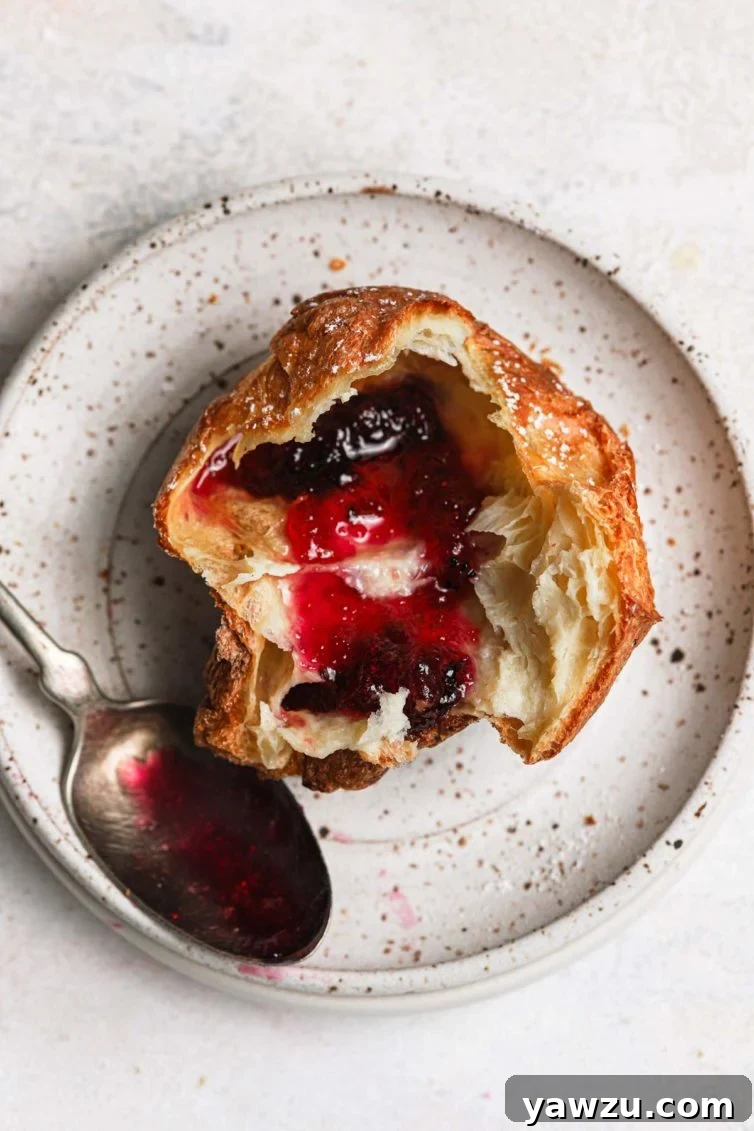
Before my grandmother’s request, I had actually never tasted a popover. I always imagined they would have a dense, muffin-like consistency. However, my first bite was a revelation! Their texture reminded me more of a flaky croissant, a perfectly baked pancake (strikingly similar to a Dutch baby pancake!), or even a light, airy soufflé. The beauty of their hollow center is what truly sets them apart, allowing them to be filled with an endless array of delicious toppings.
The recipe I developed suggested serving them fresh from the oven with butter and jam, and I wholeheartedly agree – they are truly amazing when warm. While still enjoyable at room temperature, their peak flavor and texture are experienced moments after they emerge from the oven. Beyond butter and jam, a dusting of powdered sugar or a generous drizzle of maple syrup are also fantastic options. They are the quintessential addition to any breakfast or brunch menu, and the batter comes together in mere minutes, making them a stress-free choice for special mornings or indulgent weekdays. What’s your favorite way to enjoy a popover?
The Science Behind the Perfect Popover: Why They “Pop”
The remarkable “pop” and impressive rise of these pastries aren’t magic; they’re a delightful demonstration of basic food science. Popovers rely on a high-temperature oven and a very wet batter to create their signature hollow, airy structure. When the thin, milk-and-egg-rich batter is poured into a preheated, well-greased popover pan and placed into a scorching hot oven, the moisture in the batter rapidly turns into steam. This steam, trapped within the developing gluten network of the batter, expands forcefully, causing the popovers to puff dramatically and “pop” up over the sides of the pan. As they bake, the exterior crisps and browns, setting the structure, while the interior cooks into a tender, custardy layer. This process, akin to a controlled explosion, is what gives popovers their unique charm and distinguishes them from other baked goods.
Essential Ingredients for Homemade Popovers
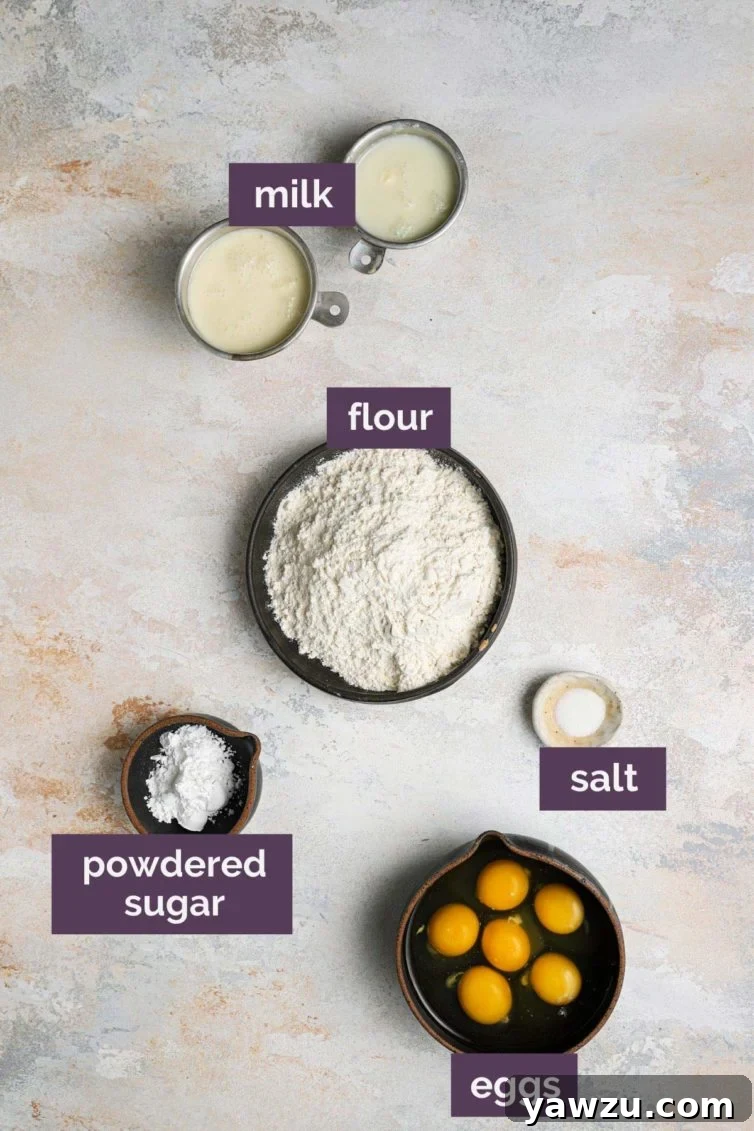
You’ll be delighted to know that these sensational homemade popovers require only five staple ingredients that you likely already have in your pantry. Simplicity is key to their success, so choosing quality ingredients will make a noticeable difference in the final product!
- Milk: Whole milk is absolutely crucial for this recipe. Its higher fat content contributes significantly to the richness, tenderness, and beautiful golden-brown crust of the popovers. Avoid using skim or low-fat milk, as they simply won’t yield the same luscious results.
- Eggs: Similar to a delicate soufflé, popovers rely heavily on eggs for their structure and impressive rise. This recipe calls for a generous six large eggs, which provide the necessary protein to create a strong, yet flexible, framework that captures the steam and allows the popovers to expand dramatically.
- Flour: Just one and a half cups of all-purpose flour are needed. Remember that this is an exceptionally wet batter, which is essential for the steam to develop properly and create that signature hollow interior. The flour provides the minimal gluten structure needed to hold the steam.
- Salt: A touch of salt is vital. It not only enhances the subtle buttery flavor of the popovers but also balances the slight sweetness from the powdered sugar, creating a well-rounded taste profile.
- Powdered Sugar: While many traditional popover recipes omit sugar, I found that these popovers benefit immensely from the slightest touch of sweetness. Powdered sugar (confectioners’ sugar) blends seamlessly into the batter, ensuring a smooth texture and a delicate, almost imperceptible sweetness that makes them truly irresistible for breakfast or dessert.
How to Make the Best Homemade Popovers
While our household typically leans towards pancakes on the weekend, these delicate, flaky, and buttery popovers have undeniably carved out a special place in our hearts. Their versatility is remarkable; you can easily tailor them to be sweet or savory simply by changing what you serve alongside them. Imagine fresh berries and maple syrup for a classic sweet treat, or crumbled crispy bacon and softened cream cheese for an unexpectedly delicious savory twist. They are ideal for relaxed weekend mornings, but also fancy enough for special occasions during the week, whether served fresh or gently reheated. I’m already envisioning them as a unique and memorable birthday breakfast!
Once your ingredients are precisely measured, your oven is preheated to the correct temperature, and your popover pan is perfectly prepped, you’re just moments away from baking perfection.
- Prepare Your Workspace: Begin by preheating your oven to 425 degrees F (220 degrees C). Crucially, position your oven rack in the lower third of the oven. This helps the popovers receive ample heat from the bottom, encouraging a strong, even rise. While the oven preheats, generously butter each cup of your 12-cup popover tin. Ensuring every crevice is buttered is essential to prevent sticking and promote that coveted upward rise. Set the prepared pan aside.
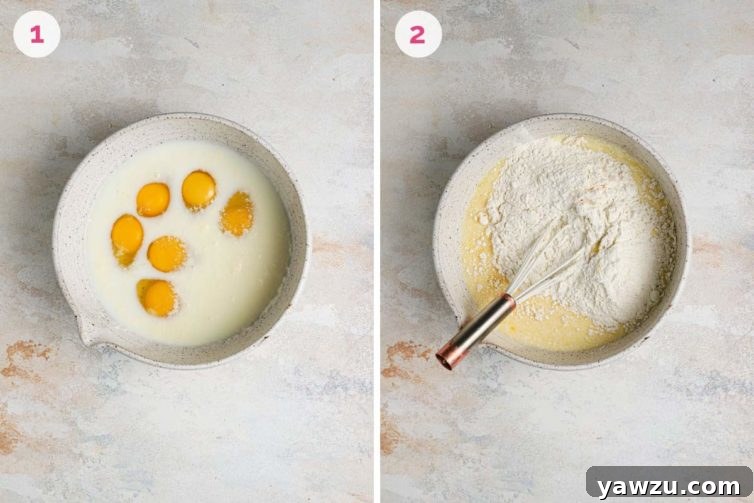
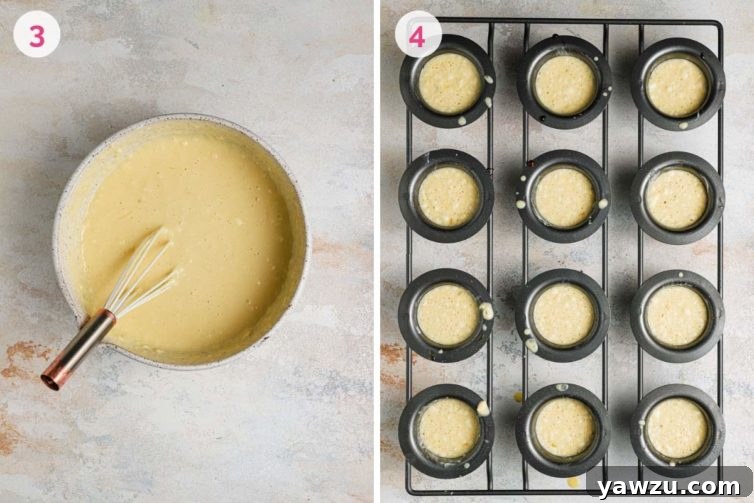
- Combine Wet Ingredients: In a medium-sized mixing bowl, gently whisk together the whole milk and eggs until they are well combined and slightly frothy. This step ensures that the liquid base is uniform before adding the dry components.
- Create the Batter: Add the flour, salt, and powdered sugar directly into the bowl with the wet ingredients. Whisk them together very briefly, just until the dry ingredients are barely incorporated. This leads us to the most critical rule of popover making:
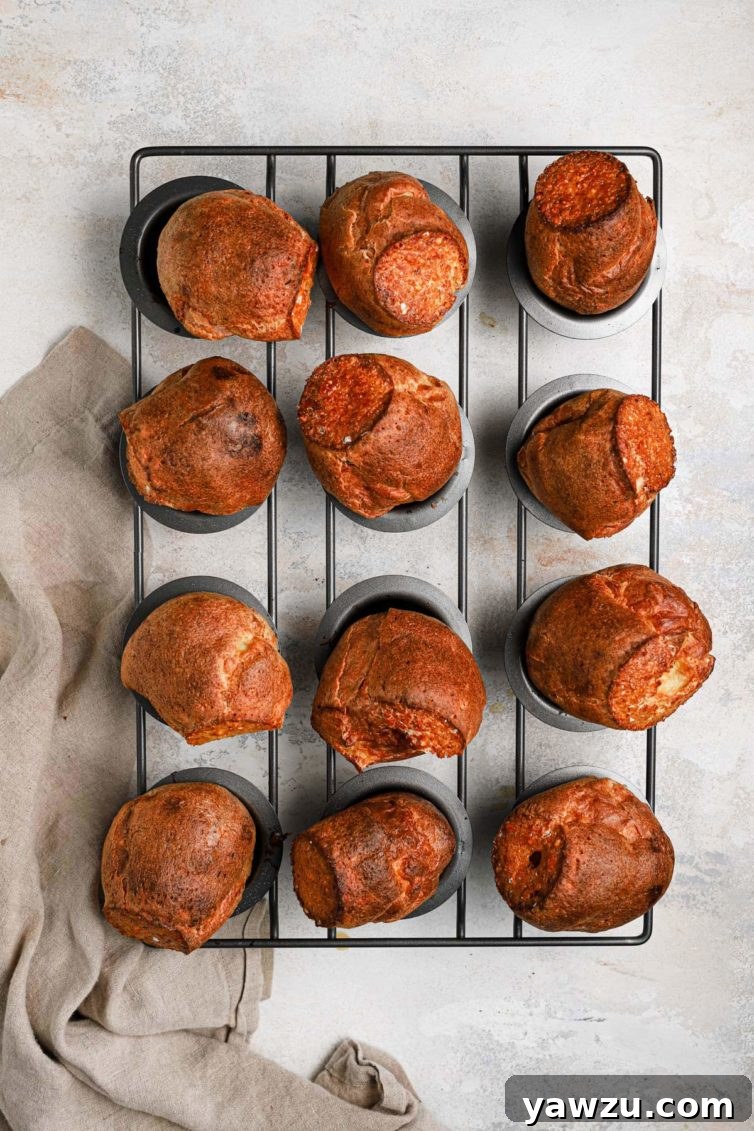
- Do NOT Over-Mix! (Seriously, This is Key): I cannot emphasize this enough! Over-mixing the batter is the most common mistake and will inevitably lead to dense, chewy popovers that fail to rise properly. It’s perfectly fine, and even desirable, for there to be small lumps throughout the batter. You might even see slight streaks of flour – that’s okay! The goal is to mix just enough to combine, leaving the gluten relaxed.
- Bake to Perfection: Carefully fill each cup of the prepared popover tin with approximately 5 tablespoons of the batter. Transfer the pan to the preheated oven. Bake for about 30 minutes, or until the popovers are incredibly puffed, beautifully golden brown, and have risen dramatically, often towering 3 inches or more above the top of the tin. The precise baking time can vary slightly with ovens, so observe their magnificent rise and color.
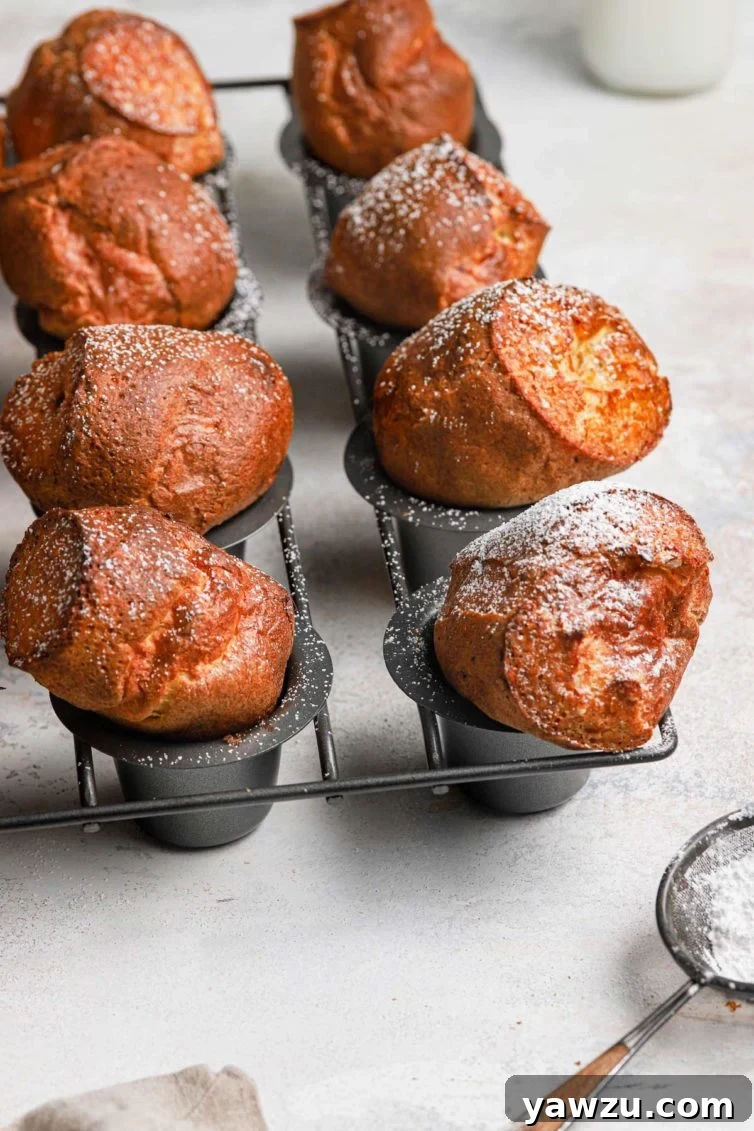
- Serve Immediately: As soon as they emerge from the oven, immediately turn the popovers out of the pan. This prevents them from steaming and becoming soggy in the hot tin. Serve them warm with your desired toppings for the ultimate popover experience!
The Secret to Achieving Light, Flaky Popovers Every Time
Creating those perfectly airy and flaky popovers isn’t difficult, but it does hinge on a few crucial techniques. Master these, and you’ll consistently produce Instagram-worthy results:
- Do Not Over-Mix Your Batter! This cannot be stressed enough. Unlike many other batters, popover batter thrives on minimal mixing. Over-mixing develops the gluten in the flour too much, resulting in a tough, dense texture. You want a tender crumb that puffs up effortlessly. Don’t worry if you see a few small lumps or streaks of flour; this is perfectly normal and even preferable for a light popover.
- Generously Butter Your Popover Pan in an Upward Direction: This isn’t just about preventing sticking; it’s a strategic move to encourage maximum rise. By buttering the cups in an upward motion, you create a slightly slicker surface on the vertical walls, which helps to guide the batter as it climbs and expands during baking. Ensure every inch of the cups is coated.
- Use High-Quality Ingredients: When a recipe calls for so few ingredients, the quality of each one becomes paramount. Opt for fresh, organic, cage-free eggs and rich, organic, full-fat whole milk and butter if possible. These superior ingredients contribute significantly to the flavor, color, and overall luxurious texture of your popovers.
- Preheat Your Popover Pan (Optional, but Recommended): For an even more dramatic rise, you can place your buttered popover pan in the oven during the last few minutes of the preheating cycle. A hot pan helps the batter start cooking immediately upon contact, generating steam faster and boosting the “pop” effect. Just be careful when handling a hot pan!
- Adjust Oven Temperature for Dark or Non-Stick Pans: If you’re using a dark-colored or non-stick popover pan, these materials tend to absorb and conduct heat more efficiently than lighter metal pans. To prevent over-browning or burning the delicate popovers, it’s wise to reduce your oven temperature by 25 degrees Fahrenheit. This slight adjustment ensures even cooking and a beautiful golden finish.
Delicious Serving Suggestions
The beauty of popovers lies in their versatility, making them a perfect canvas for both sweet and savory accompaniments. Here are some of my favorite ways to enjoy these simple homemade pastries, transforming them into a delightful treat for any palate:
- A classic pairing: a generous pad of softened butter, which melts beautifully into the warm, airy interior.
- For a burst of fruity sweetness, add a liberal schmear of your favorite fruit jam or jelly. Homemade options elevate the experience even further!
- For those who crave a savory kick, try a dollop of my favorite homemade bacon jam – the sweet and salty notes are simply divine.
- A glistening drizzle of honey or maple syrup offers comforting warmth and natural sweetness.
- Brighten up your popover with a handful of fresh berries like plump strawberries, juicy blueberries, or tart raspberries.
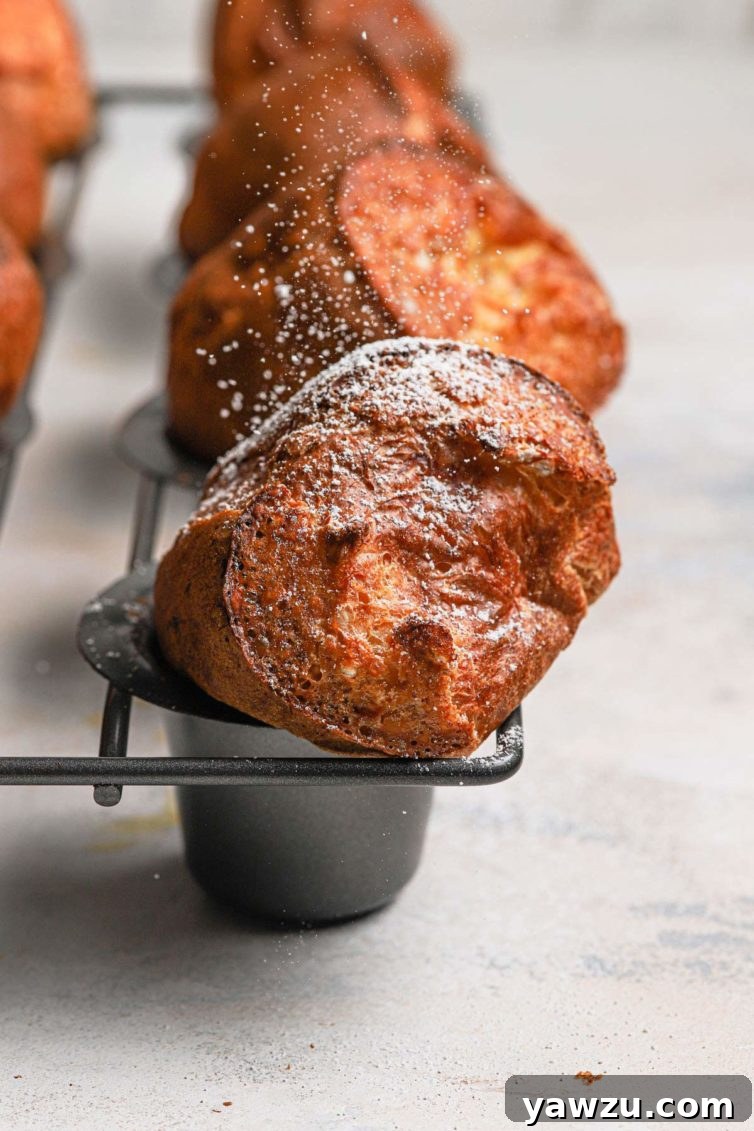
- A delicate dusting of sifted powdered sugar adds an elegant finish and a subtle touch of sweetness.
- Indulge your sweet tooth (and delight the kids!) with a spread of creamy chocolate hazelnut spread (like Nutella) for a decadent twist.
Make it a Meal: Perfect Pairings for Your Popovers
While popovers are certainly a star on their own, they also make a fantastic addition to a more substantial breakfast or brunch spread. If you’re looking to round out your meal, consider serving them alongside these complementary dishes:
- Fluffy, perfectly cooked scrambled eggs provide a protein-rich balance.
- Classic breakfast sausage links or savory patties are a hearty companion.
- Crispy oven-baked bacon offers that irresistible salty crunch.
- Elevate your bacon game with bourbon brown sugar bacon for a gourmet touch.
- A bowl of creamy Greek Yogurt (homemade or store-bought) adds a refreshing, tangy element.
- A vibrant variety of fresh fruit or my favorite fruit tart brings color and natural sweetness to the table.
Troubleshooting Common Popover Problems
Even with the best intentions, baking can sometimes throw a curveball. Here are some common issues you might encounter when making popovers and how to fix them:
- Flat or Sunken Popovers: This is almost always due to over-mixing the batter, which develops too much gluten and prevents the light, airy rise. It can also be caused by an oven that isn’t hot enough, insufficient buttering of the pan, or opening the oven door too early. Ensure your oven is fully preheated and resist the urge to peek until the baking time is almost up.
- Tough or Chewy Texture: Again, over-mixing is a prime culprit. Stick to the rule: mix just until combined, lumps are fine! Using too much flour relative to the liquid can also lead to a denser texture.
- Popovers Sticking to the Pan: This usually means the pan wasn’t buttered generously enough. Make sure to thoroughly coat every surface of the popover cups, especially the sides, with softened butter. A quick dusting of flour after buttering can also act as an extra layer of non-stick.
- Popovers Not Browning Evenly: An unevenly preheated oven or overcrowding the oven can lead to this. Ensure your oven is at the correct temperature and avoid placing too many pans in at once, which can obstruct air circulation. Rotating the pan halfway through baking can also help.
- Too Pale or Not Crispy Enough: Your oven might not be hot enough, or the popovers weren’t baked quite long enough. Popovers need that initial blast of high heat to steam and rise, and then adequate time to crisp up and brown. Don’t be afraid to let them get a deep golden color.
Storage, Freezing, and Reheating Instructions
Popovers are best enjoyed fresh from the oven, but that doesn’t mean you can’t save leftovers or prepare them in advance. Here’s how to properly store, freeze, and reheat these delicate pastries to maintain their deliciousness:
- Storage: Any leftover popovers should be stored in an airtight container at room temperature. They will remain fresh and enjoyable for up to 3 days. While they won’t retain their initial crispness, they’ll still be wonderfully soft.
- Freezing Instructions: To freeze popovers, first ensure they have completely cooled to room temperature. Then, place them in a single layer in a freezer-safe container. Avoid using a freezer bag, as these delicate pastries are prone to getting crushed or damaged in a bag, losing their airy structure. Popovers can be frozen for up to one month.
- Reheating Instructions: Whether reheating from refrigerated or frozen, popovers benefit greatly from being warmed through to restore some of their texture. You can use a microwave for quick reheating, though they may soften further. For a crispier exterior, which is highly recommended, reheat them in a toaster oven or conventional oven at about 350°F (175°C) until warmed through and the outside is nicely re-crisped. This usually takes 5-10 minutes for refrigerated popovers and 10-15 minutes for frozen ones.
More Delightful Breakfast Pastry Recipes To Try
If you’ve enjoyed the delightful experience of making and devouring these popovers, you might be eager to explore more delicious breakfast pastry recipes. Here are a few favorites that promise to bring more joy to your mornings:
- Dutch Baby Pancake: Another oven-baked pancake with an impressive rise, often called a “German pancake.”
- Pancake Cupcakes with Maple Bacon Buttercream Frosting: A fun and creative take on breakfast, perfect for celebrations.
- Pumpkin Pancakes Recipe: A seasonal favorite that brings warmth and spice to your breakfast table.
- Morning Buns Recipe: Sweet, sticky, and cinnamon-swirled pastries, ideal for a leisurely weekend.
- Danish Pastries: Flaky, buttery pastries filled with fruit or cream cheese, a true bakery classic.
Popovers Recipe
Yield: 12 popovers
Prep Time: 10 mins
Cook Time: 30 mins
Total Time: 40 mins
An easy recipe for popovers – they’re incredibly light and make a great addition to any brunch menu!
Ingredients
- 1½ cups (360 ml) whole milk
- 6 eggs
- 1½ cups (180 g) all-purpose flour
- ¾ teaspoon salt
- 4½ teaspoons powdered sugar
Instructions
- Preheat oven to 425 degrees F and position the rack in the lower third of the oven.
- Generously butter a 12-cup popover tin; set aside.
- In a medium bowl, whisk together the milk and eggs. Add the flour, salt and powdered sugar and whisk briefly to incorporate the dry ingredients. There may still be small lumps throughout the batter, which is fine; do not overmix.
- Fill each cup of the popover tin with 5 tablespoons of the batter. Bake until the popovers are very puffed and rise above the top of the tin by 3 inches, about 30 minutes. Immediately turn the popovers out of the pan and serve warm.
Notes
- Equipment: Popover Pan
- Pan Note: If you’re using a dark, non-stick pan, be sure to reduce the oven temperature by 25 degrees.
- Serving Suggestions: Softened butter + fruit jam or jelly / bacon jam / honey or maple syrup / fresh berries / dust with powdered sugar / Nutella
- Storage: Store any leftover popovers in an airtight container at room temperature for up to 3 days.
- Freezing Instructions: Freeze cooled popovers in a freezer-safe container for up to a month. Don’t use a bag, as these delicate pastries are more likely to get crushed or damaged that way.
- Reheat Instructions: Reheat from frozen or refrigerated in a microwave or toaster oven until warmed through and crispy on the outside.
Nutrition Information (per serving)
- Calories: 109kcal
- Carbohydrates: 14g
- Protein: 5g
- Fat: 3g
- Saturated Fat: 1g
- Cholesterol: 84mg
- Sodium: 190mg
- Potassium: 87mg
- Sugar: 2g
- Vitamin A: 170IU
- Calcium: 49mg
- Iron: 1.1mg
Did you make this recipe?
Leave a review below, then snap a picture and tag @thebrowneyedbaker on Instagram so I can see it!
Author: Michelle Lettrich
Course: Side Dish
Cuisine: American
Photography by DeeFrances.