Embark on a delightful culinary journey and discover the pure joy of baking your own homemade ciabatta bread. This easy-to-follow recipe promises beautiful, rustic loaves of classic Italian bread, celebrated for its perfectly chewy interior texture punctuated by those wonderfully large, open air bubbles. Each slice is practically begging to be dipped into your favorite hearty soup or stew, or perhaps transformed into an epic sandwich.
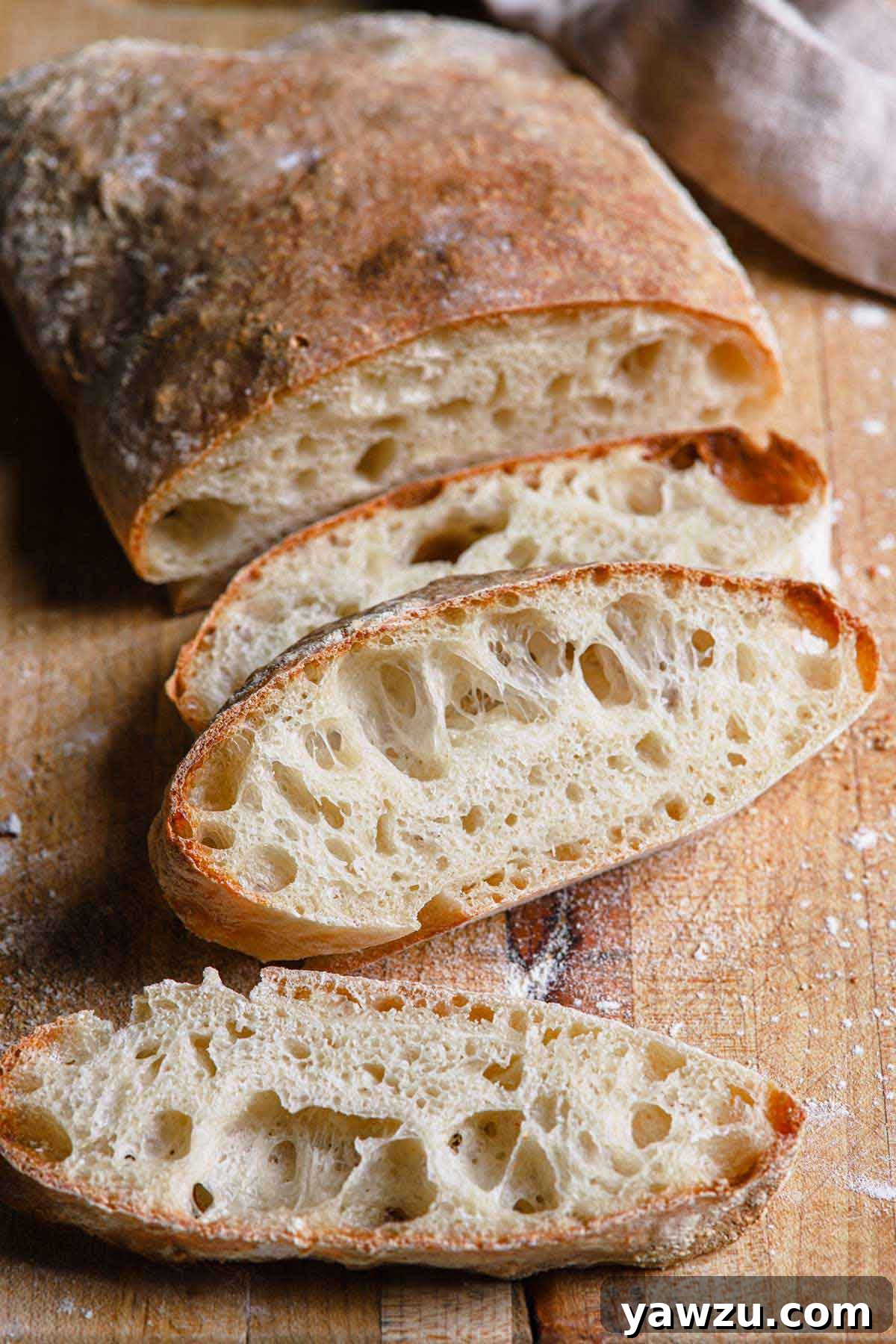
There’s a profound satisfaction that comes with baking homemade bread, a ritual that transcends simple cooking. The comforting aroma of yeast and fresh, rising dough fills the kitchen, creating an atmosphere of warmth and anticipation. For many, it evokes images of cozy afternoons, perhaps curled up on a wrap-around porch, lost in a good book as a gentle rain falls outside. This ciabatta recipe brings that peaceful, rewarding experience directly to your home.
Why You’ll Fall in Love with This Ciabatta Recipe
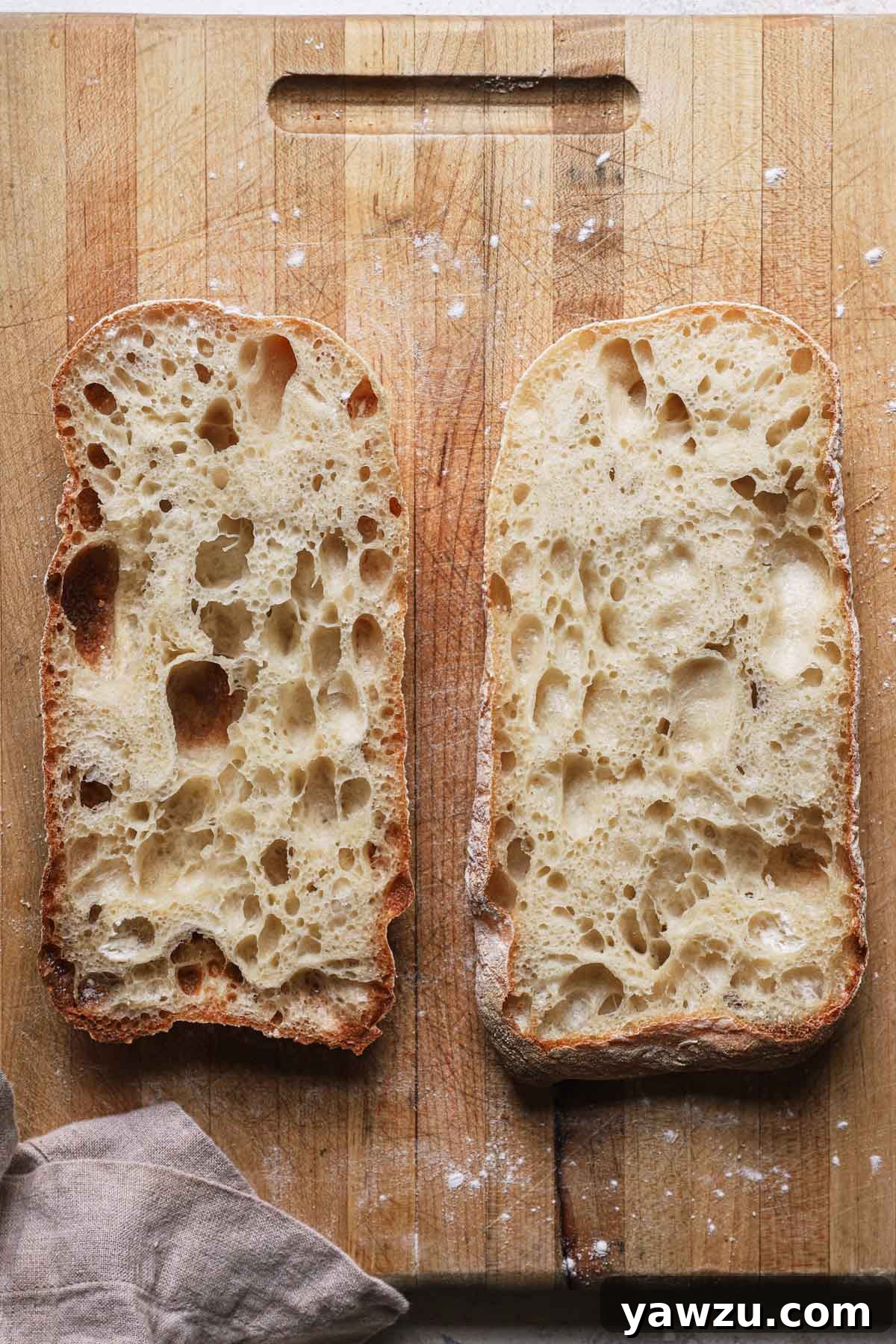
For years, I’ve been captivated by ciabatta bread – its distinctively chewy, lightly crisp exterior and the incredibly soft, open crumb speckled with irregular air holes. This isn’t just any bread; it’s a versatile culinary canvas. Imagine tearing off a piece and dunking it into a rich minestrone, or slicing it horizontally to create the foundation for an unforgettable panini. It’s also superb when converted into aromatic garlic bread, or simply slathered with sweet cream butter and savored until every last crumb is gone. This particular recipe stands out because it demystifies the art of ciabatta, proving that an artisanal loaf is well within your reach.
While the process requires a little foresight in planning, the actual hands-on time is surprisingly minimal – less than an hour in total. Moreover, ciabatta dough is remarkably forgiving, making it an excellent project for bakers of all skill levels. You don’t need to be a professional to achieve that authentic Italian taste and texture. Get ready to impress yourself and your loved ones with this incredible homemade ciabatta!
The Allure of Ciabatta: More Than Just Bread
Ciabatta, meaning “slipper” in Italian, earned its name from its distinctive, flattened, slipper-like shape. Originating in Italy in the early 1980s as a response to the popularity of French baguettes, it quickly gained global acclaim. What sets ciabatta apart is its remarkably open, airy structure, often referred to as a “custardy” interior, enveloped by a thin, crackly crust. This unique texture is primarily due to its high hydration level – a greater proportion of water to flour than many other breads – and a slow, overnight fermentation process utilizing a pre-ferment known as a biga or sponge.
Baking ciabatta at home isn’t just about creating a delicious loaf; it’s about connecting with a rich baking tradition. It’s about understanding the delicate balance of ingredients and the transformative power of time and gentle handling. The anticipation of seeing those large, irregular air pockets form, hearing the crackle of the crust fresh from the oven, and experiencing the unparalleled taste of freshly baked bread makes every step of this process incredibly rewarding. This recipe guides you through each stage, ensuring you achieve a result that’s both beautiful to behold and utterly irresistible to eat.
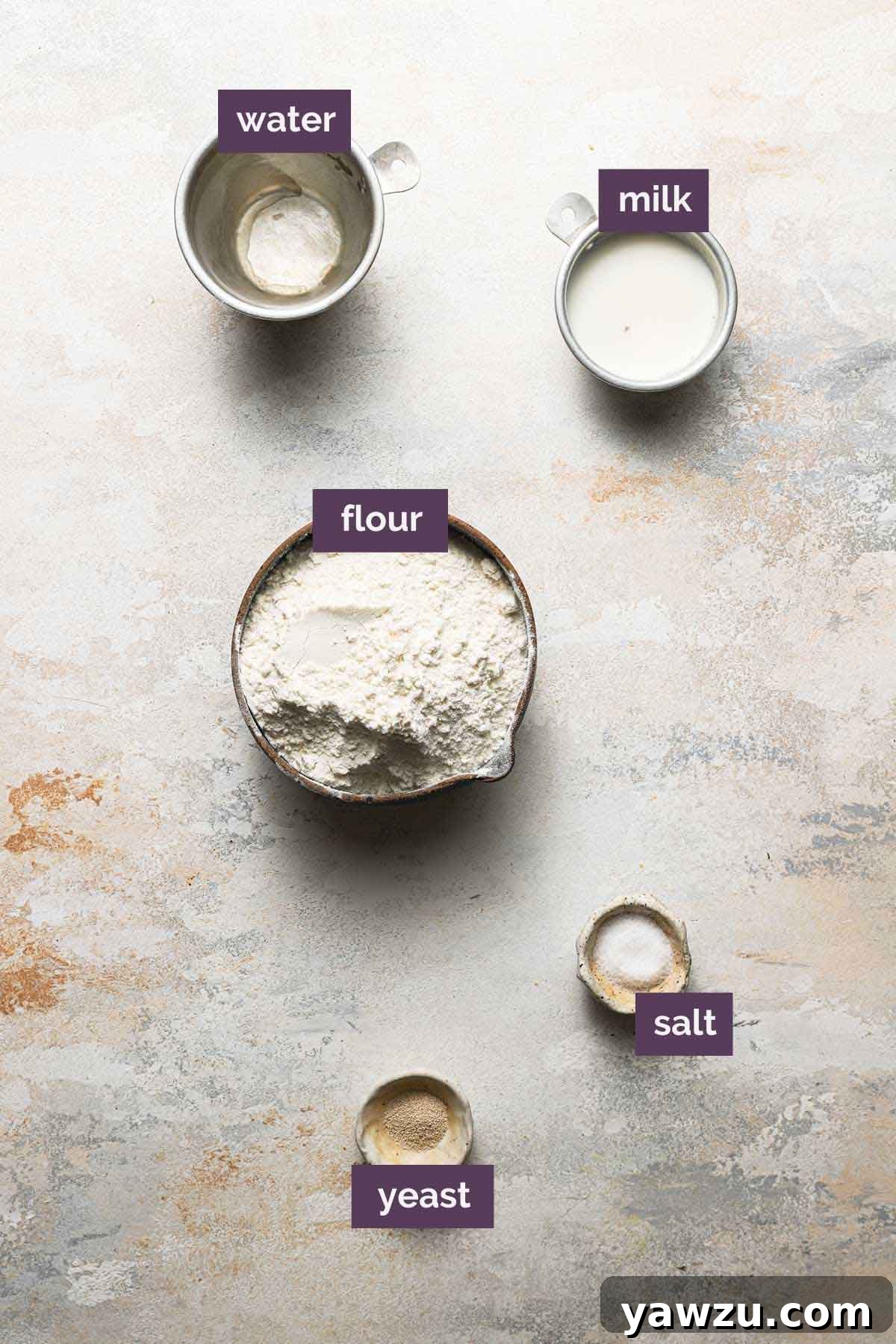
Essential Ingredients for Authentic Ciabatta
The true beauty of ciabatta lies in its incredibly simplistic and rustic nature, relying on just a few core ingredients to achieve its extraordinary texture and flavor. Below is a detailed overview of the components we’ll use, along with important notes and potential substitutions to guide your baking:
- All-Purpose Flour: For this recipe, we opt for high-quality all-purpose flour. Its moderate protein content is perfectly suited to produce a ciabatta with an ideal rise and that signature airy, open texture. While bread flour might seem like a natural choice for yeast breads, substituting it here would result in a denser, chewier, and less airy loaf, deviating from the classic ciabatta profile.
- Yeast: We utilize instant yeast, which offers the convenience of being directly mixed into dry ingredients without prior activation. If you need to substitute active dry yeast, a slight adjustment is necessary: you’ll first need to activate it in both the sponge and the main dough. Ensure your water is warm (ideally between 100 to 110 degrees F), sprinkle the yeast over the water, give it a quick stir, and then wait 10 to 15 minutes until a foamy layer appears on the surface. This indicates the yeast is active and ready, at which point you can proceed with the rest of the recipe.
- Water: A profoundly vital component! Ciabatta dough is renowned as a high-hydration dough, meaning it contains a significant ratio of water to flour. This characteristic is precisely what contributes to its exceptionally open crumb and moist interior. For this reason, you’ll quickly notice that the dough is quite sticky and very wet – a hallmark of authentic ciabatta. Don’t be alarmed; we will discuss below how best to manage and handle this unique dough.
- Salt: Far more than just a flavor enhancer, salt plays a crucial multifaceted role in bread baking. It not only balances and deepens the overall flavor profile of the bread but also aids significantly in developing a beautiful golden-brown crust, controls the rate of yeast fermentation and thus the rise of the dough, and contributes to the strengthening and development of gluten. Never omit the salt in your ciabatta!
- Milk: A protein found in milk helps to delicately control the size and distribution of the air bubbles within the ciabatta’s crumb, leading to a more consistent and appealing internal structure. Without it, the air holes can become excessively large, potentially compromising the bread’s overall integrity and chewiness. Whole milk or 2% milk are ideal choices for their fat content, but 1% can be used in a pinch without drastically altering the result. For a dairy-free alternative, you can substitute 2 tablespoons of nonfat milk powder, increasing the water in the main dough step to 1 cup to maintain the correct hydration.
Crafting Ciabatta: A Two-Part Dough Process
The distinctive characteristics of ciabatta bread – its complex flavor, airy texture, and remarkable chew – are largely attributed to its unique two-stage dough preparation process. This method, rooted in traditional Italian baking, allows for deep flavor development and optimal gluten structure:
- Sponge (or Biga): This foundational mixture is prepared the day before you intend to bake your loaves. It consists simply of flour, a tiny amount of yeast, and water. By allowing this mixture to ferment slowly overnight (or for up to 24 hours), it develops a rich, slightly tangy flavor profile and creates a more extensible dough, which is crucial for those signature large air bubbles. The biga essentially kick-starts the flavor and texture development long before the final dough is even mixed.
- Dough: On the following day, you will combine the matured sponge with the remaining dough ingredients. The sponge acts as a powerful starter, integrating its developed flavors and active yeast into the fresh ingredients, resulting in a cohesive, flavorful, and vibrant dough ready for its final transformation into ciabatta loaves. This two-step process, while requiring a bit of patience, is key to achieving truly authentic results.
How to Make the Ciabatta Dough: Step-by-Step Guide
Let’s walk through the methodical yet straightforward process of bringing this wonderful ciabatta dough together, ensuring each step builds towards a perfect loaf:
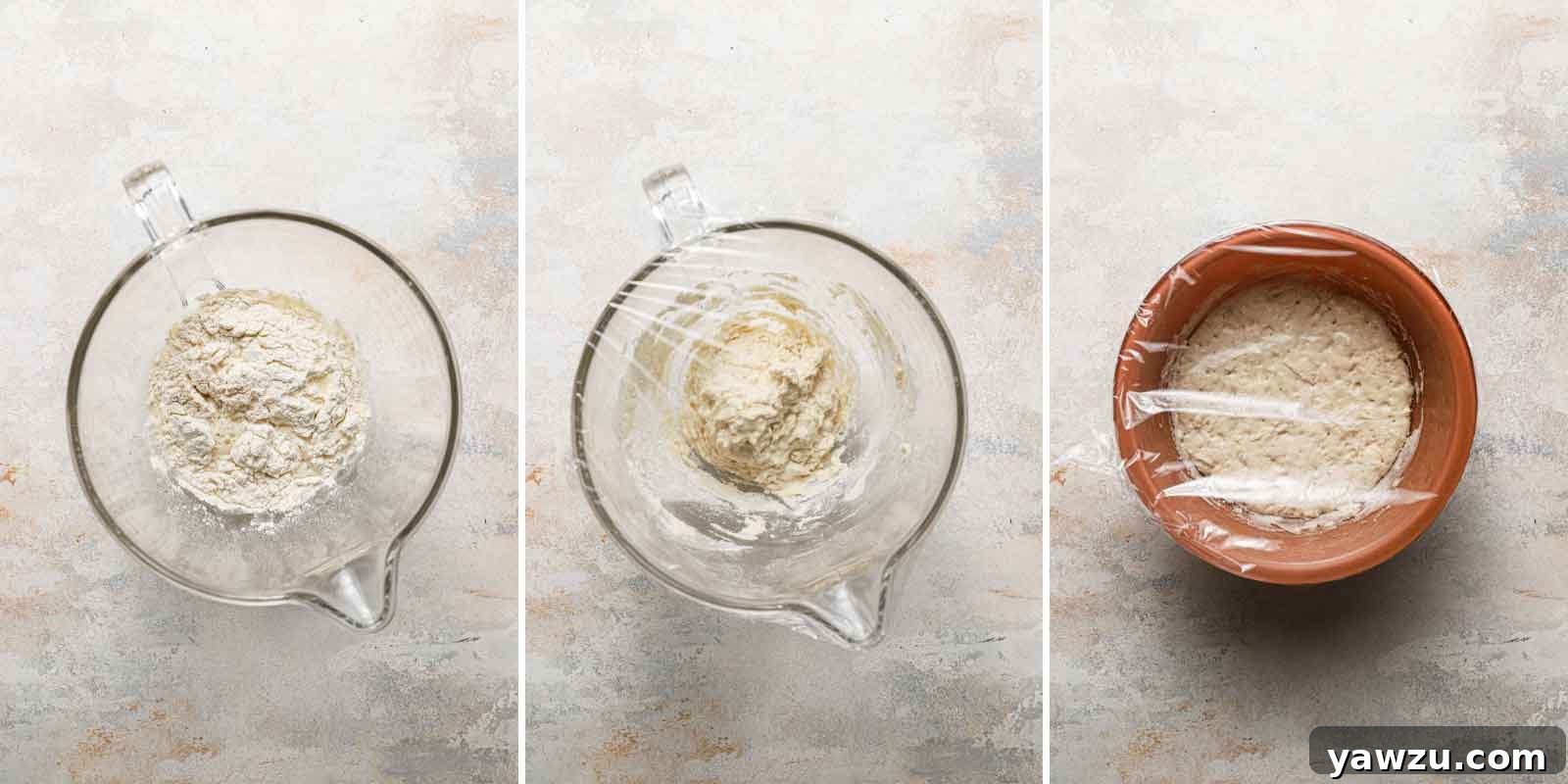
Step #1: Prepare the Sponge (Biga) – The Day Before Baking
In a medium-sized bowl, combine the specified amount of all-purpose flour, a tiny pinch of instant yeast, and room-temperature water. Stir these ingredients thoroughly with a sturdy wooden spoon until they form a uniform, shaggy mass. There’s no need for extensive kneading at this stage. Once mixed, cover the bowl tightly with plastic wrap to prevent air exposure and set it aside at room temperature for a minimum of 8 hours, or ideally, up to 24 hours. During this period, the yeast will slowly ferment, developing rich flavors and contributing to the incredible structure of your future ciabatta. You’ll notice it becomes bubbly and slightly tangy.
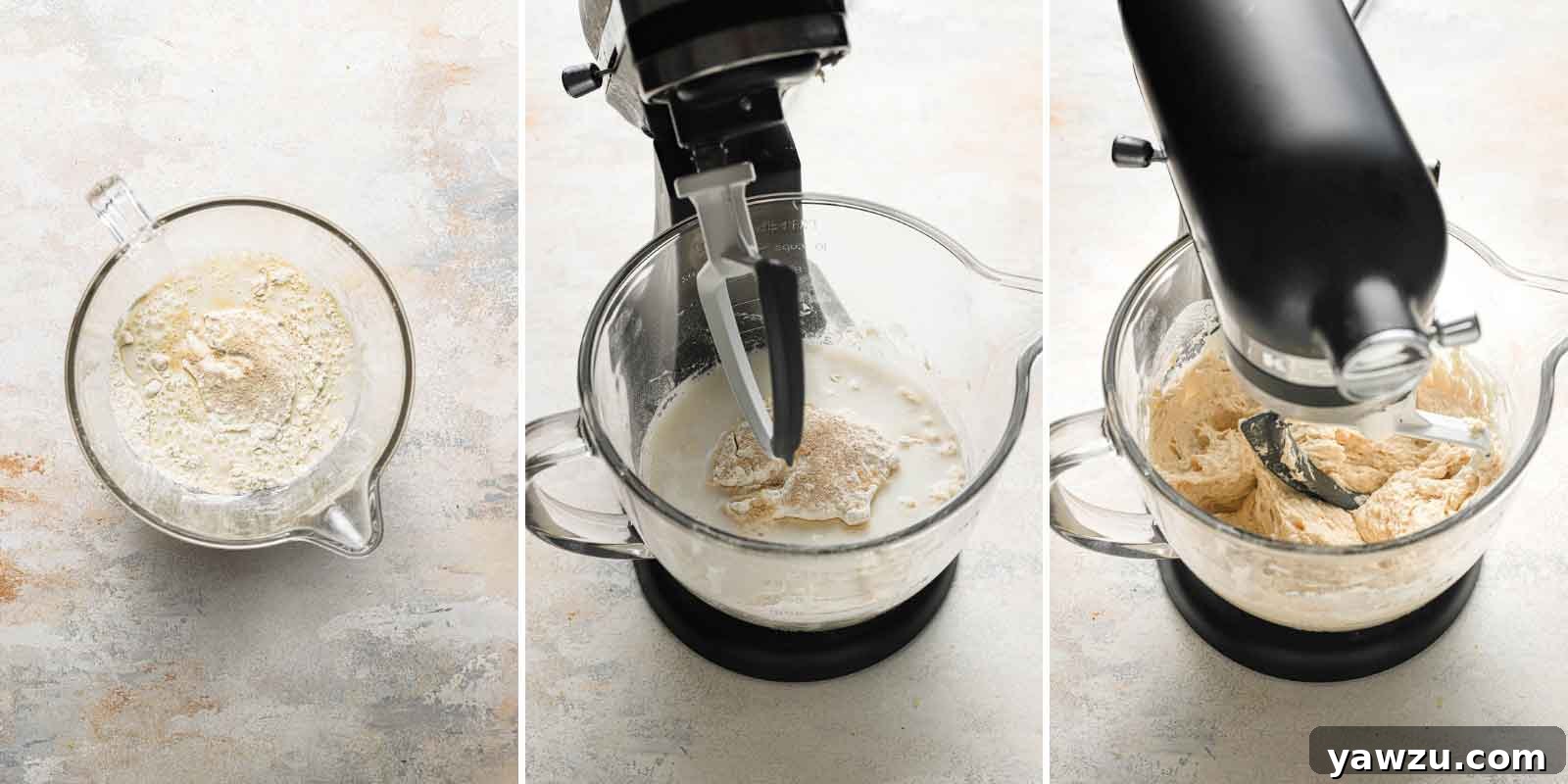
Step #2: Mix the Main Dough – The Next Day
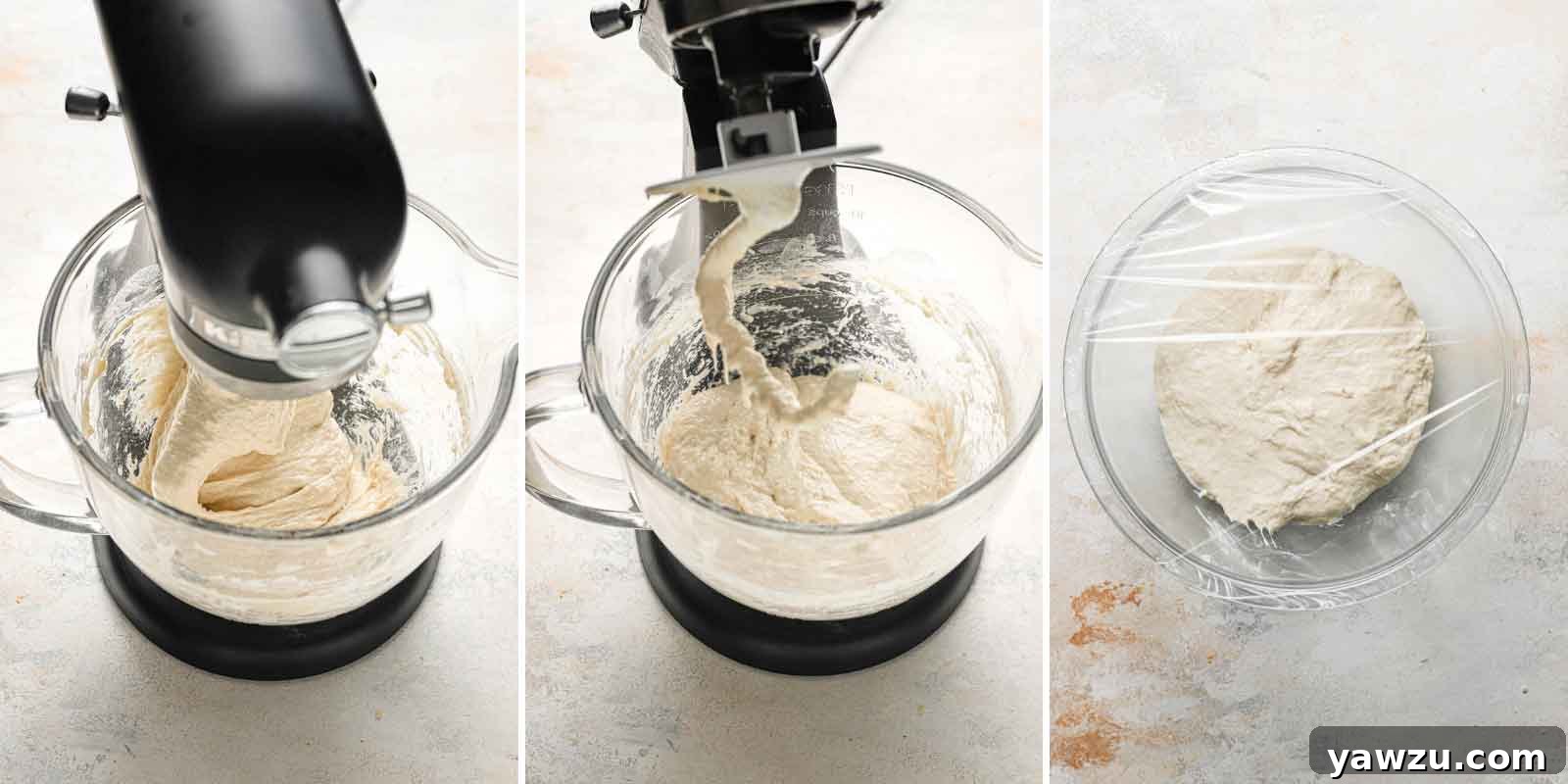
Transfer the matured sponge from the previous day into the bowl of a stand mixer. Add all the remaining dough ingredients: the additional flour, salt, instant yeast, water, and milk. Fit your stand mixer with the paddle attachment and begin mixing on low speed. Continue mixing until all the ingredients are well combined and a shaggy, somewhat sticky dough forms, typically within about 1 minute. Make sure to occasionally scrape down the sides of the bowl and the paddle to ensure everything is incorporated. Increase the speed to medium-low and continue mixing. The dough will gradually transform, becoming a uniform mass that clings to the paddle and starts to pull away from the sides of the bowl – this process usually takes between 4 to 6 minutes. Next, switch to the dough hook attachment. Knead the dough on medium speed for approximately 10 minutes. During this kneading, the dough will become noticeably smoother and shinier, though it will remain very sticky due to its high hydration. Resist the urge to add more flour; this stickiness is essential for the characteristic open crumb.
Step #3: The First Rise (Bulk Fermentation)
Carefully transfer the very sticky dough into a large, lightly oiled bowl. Cover the bowl tightly with plastic wrap, creating an airtight seal. Allow the dough to rest and rise at room temperature until it has visibly doubled in size. This primary fermentation typically takes about 1 hour, depending on your room’s ambient temperature. This is a crucial stage where the yeast produces gases, creating the internal structure and contributing to the dough’s airy quality. Be patient and let the dough take its time to fully develop.
The Secret to Ciabatta’s Air: Mastering the Dough Folding Technique
The folding process might initially seem a bit unusual or tedious, but it is an absolutely integral step in achieving those characteristic, picture-perfect large air bubbles and strengthening the dough’s gluten structure without heavy kneading. This technique gently develops the dough’s elasticity and creates layers that trap gas, leading to an incredibly open crumb. Here’s how to execute it perfectly:
First, ensure your rubber spatula or bowl scraper is lightly sprayed with non-stick cooking spray or rubbed with a small amount of olive oil. This prevents the very sticky, high-hydration dough from adhering to your tool.
With your prepared spatula or scraper, gently lift one end of the dough from the edge of the bowl and fold it over itself towards the middle. Rotate the bowl 90 degrees, then repeat the lifting and folding action. Continue this process six more times, for a total of eight gentle folds. This isn’t about deflating the dough but rather about building tension and strength within its structure.
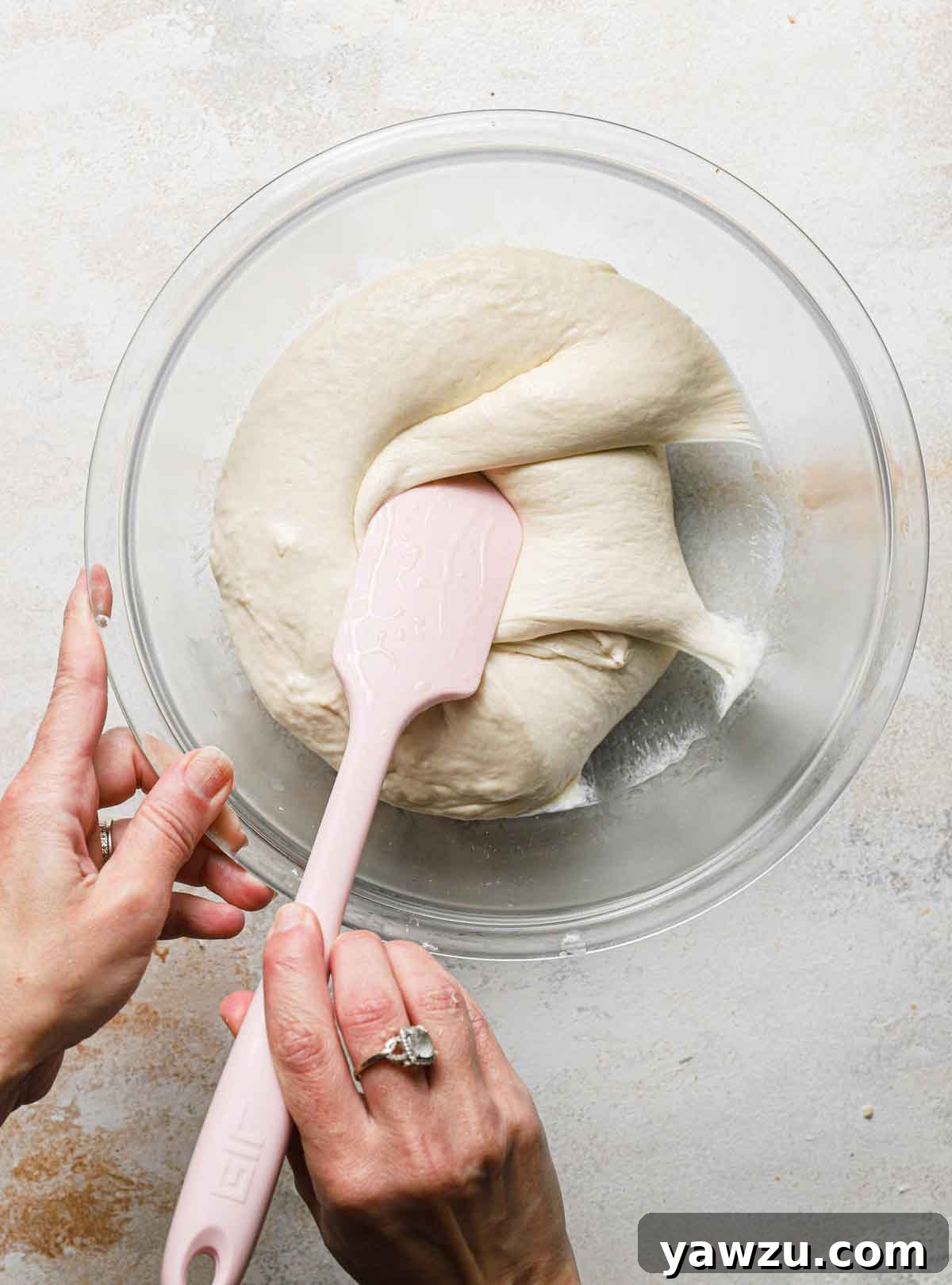
Once the eight folds are complete, cover the bowl again tightly with plastic wrap and allow the dough to rest and rise for another 30 minutes. This short rest allows the gluten to relax and the dough to regain some of its airiness. After 30 minutes, repeat the exact same folding process one more time. This second round of folding further develops the dough’s strength and internal structure, which is crucial for the final bake. Once this second set of folds is done, re-cover the dough and allow it to double in size before you proceed to the final shaping stage. This patient approach to folding and resting is the key to ciabatta’s unique light and airy texture.
Shaping the Characteristic “Slipper” Loaves
The final shaping of the ciabatta loaves, just before baking, is what gives this bread its iconic “slipper” shape – a characteristic from which its Italian name, “ciabatta,” meaning slipper, originates. The bread was affectionately given this name because its oblong, somewhat flattened form resembles a well-worn slipper. It’s important to handle the dough gently during this stage to preserve as much of the precious air as possible.
Shaping Step #1: Prepare and Divide the Dough
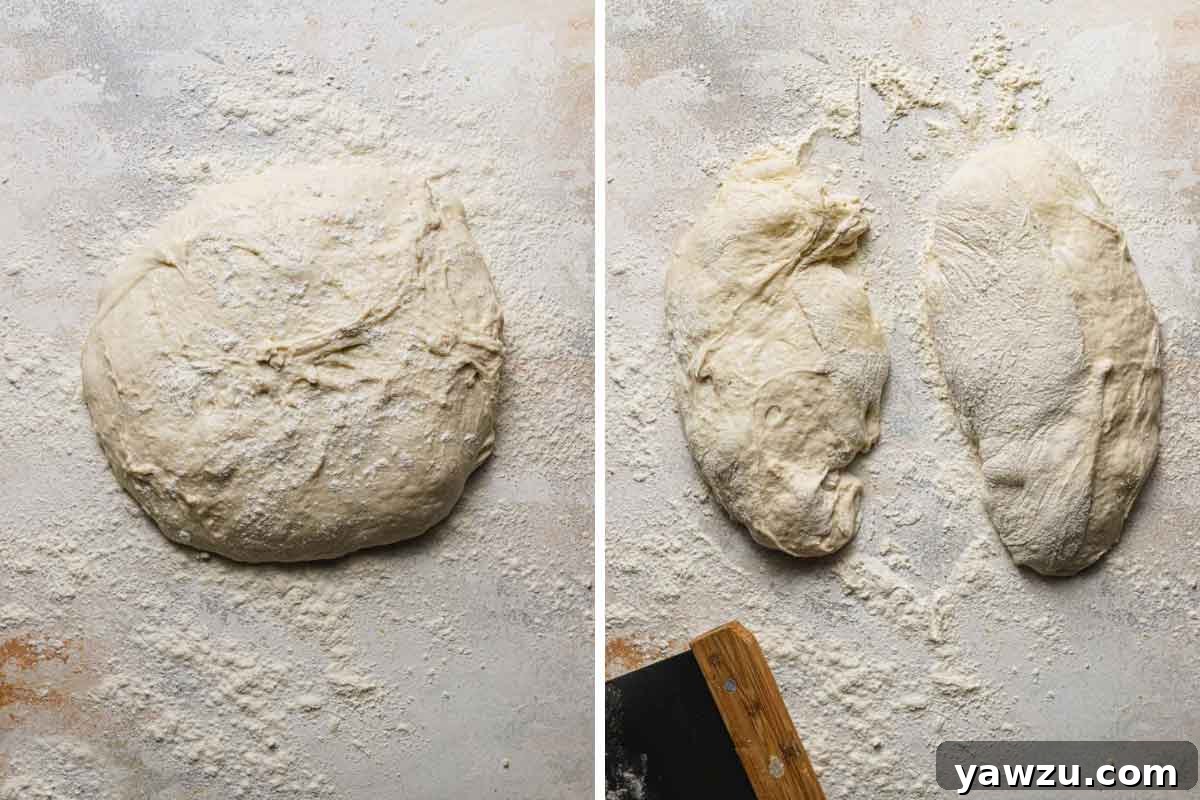
Lightly flour your work surface, ensuring it’s generously dusted. Gently turn the risen dough out onto this floured surface, taking utmost care not to completely deflate it. Liberally dust the top of the dough with more flour. Using a bench scraper, carefully divide the dough in half, creating two equal portions for your loaves.
Shaping Step #2: Form the Loaves
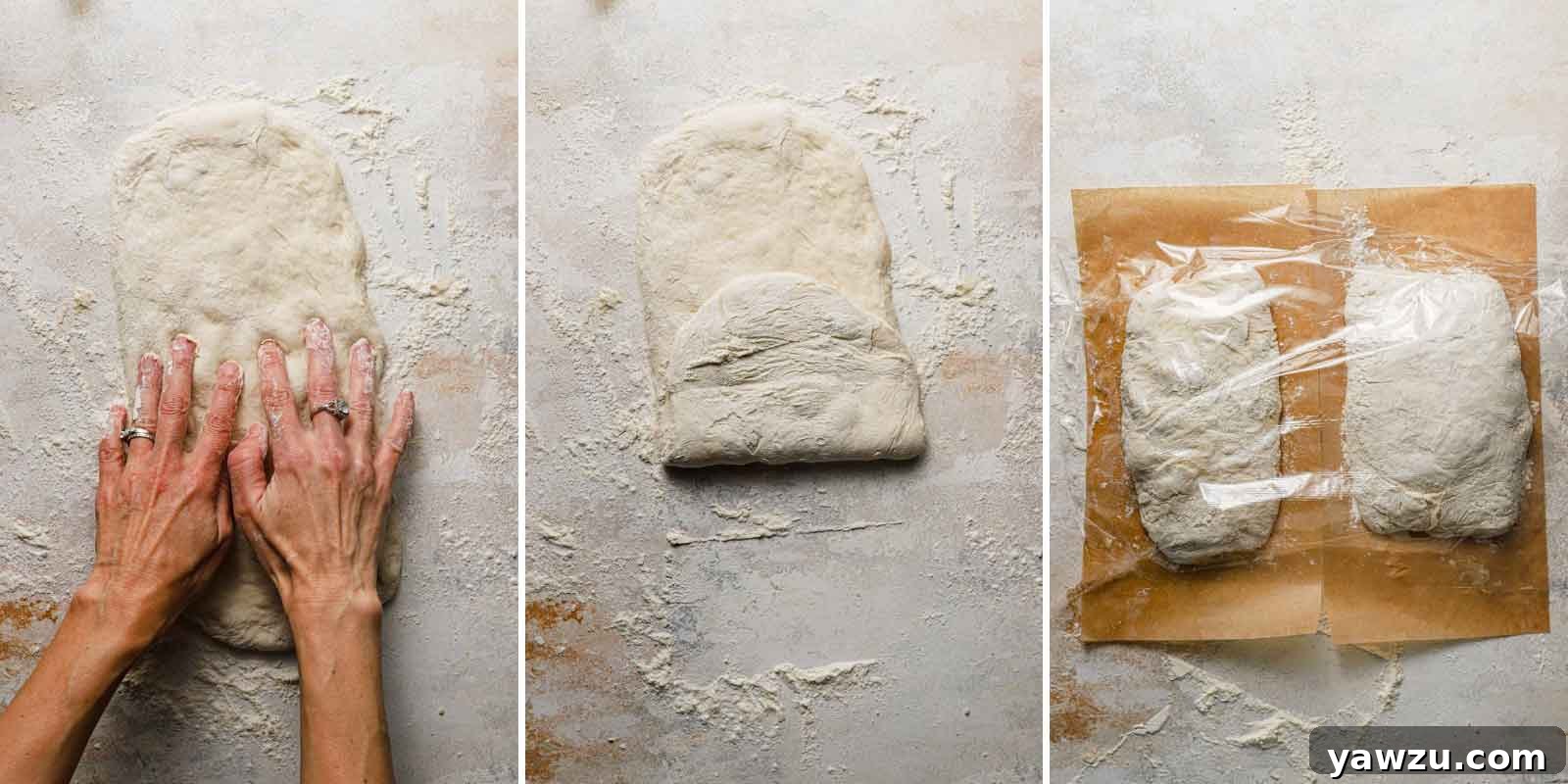
Take one piece of dough and place it cut-side-up on your floured surface, dusting it again lightly with flour. With well-floured fingertips, gently press the dough into a rough 12×6-inch rectangle. You’re not aiming for perfection, but rather a general elongated shape. Once you have your rectangle, fold one of the shorter ends of the dough towards the middle, and then fold the other shorter end over the top of the first fold, much like you would fold a letter into thirds. This technique helps to build a slight tension and shape into the loaf. Repeat this exact process with the second piece of dough.
Shaping Step #3: Final Proofing
Cut two rectangular pieces of parchment paper, each approximately 12×6 inches, and dust them liberally with flour. Gently transfer each shaped loaf, seam-side-down, onto its own floured parchment sheet. Dust the tops of the loaves with a bit more flour, then cover them loosely with plastic wrap. Allow the loaves to sit and undergo their final short proofing at room temperature for 30 minutes. During this time, you should observe small bubbles developing on the surface of the dough, indicating active fermentation and readiness for the oven.
Baking Your Ciabatta to Golden Perfection
The final stage of baking is where your ciabatta truly comes to life, developing its signature crispy crust and tender interior. Approximately one hour before you plan to bake, adjust an oven rack to the lower-middle position and place a baking stone (or an inverted heavy-duty baking sheet) on it. Preheat your oven to a robust 450 degrees F (230 degrees C). Allowing the stone to preheat thoroughly is essential for providing an initial burst of heat to the dough, which helps create a superior crust and oven spring.
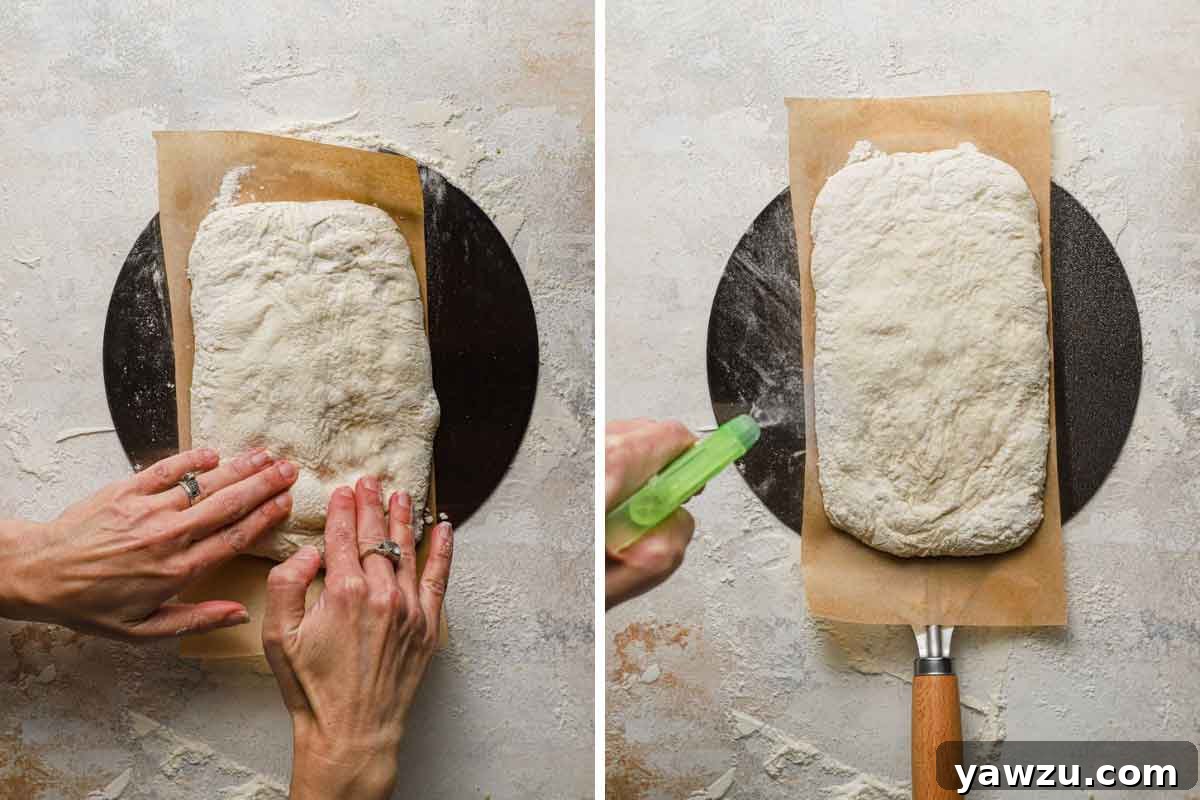
When the 30-minute final proofing time is complete, carefully slide the parchment pieces, each carrying a loaf, onto a pizza peel. Using floured fingertips, gently but evenly poke the entire surface of each loaf to help further shape it into a 10×6-inch rectangle and encourage open crumb development. Lightly spritz the tops of the loaves with water using a spray bottle. This added moisture is critical for creating a steamy environment in the oven, which delays crust formation, allowing the bread to expand fully and achieve that desirable thin, crisp crust. Quickly and carefully, slide the loaves and their parchment onto the preheated baking stone in the oven.
To further enhance the crust, spray the loaves with water twice more during the first 5 minutes of baking. Continue baking until the crust achieves a deep golden-brown color and, most importantly, the internal temperature of the bread registers 210 degrees F (99 degrees C) when checked with a digital instant-read thermometer. This typically takes between 22 to 27 minutes. The precise temperature ensures the bread is fully cooked through without being over-baked. Once baked, carefully transfer the loaves to a wire rack, discard the parchment paper, and allow them to cool completely to room temperature for at least 1 hour before slicing and serving. This cooling period is vital; it allows the internal structure to set and flavors to fully develop, preventing a gummy interior.
Recipe Notes, Expert Tips, and Frequently Asked Questions
To ensure your ciabatta baking experience is as smooth and successful as possible, here are some comprehensive notes and answers to commonly asked questions:
- Recommended Equipment: While not all strictly essential, certain tools significantly enhance the ciabatta baking process. I highly recommend using a stand mixer for handling the high-hydration dough, a bowl scraper and bench scraper for easy dough handling, a baking stone for superior crust development (or an inverted baking sheet), parchment paper for easy transfer, a pizza peel (if using a baking stone), a spray bottle for creating steam, a digital instant-read thermometer for accurate doneness, and a wire cooling rack for proper cooling.
- Yeast Alternatives: As mentioned, if you choose to use active dry yeast instead of instant yeast, remember the crucial step of activating it first in warm water (100-110°F or 38-43°C) until it becomes foamy. This ensures your dough rises properly.
- Milk Variations: For the richest flavor and best texture, whole milk is preferred. However, 2% or even 1% milk can be used as satisfactory substitutes. For a convenient alternative or if you need to avoid liquid dairy, 2 tablespoons of nonfat milk powder can be used; just increase the water in the main dough to 1 cup to compensate for the liquid milk.
- The Importance of a Stand Mixer: Due to the exceptionally high hydration of ciabatta dough, which makes it very wet and sticky, a stand mixer is almost indispensable. It allows for proper gluten development without the frustration of handling an unmanageable dough by hand. While it’s technically possible to knead by hand, it requires significant experience and patience.
- Handling High-Hydration Dough: The key to successfully working with this very wet and sticky dough is to do so quickly and gently. Over-handling or aggressively manipulating the dough will deflate the precious air pockets you’ve worked so hard to create, resulting in flat, dense, and tough loaves. Whenever possible, use a bowl scraper to manipulate the dough. If you must use your hands, ensure they are well-floured to minimize sticking.
- Baking Stone Alternative: If you don’t own a dedicated baking stone, a sturdy baking sheet turned upside down and placed on the lowest oven rack during preheating will serve as an excellent substitute, providing a similar conductive heat source for a crispy crust.
- Making Ciabatta Rolls: For individual ciabatta rolls, after the final shaping step, use your bench scraper to divide each shaped loaf into 6 or 8 even-sized portions. Arrange these portions on the parchment sheet, ensuring they are separated enough so they don’t touch during their final proof and bake.
- Storage Guidelines: Freshly baked ciabatta is best enjoyed within a day or two. Store it at room temperature, wrapped tightly in foil or a bread bag, for up to 2 days to maintain its freshness.
- Reheating for Freshness: To bring back that “fresh from the oven” feel, wrap the bread (or a portion of it) loosely in foil and place it in a 450-degree F (230°C) oven for 6 to 8 minutes. This gently warms and re-crisps the crust without drying out the interior.
- Freezing Ciabatta: Ciabatta freezes beautifully, allowing you to enjoy homemade bread for longer. Wrap tightly in a double layer of foil, then place it inside a large freezer bag to protect against freezer burn. It can be frozen for up to 3 months. To serve, thaw the bread at room temperature, then re-crisp the crust using the reheating method described above.
Serving Suggestions for Your Homemade Ciabatta
Once your homemade ciabatta has cooled to perfection, a world of culinary possibilities opens up. Its versatile nature makes it an ideal companion for countless dishes. Here are a few ideas to get you started:
- Classic Dipping: The ultimate way to enjoy ciabatta is simply torn into pieces and dipped into high-quality olive oil, perhaps infused with balsamic vinegar, fresh herbs, or a pinch of red pepper flakes.
- Spectacular Sandwiches & Paninis: Its sturdy yet airy crumb is perfect for hearty sandwiches. Slice it horizontally and fill with Italian cold cuts, fresh mozzarella, ripe tomatoes, basil, and a drizzle of pesto. For a warm treat, press it into a panini with grilled vegetables, cheese, and your favorite fillings.
- Bruschetta & Crostini: Toast thin slices, rub with a garlic clove, drizzle with olive oil, and top with fresh tomato bruschetta, tapenade, or various cheeses and cured meats for elegant appetizers.
- Alongside Soups and Stews: As mentioned, ciabatta is an unparalleled choice for soaking up the rich broths of soups, stews, and chili. Its open texture soaks up flavor beautifully.
- Garlic Bread Reinvented: Transform leftover ciabatta into the most incredible garlic bread. Slice, spread with a mixture of butter, minced garlic, and parsley, then toast until golden and fragrant.
- With Cheese and Charcuterie: Serve alongside a platter of artisanal cheeses, cured meats, and fresh fruits for a sophisticated snack or light meal.
Troubleshooting Common Ciabatta Challenges
Even with the best recipe, baking can sometimes present challenges. Here’s a quick guide to common issues you might encounter with ciabatta and how to fix them:
- Flat, Dense Loaves: This is often a sign of over-handling the dough, which deflates the trapped gases, or under-proofing. Ensure you are gentle during folding and shaping, and allow the dough to fully double in size during its rises.
- Gummy or Underbaked Interior: This usually means the bread didn’t bake long enough, or the oven temperature wasn’t consistent. Always rely on an instant-read thermometer to confirm doneness (210°F/99°C). Also, ensure proper cooling time is observed.
- Crust Not Crisp Enough: A lack of steam in the oven is the usual culprit. Be sure to generously spritz the loaves with water at the beginning of the bake to create that crucial steamy environment. A preheated baking stone also contributes significantly to crust development.
- Small or Uneven Air Bubbles: This could be due to insufficient hydration (dough too stiff), not enough folding to develop gluten, or cutting into the dough too aggressively during shaping. Ensure your dough is sticky as instructed and follow the folding steps meticulously.
- Dough Too Sticky to Handle: Ciabatta dough is inherently sticky. This is normal! Avoid the temptation to add extra flour. Instead, rely on generously floured hands and a well-oiled or floured bench/bowl scraper for handling. Working quickly and confidently also helps.
More Popular Homemade Bread Recipes
- The Best White Bread Recipe
- Grandma’s Banana Nut Bread
- Copycat Pizza Hut Breadsticks
- Classic Italian Bread Recipe
- Spicy Cheese Bread
Ciabatta Bread
Yield: 18 servings (2 loaves)
Prep Time: 1 hr
Cook Time: 25 mins
Resting Time: 10 hrs
Total Time: 11 hrs 25 mins
This easy ciabatta bread recipe results in beautiful rustic loaves with a perfectly chewy interior texture studded with wonderfully large air bubbles. It’s practically begging to be dipped into your favorite soup or stew.
Ingredients
For the Sponge:
- 1 cup (130 g) all-purpose flour
- ⅛ teaspoon instant yeast
- ½ cup (120 ml) water, at room temperature
For the Dough:
- 2 cups (260 g) all-purpose flour
- 1½ teaspoons salt
- ½ teaspoon instant yeast
- ¾ cup (180 ml) water, at room temperature
- ¼ cup (60 ml) whole or 2% milk, at room temperature
Instructions
- Make the Sponge: Combine the 1 cup flour, ⅛ teaspoon yeast, and ½ cup water in a medium bowl. Stir with a wooden spoon until a uniform mass forms. Cover the bowl tightly with plastic wrap and let stand at room temperature for at least 8 hours or up to 24 hours.
- Make the Dough: Place the sponge and the dough ingredients (flour, salt, yeast, water, and milk) in the bowl of a stand mixer fitted with the paddle attachment. Mix on low speed until combined and a shaggy dough forms, about 1 minute, scraping down the bowl and paddle as needed. Increase the speed to medium-low and continue mixing until the dough becomes a uniform mass that collects on the paddle and pulls away from the sides of the bowl, 4 to 6 minutes.
- Change to the dough hook and knead the bread on medium speed until smooth and shiny (the dough will be very sticky), about 10 minutes.
- Transfer the dough to a large bowl, cover tightly with plastic wrap, and let rise at room temperature until doubled in size, about 1 hour.
- Spray a rubber spatula or bowl scraper with non-stick cooking spray. Fold the dough over itself by gently lifting and folding the edge of the dough toward the middle. Turn the bowl 90 degrees, and fold again. Turn the bowl and fold the dough 6 more times (for a total of 8 times).
- Cover with plastic wrap and let rise for 30 minutes.
- Repeat the folding as in the previous folding step, replace the plastic wrap, and let rise until doubled in size, about 30 minutes.
- One hour before baking, adjust an oven rack to the lower-middle position, place a baking stone on the rack, and preheat the oven to 450 degrees F (230°C).
- Cut two 12×6-inch pieces of parchment paper and dust liberally with flour. Transfer the dough to a floured work surface, being careful not to deflate it completely. Liberally flour the top of the dough and divide it in half with a bench scraper. Turn 1 piece of dough cut-side-up and dust with flour. With well-floured hands, press the dough into a rough 12×6-inch rectangle. Fold the shorter sides of the dough toward the center, overlapping them like you would fold a letter in thirds, to form a 7×4-inch rectangle. Repeat with the second piece of dough.
- Gently transfer each loaf, seam-side-down, to the parchment sheets, dust with flour, and cover with plastic wrap. Let the loaves sit at room temperature for 30 minutes (the surface of the loaves will develop small bubbles).
- Slide the parchment pieces with the loaves onto a pizza peel. Using floured fingertips, evenly poke the entire surface of each loaf to form a 10×6-inch rectangle; spray the loaves lightly with water. Slide the loaves and parchment onto the baking stone. Bake, spraying the loaves with water twice more during the first 5 minutes of baking time, until the crust is deep golden brown and the loaves register 210 degrees F (99°C), 22 to 27 minutes.
- Transfer the loaves to a wire rack, discard the parchment, and let cool to room temperature for at least 1 hour before slicing and serving. The bread can be wrapped in a double layer of plastic wrap and stored at room temperature for up to 3 days. Wrapped with an additional layer of foil, the bread can be frozen for up to 1 month. To recrisp the crust, thaw the bread at room temperature (if frozen), and place unwrapped bread in 450-degree F (230°C) oven for 6 to 8 minutes.
Notes
- Equipment: To make the most of this recipe, I recommend using the following pieces of equipment: stand mixer / bowl scraper / bench scraper / baking stone / parchment paper / pizza peel / spray bottle / digital instant-read thermometer / wire cooling rack
- Yeast: If you substitute active yeast instead of instant yeast, you will need to be sure to activate it in warm water first, instead of simply mixing it with the flour and room temperature water.
- Milk: Whole milk is preferred, but 2% or 1% can also be used. You can also substitute 2 tablespoons of nonfat milk powder (increase water in dough to 1 cup).
- Stand Mixer: Due to the high hydration of this dough and how sticky it is, a stand mixer is important for being able to manage the dough properly.
- Handling the Dough: Keep in mind that this dough is very wet and sticky; the key to working it well is to do so quickly and gently. Too much heavy-handling of the dough will result in flat, tough loaves. Use a bowl scraper when possible and if you need to use your hands, make sure they are well-floured.
- Baking Stone: If you do not have a baking stone, you can use a baking sheet that is turned upside down on the lowest oven rack and preheated as directed.
- Making Ciabatta Rolls: To make rolls, use a bench scrape to divide each loaf into 6 or 8 even-sized portions. Separate them a bit on the parchment sheet so they aren’t touching.
- Storage: The bread can be kept at room temperature, wrapped in foil, for up to 2 days.
- To Reheat the Bread: Keep it wrapped in foil and place in a 450-degree F (230°C) oven for 6 to 8 minutes.
- Freezing the Bread: Wrap tightly in foil, then place in a ziploc freezer bag and freeze for up to 3 months. Thaw at room temperature, then warm and re-crisp the crust using the reheating method above.
- Recipe adapted from Baking Illustrated.
Nutrition Information (per serving):
- Calories: 79 kcal
- Carbohydrates: 16 g
- Protein: 2 g
- Sodium: 196 mg
- Potassium: 29 mg
- Vitamin A: 5 IU
- Calcium: 7 mg
- Iron: 1 mg
Nutritional values are estimates based on one serving.
Did you make this recipe?
Leave a review below, then snap a picture and tag @thebrowneyedbaker on Instagram so I can see it!
Author: Michelle Lettrich
Course: Bread
Cuisine: American, Italian
This recipe was originally published in March 2014, with updates for improved clarity and user experience.
Photography by Dee Frances.