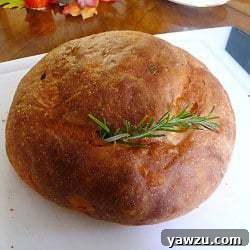
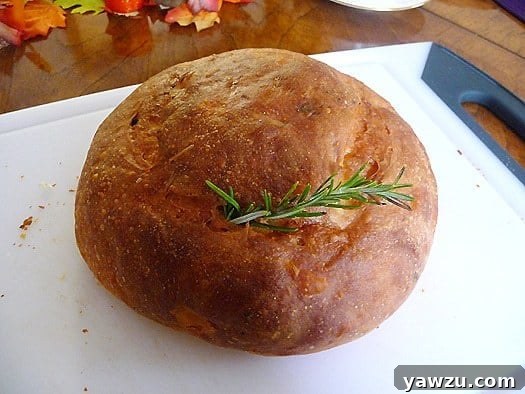
Experience the Aromatic Delight of Homemade Potato Rosemary Bread
Welcome, fellow bread enthusiasts! While World Bread Day may have officially passed last Friday, October 16th, the spirit of artisan baking lives on. My baking schedule often runs a delightful course of its own, but it has finally brought forth a recipe truly worth celebrating: an absolutely sensational Potato Rosemary Bread, perfect for kick-starting your week with warmth and flavor.
Each year, as World Bread Day approaches, I challenge myself to explore new horizons in the vast and wonderful world of bread making. It’s an exciting tradition where I delve into recipes that promise both novelty and a touch of complexity. Two years ago, I embarked on my very first participation in this global celebration, crafting a beautiful Brown Sugar Raisin Bread, which marked my inaugural journey into the art of swirled breads. Last year, I embraced the intricate challenge of braiding, successfully creating a magnificent Challah loaf.
This year, my quest for a distinctive bread led me through the pages of countless cookbooks. Time and again, one particular recipe seemed to call out to me, its description igniting a spark of curiosity and anticipation: Potato Rosemary Bread. The very name evokes images of comfort and rustic elegance. But what truly makes this recipe irresistible? The addition of coarse black pepper and wonderfully roasted garlic, transforming a simple potato bread into an extraordinary culinary experience. This delightful combination not only caught my eye but also perfectly fulfilled my annual requirement: trying something entirely new – the unique texture and flavor of potato bread.
Why Potato Rosemary Bread is an Absolute Must-Try
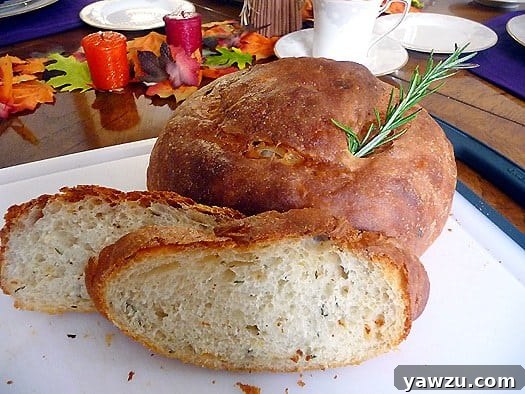
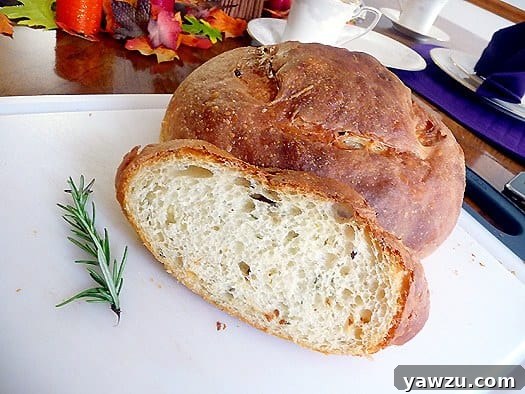
In all honesty, this bread is nothing short of spectacular. It stands out as one of the finest loaves I have ever had the pleasure of baking, easily earning a spot in my Top 5, and quite possibly even my Top 3. The magic truly lies in the potatoes, which impart an incredibly soft, tender crumb that is utterly distinct from conventional breads. Every ingredient plays a crucial role, but together, they create a symphony of sensational flavors that dance on your palate.
While the recipe lists roasted garlic as optional, I cannot emphasize enough how highly I recommend including it. Roasting garlic transforms its pungent raw flavor into a mellow, sweet, and deeply aromatic essence that elevates this bread to another level. It adds an unparalleled depth and complexity that you simply won’t want to miss. If you’ve never roasted garlic before, don’t fret – it’s surprisingly easy! I’ll be sharing a detailed tutorial with step-by-step pictures very soon, so keep an eye out for that. But for now, let’s focus on the bread itself.
Aromatic Bliss: More Than Just a Taste Sensation
It might sound a bit unconventional, but I found myself constantly, almost compulsively, smelling this bread. From the moment it began baking, our entire home was filled with the most incredible, comforting aroma – a fragrant blend of earthy potatoes, pungent rosemary, and the sweet, savory notes of roasted garlic. And once it was baked, cooled slightly, and sliced, the aroma intensified, becoming even more intoxicating. It’s a sensory experience that truly enhances the joy of eating this bread. The rich, golden crust gives way to an airy, moist interior, each bite a perfect balance of savory and herbaceous notes with a subtle hint of pepper. This bread isn’t just food; it’s an experience.
Beyond its exquisite taste and texture, this Potato Rosemary Bread offers a wonderful opportunity to utilize those leftover mashed potatoes sitting in your fridge. It’s an ingenious way to transform humble leftovers into something truly extraordinary. But what if you don’t have any mashed potatoes on hand? No problem at all! Who doesn’t love a fresh batch of mashed potatoes? Simply whip up a new batch, enjoy some alongside your dinner, and save a cup for this magnificent bread. Trust me, it’s worth the extra step.
The bottom line is simple: this Potato Rosemary Bread is an absolute must-add to your baking repertoire. It’s more than just a recipe; it’s an invitation to create something truly special. The soft crumb, the fragrant rosemary, the subtle kick of pepper, and the deep savoriness of roasted garlic combine to create a loaf that is both comforting and sophisticated. You, and everyone lucky enough to share a slice, will be incredibly glad you made it. It’s perfect as a side for a hearty meal, delicious slathered with butter, or even as the base for an elevated sandwich. Don’t hesitate; dive into this recipe and discover your new favorite homemade bread!
Looking for more delicious baking inspiration? Check out these past favorites:
1 year ago: Brownie Mosaic Cheesecake
2 years ago: Sweet Dinner Rolls
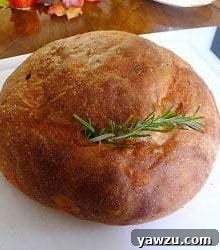
Potato Rosemary Bread: An Artisanal Homage
18
servings (Two 1-pound loaves or 18 dinner rolls)
30 minutes
45 minutes
2 hours
3 hours
15 minutes
Pin
Rate
Ingredients
For the Bread:
-
1¼
cups
(295.74
g)
biga (prepared according to the recipe below),
(approximately 7 ounces) -
3
cups
(375
g)
plus 2 Tablespoons unbleached high-gluten or bread flour,
(approximately 14 ounces) -
1½
teaspoons
(1.5
teaspoons)
salt,
(approximately 0.38 ounce) -
¼
teaspoon
(0.25
teaspoon)
black pepper, coarsely ground (optional, but highly recommended for a subtle kick),
(approximately 0.03 ounce) -
1¼
teaspoons
(1.25
teaspoons)
instant yeast,
(approximately 0.14 ounce) -
1
cup
(210
g)
mashed potatoes (plain, without additions like butter or milk, or with minimal additions),
(approximately 6 ounces) -
1
Tablespoon
olive oil,
(approximately 0.5 ounce) -
2
Tablespoons
coarsely chopped fresh rosemary (ensure it’s fresh for best aroma),
(approximately 0.25 ounce) -
¾
cup
(0.75
cup)
plus 2 Tablespoons to 1 cup water, at room temperature (or warm if the potatoes are cold, to aid yeast activation),
(approximately 7 to 8 ounces) -
4
Tablespoons
coarsely chopped roasted garlic (optional, but highly recommended for deep flavor),
(approximately 1 ounce) -
Semolina flour or cornmeal for dusting (prevents sticking and adds a rustic touch) -
Olive oil for brushing on top (for a golden, crisp crust)
For the Biga (Pre-ferment):
A biga is a type of pre-ferment used in Italian baking. It adds depth of flavor, improves crumb texture, and enhances the bread’s keeping qualities. This step requires overnight refrigeration, so plan accordingly.
-
2½
cups
(312.5
g)
unbleached bread flour,
(approximately 11.25 ounces) -
½
teaspoon
(0.5
teaspoon)
instant yeast,
(approximately 0.055 ounce) -
¾
cup
(0.75
cup)
plus 2 Tablespoons to 1 cup water, at room temperature,
(approximately 7 to 8 ounces)
Instructions
-
1. Prepare the Biga: In a 4-quart mixing bowl (or the bowl of an electric mixer), combine the bread flour and instant yeast. Gradually add ¾ cup plus 2 tablespoons of water, stirring continuously until all ingredients are fully incorporated and form a coarse, shaggy ball of dough. If using a stand mixer, mix on low speed with the paddle attachment for about 1 minute. At this stage, assess the dough’s consistency: it should be manageable, neither excessively sticky nor too stiff. It’s always better to err on the side of stickiness, as you can easily add more flour during kneading if necessary, while adding water to stiff dough is much harder.
-
Lightly flour a clean counter surface and transfer the dough onto it. Begin kneading by hand for 4 to 6 minutes until the dough becomes soft, pliable, and smooth, exhibiting a slightly tacky but not sticky feel. Alternatively, use a stand mixer with a dough hook attachment on medium speed for about 4 minutes. The ideal internal temperature of the dough should be between 77°F and 81°F (25°C to 27°C). This ensures optimal yeast activity for the pre-ferment.
-
Lightly grease a clean bowl with a small amount of oil. Transfer the kneaded dough to this bowl, turning it once or twice to ensure it is fully coated in the oil. Cover the bowl tightly with plastic wrap to prevent a skin from forming and place it at room temperature to ferment. Allow it to ferment for 2 to 4 hours, or until the dough has nearly doubled in size. This initial rise develops flavor and strength.
-
Once the initial fermentation is complete, gently remove the dough from the bowl and briefly knead it to degas (release the accumulated gases). Return the dough to the lightly oiled bowl, re-cover it with plastic wrap, and transfer it to the refrigerator. Allow it to chill overnight, which will further develop its complex flavors and improve texture. This biga can be stored in the refrigerator for up to 3 days, or frozen in an airtight plastic bag for up to 3 months, making it a convenient component for future baking projects.
-
2. Prepare the Biga for Main Dough: Approximately 1 hour before you intend to start mixing the main bread dough, remove the biga from the refrigerator. Using a pastry scraper or a serrated knife, cut the cold biga into about 10 small, manageable pieces. Arrange these pieces on a clean surface, cover them loosely with a towel or plastic wrap, and let them sit at room temperature for 1 hour. This step is crucial for allowing the biga to warm up slightly and lose its chill, making it easier to incorporate into the new dough and promoting more consistent fermentation.
-
3. Combine Main Dough Ingredients: In a large 4-quart mixing bowl (or the bowl of your electric mixer), thoroughly combine the bread flour, salt, coarsely ground black pepper (if using), and instant yeast. Add the prepared biga pieces, mashed potatoes, olive oil, and fresh rosemary. Pour in ¾ cup plus 2 tablespoons of water. Using a sturdy large spoon (or the paddle attachment on low speed for 1 minute), stir all the ingredients together until they form a cohesive ball of dough. At this stage, adjust the hydration if necessary: add a little more water if the dough appears too dry and stiff, or a tablespoon of flour if it is too sticky to handle.
-
4. Knead and Add Garlic: Lightly flour your clean counter surface and transfer the dough onto it. Begin kneading the dough by hand for approximately 10 minutes until it becomes soft, supple, and elastic, feeling tacky but not sticky. It should pass the ‘windowpane test,’ where a small piece of dough can be stretched thin enough to see light through it without tearing. If using a stand mixer, knead with the dough hook on medium speed for about 6 minutes. The dough’s internal temperature should ideally be between 77°F and 81°F (25°C to 27°C). Once kneaded, flatten the dough into a disc and spread the coarsely chopped roasted garlic evenly over the surface. Gather the dough back into a ball and knead it by hand for another minute to thoroughly distribute the garlic. You may need to dust your hands and the dough lightly with flour to manage the moisture from the garlic. Finally, lightly oil a large bowl, transfer the dough to it, and roll it around to coat it evenly with oil. Cover the bowl securely with plastic wrap.
-
5. First Fermentation (Bulk Proof): Allow the dough to ferment at room temperature for approximately 2 hours, or until it has visibly doubled in size. This step, known as the bulk proof, is essential for developing the bread’s flavor and open crumb structure. Ensure your room is a comfortable temperature, ideally around 70-75°F (21-24°C).
-
6. Divide and Shape: Gently remove the fermented dough from the bowl onto a lightly floured surface. Divide the dough into 2 equal pieces if you are making two 1-pound loaves, or into 18 equal pieces (each weighing approximately 2 ounces) for dinner rolls. For loaves, shape each larger piece into a round boule by gently tucking the edges underneath to create tension on the surface. For dinner rolls, shape each smaller piece into a smooth, tight roll. Line one or two (for rolls) large baking sheets with baking parchment paper and lightly dust the parchment with semolina flour or cornmeal. Arrange the shaped dough pieces on the prepared baking sheet(s), ensuring there is ample space between them to prevent them from touching as they rise. Lightly mist the dough with spray oil and cover loosely with plastic wrap.
-
7. Final Proof (Proofing): Allow the shaped dough to proof at room temperature for 1 to 2 hours. The exact timing will depend on the size of your loaves or rolls and the ambient temperature. The dough is ready when it has doubled in size and feels light and airy. To check, gently press a floured finger into the dough; if the indentation slowly springs back, it’s ready. If it springs back too quickly, it needs more time. If it doesn’t spring back at all, it might be over-proofed.
-
8. Preheat Oven and Prepare for Baking: While the dough is completing its final proof, preheat your oven to 400°F (200°C) with an oven rack positioned in the middle. Carefully remove the plastic wrap from the proofed dough. Lightly brush the tops of the breads or rolls with olive oil. While scoring (making cuts on the surface) is not strictly necessary for this type of bread, you can certainly do so with a sharp knife or lame if you prefer a more artisanal look and to help control oven spring.
-
9. Bake the Bread: Carefully transfer the pan(s) into the preheated oven. Bake the loaves for 20 minutes, then rotate the pan 180 degrees to ensure even baking and browning. Loaves typically require a total baking time of 35 to 45 minutes. For dinner rolls, bake for 10 minutes, then rotate the pans and continue baking for another 10 minutes, for a total of approximately 20 minutes. The breads and rolls should achieve a rich, golden brown color all around. To confirm doneness, the internal temperature should register at least 195°F (90°C) with an instant-read thermometer. Loaves should also emit a hollow sound when tapped on the bottom. If the bread appears fully colored but feels too soft, turn off the oven and leave them in for an additional 5 to 10 minutes to firm up without over-browning.
-
10. Cool and Serve: Once baked to perfection, carefully remove the finished loaves or rolls from the oven. Transfer them immediately to a wire rack to cool completely. Loaves should cool for at least 1 hour, and rolls for about 20 minutes, before slicing or serving. Cooling allows the internal structure to set and prevents a gummy texture. Enjoy your magnificent homemade Potato Rosemary Bread!
Nutrition Information
Calories:
161
kcal
,
Carbohydrates:
30
g
,
Protein:
5
g
,
Fat:
1
g
,
Sodium:
197
mg
,
Potassium:
104
mg
,
Fiber:
1
g
,
Vitamin A:
5
IU
,
Vitamin C:
1.9
mg
,
Calcium:
13
mg
,
Iron:
0.8
mg
Did you make this recipe? Share your culinary creations!
We’d love to hear about your experience with this Potato Rosemary Bread. Please leave a review below and share your thoughts. Don’t forget to snap a beautiful picture of your baked masterpiece and tag @thebrowneyedbaker on Instagram so we can admire your work!
Michelle Lettrich
Bread, Side Dish, Appetizer
American, European Inspired
homemade bread, potato bread, rosemary bread, roasted garlic bread, artisan bread, baking recipe, savory bread