
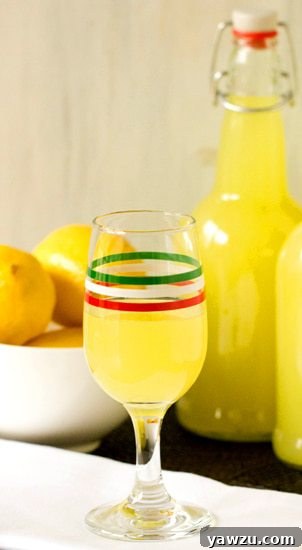
Mastering Homemade Limoncello: Your Ultimate Guide to Crafting Authentic Lemon Liqueur
There’s something truly special about a homemade spirit, especially one steeped in tradition and bursting with vibrant flavor like Limoncello. This iconic Italian lemon liqueur, known for its dazzling yellow hue and refreshing taste, often brings to mind sun-drenched coastal towns and leisurely evenings. What many don’t realize is how surprisingly simple it is to create this delightful digestivo right in your own kitchen.
A few months ago, an unexpected conversation sparked a fun culinary adventure. My Chief Culinary Consultant and I were visiting my grandparents, dropping off some fresh summer squash from his garden. Our brief visit stretched into a lovely afternoon of card games and shared stories. It was then that my grandma mentioned her neighbor, a true artisan, who crafts his own batches of limoncello. She proudly showed us a bottle he had gifted them, chilled perfectly in the refrigerator. Even better, she had his cherished recipe, though she had yet to try making it herself.
Naturally, my interest was immediately piqued. The idea of a DIY Limoncello project resonated with both of us. We envisioned not only enjoying this zesty liqueur ourselves but also transforming our homemade batches into unique, thoughtful Christmas gifts. Little did we know, this simple recipe would lead to a rewarding journey into the art of limoncello making, proving that some of the best culinary treasures are born from curiosity and shared traditions.
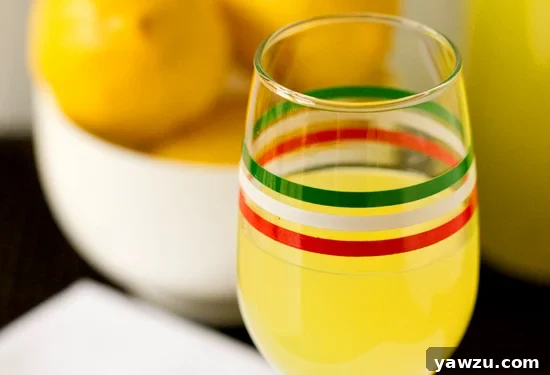
Why Embrace Homemade Limoncello? The Benefits Beyond the Bottle
While store-bought Limoncello is readily available, crafting your own offers a multitude of advantages that elevate the experience. Firstly, the unparalleled freshness. When you make limoncello at home, you control the quality of every ingredient, from the lemons themselves to the type of alcohol used. This allows for a brighter, more aromatic, and deeply flavorful liqueur that often surpasses commercial varieties.
Secondly, the satisfaction of creation. There’s immense joy in following a recipe, watching the colors deepen as the lemon zest infuses the alcohol, and finally bottling your own golden elixir. It’s a project that engages the senses and results in a product you can truly be proud of.
Finally, homemade Limoncello makes for an exceptional and personal gift. Whether for holidays, birthdays, or housewarmings, a beautifully bottled, handcrafted limoncello speaks volumes. It’s a gift that says, “I made this just for you,” offering a taste of Italy and a touch of your own effort and care.
As you’ll see in the images throughout this guide, we opted to significantly scale up the original recipe, more than tripling the quantities. This decision made perfect sense given the time investment and our desire to yield plenty for both personal enjoyment and holiday gifting. If you choose to make a single batch, rest assured your ingredient quantities will be much smaller, but the process remains the same.
Essential Ingredients for Your Limoncello Masterpiece
The beauty of Limoncello lies in its simplicity, requiring just four core ingredients. However, the quality of these ingredients profoundly impacts the final product. Choosing the right components is the first crucial step towards a perfect batch of this vibrant lemon liqueur.
- Grain Alcohol (Everclear) or High-Proof Vodka: The foundation of your limoncello. Grain alcohol (like Everclear) is traditional and offers a neutral base, allowing the lemon flavor to shine through without competition. If grain alcohol is unavailable in your region, a high-quality 100-proof (50% ABV) vodka is an excellent substitute. The higher the proof, the more effectively it extracts the essential oils from the lemon zest.
- Fresh Lemons: The star of the show! Aim for organic, unwaxed lemons, as you will be using their peels directly. If organic isn’t an option, thoroughly scrub non-organic lemons with a brush under warm water to remove any wax or pesticides. Meyer lemons can also be used for a slightly sweeter, less tart profile, but traditional lemons offer that classic Limoncello zing.
- Water: Used to create the simple syrup. Filtered water is recommended to avoid any off-flavors that might be present in tap water.
- Granulated Sugar: The sweetener that balances the tartness of the lemon and the intensity of the alcohol. White granulated sugar is standard, dissolving easily to create a clear syrup.
The Four Key Steps to Crafting Exquisite Homemade Limoncello
Making Limoncello is a process of patience and precision, broken down into four distinct stages. Each step is vital for achieving that perfectly balanced, clear, and intensely flavored lemon liqueur.
Step #1: The Art of Infusion – Unleashing the Lemon’s Essence
This is where the magic begins. The initial stage involves carefully extracting the aromatic oils from the lemon peels into the alcohol. It’s a straightforward process, but attention to detail is key.
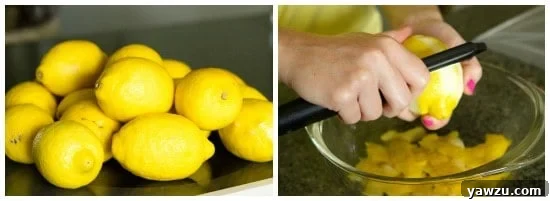
First, give your lemons a thorough wash and dry. Since you’re primarily interested in the zest, ensuring the lemons are clean and free of any residues is paramount. Next, using a vegetable peeler or a sharp paring knife, carefully peel the lemons. The goal is to obtain thin strips of bright yellow zest, leaving behind as much of the bitter white pith as possible. The pith, located directly beneath the zest, contains compounds that can make your limoncello cloudy and impart an undesirable bitterness. Aim for thin, elegant peels.
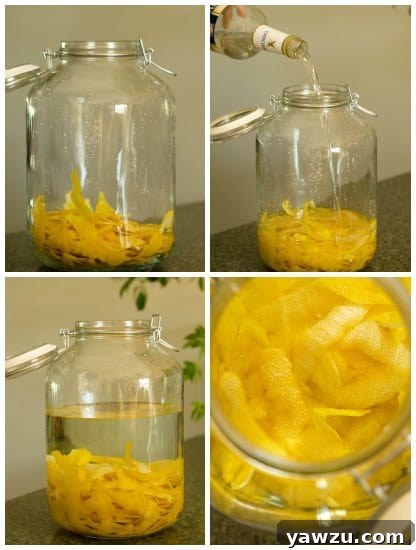
Once you have a generous collection of lemon peels, transfer them to a large, airtight glass container. Pour the grain alcohol or high-proof vodka over the peels, ensuring they are completely submerged. This contact is crucial for the alcohol to draw out the essential oils. Seal the container tightly and store it in a cool, dark place. Now comes the hard part: waiting! The mixture needs to steep for at least 10 days, though many enthusiasts recommend up to three weeks for a deeper, more pronounced lemon flavor. During this time, the alcohol gradually transforms, taking on a beautiful golden-yellow hue as it absorbs the vibrant essence of the lemon.
Step #2: Crafting the Simple Syrup and Blending
After the infusion period, it’s time to introduce sweetness and dilute the potent lemon-infused alcohol. This step involves making a simple syrup and then carefully combining it with the steeped alcohol.
Begin by preparing the simple syrup. In a large saucepan, combine the water and granulated sugar over low heat. Stir occasionally until the sugar completely dissolves and the syrup becomes clear. It’s important not to boil the syrup vigorously; gentle heat is all that’s needed. Once clear, remove the syrup from the heat and allow it to cool completely to room temperature. This cooling step is critical. Adding hot syrup to the alcohol can cause the alcohol to evaporate and compromise the final flavor and clarity of your limoncello.
While the syrup cools, prepare to separate the peels from the infused alcohol. Place a colander inside a large, clean bowl or pot. Carefully pour the alcohol mixture through the colander, allowing the liquid to drain into the bowl below. Use a wooden spoon to gently press on the lemon peels in the colander, extracting any remaining infused alcohol. Once drained, discard the spent lemon peels. They have given their all to your limoncello!
Once both the infused alcohol and the simple syrup have reached room temperature, gently combine them in a large mixing vessel. Stir thoroughly to ensure an even distribution of sweetness throughout the lemon liqueur. You’ll notice a magical transformation as the clear alcohol meets the syrup: the mixture will turn from translucent yellow to a characteristic cloudy, opaque, and intensely bright yellow. This is known as the ‘louche’ effect, a natural emulsification of the lemon oils and alcohol that signifies a successful infusion.
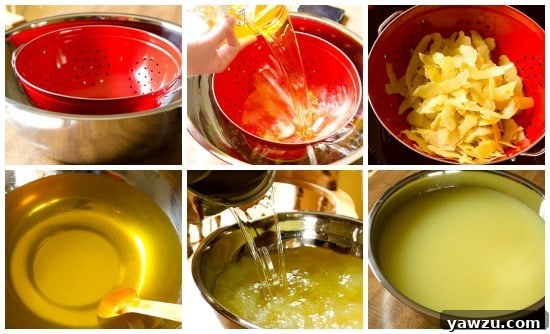
Step #3: The First Filtration – Achieving Clarity
With the alcohol and simple syrup combined, your limoncello is taking shape. The next crucial step is the first round of filtration, which aims to remove any larger particles of lemon zest or sediment, contributing to a smoother, clearer final product.
The most effective and accessible method for this initial filtration involves a fine-mesh sieve lined with coffee filters. Place a wire mesh strainer over a large, clean bowl. Carefully place a coffee filter inside the mesh strainer, forming a cup-like shape. Slowly pour the limoncello mixture into the coffee filter. Be patient, as this process can take some time. The liquid will seep through, leaving behind any impurities. As the filtration slows down considerably or stops, gently lift out the used coffee filter (being careful not to tear it) and replace it with a fresh one. Continue this process until the entire batch of limoncello has been filtered, replacing coffee filters as needed. This meticulous step ensures that your limoncello is free of any floating bits, enhancing both its appearance and texture.
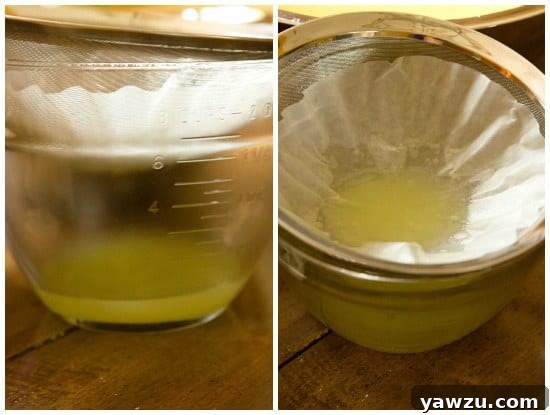
Step #4: Second Filtration and Bottling – The Grand Finale
The final step in your limoncello journey is a second, finer filtration, followed by bottling. This extra filtration guarantees a beautifully clear liqueur, devoid of any lingering sediment, ready for storage and enjoyment.
This time, the filtering can be done directly into the bottles you plan to use for long-term storage. Gather your clean, sterilized bottles, a funnel, and a fresh supply of coffee filters. Place a funnel into the mouth of your first bottle, and then line the funnel with a coffee filter. Slowly pour the limoncello through the coffee filter into the bottle. Just like in the previous step, replace the coffee filter with a new one as it becomes saturated and the liquid flow diminishes. This second pass ensures maximum clarity, resulting in a professional-looking and tasting limoncello.
Once each bottle is filled, seal them tightly. Swing-top bottles are an excellent choice, providing an airtight seal and a rustic aesthetic. However, any clean, sealable bottle will work perfectly. The beautiful thing about limoncello is its robust nature; once bottled, it can be stored indefinitely in the freezer. Keeping it chilled enhances its smooth texture and makes it delightfully refreshing, especially for after-dinner sipping.
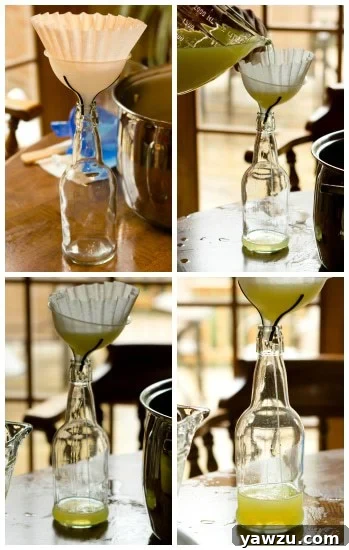
Bottling Your Liquid Sunshine: Tips and Recommendations
Our scaled-up recipe, which was more than triple the original, yielded an impressive volume – enough to fill twelve 16-ounce swing-top bottles, with a little extra left over (we only had a case of 12 bottles!). For our project, we sourced our sturdy swing-top bottles from Northern Brewer, finding the price for a case to be an absolute steal. However, the world of bottling offers endless possibilities.
If swing-top bottles aren’t quite your style or you’re looking for different sizes and shapes, Specialty Bottle offers a fantastic variety, from classic sauce bottles to more ornate designs. You can also find countless options on Amazon, perfect for any aesthetic or occasion. Remember to sterilize your bottles thoroughly before filling to ensure the longevity and purity of your Limoncello.

Beyond the Sip: Serving Suggestions and Creative Uses
Homemade Limoncello is far more versatile than just an after-dinner digestivo, though it excels in that role. Its bright, sweet, and potent lemon flavor makes it a fantastic ingredient in both cocktails and culinary applications.
Classic Enjoyment: Chilled to Perfection
The traditional way to savor Limoncello is straight from the freezer. Storing your bottles in the freezer ensures the liqueur is impeccably cold, enhancing its smoothness and refreshing qualities. Serve it in small, chilled cordial glasses, allowing the vibrant lemon notes to awaken your palate after a meal. The high alcohol content prevents it from freezing solid, resulting in a thick, syrupy texture that is truly delightful.
Limoncello in Cocktails
Limoncello adds a sunny, citrusy twist to a variety of mixed drinks. Consider these ideas:
- Limoncello Spritz: Combine Limoncello with Prosecco and a splash of soda water for a light, effervescent, and incredibly refreshing cocktail.
- Lemon Drop Martini with a Twist: Instead of simple syrup or sugar, use Limoncello to sweeten your lemon drop, adding depth and a boozy kick.
- Limoncello & Tonic: A simple yet sophisticated drink. Mix Limoncello with tonic water and garnish with a lemon slice for an elevated highball.
- Limoncello Margarita: A fun variation on a classic. Combine Limoncello, tequila, and fresh lime juice for a zesty, potent margarita.
Culinary Adventures with Limoncello
Don’t limit Limoncello to drinks alone! Its intense lemon flavor makes it a fantastic addition to various desserts and baked goods:
- Limoncello Dessert Drizzles: Drizzle over vanilla ice cream, fruit salad, or panna cotta for an instant flavor boost.
- Limoncello Cakes and Cupcakes: Incorporate into cake batters, glazes, or frosting for an irresistible lemon kick. Imagine lemon-limoncello cupcakes – truly yum!
- Soaking Syrups: Use to soak sponge cakes or savoiardi biscuits for tiramisu variations.
- Limoncello Sorbets and Gelatos: Create a refreshing homemade sorbet or swirl into gelato for a decadent treat.
The Perfect Gift, Every Time
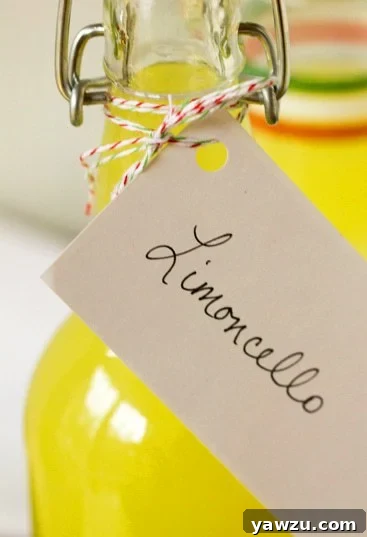
Beyond personal enjoyment, homemade Limoncello is the ultimate versatile gift. Crafting homemade labels and gift tags adds a personal touch that elevates your bottles beyond simple presents. It’s perfect for a myriad of occasions:
- Holiday Gifts: A festive and unique present that stands out from typical store-bought offerings.
- Birthday Presents: A thoughtful gesture for friends and family who appreciate fine spirits or unique culinary treats.
- Housewarming Gifts: A welcoming and stylish alternative to a bottle of wine, adding a touch of Italian flair to a new home.
- Hostess Gifts: Show your appreciation to your host or hostess with a bottle of your homemade creation, sure to be a conversation starter.
Troubleshooting Common Limoncello Issues
While making Limoncello is generally simple, a few common issues can arise. Here’s how to address them:
- Cloudy Limoncello (Beyond the Normal Louche): If your limoncello is excessively cloudy or has a milky appearance, it might be due to residual pith during peeling. Extra filtration with more coffee filters can sometimes help, but primarily, precision during the initial peeling step is key.
- Bitter Taste: This is almost always caused by including too much of the white pith with the lemon zest. There’s not much to be done once it’s in the infusion, so careful peeling is crucial for preventing bitterness.
- Weak Lemon Flavor: If your limoncello lacks that vibrant lemon punch, it could be that your lemons weren’t aromatic enough or the infusion time was too short. Next time, try extending the steeping period to the full three weeks.
- Not Sweet Enough (or Too Sweet): Taste is subjective! Feel free to adjust the simple syrup ratio in subsequent batches. You can make a small extra batch of simple syrup, cool it, and add it gradually to your finished limoncello if you desire more sweetness.
Concluding Thoughts on Your Limoncello Journey
Crafting your own Limoncello is more than just following a recipe; it’s an immersive experience that connects you to a rich culinary tradition. From the intoxicating aroma of fresh lemon zest to the satisfying clink of bottled liqueur, every step is a pleasure. This relatively simple yet profoundly rewarding project culminates in an extremely smooth, wonderfully strong, and delightfully sweet drink, bursting with pure lemon flavor.
The hardest part, arguably, is the waiting during the infusion phase. But as with all good things, patience yields an exceptional reward. Once your golden batches are complete, nestled in your freezer, you’ll have a taste of Italian sunshine ready to share with loved ones or savor yourself. So, gather your lemons, clear your calendar, and embark on this delicious journey. You’ll soon discover the unparalleled joy of homemade Limoncello.
For more delicious inspiration, check out some of our past favorites:
One year ago: Classic Apple Pie
Two years ago: Fig and Almond Cheesecake
Three years ago: Italian Sausage, Red Pepper & Mushroom Risotto
Four years ago: Cream of Mushroom Soup
Five years ago: Cornbread

Limoncello
2 liters
30 mins
10 days
30 mins (plus resting)
Pin Recipe
Rate This Recipe
Ingredients
Instructions
- First, wash and dry your lemons. Since you’re going to be using the peel exclusively, you want to make sure they don’t have any residue on them. Next, peel your lemons (a vegetable peeler works perfectly for this job) – you don’t want to get too much of the white pith under the peel, so try to peel as thinly as possible. Put the peels into a large glass container. Add the alcohol, making sure that it completely covers the peels. Let the mixture steep for 10 days, or up to 3 weeks.
- Place a colander inside of a large bowl. Pour the alcohol mixture into the colander and drain, using a wooden spoon to press out any excess liquid from the peels. Discard the peels.
- In a large saucepan, combine the water and sugar over low heat, stirring occasionally, until the sugar is dissolved and the syrup is clear. Remove from heat and let cool to room temperature, then add the simple syrup to the alcohol mixture and stir to combine.
- Place a wire mesh strainer over a large, clean bowl and place a coffee filter inside the mesh strainer. Slowly pour the limoncello through the coffee filter. Once the amount of liquid straining through slows down considerably or stops, replace the coffee filter with a new one and continue until all of the limoncello has been filtered, replacing coffee filters as needed.
- Next, filter again and fill the bottles as follows: Place a funnel into the mouth of the bottle you’ll use for your finished limoncello. Place a coffee filter inside the funnel, and slowly pour the limoncello through the coffee filter to fill the bottle. Seal the bottle(s) and store in the freezer indefinitely.
Notes
Nutritional values are based on one liter.
Carbohydrates: 450g,
Protein: 5g,
Fat: 1g,
Sodium: 51mg,
Potassium: 745mg,
Fiber: 15g,
Sugar: 412g,
Vitamin A: 120IU,
Vitamin C: 286.2mg,
Calcium: 159mg,
Iron: 3.6mg
Did you make this recipe?
Leave a review below, then snap a picture and tag @thebrowneyedbaker on Instagram so I can see it!
Michelle Lettrich
Drinks
Italian