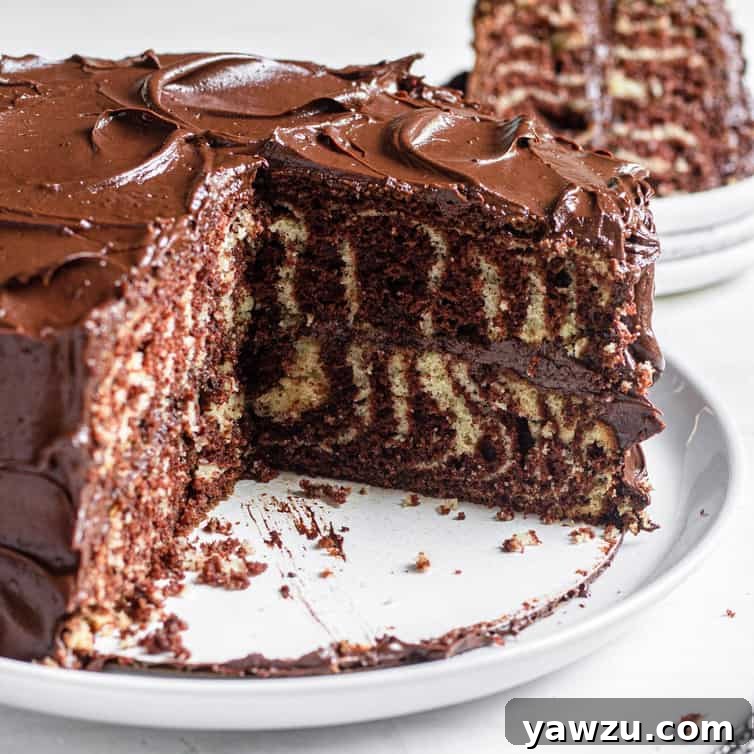
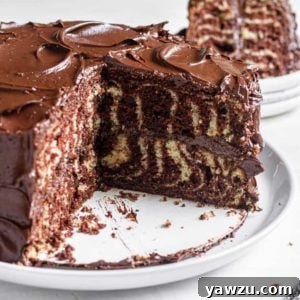
Get ready to be enchanted by the magnificent Zebra Cake! If this delightful creation is new to you, prepare to be amazed. Imagine a cake where rich vanilla and decadent chocolate batters are meticulously layered, creating a breathtaking stripe effect that mirrors the elegant patterns of a zebra. It’s a visually stunning dessert that’s surprisingly simple to master, guaranteed to impress at any gathering. And to elevate this masterpiece, I’ll guide you through making a velvety smooth chocolate frosting – a truly irresistible complement that will leave everyone craving more.
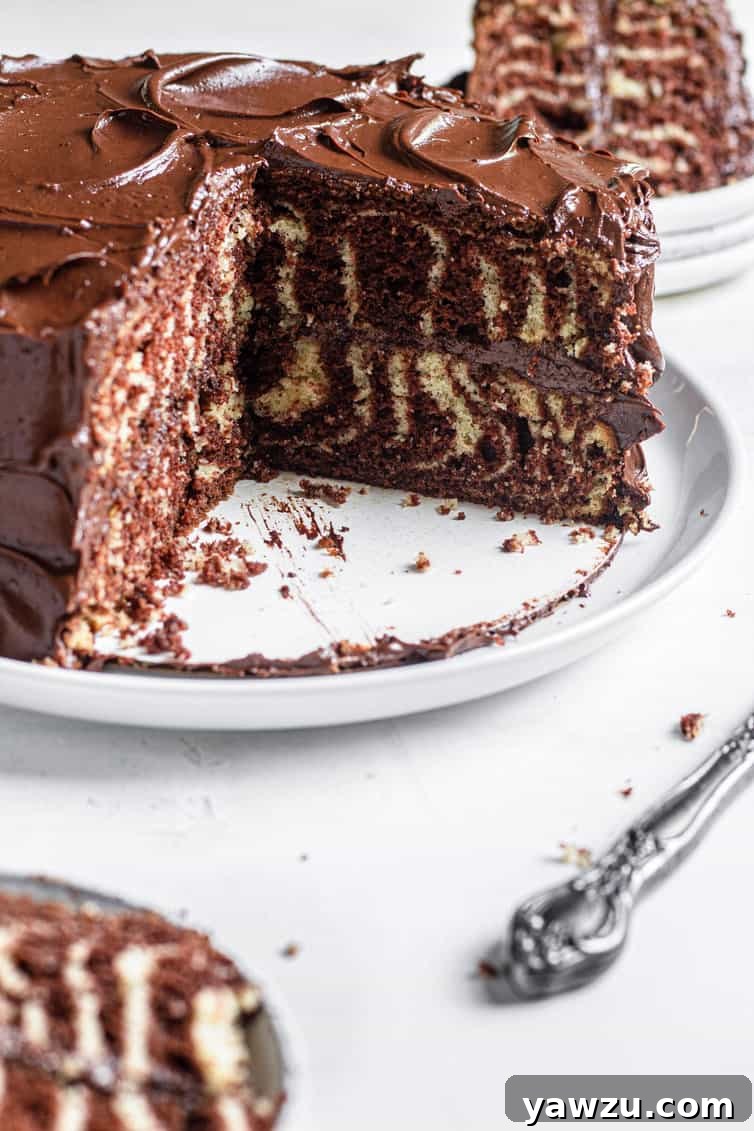
When you hear “Zebra Cake,” what springs to mind? Is it the captivating, striped vanilla and chocolate confection we’re about to explore, or perhaps a nostalgic flashback to those iconic Little Debbie Zebra Cakes that graced lunchboxes during high school? While both hold a special place in our hearts (and taste buds!), today, we’re focusing on crafting a truly magnificent homemade version. This gorgeous two-layer cake, boasting a dual-flavor profile and an eye-catching design, is perfect for any occasion – from grand birthday celebrations to simply making a random Tuesday feel a little more extraordinary.
Embarking on the journey of homemade baking brings an unparalleled sense of accomplishment and the joy of sharing something truly special. This Zebra Cake recipe is more than just a dessert; it’s an experience. It’s about the anticipation as you pour the alternating batters, the magic of the oven transforming simple ingredients into art, and the ultimate satisfaction of slicing into a cake that reveals its stunning, hidden pattern. It’s an opportunity to create memories and share a slice of happiness with loved ones.
What is a Zebra Cake? Unveiling the Striped Marvel
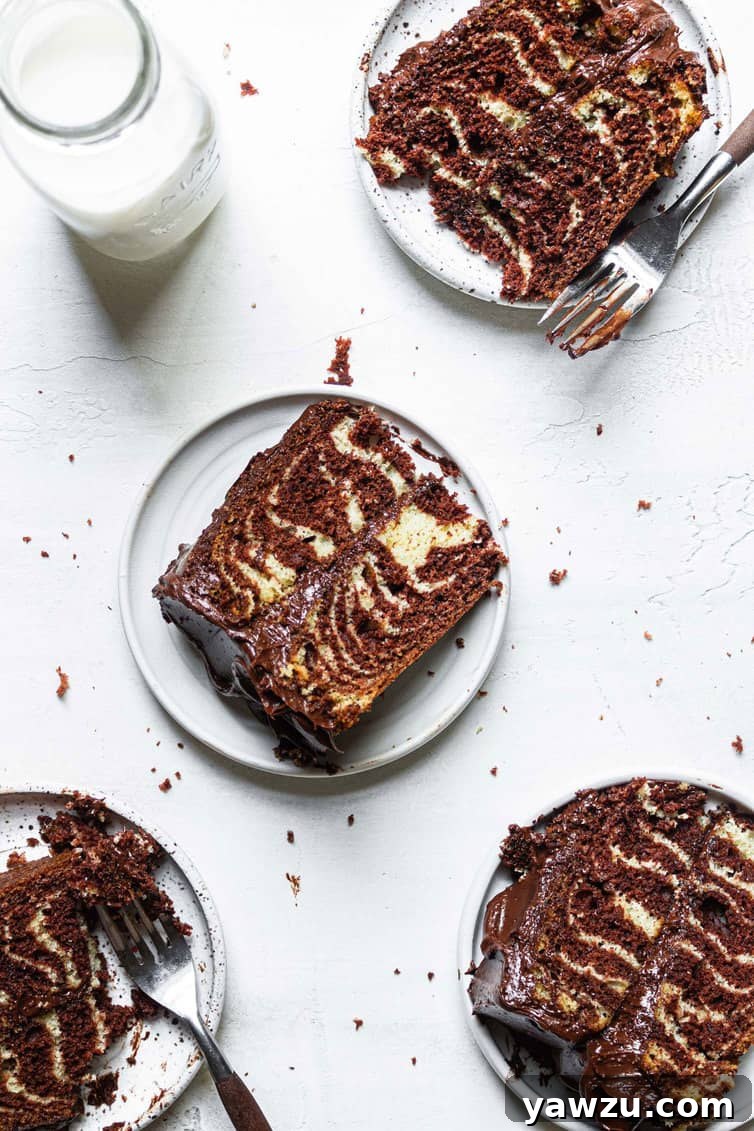
At its heart, a Zebra Cake is a brilliant fusion of two distinct cake batters – typically vanilla and chocolate – that are artfully layered into a cake pan. Instead of being swirled or marbled, the batter is strategically dropped, one spoonful at a time, to create concentric rings of alternating color. This ingenious method results in the mesmerizing “zebra stripe” pattern when the cake is sliced, transforming a simple dessert into a spectacular culinary illusion.
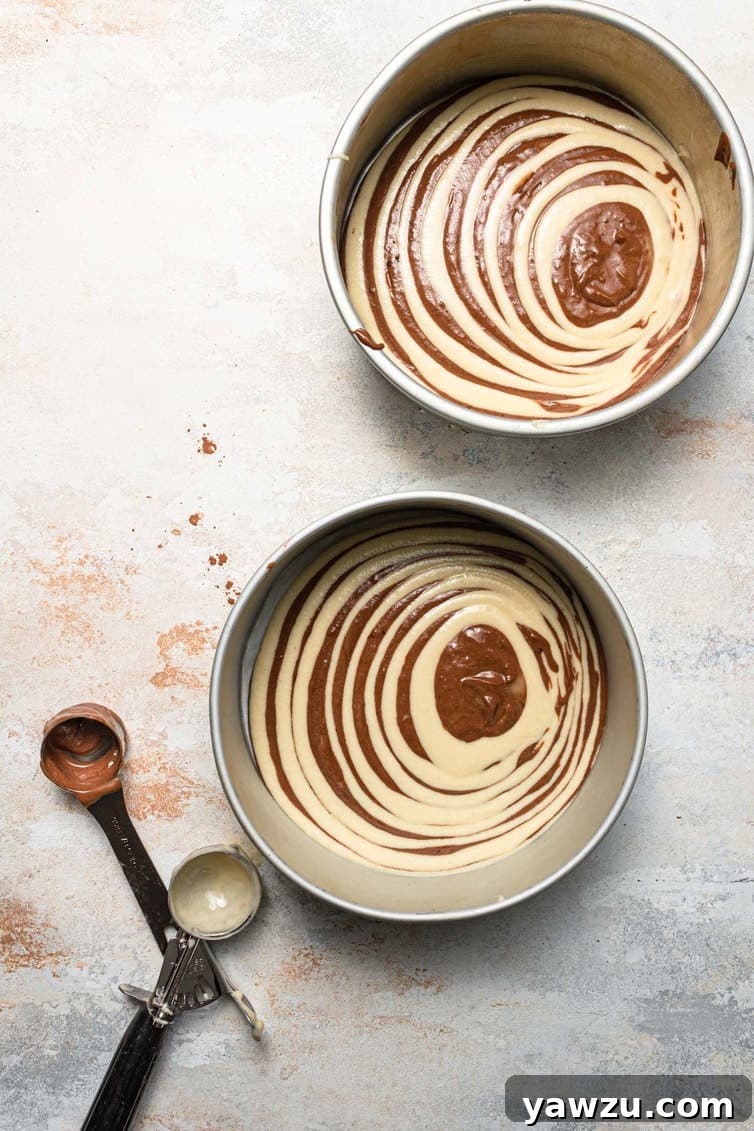
The magic behind the stripes is simpler than you might imagine. It involves carefully spooning alternating dollops of your lighter batter (vanilla) and darker batter (chocolate) into the center of your prepared cake pan. Each new spoonful, placed precisely in the middle, gently pushes the previous layer outwards, forming beautiful, even rings. This natural spreading action, driven by the weight of the batter, is what creates those distinctive, flawless stripes that give the Zebra Cake its iconic name and appearance.
For this recipe, we begin with a robust and flavorful vanilla cake batter, which serves as the perfect canvas. We then divide this base batter, transforming a portion of it into a rich chocolate counterpart by incorporating high-quality cocoa powder and a touch of milk. This approach ensures both batters are perfectly balanced in consistency, crucial for achieving those crisp, defined stripes. The simplicity of this adaptation makes the process surprisingly straightforward, allowing even novice bakers to achieve professional-looking results that are sure to earn rave reviews.
Crafting Your Batters: From Scratch or Convenient Box Mix
The Homemade Advantage: Rich Flavors and Perfect Texture
Starting with a homemade vanilla cake base offers unparalleled depth of flavor and a wonderfully tender crumb. Our recipe uses a classic yellow cake foundation, known for its moistness and ability to hold its shape, making it ideal for layering. The process begins with creaming butter and sugar until light and fluffy, incorporating eggs one by one for aeration, and then alternating dry ingredients with buttermilk. Buttermilk is key here, contributing to the cake’s fine texture and subtle tang, which beautifully complements the sweetness.
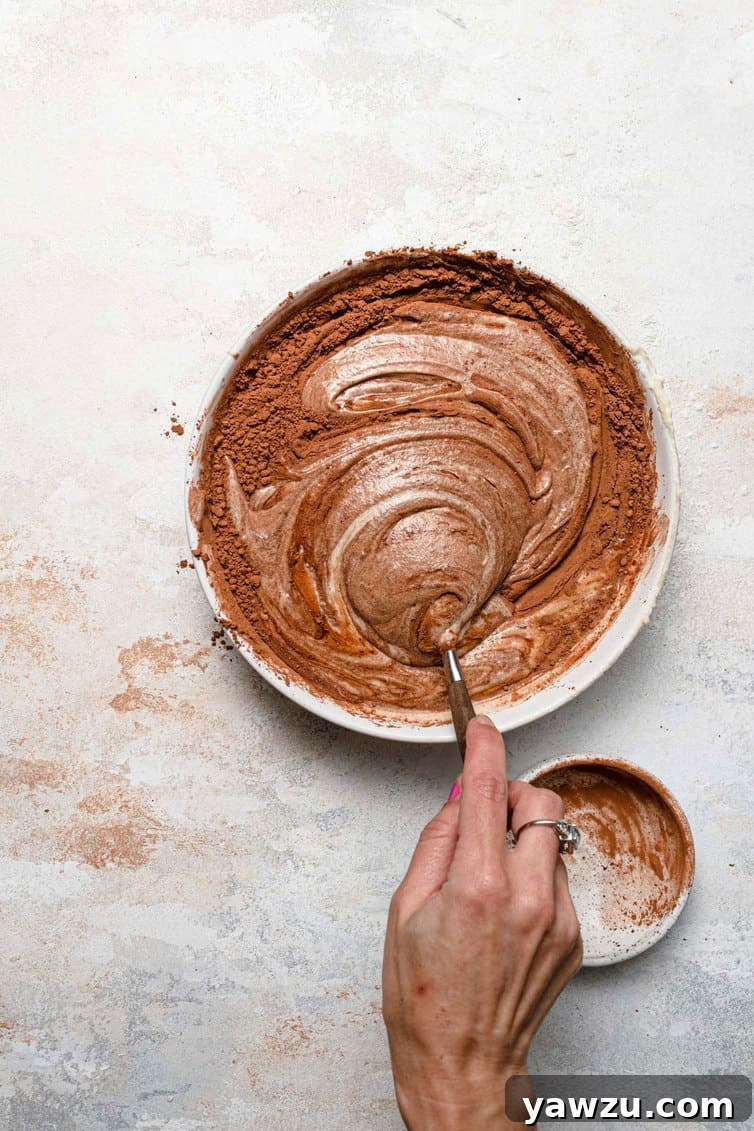
Once your exquisite vanilla batter is ready, the transformation into chocolate is seamless. By simply taking a portion of this base and whisking in unsweetened cocoa powder along with a splash of milk, you create a rich, dark batter that perfectly contrasts with the vanilla. The small addition of milk ensures the chocolate batter maintains a similar consistency to the vanilla, preventing any issues with uneven spreading or baking – a critical detail for perfectly defined stripes.
Simplifying with a Box Cake Mix: Tips for Success
For those times when you need a delicious cake with less fuss, a high-quality box cake mix can be a fantastic shortcut. The core principle of creating the zebra stripes remains exactly the same, whether you start from scratch or with a mix. The key is to adapt the box mix effectively to produce both vanilla and chocolate batters of comparable consistency.
Begin by preparing your chosen box cake mix exactly as the package directs. Once the batter is fully mixed, measure out approximately half of it into a separate bowl. To this half, carefully whisk in your unsweetened cocoa powder and the small amount of milk. This will create your chocolate portion. Taste-test if desired, and if the chocolate flavor isn’t quite robust enough, you can add another tablespoon of cocoa powder, adjusting the milk slightly if needed to maintain a pourable consistency. After this simple modification, you can proceed with the layering technique as outlined in the recipe, ensuring both batters are ready to create their striking patterns.
Remember that baking times might vary slightly when using a box mix, so always refer to the instructions on your specific package for guidance. Keep an eye on the cake as it bakes, and test for doneness with a skewer or toothpick inserted into the center. This flexibility ensures that the joy of a Zebra Cake is accessible to everyone, regardless of their baking experience or time constraints.
The Art of the Stripes: Mastering the Pouring Technique
The distinctive zebra pattern is born from a straightforward, yet captivating, pouring technique. It’s less about intricate swirling and more about methodical layering, making it an achievable feat for bakers of all skill levels. Here’s how to create those stunning concentric rings:
- Prepare Your Pans: Thoroughly grease and flour your two 8-inch round cake pans. This crucial step ensures your beautiful striped layers release cleanly without sticking.
- Start at the Center: Begin by dropping a generous spoonful (a medium cookie scoop works wonderfully for consistent portions) of one batter, let’s say the vanilla, directly into the center of each prepared cake pan. Don’t spread it.
- Alternate Colors: Immediately follow with a spoonful of the chocolate batter, placing it directly on top of the vanilla batter in the center.
- Repeat the Process: Continue alternating spoonfuls of vanilla and chocolate batter, always placing each new dollop directly in the center of the previous one. You’ll notice the weight of the new batter gently pushing the existing layers outwards, forming increasingly larger rings.
- Utilize All Batter: Keep repeating this process until both batters are completely used up, distributed evenly between your two cake pans. Aim for a consistent rhythm and spoon size for the most uniform stripes.
- Gentle Leveling: Once all the batter is in the pans, give each pan a very gentle shake from side to side. This helps the top layer settle and creates a smoother surface, but be careful not to overdo it, or you might disturb the intricate stripe pattern beneath. Avoid tilting or tapping excessively.
With this simple yet effective method, you’re not just baking a cake; you’re creating a piece of edible art. The anticipation as you wait for the cake to bake, knowing what stunning pattern lies within, is part of the joy of making a Zebra Cake.
Beyond Vanilla and Chocolate: Creative Color and Flavor Combinations
While the classic vanilla and chocolate combination is undeniably delicious and visually striking, the Zebra Cake technique offers a playground for endless creativity! This recipe is incredibly versatile, allowing you to customize colors and flavors to suit any theme, holiday, or personal preference. Let your imagination run wild!
Playing with Colors: A Spectrum of Possibilities
To achieve vibrant, eye-catching colored stripes, simply omit the cocoa powder and milk from one portion of the base batter. Instead, you’ll use food coloring to tint the batter to your desired shade. I highly recommend using high-quality gel food coloring over liquid varieties. Gel colors are far more concentrated, meaning you need only a tiny amount to achieve intense hues without altering the batter’s consistency. Liquid food coloring can introduce too much moisture, potentially affecting the cake’s texture. Brands like Americolor gel food coloring or Wilton’s gel colors are excellent choices, perfect for coloring not just batters, but also frostings and other confections.
- Holiday Themes: Imagine a red and green striped cake for Christmas, or orange and black for Halloween. Pastels like pink and blue, or yellow and green, would be perfect for Easter or a baby shower.
- Team Spirit: Support your favorite sports team by coloring the batters in their team colors!
- Rainbow Magic: For an extra fun twist, divide the base batter into multiple portions and color each a different vibrant shade for a stunning rainbow zebra cake!
Exploring New Flavors: A Culinary Adventure
The flavor combinations are just as limitless as the color possibilities. You can infuse different extracts into your batters to create unique and delightful profiles. Here are a few ideas to get you started:
- Fruity Pairings: Try lemon extract in one batter and raspberry in the other, or orange and lime for a citrusy delight.
- Nutty Notes: Almond extract paired with cherry, or hazelnut with coffee, can create sophisticated flavor profiles.
- Spiced Variations: Incorporate warm spices like cinnamon or cardamom into one batter, leaving the other plain or adding a complementary extract.
- Tropical Twist: Coconut extract and pineapple extract could transport your taste buds to an island paradise.
- Mint Chocolate: Add a hint of peppermint extract to your chocolate batter for a refreshing mint chocolate zebra cake.
When experimenting with extracts, start with a small amount (½ to 1 teaspoon per batter portion) and adjust to taste. Remember, the goal is to create distinct but harmonious flavors that complement each other beautifully within the striped structure of the cake. Don’t be afraid to mix and match; the joy of baking is in the discovery!
The Perfect Companion: Silky Smooth Chocolate Frosting
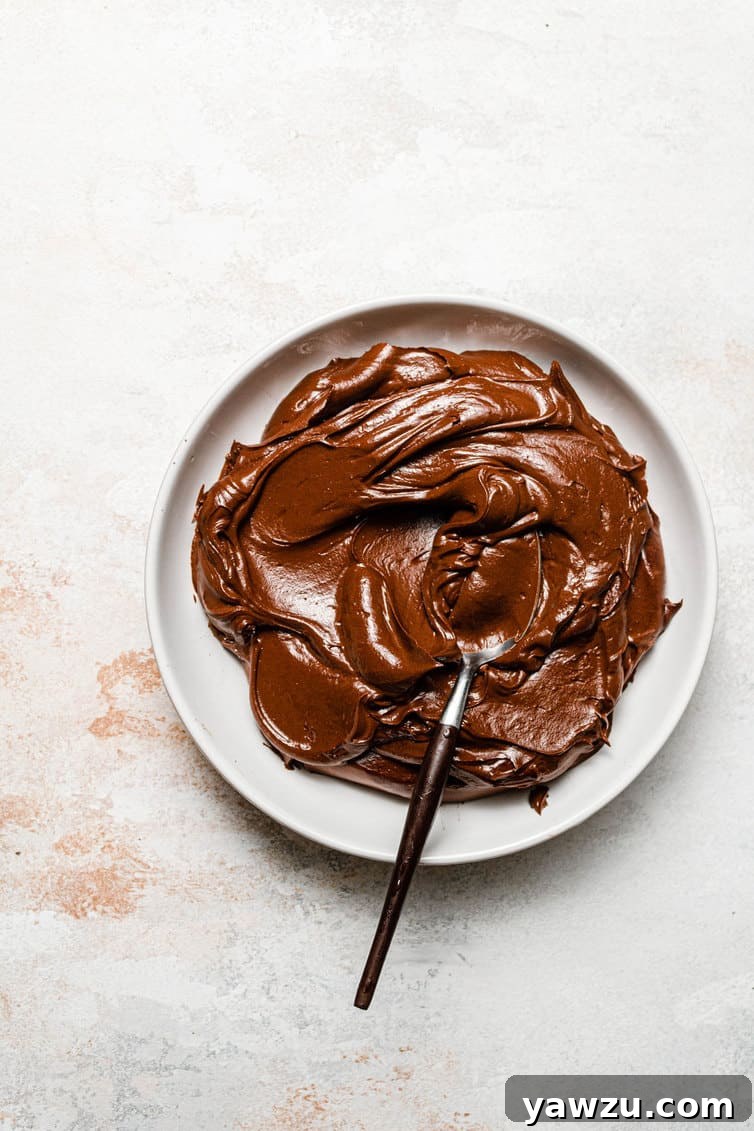
A cake as visually stunning as the Zebra Cake deserves a frosting that’s equally impressive in taste and texture. For this recipe, I always gravitate towards a rich, silky smooth chocolate frosting. The one included below is my go-to for many of my layer cakes, including my beloved yellow cake recipe. Its divine texture and deep chocolate flavor provide the perfect complement to the contrasting vanilla and chocolate cake layers, making every bite a truly luxurious experience.
This particular chocolate frosting stands out for its incredible smoothness, achieved through a blend of butter, powdered sugar, Dutch-process cocoa, and melted semisweet chocolate, balanced with a touch of corn syrup for that desirable sheen and velvety mouthfeel. It’s stable enough to hold its shape beautifully, yet soft enough to spread effortlessly, creating a professional-looking finish on your cake.
Alternative Frosting Ideas to Consider
While my signature silky chocolate frosting is a dream, you might occasionally crave a different flavor or texture to pair with your Zebra Cake. Here are some fantastic alternatives:
- Classic Chocolate Buttercream: If you prefer a more traditional, buttery frosting, my classic chocolate buttercream frosting is an excellent choice. It’s an American-style buttercream that prioritizes rich butter flavor over excessive sweetness, featuring butter, vanilla, powdered sugar, and melted chocolate. It’s wonderfully easy to make and pipes beautifully.
- Vanilla Bean Frosting: For a lighter contrast, a creamy vanilla bean frosting would allow the chocolate stripes to truly pop. Its delicate flavor would highlight the vanilla cake layers while still harmonizing with the chocolate.
- Cream Cheese Frosting: A tangy cream cheese frosting could add a delightful zing, especially if you’re experimenting with fruitier cake flavors or a slightly less sweet cake base.
- Ganache: For an intensely rich and glossy finish, a simple chocolate ganache poured over the top of the cake, allowing drips down the sides, would create an elegant and indulgent presentation.
No matter which frosting you choose, ensure it’s at the right consistency for spreading. For best results, chill your cake layers slightly before frosting; this makes them firmer and easier to handle, resulting in a cleaner, smoother finish.
Assembling Your Masterpiece: Tips for a Flawless Finish
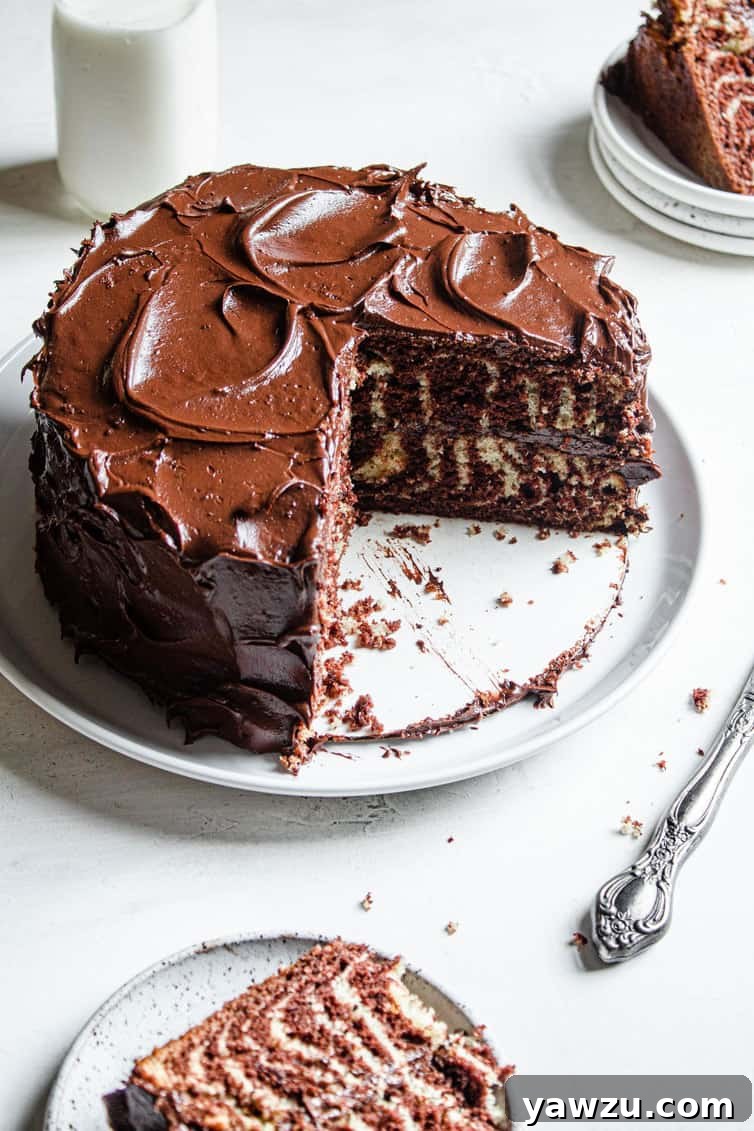
Once your beautifully striped cake layers are baked and completely cooled, the final step is to assemble and frost them into a show-stopping dessert. Proper assembly not only makes your cake look professional but also enhances its stability and overall enjoyment.
- Level the Cakes: Ensure your cake layers are perfectly flat for a stable stack. If they have domed tops, use a serrated knife or a cake leveling tool to gently trim them, creating an even surface.
- Crumb Coat (Optional but Recommended): Place one cooled cake layer on your serving platter. Spread a thin layer (about 1 cup) of your chosen frosting evenly over the top. This is your “filling” layer. Then, place the second cake layer on top. Apply a very thin layer of frosting over the entire cake – top and sides. This is called a “crumb coat” and it traps any loose crumbs, preventing them from mixing into your final, visible layer of frosting. Chill the crumb-coated cake in the refrigerator for 15-20 minutes until the frosting is firm.
- Final Frosting Layer: Once the crumb coat is set, apply the remaining frosting to the top and sides of the cake. Use an offset spatula or a cake scraper to smooth the frosting for a polished look. You can create various textures, from perfectly smooth to charming rustic swirls, depending on your preference.
- Decorate (Optional): Enhance your Zebra Cake with additional decorations. You could pipe extra frosting borders, sprinkle chocolate shavings or sprinkles, or place fresh berries around the base or on top.
Allow the frosting to set slightly before serving. This not only firm up the frosting but also allows the flavors to meld beautifully. The anticipation of slicing into the cake to reveal those perfect stripes is truly part of the joy!
Storage and Freezing: Keeping Your Zebra Cake Fresh
Proper storage is essential to keep your homemade Zebra Cake tasting its best for days after baking. Thankfully, this layer cake stores beautifully, allowing you to enjoy slices over time or prepare components in advance.
Room Temperature Storage
If your cake is frosted, it can be kept at room temperature for up to 3 days. Ensure it’s covered with a cake dome or in an airtight container to prevent it from drying out. If your frosting contains fresh cream cheese or other highly perishable ingredients, refrigeration might be necessary, but for butter-based frostings, room temperature is usually fine.
Refrigeration
For longer storage beyond 3 days, or if your kitchen is particularly warm, refrigerate the frosted cake. Again, keep it in an airtight container or covered with plastic wrap to maintain moisture and prevent it from absorbing odors from other foods. Bring slices to room temperature for about 30 minutes before serving to ensure the cake and frosting are at their ideal texture.
Freezing Instructions: Frosted Cake
Zebra Cake freezes exceptionally well, making it perfect for meal prepping desserts or saving leftovers. For individual slices, wrap each slice tightly in plastic wrap, then place them in a freezer-safe zip-top bag or airtight container. They can be frozen for up to 3 months. When you’re ready to enjoy, simply thaw at room temperature for a few hours. This method is great for portion control!
Freezing Instructions: Unfrosted Cake Layers
You can also freeze the unfrosted cake layers. This is a fantastic time-saver if you like to bake ahead. Once your cake layers are completely cooled, wrap each layer individually in plastic wrap, then in a layer of aluminum foil. Place these securely wrapped layers in a large freezer-safe zip-top bag. They will keep in the freezer for up to 3 months. To use, thaw the wrapped layers at room temperature for several hours or overnight before filling and frosting. Freezing the layers often enhances their moisture, resulting in an even more tender cake!
More Beautiful Layer Cakes to Inspire Your Baking Journey:
- Hummingbird Cake: A Tropical Delight
- Best German Chocolate Cake: Rich & Indulgent
- The Ultimate Chocolate Cake Recipe: A Decadent Classic
- Classic Carrot Cake: Perfectly Spiced & Moist
- Traditional Devil’s Food Cake: Dark & Dreamy
We hope you thoroughly enjoy creating and devouring this spectacular Zebra Cake! It’s a recipe designed not just to deliver an incredibly delicious dessert, but also to bring a touch of artistic flair to your kitchen. If you try this recipe and love it as much as we do, we would be incredibly grateful if you would take a moment to share your experience and leave a rating below. Your feedback helps us and other bakers in our community. Thank you so much for baking with us!
Zebra Cake Recipe
12
servings
45
mins
30
mins
1
hr
15
mins
Yellow and chocolate cake batters are layered together to create a gorgeous two-layer Zebra Cake. Filled and covered with a silky smooth chocolate frosting!
Pin Recipe
Ingredients
For the Cake:
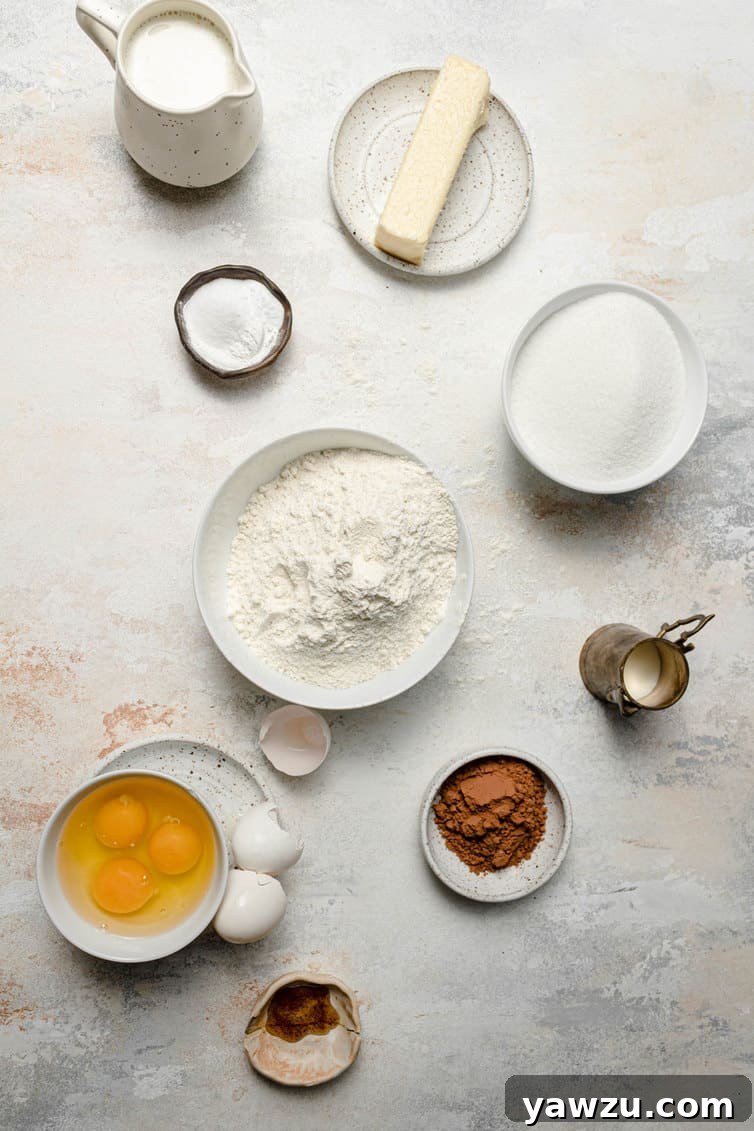
- 2¼ cups all-purpose flour
- 2 teaspoons baking powder
- 1 teaspoon baking soda
- 1 teaspoon salt
- ½ cup unsalted butter, at room temperature
- 1½ cups granulated sugar
- 3 large eggs, at room temperature
- 1 teaspoon vanilla extract
- 1¼ cups buttermilk, at room temperature
- 3 tablespoons unsweetened cocoa powder
- 1 tablespoon milk
For the Frosting:
- 20 tablespoons unsalted butter, at cool room temperature
- 1 cup powdered sugar
- ¾ cup Dutch-process cocoa powder
- Pinch of salt
- ¾ cup light corn syrup
- 1 teaspoon vanilla extract
- 8 ounces semisweet chocolate, melted and cooled slightly
Instructions
-
Make the Cake: Preheat oven to 350 degrees F (175°C). Grease and flour two 8-inch round cake pans; set aside.
-
In a medium bowl, whisk together the flour, baking powder, baking soda, and salt; set aside.
-
Using an electric mixer, cream together butter and granulated sugar until light and fluffy, about 3 to 5 minutes. Scrape down the sides of the bowl and beat in the eggs, one at a time, beating for 1 minute between each addition. Beat in vanilla extract.
-
Add the dry ingredients all at once to the wet ingredients and beat on low speed until just combined.
-
Add the buttermilk and beat on low speed for 1 minute, then increase the speed to medium and beat for 3 additional minutes.
-
Make the Chocolate Batter: Transfer 2 cups of the prepared vanilla batter to a separate medium bowl. Gently whisk in the 3 tablespoons of cocoa powder and 1 tablespoon of milk until completely incorporated and smooth.
-
Create the Stripes: Drop a large spoonful (using a medium cookie scoop is highly recommended for consistent results) of the vanilla batter into the center of each prepared pan. Immediately top with a spoonful of the chocolate batter, placing it directly in the center of the vanilla. Continue alternating spoonfuls, always placing the new batter in the center of the previous, until all batter is used up and distributed between the two pans. Give each pan a gentle side-to-side shake to lightly level the batter without disturbing the stripes.
-
Bake for 28 to 32 minutes, or until a wooden skewer or toothpick inserted into the center of the cake comes out with a few moist crumbs attached, but no wet batter. Remove from the oven and cool for 10 minutes in the pans, then carefully turn out onto wire racks and cool completely before frosting.
-
Make the Frosting: In a food processor, combine the unsalted butter, powdered sugar, Dutch-process cocoa powder, and salt. Process until smooth, about 30 seconds, stopping once to scrape down the sides of the bowl. Add the light corn syrup and vanilla extract and process until just combined, about 5 to 10 seconds. Scrape the sides of the bowl again, then add the melted and slightly cooled semisweet chocolate and pulse until the frosting is completely smooth and creamy, about 10 to 15 seconds.
-
Assemble the Cake: Once cake layers are completely cool, place one layer on a serving platter. Spread 1 cup of the prepared chocolate frosting evenly over its surface. Carefully place the second cake layer on top. Use the remaining frosting to generously frost the top and sides of the entire cake. The cake can be kept at room temperature for up to 1 day before serving. Once cut, any leftovers should be stored in an airtight container at room temperature for up to 4 days, or as per freezing instructions above.
Nutrition Information (per serving):
Calories: 291 kcal
Carbohydrates: 52g
Protein: 7g
Fat: 6g
Saturated Fat: 3g
Cholesterol: 84mg
Sodium: 119mg
Potassium: 281mg
Fiber: 1g
Sugar: 26g
Vitamin A: 170IU
Calcium: 119mg
Iron: 2.2mg
Did you make this recipe?
Leave a review below, then snap a picture and tag @thebrowneyedbaker on Instagram so I can see it!
Michelle Lettrich
Dessert
American
[Photography by Dee of One Sarcastic Baker]