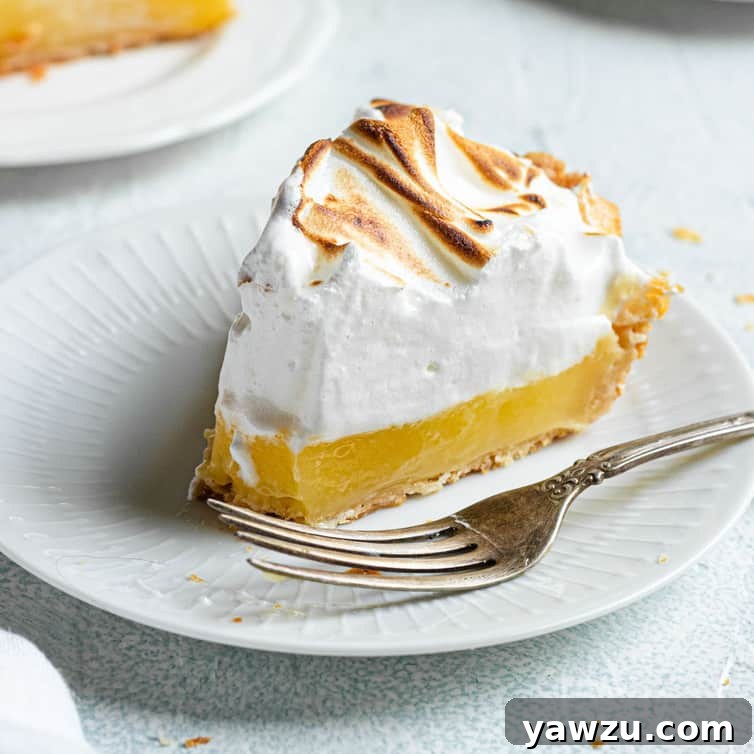
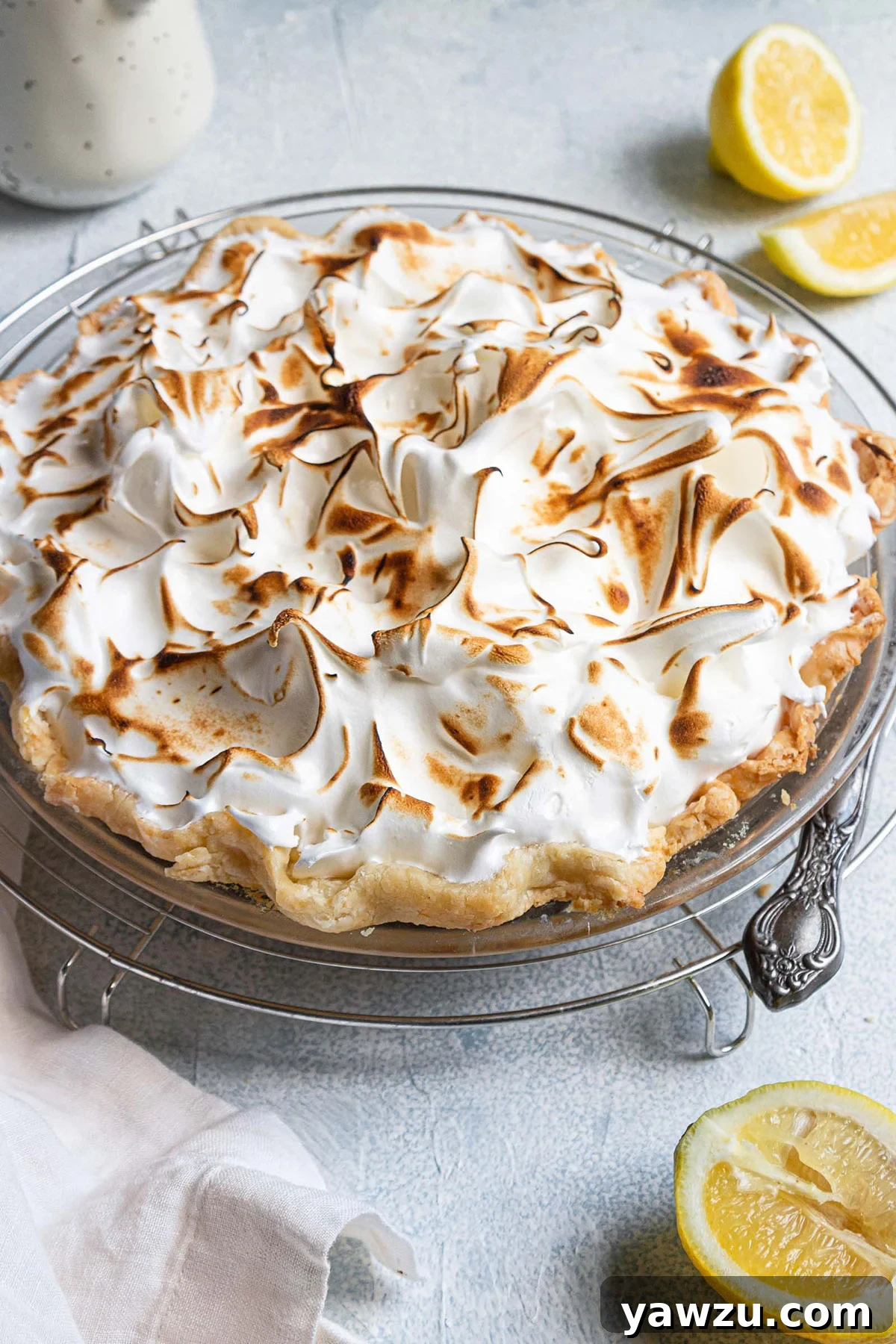
There’s a unique, irresistible charm in a perfectly crafted, from-scratch lemon meringue pie. It’s a culinary masterpiece that expertly marries contrasting textures and flavors into an unforgettable dessert experience, making it a beloved classic. Imagine starting with a golden, buttery, flaky pie crust, a testament to traditional baking. This crust forms the perfect foundation for a luscious, creamy, and wonderfully tangy homemade lemon filling that bursts with vibrant citrus notes. Finally, it’s crowned with a majestic, towering pile of sweet, ethereal fluffy meringue, often beautifully toasted to a golden perfection. This isn’t just a dessert; it’s a symphony of tastes and textures, a true pie lover’s dream realized, promising a delightful and harmonious bite every single time.
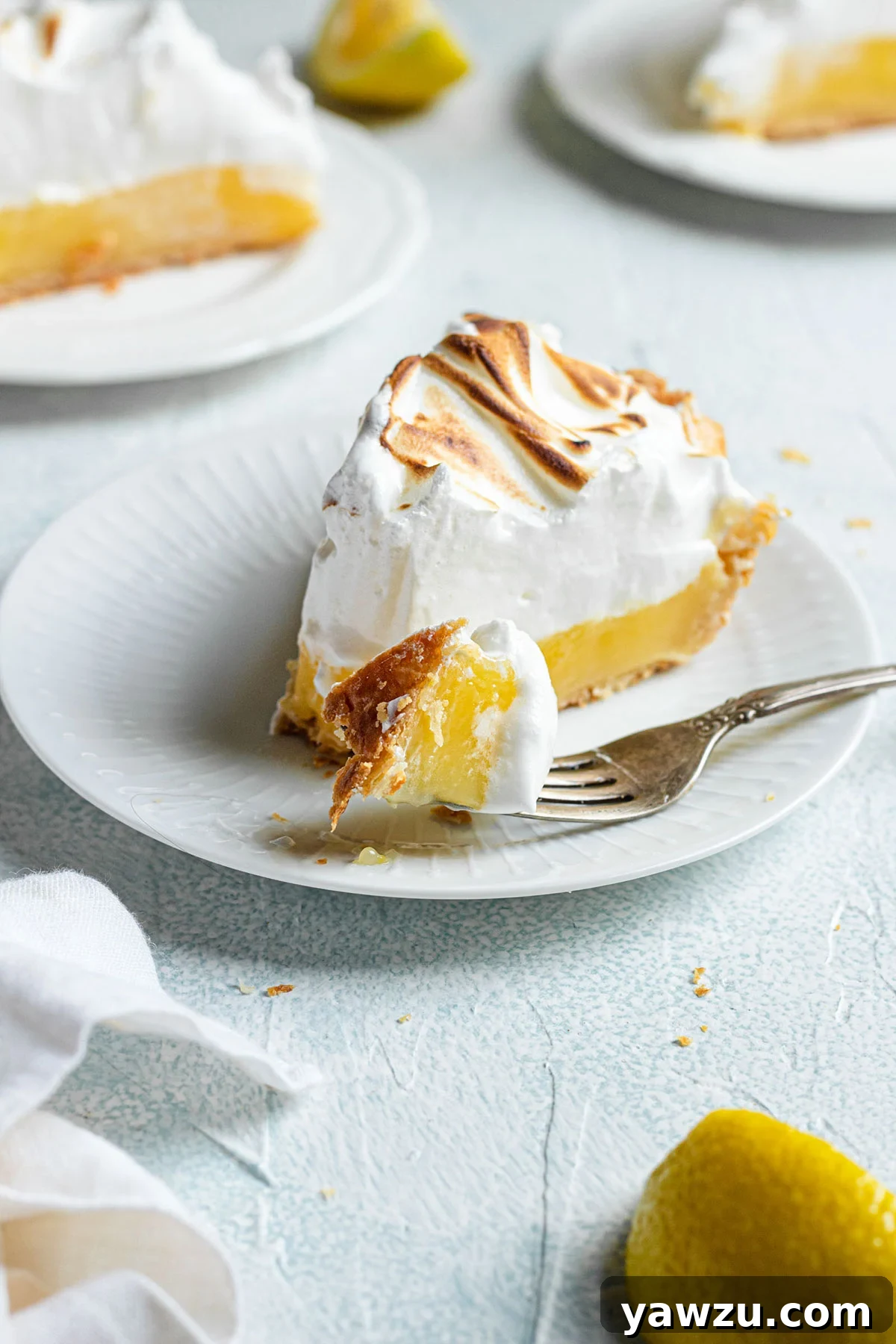
For those who may be unfamiliar with the delightful intricacies of traditional lemon meringue pie, allow us to introduce you to this iconic American dessert, a cherished staple in bakeries and homes across generations. It’s more than just a pie; it’s an experience.
Understanding the Anatomy of a Classic Lemon Meringue Pie
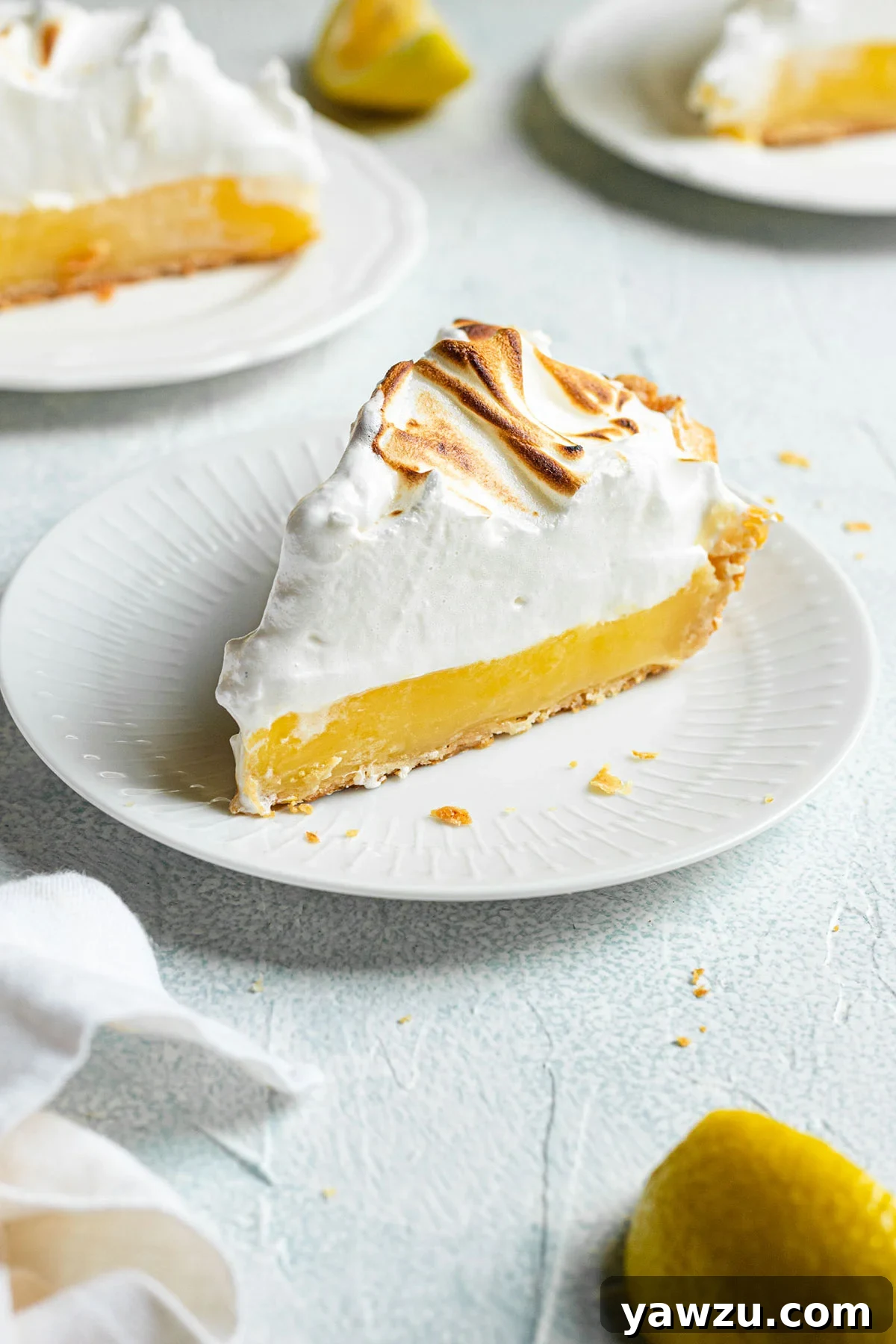
A truly classic lemon meringue pie is a masterful composition, thoughtfully designed with three distinct yet harmoniously blended elements. Each component plays a crucial role, contributing its unique character to the dessert’s overall appeal and creating a balanced, multi-layered sensory experience:
- The Flaky Homemade Pie Crust: This is the foundational layer, providing a crucial buttery, crisp, and robust base that elegantly contrasts with the soft, delicate fillings. Its texture is essential for the structural integrity and flavor balance of the pie.
- The Silky Lemon Custard Filling: Serving as the vibrant heart of the pie, this layer offers an electrifying burst of bright, tangy, and sweet citrus flavor. Its smooth, creamy consistency is paramount, providing a rich mouthfeel that perfectly complements the crust.
- The Cloud-Like Meringue Topping: This magnificent, light, and airy cap is typically piled high and beautifully toasted to a golden-brown finish. It introduces a delicate, sweet texture that gracefully balances the intense tartness of the lemon filling, creating a perfect equilibrium of flavors.
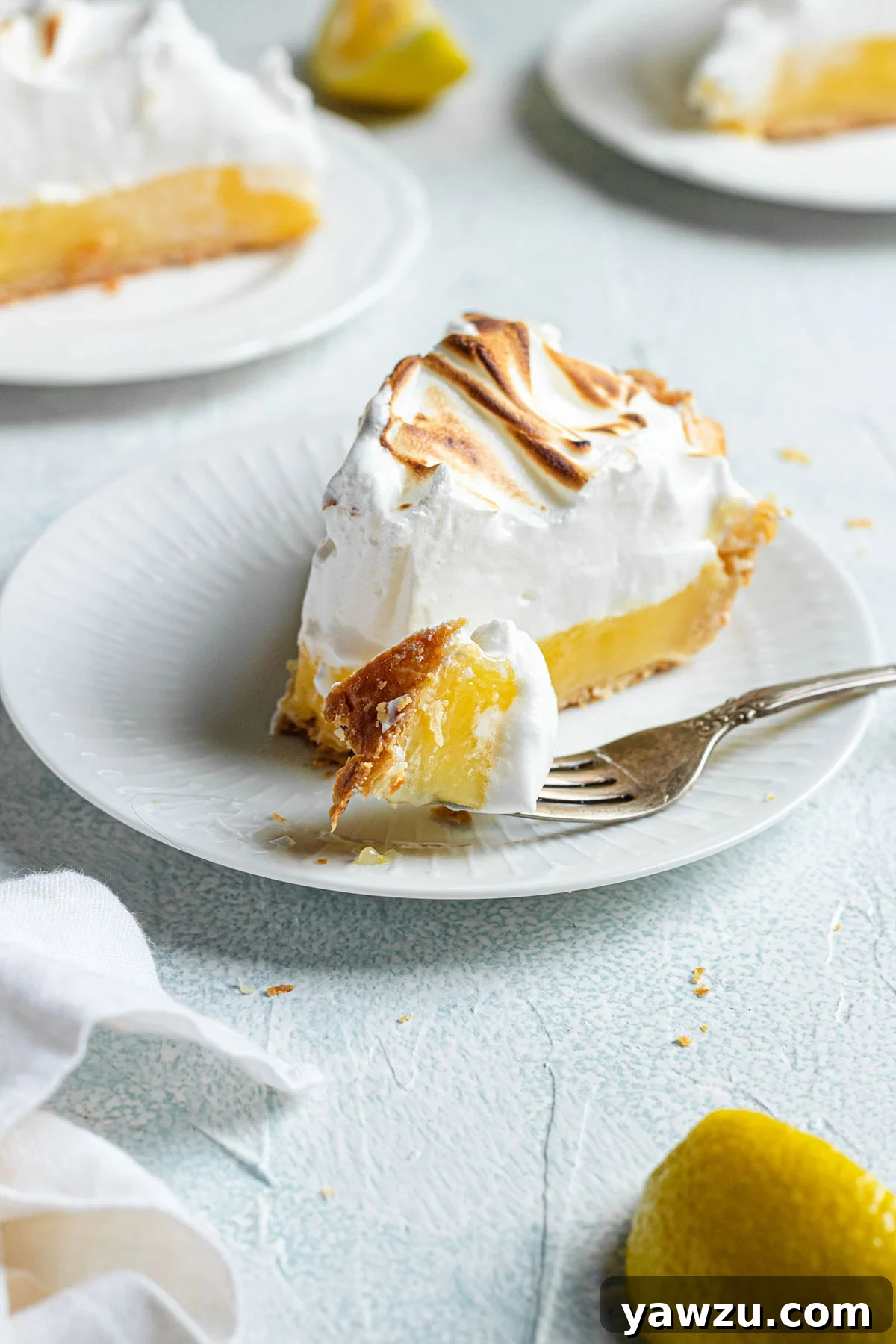
This exquisite interplay of contrasting flavors and textures—the comforting richness of the buttery, flaky pie crust, the exhilarating creaminess and tartness of the lemon filling, and the ethereal fluffiness and sweetness of the meringue—is precisely what elevates this traditional dessert. It transforms it into a beloved favorite among countless enthusiasts, offering an irresistible treat that excites and satisfies the palate with every forkful.
Essential Ingredients for Your Lemon Meringue Masterpiece
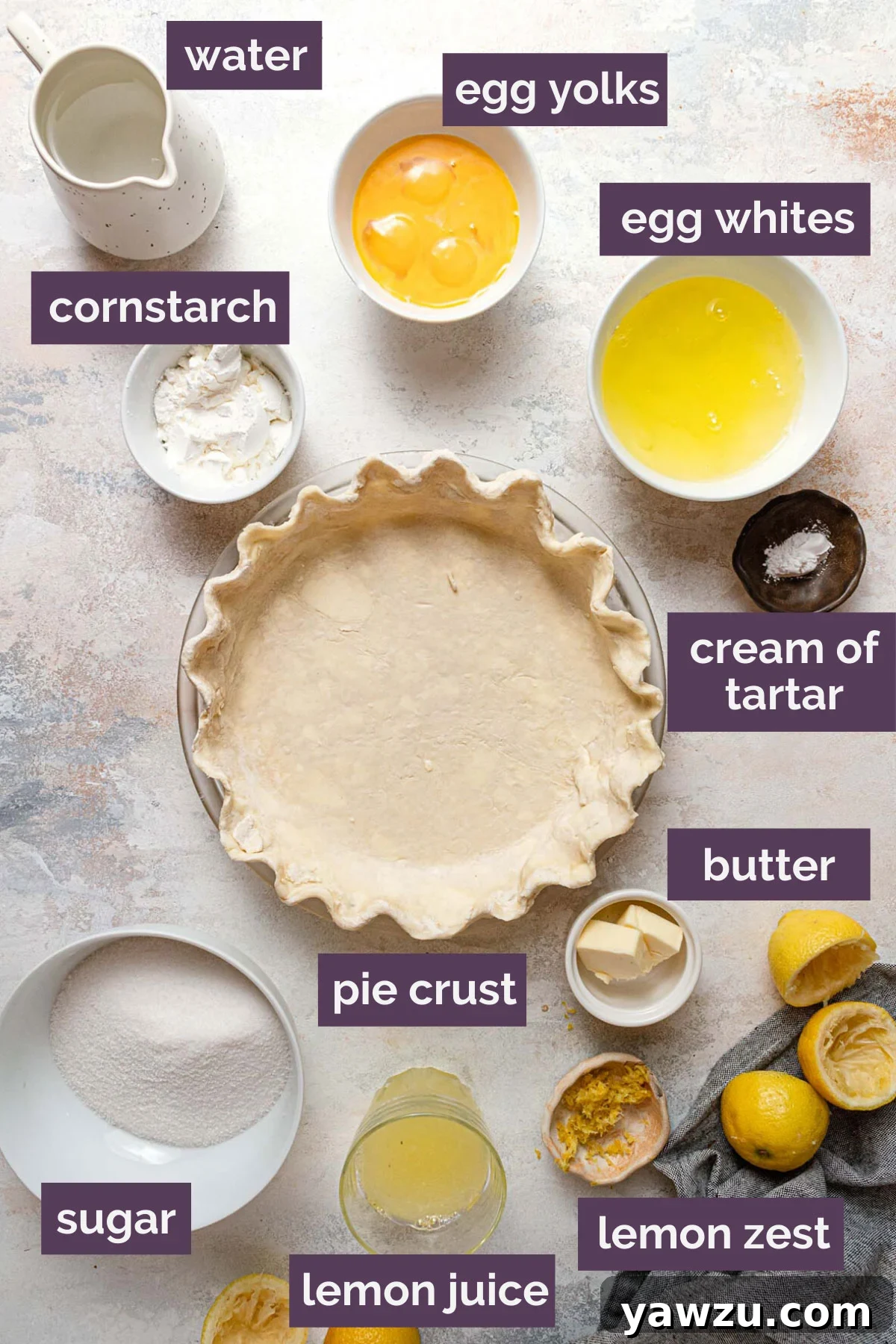
Crafting this impressive homemade lemon meringue pie doesn’t demand a trip to specialty stores for exotic ingredients. In fact, its beauty lies in how beautifully it comes together with basic, readily available kitchen staples that you likely already have on hand. Below, we’ve provided a detailed overview of the key components you’ll need to begin your journey to pie perfection. For the complete, meticulously detailed ingredient list with precise measurements and comprehensive step-by-step recipe instructions, please refer to the full recipe card conveniently located at the bottom of this page.
The Foundation: Crafting the Perfect Pie Crust
The pie crust, often underestimated, is the unsung hero of any outstanding pie, and for lemon meringue, it needs to be robust enough to hold the filling yet wonderfully tender and flaky. You have excellent choices, and here are three of our tried-and-true classic crust recipes that provide a superb base for this traditional pie, each offering a slightly different character and appeal:
- All-Butter Pie Crust: This is our premier recommendation and the specific recipe detailed in the comprehensive instructions below. Crafted exclusively with high-quality, cold unsalted butter, it consistently yields an incredibly rich, crisp, and distinctively flaky crust. This butter-rich base offers an exquisite, savory counterpoint to the cool, creamy, and wonderfully tart lemon filling. If your aspiration is to create a truly authentic and classic lemon meringue pie experience, this all-butter crust is undoubtedly the superior choice for unparalleled depth of flavor and a delicate, shattered flakiness. The layers of butter trapped within the dough create steam during baking, which separates the gluten layers, resulting in that coveted tender, flaky texture.
- “The Best Pie Crust“: This exceptionally versatile recipe has been a personal go-to for many years, celebrated for its consistent and outstanding results. It ingeniously combines the luxurious richness of butter with the superior flakiness provided by solid vegetable shortening. The secret ingredient here, a small amount of vodka used in place of some water, is a game-changer; vodka evaporates quickly, inhibiting excessive gluten development more effectively than water, thus ensuring an incredibly tender and perfectly flaky crust every single time. This option is an excellent choice if you’re looking for reliable consistency and exceptional, melt-in-your-mouth flakiness.
- Graham Cracker Crust: For those moments when time is precious or you simply desire a delightful alternative, a graham cracker crust offers a delicious and effortlessly easy shortcut without compromising on taste. Its sweet, subtly spiced flavor complements the bright lemon filling beautifully, introducing a comforting, slightly different but equally satisfying dessert profile. This no-bake (or minimally baked) option is perfect when you need a quick solution or when you’re exploring variations on the classic.
The Heart: Crafting the Luscious Lemon Pie Filling
Our lemon meringue pie filling is meticulously designed to be decadently creamy, perfectly balanced with a delightful sweetness, and a bright, refreshing tartness that awakens the palate. Achieving this exquisite texture and vibrant flavor relies on a few “power ingredients,” each contributing uniquely to its custardy perfection:
- Egg Yolks: These are absolutely paramount for creating the signature creamy, rich, and custardy texture that defines a truly traditional lemon meringue pie filling. Beyond their emulsifying properties, egg yolks contribute a beautiful golden hue and add a subtle richness, enhancing both the flavor and luxurious mouthfeel of the custard.
- Granulated Sugar: Essential for balancing the intense, piquant tartness of the lemons, the sugar adds the necessary sweetness, ensuring the filling is palatable and utterly delicious without ever being cloying. It’s about striking that perfect sweet-tart equilibrium.
- Cornstarch: This humble pantry staple is a thickening marvel and a crucial ingredient. Cornstarch ensures that the pie filling sets beautifully as it cools, allowing for clean, precise, and perfect slices when you’re ready to serve your magnificent pie. Without its thickening power, the filling would remain too runny to hold its shape.
- Fresh Lemon Juice + Zest: For the most vibrant, authentic, and pronounced lemon flavor, fresh lemon juice and its aromatic zest are truly indispensable. The zest, in particular, contains potent essential oils that deliver a concentrated burst of citrus essence, elevating the flavor profile significantly. While fresh is always superior, if fresh lemons are genuinely not an option, you can use an equivalent amount of bottled lemon juice for the liquid component of the filling. However, you will, by necessity, need to omit the zest, and the overall flavor will be noticeably milder and less complex.
The Crown: Achieving a Fluffy Meringue Topping
The magnificent, cloud-like topping is what truly makes a lemon meringue pie an impressive, show-stopping dessert. To achieve this signature fluffy, sweet, and perfectly peaked meringue, you’ll need standard meringue ingredients combined with careful technique:
- Egg Whites: These form the fundamental basis of meringue. When whipped, egg whites incorporate air, creating the meringue’s signature volume, light texture, and pristine white appearance. It is absolutely critical that they are free of any trace of fat, which can prevent them from whipping properly.
- Cream of Tartar: This acidic ingredient is a meringue’s best friend and a vital stabilizer. It helps the egg whites hold their voluminous structure, achieve those glorious stiff peaks, and prevents them from collapsing or deflating prematurely, ensuring a stable, impressive topping.
- Granulated Sugar: Gradually added during the whipping process, sugar not only sweetens the meringue but also contributes significantly to its stability and glossy, reflective appearance. It dissolves into the egg whites, forming a stronger, more resilient foam structure.
- Vanilla Extract + Salt: These additions are not merely for flavoring; they serve a purpose in enhancing the meringue. A tiny pinch of salt actually helps the egg whites whip up faster and adds a subtle depth to the overall taste, while vanilla extract complements the sweetness and rounds out the flavor profile, creating a more complex and appealing aroma.
Step-by-Step Guide: Crafting Your Perfect Lemon Meringue Pie
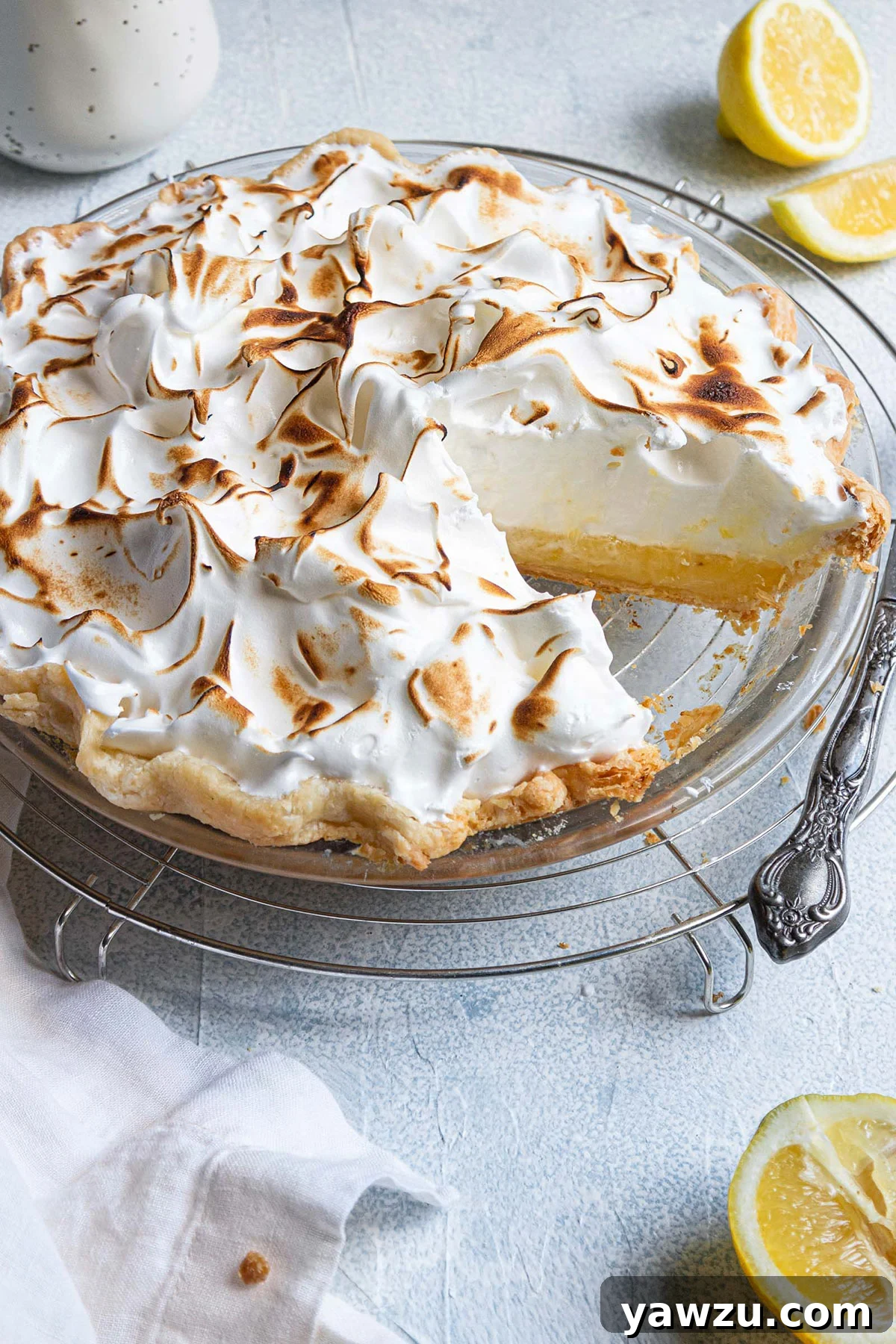
While the prospect of making a lemon meringue pie from scratch might initially appear somewhat daunting due to its multiple distinct components, rest assured that each step is entirely manageable. When approached systematically and with attention to detail, the entire process comes together quite easily. Let’s walk through the essential highlights and detailed steps, and you’ll soon master this classic dessert with confidence, producing a pie that’s both beautiful and delicious!
1. Prepare the Crust: Begin by meticulously combining your pie dough ingredients according to the recipe’s specifications. Once the dough is formed and cohesive, carefully roll it out to the required size and meticulously line your pie plate, gently pressing it into all the contours. The crucial next step is to refrigerate the dough-lined plate for a minimum of 2 hours. This extended chilling period is absolutely vital as it allows the butter within the dough to firm up completely and gives the gluten strands an opportunity to relax, which is essential for preventing unsightly shrinkage during the baking process and ensuring a wonderfully tender and flaky crust.
2. Blind Bake the Crust: This essential preparatory baking step, also widely known as “par-baking,” involves baking the pie crust until it’s nearly cooked through but not completely browned. It will return to the oven for a final, brief bake once the lemon filling and meringue are added. The primary purpose of blind baking is to prevent the bottom crust from becoming soggy after the moist filling is introduced, ensuring it remains wonderfully crisp and firm, providing the perfect contrast to the soft filling.
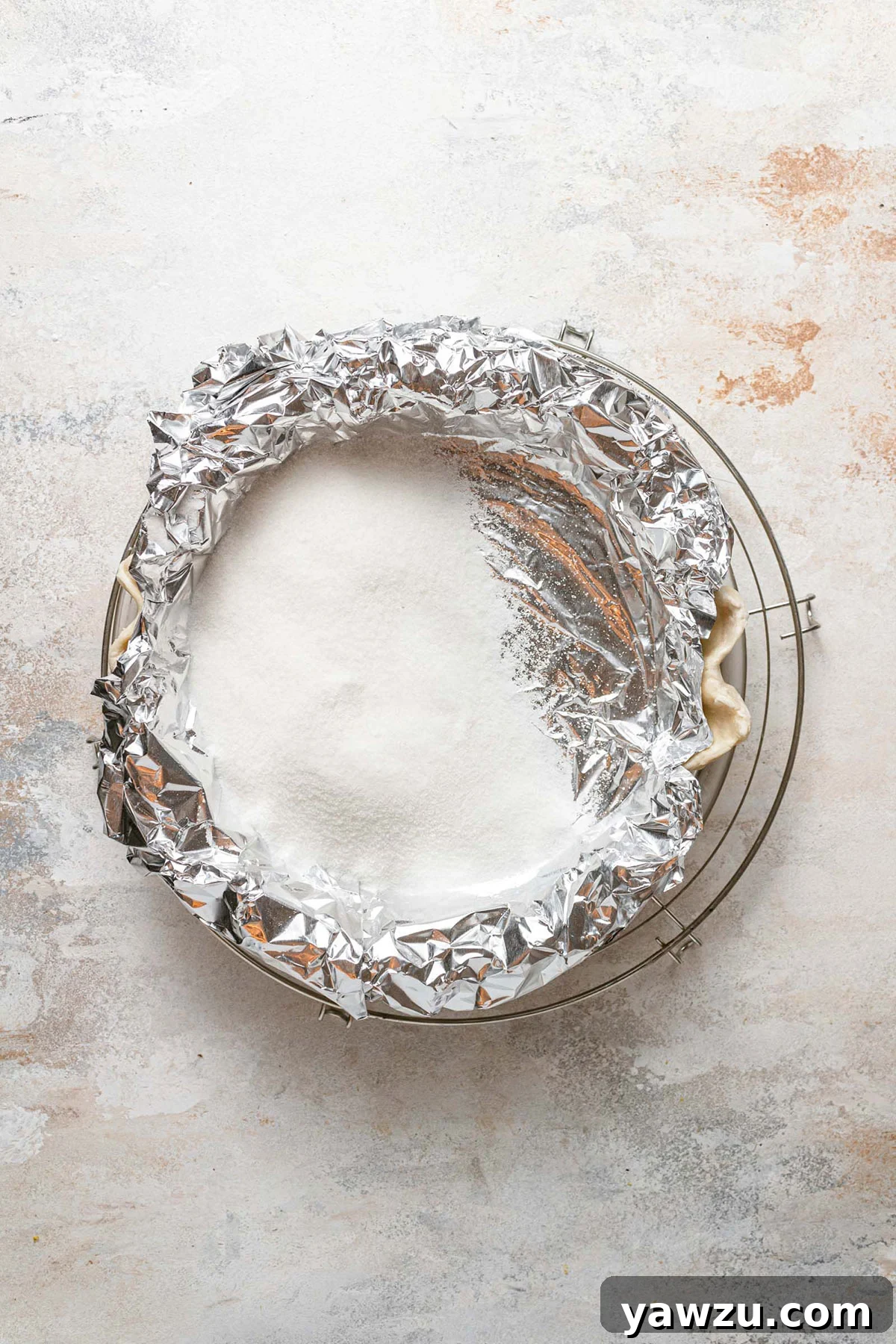
Expert Tip for Foolproof Blind Baking: After years of experimenting with various blind baking methods and numerous types of pie weights, the technique I’ve found to be completely foolproof, consistently delivering impeccable results, is the one brilliantly outlined by culinary expert Stella Parks. To execute this method, line your chilled pie plate (containing the unbaked dough) generously with a large piece of aluminum foil, pressing it firmly and snugly into the edges of the pie dough and ensuring it extends over the crimped edges of the crust. Then, fill this foil-lined crust completely with granulated sugar (yes, sugar! And generously – don’t worry, you can easily cool and reuse this sugar for future blind baking or in other recipes!). Bake the pie in a preheated oven at 350 degrees F (175°C) for approximately 45 minutes for a partially-baked crust, or 55 to 60 minutes for a fully baked crust, depending on your recipe’s precise needs. This method has consistently delivered unparalleled success: you’ll experience no more frustrating pie crust shrinkage, no dough stubbornly sticking to the foil when removed halfway through baking, and consistently achieve a beautifully browned, perfectly baked pie crust that forms an ideal, sturdy, and delicious foundation for your lemon meringue masterpiece.
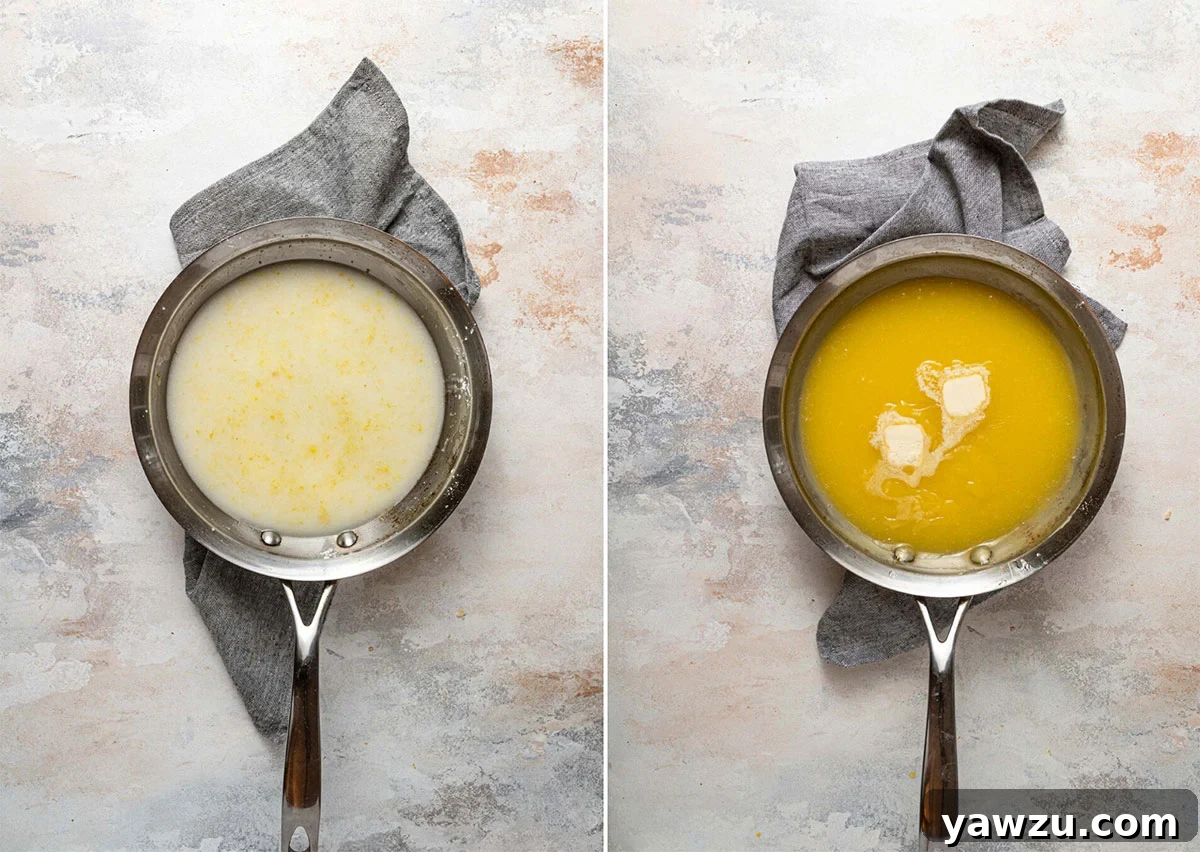
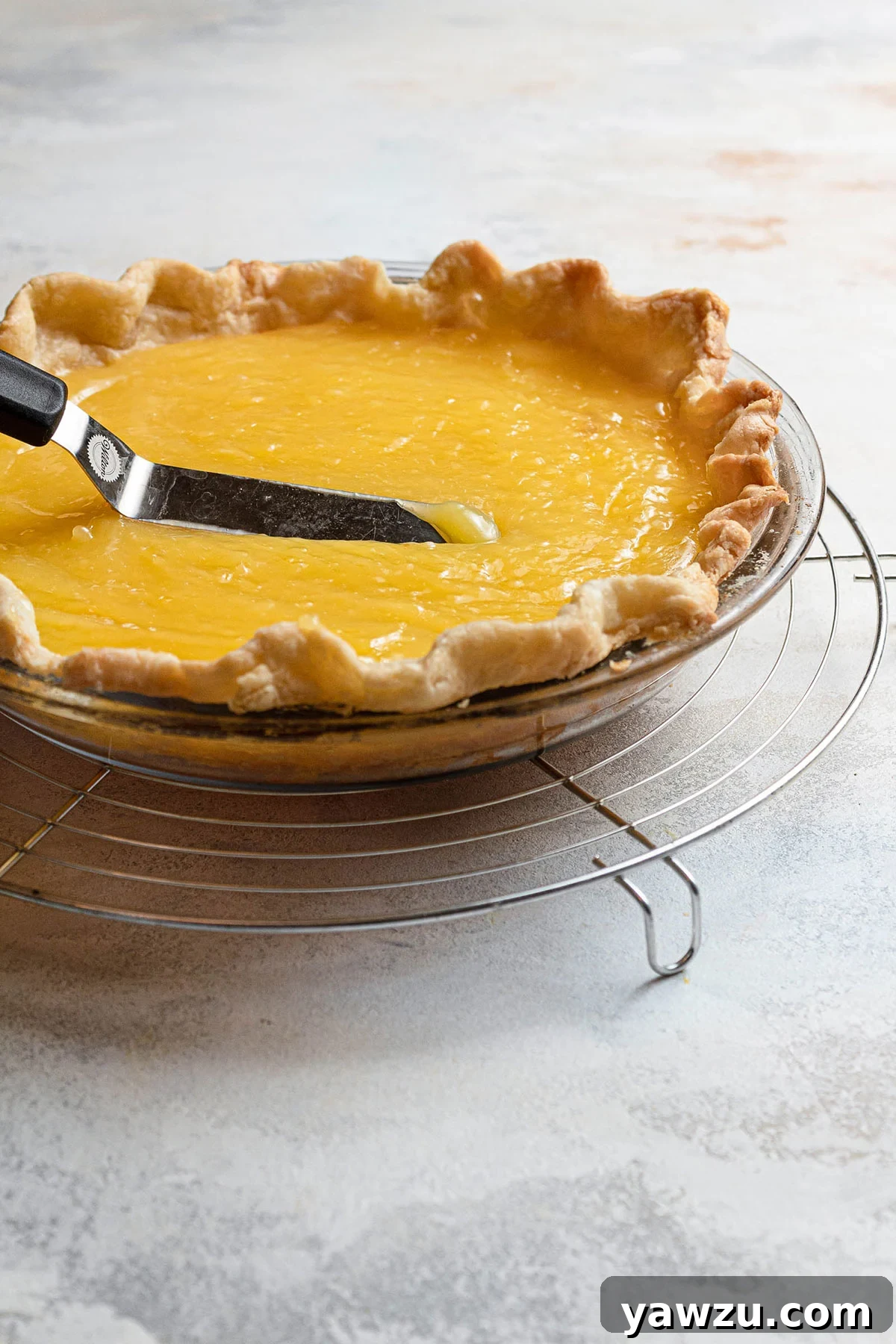
3. Prepare the Luscious Lemon Filling: In a medium, heavy-bottomed saucepan, whisk together the water, granulated sugar, salt, cornstarch, fresh lemon juice, and finely grated lemon zest. Place this mixture over medium heat and cook, stirring frequently to prevent scorching, until it begins to thicken, becomes visibly bubbly, and actively bursts with large bubbles. This thickening is crucial for the pie to set correctly. Next, you’ll temper the beaten egg yolks: gradually whisk about half of the hot lemon mixture into the beaten egg yolks. This process slowly raises the temperature of the yolks, preventing them from scrambling. Once combined, immediately scrape this warmed egg yolk mixture back into the saucepan with the remaining hot lemon mixture. Increase the heat back to medium and continue cooking, whisking constantly, until the filling is very thick and large, slow bubbles break on the surface, indicating it’s fully cooked and thickened to perfection. Remove the pan from the heat and whisk in the unsalted butter until it’s completely melted and smoothly incorporated, adding a luxurious richness and glossy finish. Finally, pour this vibrant, warm lemon filling into your blind-baked pie crust and smooth it into an even layer using an offset spatula. Immediately press a piece of plastic wrap directly against the entire surface of the warm filling. This prevents an undesirable “skin” from forming on top and critically keeps the filling warm, which is important for proper meringue adhesion.
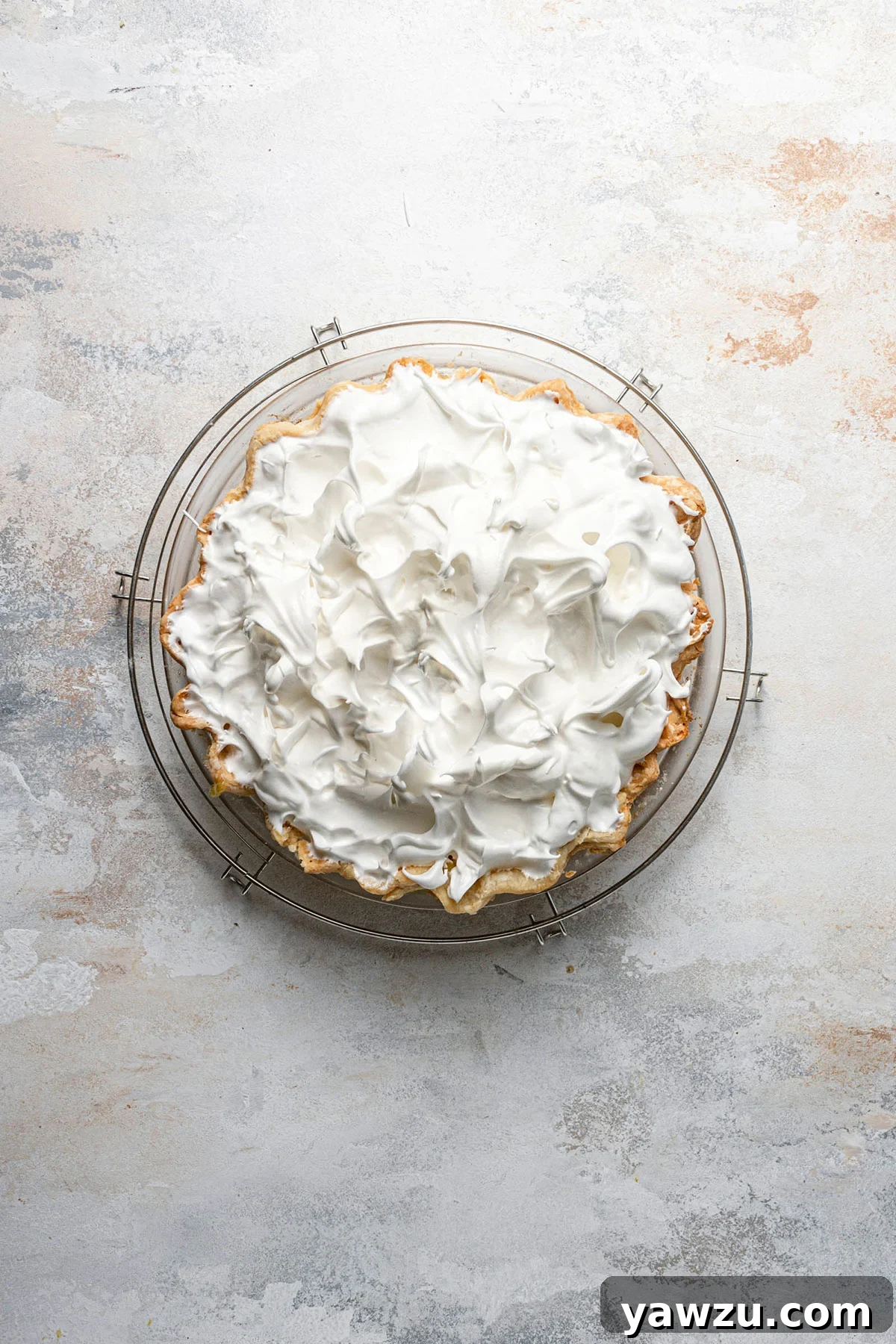
4. Craft the Fluffy Meringue: Now, for the show-stopping, cloud-like meringue! In an impeccably clean, dry mixing bowl (free from any grease), begin to whip your room-temperature egg whites on medium speed until they become light and frothy. At this crucial stage, add the cream of tartar (your meringue’s essential stabilizer), a tiny pinch of salt to enhance whipping, and a touch of vanilla extract for a subtle flavor note. Increase the mixer speed to medium-high and continue to beat until soft peaks form—this is when the peaks hold their shape but gently curl over at the tip when the whisk is lifted. Then, with the mixer still running on medium-high speed, slowly and gradually add the granulated sugar, a tablespoon at a time, ensuring it fully dissolves into the egg whites with each addition. Continue to beat until the meringue becomes incredibly thick, glossy, and forms stiff peaks that stand upright without collapsing. Once your magnificent meringue is ready, carefully remove the plastic wrap from the warm lemon filling. Using an offset spatula or the back of a large spoon, pile the voluminous meringue high on top of the warm lemon filling, ensuring it generously covers the entire surface. Crucially, press the meringue firmly against and into the outer edges of the pie crust all the way around. This essential sealing step “locks” the meringue to the crust, which is vital for preventing the dreaded “weeping” (exuding liquid) and helps it adhere beautifully during baking and cooling. For an elegant finish, you can create decorative swirls and peaks with your spoon or spatula.
5. Bake the Assembled Pie: The fully assembled lemon meringue pie requires only a short and precise duration in a moderately heated oven. This final bake serves two critical purposes: it allows the lemon filling to fully set and solidify further, and more visibly, it cooks and beautifully browns the meringue topping, creating those enticing, slightly toasted, golden-brown peaks and an appealing texture. It’s imperative to keep a close eye on the pie during this stage to prevent the delicate meringue from over-browning or burning.
6. Cool and Chill for Perfection: Once baked, the most challenging part is resisting the urge to slice immediately! It is absolutely critical to first cool the pie at room temperature for at least 1 hour. This allows the internal structure of the lemon filling to begin setting and firming up gradually. After this initial cooling period, transfer the pie to the refrigerator and chill it for a minimum of 4 hours, or preferably even longer (up to 6-8 hours or overnight), before you even consider slicing and serving. This extended chilling period is paramount for the filling to firm up completely and for all the vibrant flavors to meld beautifully, ensuring clean, perfectly defined slices every single time. Patience is key to a flawless lemon meringue pie.
Expert Tips for an Unforgettable Lemon Filling
Fresh Lemons vs. Bottled Juice: Maximizing Flavor Impact
For a lemon meringue pie filling that truly sings with bright, authentic, and complex citrus flavor, there’s absolutely no substitute for using fresh lemon juice and its aromatic zest. The natural essential oils concentrated in the zest provide an intense aromatic punch and depth that bottled juice simply cannot replicate. Fresh juice also offers a cleaner, more vibrant acidity. However, we understand that fresh citrus isn’t always readily available or convenient. If you must use bottled lemon juice, it will certainly function as the liquid component for the filling, but be aware that the overall flavor will be noticeably less vibrant and might lack the nuanced complexity. In such cases, remember to use the exact equivalent amount of bottled lemon juice as specified for fresh juice. You will, by necessity, need to omit the zest as bottled juice lacks this flavorful component. Always prioritize fresh lemons whenever possible for the ultimate, most impactful taste experience in your homemade pie.
The Art of Zesting for Maximum Aromatic Impact
Whenever a recipe, particularly one for a lemon-forward dessert, calls for both citrus juice and zest, always remember this golden rule: zest the outside of the fruit first, *before* you cut and juice it. It’s considerably easier and safer to zest a whole, firm lemon. For this task, we absolutely swear by a high-quality Microplane citrus zester. It’s designed to meticulously remove only the vibrant, richly flavored outer layer of zest, leaving behind the bitter white pith, which can quickly ruin the delicate flavor balance of your lemon filling. To truly amplify the lemon flavor and infuse it deeply into your filling, try this professional trick: use your fingers to vigorously combine the freshly grated lemon zest with the granulated sugar. Rub them together until the sugar is completely moistened and takes on the consistency of wet sand. This action effectively releases the precious essential oils from the zest, thoroughly infusing the sugar with an intense lemon aroma and flavor. Then, simply combine this lemon-infused sugar with the rest of your ingredients as directed in the recipe, and proceed as usual for an extra burst of citrus.
Mastering the Juicing Technique for Optimal Yield
To extract the absolute maximum amount of juice from your lemons, employ a simple yet remarkably effective technique: firmly press and roll the whole lemon on your kitchen counter for about 10-15 seconds before cutting it. This gentle but firm pressure helps to break down the internal membranes of the lemon, making it much easier to squeeze and yielding significantly more juice. For this specific recipe, you’ll typically need approximately ½ cup of fresh lemon juice. Depending on the size, ripeness, and natural “juiciness” of your specific lemons, you will likely require anywhere from 2 to 4 medium-sized lemons to achieve the desired quantity. Always have a few extra on hand just in case!
Troubleshooting Common Lemon Meringue Pie Issues
Even the most experienced bakers can occasionally encounter challenges when perfecting a delicate dessert like lemon meringue pie. Don’t be discouraged! Here are comprehensive explanations and practical solutions for some of the most common issues you might face:
Why is my lemon meringue pie filling runny or watery?
A perfectly set lemon meringue pie filling should possess a firm, sliceable consistency, reminiscent of a dense, creamy pudding, yet slightly softer than a firm gel like Jell-O. The most frequent culprit behind a runny or watery filling is insufficient cooking of the cornstarch. It is absolutely imperative that the initial lemon mixture (water, sugar, cornstarch, etc.) becomes visibly thick and vigorously bubbly, with large, slow-moving bubbles actively bursting on the surface, before you begin the crucial tempering process with the egg yolks. If the mixture doesn’t reach this critical thickening point, the cornstarch won’t fully activate its gelling properties, and consequently, the entire filling will fail to set and firm up correctly, resulting in a disappointing, unset consistency. Ensure you cook it until you see those “large bubbles bursting” as described in the detailed instructions.
Why won’t my meringue form stiff peaks, or why does it deflate?
Making meringue can be an incredibly rewarding experience, but it is indeed a bit finicky and demands precision. The absolute golden rule for successful meringue is to ensure that absolutely *no* fat, in any form, comes into contact with your egg whites. Even the tiniest speck of egg yolk, residual grease from your mixing bowl, or remnants of fat on your whisk attachment (or hand mixer beaters) can catastrophically prevent the egg whites from whipping up properly and forming stiff, stable peaks. Before you begin, meticulously check and clean your mixing bowl and whisk attachment to confirm they are spotlessly clean and completely free of any grease. Additionally, when incorporating the sugar into the egg whites, it’s crucial to add it very gradually—a few tablespoons at a time, allowing each addition to dissolve slightly into the whites before adding the next. Dumping all the sugar in at once can “break” the delicate protein structure of the meringue, preventing it from ever reaching those beautiful, glossy stiff peaks. For a deeper dive into perfecting this delicate topping and mastering all its nuances, refer to our comprehensive meringue guide.
Why is my meringue weeping, and how can I prevent it?
Meringue weeping, a common frustration, is characterized by the formation of liquid or condensation (small beads of moisture) between the meringue layer and the pie filling. This occurs when moisture is trapped and then released. To effectively prevent your homemade lemon meringue pie from “weeping” and to ensure a beautiful, seamless bond between the layers, follow these two critical tips: (1) Always spread the meringue onto a *warm* lemon filling. A warm surface helps to create a strong, stable “seal” between the two layers as the meringue bakes. We achieve this by pressing plastic wrap directly against the filling’s surface while you prepare the meringue, which keeps it warm and prevents a skin from forming. (2) When you spread the meringue over the filling, it is absolutely crucial to ensure that the meringue makes firm, continuous contact with the entire circumference of the pie crust. There should be absolutely no gaps or bare spots where the filling is exposed at the edges! This vital sealing mechanism effectively traps the moisture from the filling underneath and creates a barrier, preventing the meringue from separating or pulling away from the crust, which is a primary cause of weeping.
Make-Ahead, Shelf Life, and Storage Recommendations
Thoughtful planning can significantly reduce stress and enhance the enjoyment of your pie-baking experience. Here’s how to effectively manage your lemon meringue pie from preparation to serving, ensuring the best results:
Make-Ahead Preparation: You can meticulously prepare your pie crust—this includes mixing the dough, carefully lining the pie plate, and decoratively crimping the edges—up to a full day (24 hours) in advance. Once prepared, wrap the dough-lined plate securely with plastic wrap to prevent it from drying out, and keep it refrigerated overnight. This smart make-ahead strategy allows you to tackle the most time-consuming and often fiddly part of the pie a day before, making the final assembly and baking process much quicker and more enjoyable on serving day.
Optimal Shelf Life: Lemon meringue pie, with its delicate meringue topping and creamy filling, is truly at its absolute peak when served fresh. For the best possible flavor, ideal texture, and most appealing appearance, it is highly recommended to consume the pie within 1 day of baking. The meringue, being a sensitive element, will gradually begin to separate and release moisture (a process known as weeping) the longer it sits. This causes it to become a bit watery and lose its desirable crispness and airy texture. While still perfectly edible beyond this timeframe, the overall quality and aesthetic appeal rapidly diminish, so we strongly encourage you to enjoy your magnificent homemade masterpiece promptly!
Storage Guidelines: Always store any leftover lemon meringue pie in the refrigerator. To protect the delicate meringue from absorbing unwanted odors from other foods and to prevent it from drying out too quickly, cover the pie loosely with plastic wrap. However, it’s important to understand that even with careful refrigeration, this will not entirely prevent the meringue from weeping over an extended period. It is crucial to note that lemon meringue pie does not freeze well. Freezing and subsequent thawing will significantly alter the delicate texture of both the custard-like filling and the fluffy meringue, invariably leading to a watery, grainy, and generally unpleasant result. Therefore, freezing this particular dessert is strongly not recommended if you wish to preserve its quality and appeal.
Explore More Exquisite Meringue Desserts
If the delicate, ethereal charm and versatile nature of meringue have truly captivated your culinary imagination, you’ll undoubtedly swoon over these other delightful meringue-based desserts. Expand your baking repertoire and indulge in these incredible creations next:
- Classic Pavlova Recipe: Experience a beautifully crisp meringue shell enveloping a soft, marshmallowy interior, often adorned with fresh fruit and cream.
- Pavlova Layer Cake with Whipped Cream & Berries: An elegant and impressive dessert featuring multiple layers of pavlova meringue, stacked with luscious whipped cream and fresh, vibrant berries.
- Chocolate Pavlova with Mascarpone & Raspberries: A rich, decadent twist on the traditional pavlova, featuring a chocolate-infused meringue base, creamy mascarpone, and tart raspberries.
- Chocolate Chip Meringue Cookies: Discover these incredibly light-as-air cookies, delicate and crisp, studded with delightful miniature chocolate morsels for a sweet treat.
- Sky-High Lemon Meringue Pie Bars: Enjoy all the glorious flavors and textures of classic lemon meringue pie, reinvented in an easy-to-make and convenient bar format, perfect for sharing.
Watch Our Detailed Recipe Video:
Prefer to learn by watching every step come to life? Our detailed recipe video guides you through the entire process of making this incredible Classic Lemon Meringue Pie. Click the link below to see the magic unfold and bake along with us!
Watch the Lemon Meringue Pie Recipe Video (MP4)
(Please note: This is a direct link to the video file. For an embedded player experience with additional features, please visit the original recipe page on our website.)
If you embark on this delightful culinary adventure and make our classic homemade lemon meringue pie, and find yourself utterly delighted with the beautiful and delicious result, we would be incredibly grateful if you would take a moment to leave a rating below. Your invaluable feedback and ratings not only inspire us but also significantly help other aspiring bakers discover and enjoy this wonderful recipe. Thank you so much for your support and happy baking! ❤️️

Classic Lemon Meringue Pie Recipe
Pin
Rate
Ingredients
For the Crust:
- 1¼ cups (150 g) all-purpose flour
- 1½ teaspoons (1½ teaspoons) granulated sugar
- ½ teaspoon (½ teaspoon) salt
- ½ cup (113 g) unsalted butter, cubed and very cold
- 2 to 4 tablespoons ice water
For the Filling:
- 5 egg (5 egg yolks) yolks
- 1½ cups (360 ml) water
- 1¼ cups (248 g) granulated sugar
- 5 tablespoons cornstarch, beaten
- ¼ teaspoon salt
- ½ cup (120 ml) fresh lemon juice
- 1 tablespoon lemon zest
- 2 tablespoons unsalted butter
For the Meringue:
- 5 (5 egg whites) egg whites, room temperature
- ½ teaspoon cream of tartar
- ½ teaspoon vanilla extract
- Pinch salt
- ½ cup (99 g) granulated sugar
Instructions
-
Make the Pie Crust: In a large bowl, whisk together the flour, sugar, and salt until well combined.
-
Add the cold, cubed unsalted butter. Using a pastry blender or two forks, quickly cut the butter into the flour mixture until it resembles coarse meal with some larger pea-sized bits of butter still visible. This is key for flakiness.
-
Add 2 tablespoons of the ice water and use a rubber spatula to gently stir and press it into the dough. If the dough still appears dry and crumbly, add more ice water, one tablespoon at a time, until it just comes together into a cohesive ball. Be careful not to overmix, as this can develop gluten and make the crust tough.
-
Turn the dough out onto a lightly floured work surface. Briefly bring it together with your hands, pressing it into a flat 6-inch round disk. Lightly flour the top of the disk and your rolling pin. Gently and quickly roll the dough out to a 13-inch circle, rotating the dough a quarter turn after every couple of rolls to prevent it from sticking to the surface and to ensure even thickness.
-
Carefully transfer the rolled-out dough to a 9-inch pie plate. Gently press the dough into the bottom and up the sides of the plate, ensuring it fits snugly without stretching. Trim the excess dough, leaving about 1 inch extending beyond the lip of the pie plate. Then, tuck this overhang under itself so that the edge of the dough is flush with the pie plate rim. Flute the edges decoratively or press them with the tines of a fork to create an appealing pattern. Place the dough-lined plate in the refrigerator and chill for a minimum of 2 hours, or up to overnight. This chilling period is crucial for preventing shrinkage during baking.
-
Partially Bake the Crust (Blind Bake): Preheat your oven to 350 degrees F (175°C).
-
Remove the chilled, dough-lined pie plate from the refrigerator. Line the entire surface of the pie dough with a large piece of aluminum foil, pressing it firmly into the edges of the dough and ensuring it extends over the crimped crust edges. Fill the foil-lined pie plate completely with granulated sugar (you can also use ceramic pie weights or dried beans, but sugar provides superior results!). Bake for 45 minutes.
-
Carefully remove the pie plate from the oven and let it sit for 5 minutes. Then, gently remove the foil with the sugar (the sugar can be cooled and stored in an airtight container for future blind baking use). The crust should be lightly golden and partially baked.
-
Reduce the oven temperature to 325 degrees F (160°C). This lower temperature is ideal for the final bake.
-
Make the Lemon Filling: In a medium bowl, whisk the 5 egg yolks together until smooth and pale yellow; set aside.
-
In a medium, heavy-bottomed saucepan, whisk together the water, 1¼ cups granulated sugar, cornstarch, ¼ teaspoon salt, fresh lemon juice, and lemon zest. Place the saucepan over medium heat and cook, whisking continuously (or at least very frequently) to prevent scorching, until the mixture comes to a full boil, becomes visibly thick, and large bubbles are actively bursting on the surface. This typically takes 4 to 6 minutes. Once thickened, reduce the heat to low.
-
To temper the egg yolks, very gradually—drizzling slowly while continuously whisking—incorporate about half of the hot lemon mixture into your beaten egg yolks. This step gently raises the temperature of the yolks without scrambling them. Once combined, immediately scrape this warmed egg yolk mixture back into the saucepan with the remaining hot lemon mixture. Increase the heat back to medium and continue to cook, whisking constantly, until the entire mixture is very thick and large, slow-moving bubbles burst on the surface again, indicating it has reached its full thickening potential, usually 1 or 2 minutes. Remove the pan from the heat and whisk in the 2 tablespoons of unsalted butter until it is completely melted and smoothly incorporated, adding richness and a beautiful sheen.
-
Promptly pour the warm lemon filling into the partially baked pie crust, spreading it out into an even layer using an offset spatula. Immediately place a piece of plastic wrap directly against the surface of the filling. This prevents a “skin” from forming on top and critically keeps the filling warm, which is essential for proper meringue adhesion.
-
Make the Meringue: Ensure your mixing bowl and whisk attachment (or hand mixer beaters) are perfectly clean and grease-free. Using an electric mixer with the whisk attachment (or a hand mixer), beat the 5 room-temperature egg whites on medium speed until they become frothy and foamy. At this point, add the ½ teaspoon of cream of tartar, a pinch of salt, and the ½ teaspoon of vanilla extract. Increase the mixer speed to medium-high and continue to beat until soft peaks form—when you lift the whisk, the peaks should hold their shape but gently curl over at the tip. While still beating the egg whites, gradually add the ½ cup of granulated sugar, one tablespoon at a time, ensuring it dissolves completely into the whites with each addition. Continue beating until the meringue is incredibly glossy, thick, and stiff peaks form, standing straight up when the whisk is lifted without collapsing.
-
Carefully remove the plastic wrap from the top of the warm lemon filling. Using an offset spatula or the back of a spoon, spread the freshly made meringue evenly over the warm lemon filling. It is crucial to ensure that the meringue generously touches and connects with the inner edge of the pie crust all the way around. This creates a seal that helps prevent the meringue from “weeping” during baking and cooling. You can create beautiful decorative swirls and peaks with the back of your spoon or spatula for an aesthetically pleasing finish.
-
Bake the assembled pie in the preheated 325 degrees F (160°C) oven until the meringue topping is beautifully golden brown on its peaks, typically 18 to 22 minutes. Keep a close eye on it to prevent over-browning. Once baked, carefully remove the pie from the oven and place it on a wire rack to cool completely at room temperature for 1 hour. After this initial cooling, transfer the pie to the refrigerator and chill for at least 4 hours (preferably longer, up to 6-8 hours or overnight) before slicing and serving. This extended chilling time is absolutely essential for the filling to fully set and for the flavors to meld perfectly.
Notes
- Alternate crust options: For variety, consider using a butter/shortening crust for ultimate flakiness and ease of handling, or a graham cracker crust for a quick and delicious alternative with a different flavor profile.
- Recommended Equipment: To make your pie-baking experience smoother and more efficient, we highly recommend a sturdy 9-inch glass or ceramic pie plate, a reliable pastry blender (or a food processor for even quicker dough prep), a marble board for rolling dough (it stays wonderfully cold, which is ideal for pastry!), a sturdy rolling pin for even thickness, and an essential Microplane citrus zester for extracting maximum lemon flavor.
- Lemon Yield: You will typically need 2 to 4 medium-sized lemons to yield the ½ cup of fresh lemon juice specified in this recipe. Always have a spare lemon on hand just in case.
- Make-Ahead Crust: The pie crust can be fully prepared (mixed, lined, and crimped) and kept refrigerated for up to one day in advance before you proceed with blind baking and assembling the rest of the pie.
- Storage Best Practices: For optimal freshness, texture, and flavor, this lemon meringue pie is best enjoyed within 24 hours of baking. Store any leftovers in the refrigerator, loosely covered with plastic wrap to prevent it from drying out or absorbing odors. Please note that this pie does not freeze well, as both the delicate filling and meringue textures will degrade significantly upon thawing, leading to a less desirable result.
Did you make this recipe?
Leave a review below, then snap a picture and tag @thebrowneyedbaker on Instagram so I can see it!
Photography by Dee Frances.