Unlock Baking Perfection: Why Every Baker Needs a Kitchen Scale
For decades, the standard method for measuring dry ingredients in home kitchens has been the venerable “scoop and level” technique. You plunge your measuring cup into the flour, then use the straight edge of a butter knife to level off the top. On the surface, this method appears straightforward, intuitive, and efficient. However, beneath this veneer of simplicity lies a significant flaw: a glaring lack of accuracy. While cooking often embraces flexibility and improvisation, baking operates on a more scientific plane, where precision is not merely an advantage but a critical prerequisite for success. Indeed, inaccurate measuring stands as one of the most common culprits behind baking failures, transforming what should be delightful culinary creations into disappointing mishaps.
Consider the all-too-common scenario: cookies that emerge from the oven as hard as pucks rather than delightfully soft and chewy, bread with a dense, tough crumb instead of a light and airy texture, or cakes that fall flat and dense, losing their expected fluffiness. These frustrating outcomes are frequently traceable to the subtle but impactful error of adding just a bit too much flour. Conversely, an overabundance of granulated sugar can transform your desired soft and pliable cookies into unpleasantly crispy discs. It wasn’t until a little over a year ago that I wholeheartedly embraced the transformative power of measuring ingredients by weight – a revelation that has unequivocally elevated my baking endeavors. The profound difference this switch made was so remarkable that I realized it was imperative to share this game-changing insight with you, my fellow baking enthusiasts. Join me as we explore my personal experiment, delve into the unparalleled benefits of weight measurement, uncover top kitchen scale recommendations, and compile a list of essential resources to kick-start your journey toward consistent, professional-quality baking success.
The Flawed Art of Volume Measurement: An Eye-Opening Experiment
Like countless home bakers, my initial foray into baking relied almost exclusively on volume measurements – cups, teaspoons, and tablespoons – as dictated by the majority of recipes available. However, a few esteemed cookbooks in my collection began to offer ingredient quantities in both volume and weight. While I initially overlooked the weight column, my curiosity was significantly piqued during an attempt to perfect the Thick & Chewy Chocolate Chip Cookies from the acclaimed Baking Illustrated. This particular recipe placed a strong emphasis on precision, prompting me to seriously question how significant the difference could truly be between the traditional scoop-and-level method and the more rigorous approach of weighing ingredients.
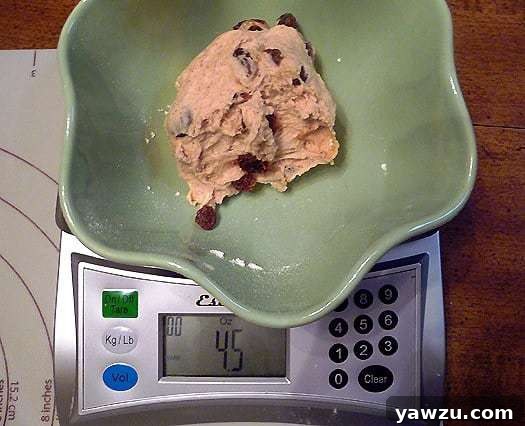
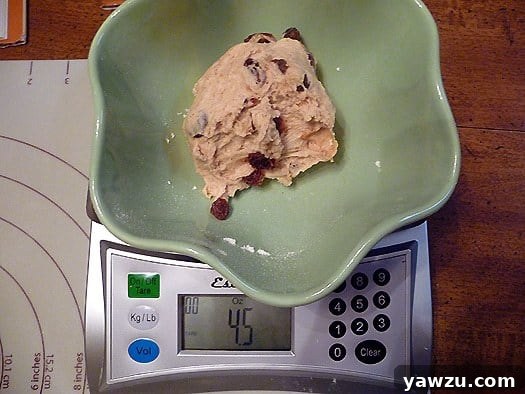
Driven to uncover the undeniable truth, I conducted a simple yet profoundly eye-opening experiment. I meticulously measured out a single cup of all-purpose flour using my accustomed scoop-and-level technique, ensuring I replicated my standard practice as accurately as possible. Subsequently, I carefully transferred that “cup” of flour onto my trusty digital kitchen scale. The result was genuinely astonishing: there was almost an entire ounce of difference! The flour I had scooped into the measuring cup weighed nearly a full ounce more than what the recipe – and widely accepted baking standards – stated a cup of all-purpose flour should weigh. This might seem like a minor discrepancy, but for a delicate baking recipe, an extra ounce of flour in a single cup can dramatically alter the hydration balance of a dough or batter, fundamentally impacting its structure, texture, and overall outcome. For a recipe that calls for multiple cups of flour, this cumulative error quickly escalates into a genuine recipe for disaster. At that pivotal moment, the scales (a deliberate pun) fell from my eyes, and I unequivocally committed to weighing every single ingredient going forward.
Understanding Why Volume Measurements Are Inherently Inaccurate
To truly grasp the importance of a kitchen scale, it’s vital to understand *why* volume measurements are so unreliable. The core issue stems from the variable density and compressibility of dry ingredients, especially flour. When you scoop flour directly from its bag, you inevitably compact it to varying degrees with each scoop. One scoop might capture light, airy flour, while another, perhaps from a nearly empty bag, could be densely packed. This leads to inconsistent amounts of actual ingredient mass in your measuring cup, even if it visually appears “level.” Factors such as ambient humidity, storage conditions, and even the specific design or material of your measuring cup can further exacerbate these inconsistencies. Imagine a recipe calling for three cups of flour. If each cup is off by just half an ounce due to compaction, you could inadvertently be adding an extra 1.5 ounces of flour to your dough. This translates to a significantly drier, tougher, and ultimately less palatable final product. This inherent variability makes it virtually impossible to replicate recipes with consistent results, transforming baking from a reliable culinary science into a frustrating game of chance.
Embracing Precision: The Unrivaled Benefits of Weighing Ingredients
Making the initial switch to using a kitchen scale might seem like an added step or an unnecessary complication, but the profound benefits it brings to your baking are truly immense and multifaceted. It represents a fundamental shift in approach that consistently yields more consistent, exquisitely delicious, and unmistakably professional-quality results every single time you bake.
1. Unmatched Accuracy and Unwavering Consistency
This stands as arguably the most significant advantage. A gram of flour, whether sifted lightly or packed densely, always weighs precisely one gram. This mass remains constant, entirely unaffected by how it’s scooped, whether it’s compacted, or what the ambient humidity might be. Weight measures the true mass of an ingredient, which is an unchanging constant, unlike volume, which measures the space an ingredient occupies and can vary dramatically. This unparalleled accuracy ensures that your recipes will consistently turn out exactly as the creator intended, batch after batch. Say goodbye to the frustrating unpredictability of baking – with a reliable kitchen scale, consistent outcomes become your new normal, empowering you to reliably reproduce your favorite treats with perfect texture, flavor, and structure.
2. Effortless Cleanup and a Streamlined Baking Process
Bid farewell to the cluttered counter overflowing with an endless array of measuring cups and spoons. When you adopt the method of baking by weight, you gain the remarkable ability to measure multiple ingredients directly into the same mixing bowl. The process is elegantly simple: place your mixing bowl on the scale, press the “tare” button to reset the scale to zero, add your first ingredient, tare the scale again, add the next ingredient, and so forth. This seamless, sequential process dramatically reduces the number of dishes you’ll need to wash after baking, saving you precious time and effort in cleanup. It transforms baking from a laborious, multi-step, and often messy affair into a smooth, highly efficient, and enjoyable operation, allowing you to focus more on the creative joy of baking and less on the drudgery of post-baking chores.
3. Achieving Professional-Level Baking Results
There’s a compelling reason why professional bakers, revered patissiers, and esteemed chefs in high-end culinary establishments across the globe exclusively rely on kitchen scales for their precision work. They inherently understand that unwavering consistency is the cornerstone of producing high-quality, perfectly reproducible products day in and day out. By consciously adopting their meticulously precise methods, you effortlessly elevate your home baking to an enviable professional standard. Your homemade cakes will boast an ethereal lightness, your bread will achieve a consistent, enviable crumb, and your cookies will possess that perfectly balanced texture, earning you widespread accolades from appreciative friends and family. Embracing a kitchen scale is, quite simply, the most effective and straightforward way to bridge the gap between amateur enthusiasm and expert baking mastery.
4. Simplified Scaling of Recipes
Whether you need to effortlessly double a recipe to feed a hungry crowd at a party or precisely halve it for a small, intimate batch, scaling recipes by weight is immeasurably simpler and significantly more accurate than attempting to do so by volume. Multiplying or dividing exact weights (e.g., 200g x 2 = 400g) is a straightforward mathematical operation that leaves virtually no room for error or ambiguity. This stands in stark contrast to the often-cumbersome and error-prone process of accurately doubling or halving irregular fractional cup measurements. This newfound flexibility empowers you to easily adjust your favorite recipes to perfectly suit your specific needs without ever compromising on the integrity of the recipe’s quality or worrying about imprecise conversions that could sabotage your efforts.
5. Reduced Food Waste and Tangible Cost Savings
When your baked goods consistently turn out perfectly and deliciously, you inherently reduce the disheartening chances of having to discard failed batches. This not only conserves valuable ingredients but also saves the considerable amount of time, effort, and energy you invested in the baking process. Over time, this significant reduction in waste translates directly into tangible cost savings, making your baking endeavors more economical, more sustainable, and ultimately more rewarding. Viewed in this light, a quality kitchen scale is far more than just a kitchen gadget; it is a wise and worthwhile investment that quickly pays for itself in avoided failures and a consistent stream of successful, delectable outcomes.
Choosing Your Perfect Partner in Precision: Kitchen Scale Recommendations
The most straightforward and highly effective method for achieving truly precise ingredient measurements is to invest in a quality kitchen scale. The market currently offers a diverse array of options, ranging from basic, inexpensive spring-loaded models to sophisticated, feature-rich digital scales. For anyone who is serious about elevating their baking and consistently achieving professional-level results, a digital kitchen scale is an absolute indispensable tool. When making your selection, prioritize models that offer measurements in both ounces and grams – with grams being the preferred unit for ultimate precision in baking – and crucially, those that feature a reliable tare function and a clear, highly legible display.
I personally rely on an Escali Pana scale, which I purchased from King Arthur Flour. While it represented a modest initial investment at approximately $65, its consistently reliable performance, effortless ability to switch between ounces and grams, and highly dependable tare function have solidified its position as an indispensable tool in my kitchen. It is a model I would wholeheartedly recommend for its robust functionality and unwavering accuracy. However, it’s important to remember that you absolutely do not need to splurge extravagantly to acquire an excellent kitchen scale. There are numerous economy models available that perform just as admirably for the vast majority of everyday baking needs, providing excellent value for money.
Here’s an overview of some highly-rated digital kitchen scales, often recommended by discerning culinary experts such as Cook’s Illustrated (who, incidentally, rated my Escali scale as “Recommended with Reservations” due to a subjective perception of cheapness in its buttons, though I have personally found it to be perfectly durable and responsive):
- OXO Good Grips Stainless Steel Food Scale with Pull-Out Display ($49.95): This scale is consistently lauded for its remarkably user-friendly design, featuring a genius pull-out display that ingeniously prevents shadowing from larger plates or mixing bowls. It is widely recognized for its exceptional accuracy, effortless cleaning, and robust, durable construction, making it an incredibly popular and reliable choice for home bakers aiming for precision.
- Polder Easy Read Digital Kitchen Scale ($40.00): As its name so aptly suggests, the Polder scale distinguishes itself with its generously sized, exceptionally easy-to-read digital display. It consistently delivers solid, dependable performance at a highly competitive price point, positioning it as an excellent budget-friendly option for those embarking on their weighing journey without having to compromise on essential features like tare functionality and unit conversion.
- Salter Aquatronic Glass Kitchen Scale ($49.95): Salter is a long-respected and reputable brand within the kitchenware industry, and this elegant glass-top model is frequently praised for its sleek, modern design and its effortlessly easy-to-clean surface. Its unique Aquatronic feature also allows for the precise measurement of liquids, making it a highly versatile tool for accurately handling both dry and wet ingredients. It masterfully combines aesthetic appeal with unwavering, reliable functionality.
- Soehnle 65055 Digital Scale ($34.04): For those actively seeking a truly economical yet undeniably dependable option, the Soehnle 65055 consistently comes highly recommended. It provides accurate measurements within a compact, space-saving design, powerfully demonstrating that one does not need to spend a small fortune to fully reap the immense benefits of precise ingredient weighing. It stands as an excellent entry-level scale that reliably delivers on its core promise of accuracy.
Do you have a cherished kitchen scale that you use and absolutely adore? We would be truly thrilled to hear your personal recommendations and insightful experiences in the comments section below! Sharing your valuable insights actively helps our vibrant community of bakers make even more informed and confident choices.
Essential Resources and Expert Tips for Weighing Success
To fully embrace the art and science of measuring by weight and effectively kick-start your transformative journey toward consistent baking perfection, having a few key resources readily at your fingertips is incredibly beneficial. While the ideal scenario is always to utilize recipes that explicitly provide ingredient weights, possessing a reliable conversion chart can effectively bridge the gap for many of your cherished legacy recipes that only list volume measurements.
Common Volume-to-Weight Conversions (Approximate)
It’s important to note that these conversions are approximate, as the density of ingredients can still vary slightly based on factors like brand or grind. However, they provide a significantly more accurate starting point than haphazard scooping ever could. Always prioritize recipes that list weights directly for the most precise results.
- All-purpose flour: 1 cup = 4.25 ounces (approx. 120 grams)
- Bread flour: 1 cup = 4.5 ounces (approx. 128 grams)
- Cake flour: 1 cup = 4.0 ounces (approx. 113 grams)
- Granulated sugar: 1 cup = 7.0 ounces (approx. 200 grams)
- Brown sugar (packed): 1 cup = 7.5 ounces (approx. 213 grams)
- Powdered sugar (sifted): 1 cup = 4.0 ounces (approx. 113 grams)
- Butter: 1 cup (2 sticks) = 8.0 ounces (approx. 227 grams)
- Milk/Water: 1 cup = 8.0 ounces (approx. 227 grams)
Reliable Online Resources for Bakers
For a truly comprehensive and authoritative list of ingredient weights, I wholeheartedly recommend visiting King Arthur Baking Company’s Master Weight Chart. Their extensive and meticulously curated database covers a vast array of common baking ingredients, providing precise gram and ounce measurements that serve as an invaluable tool for any baker enthusiastically transitioning to weight measurement. Additionally, many other reputable baking blogs, culinary websites, and university extension services also offer their own detailed conversion charts, making it easier than ever to accurately convert and adapt your cherished recipes.
Top Tips for a Seamless Transition to Weighing
- Always Tare Your Scale: This is fundamental. Before adding each new ingredient to your bowl, remember to press the “tare” or “zero” button. This crucial step resets the scale to zero, ensuring that you are measuring only the current ingredient’s precise weight, not the cumulative weight of previous ingredients or the bowl itself.
- Prioritize Grams for Ultimate Precision: While ounces provide a significant improvement over volume, grams offer finer increments (typically 1-gram steps), leading to even greater accuracy, especially for smaller quantities of potent ingredients like salt, yeast, or spices. Many professional recipes will exclusively list grams for this very reason.
- Start with New Recipes Designed for Weight: If you are completely new to the practice of weighing, begin your journey by using recipes that explicitly provide ingredient weights. This approach bypasses the complexities of manual conversions and allows you to comfortably get accustomed to the seamless weighing process without any added guesswork.
- Don’t Overlook Liquids: While many recipes traditionally measure liquids by volume (e.g., cups), weighing them (especially milk, water, and oil) can also contribute significantly to overall accuracy. The density of these common liquids is quite consistent, making weight measurement a highly reliable method for them as well.
- Keep Your Scale Spotlessly Clean: A clean scale is not only hygienic but also essential for its longevity and consistent, accurate readings. Make it a habit to wipe down your scale after each use, paying particular attention to promptly cleaning up any spills or crumbs that could interfere with its delicate sensors.
Conclusion: Elevate Your Baking Game with Precision and Confidence
The journey from the often-haphazard world of volume measurements to the exacting precision of weighing ingredients has been nothing short of a profound revelation in my own kitchen. It represents a surprisingly simple yet incredibly impactful change that yields consistently profound results, effectively transforming frustrating baking failures into reliable, triumphant successes. Investing in a dependable kitchen scale and cultivating the habit of meticulously weighing your ingredients is far more than just adopting a new technique; it is a strategic investment in your entire baking future. It promises an unwavering consistency in texture, perfectly balanced flavors, and professional-quality results every single time you embark on a baking adventure.
Embrace the unparalleled precision, streamline your entire baking process, and unlock an entirely new level of confidence and pure joy in all your baking endeavors. Once you personally experience the undeniable consistency and superior quality that precise weighing provides, you will undoubtedly wonder how you ever managed to bake without this indispensable tool. Happy baking, and may your kitchen be filled with perfectly crafted delights!

Don’t miss another valuable blog post! Be sure to subscribe to the Brown Eyed Baker RSS feed today to stay updated!