
Classic Baklava Recipe: A Journey Through Layers of Flavor and History
Embark on a culinary adventure with this classic Baklava recipe, a revered pastry steeped in tradition from both Greek and Turkish heritage. Featuring delicate, buttery layers of phyllo dough generously filled with aromatic ground nuts and drenched in a warm, spiced honey syrup, this homemade Baklava promises an unforgettable taste experience. Perfect for festive holiday platters, special occasions, or simply to indulge in a timeless dessert, learn how to craft this crispy, golden delight in your own kitchen.
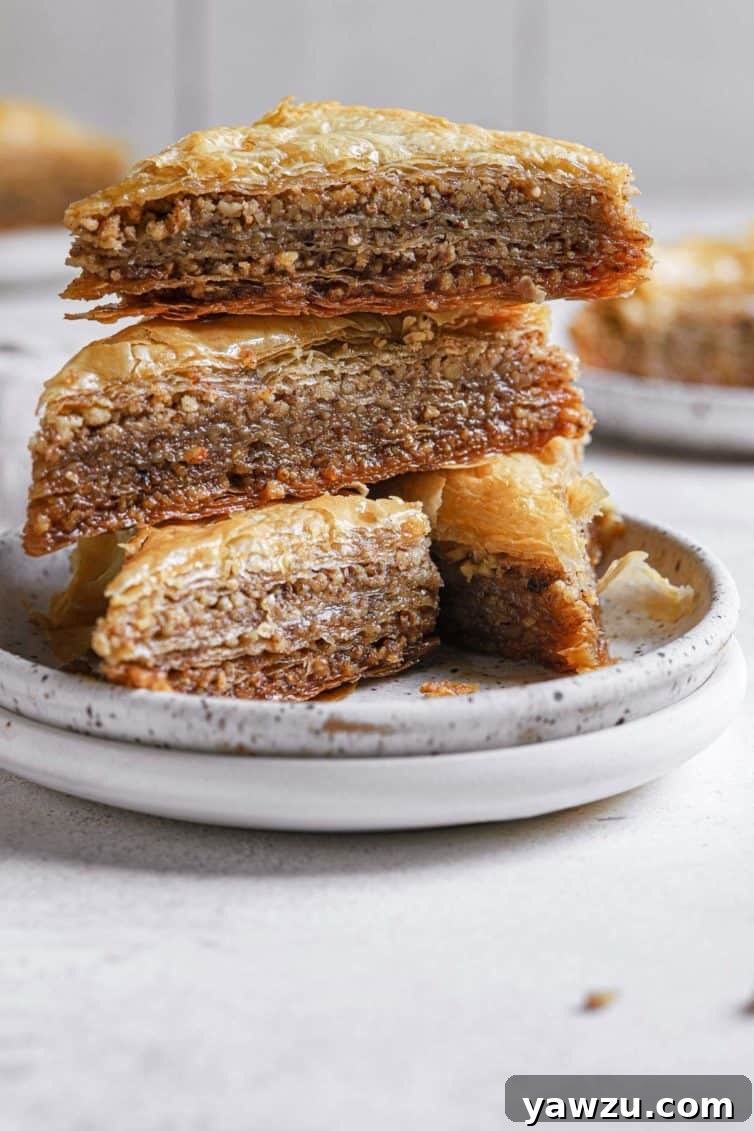
There are some desserts that simply transport you, creating a vivid memory with every bite. For me, Baklava holds that power. I vividly recall a summer Brewfest many years ago, when my husband and I, still early in our dating days, stumbled upon a charming Greek food tent. Manned by an older, exceptionally hospitable couple, the aroma of their pastries was intoxicating. We couldn’t resist picking up some Baklava, eager to enjoy it later.
That evening, as we savored the first delicate pieces, I was instantly reminded of Baklava’s truly phenomenal nature. Each serving was a symphony of textures and flavors: countless sheets of paper-thin, buttery phyllo dough, crisped to perfection, embracing a rich, spiced filling of finely ground walnuts. Once baked to a beautiful golden brown, the entire pan was lavishly bathed in an aromatic honey syrup, infused with cinnamon and orange. Left to soak for hours, the syrup seeped into every crevice, transforming the pastry into a sweet, slightly sticky, beautifully spiced, and fabulously nutty treat.
The experience was so profound that I immediately reached out to a dear friend with deep Greek roots, hoping she might share a cherished family recipe. To my delight, she entrusted me with her grandmother’s treasured Baklava recipe. A few months later, I prepared it for Thanksgiving, and it was an undeniable triumph. Since then, it has remained the only Baklava recipe I’ve ever used, and I’m thrilled to share its magic with you.
The Ancient Origins of Baklava: A Culinary Legacy
The question of Baklava’s true origin often sparks passionate debate: Is it a quintessential Greek dessert, or does its lineage trace back to the Middle East? Delving into its history reveals a fascinating, complex past that predates modern national borders.
The earliest known references to a dessert resembling Baklava date back an incredible number of centuries, potentially even to the BC era. While Greeks and Turks continue to assert their claim to its invention, the most ancient versions of a layered, baked dessert topped with honey are found within the vast expanse of the Roman Empire. Both Greek and Turkish cuisines, deeply interconnected, built upon and refined the rich cooking traditions inherited from the Byzantine Empire and, subsequently, the Roman Empire. This shared culinary heritage makes definitively pinpointing a single origin challenging, highlighting instead a long history of cultural exchange and innovation.
Indeed, when researching the genesis of many recipes, it’s rare to uncover such an ancient and storied past. The very thought of a pastry with roots stretching back thousands of years speaks to the enduring appeal and perfection of Baklava.
Global Variations: Regional Differences in Baklava
Just as beloved dishes like Tres Leches cake boast diverse regional interpretations across the globe, Baklava too has evolved into unique forms in various countries. While the core elements of flaky phyllo dough layers and a delectable chopped nut filling remain consistent, you’ll encounter fascinating distinctions that reflect local ingredients and cultural palates. Understanding these nuances enriches the appreciation for this versatile dessert.
- Greece: The Greek style, which this recipe closely follows, commonly features a generous filling of walnuts, often spiced simply with fragrant cinnamon. The syrup is typically honey-based, sometimes with citrus notes.
- Turkey: Turkish Baklava often incorporates a wider variety of nuts, including almonds, walnuts, or most notably, vibrant green pistachios. It’s frequently topped with a dollop of kaymak, a rich, clotted cream-like dairy product, adding an extra layer of indulgence.
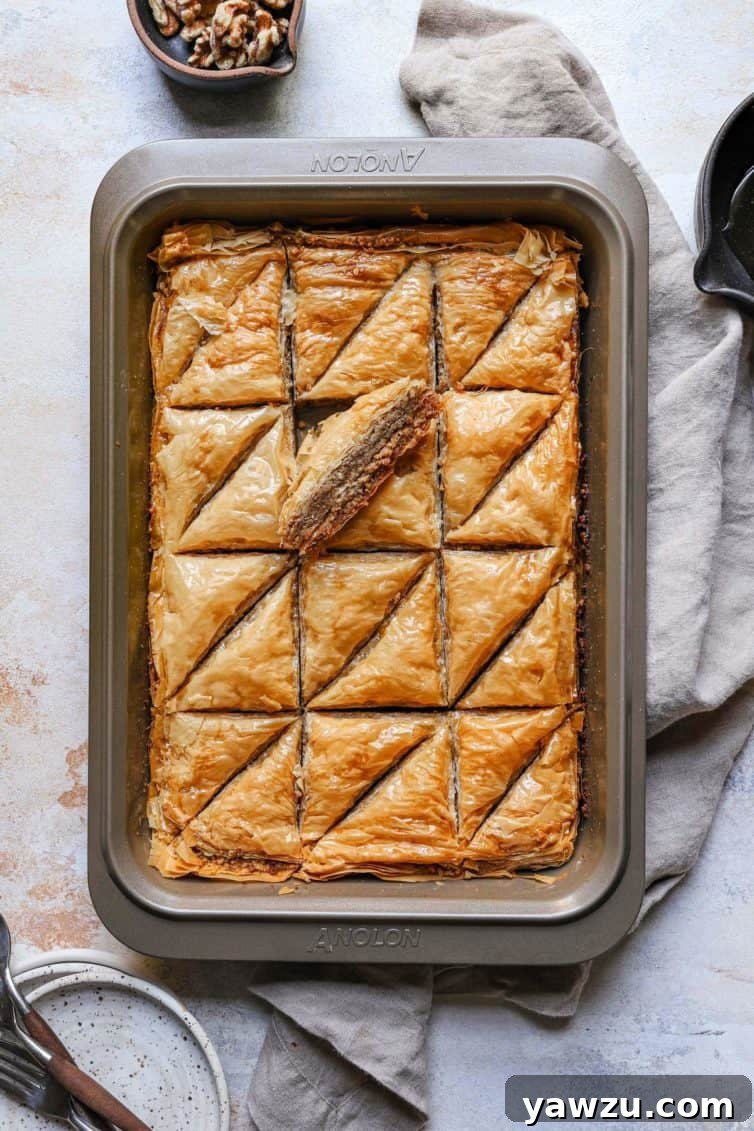
- Iran: Iranian Baklava is often distinguished by its precise diamond-shaped cuts and the delicate infusion of rose water into its sweet syrup, imparting a uniquely floral aroma and taste.
- Lebanon: Lebanese Baklava typically uses a rich walnut filling but often opts for orange blossom water in its syrup, which is usually applied more sparingly, resulting in a slightly less sweet and sticky pastry.
This particular recipe embraces the cherished traditions of classic Greek Baklava, celebrating the harmonious blend of walnuts, cinnamon, and a generously sweet honey syrup, creating a truly authentic experience.
Essential Ingredients for Homemade Baklava
While many home cooks might perceive Baklava as an intimidating challenge, it is, at its heart, a relatively straightforward recipe built upon a few simple, yet crucial, ingredients. The secret lies not in complexity, but in patience and technique.
Crafting the Aromatic Honey Syrup
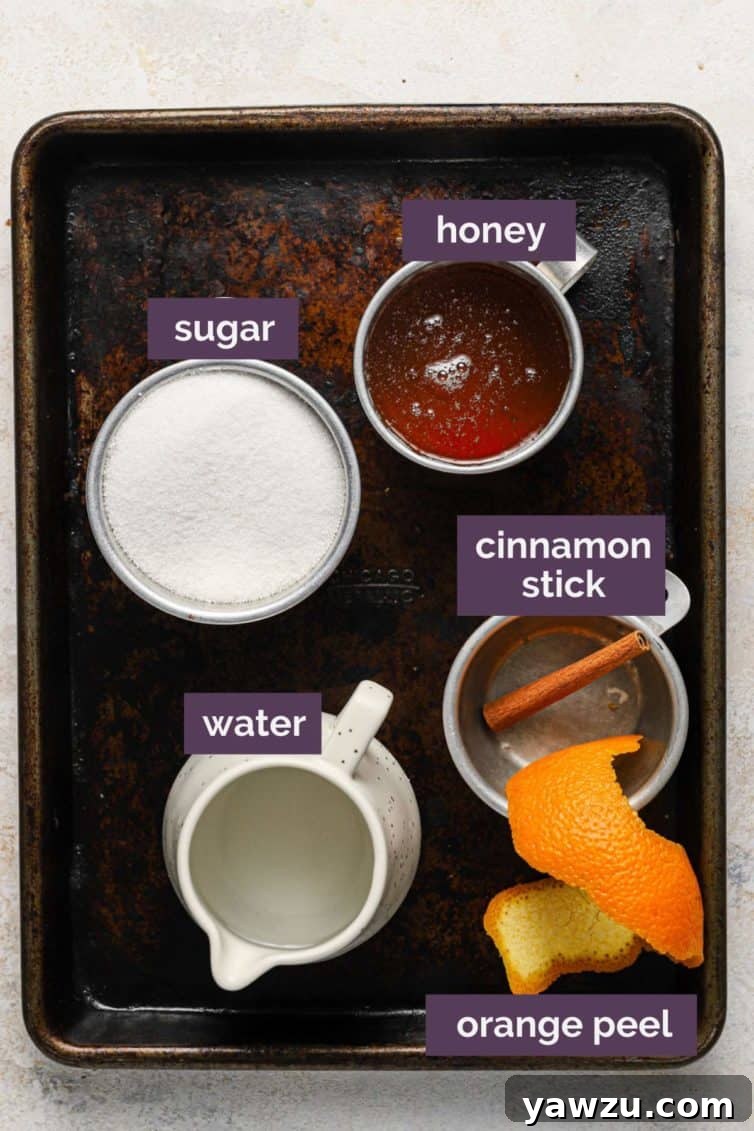
- Water: The base for dissolving the sugar and honey, creating the perfect consistency.
- Granulated Sugar: Provides sweetness and helps achieve the desired syrupy texture.
- Honey: The quintessential ingredient that gives Baklava its characteristic rich flavor and sticky glaze. Opt for a good quality honey for the best taste.
- Cinnamon Stick: Infuses the syrup with a warm, comforting spice that beautifully complements the nuts.
- Orange Peel: A strip of orange peel adds a bright, zesty aroma, elevating the overall flavor profile of the syrup.
The Heart of the Pastry: Layers and Filling
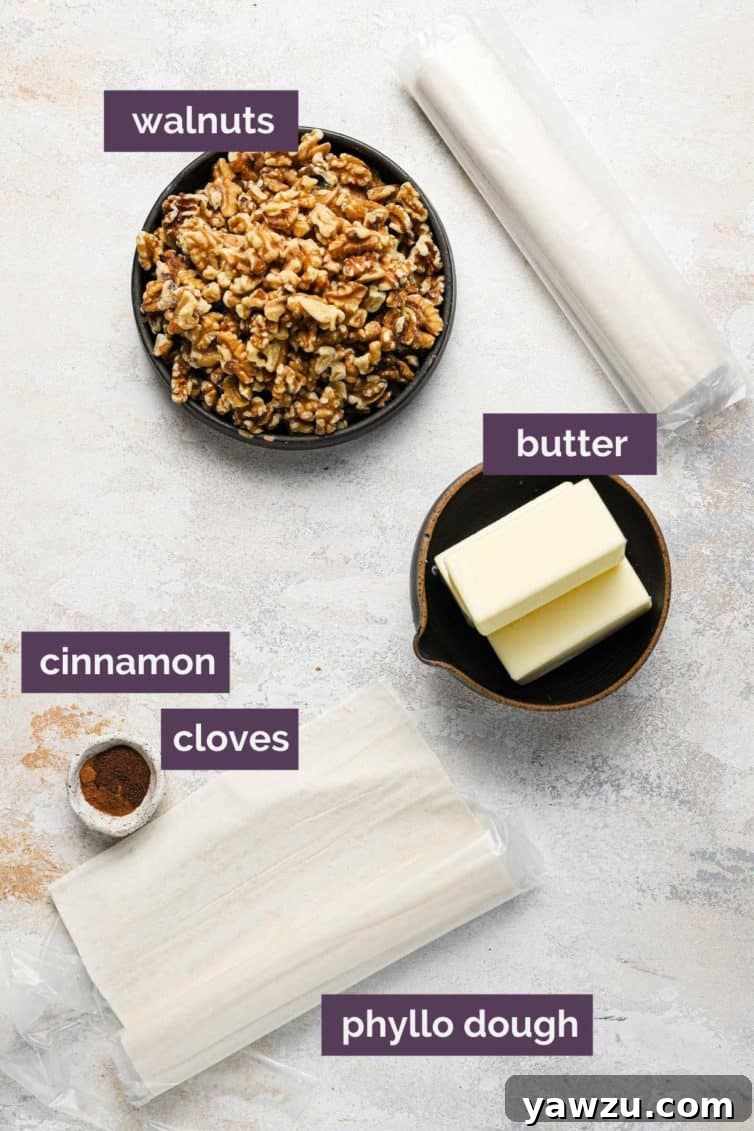
- Walnuts: These form the cornerstone of the Baklava filling. For the best flavor and texture, use good quality, fresh walnuts. While this recipe specifies walnuts for a traditional Greek taste, you can experiment with other nuts like pistachios or almonds, or even a delightful mix. Toasting them lightly before grinding can also enhance their nutty depth.
- Spices: A classic blend of ground cinnamon and a hint of ground clove seasons the chopped walnut filling. These spices introduce warmth and complexity, balancing the sweetness of the syrup.
- Phyllo (Fillo) Dough: These incredibly thin sheets are the magical foundation that creates the signature flaky layers of Baklava. Success with phyllo dough relies on careful handling, so be sure to review the specific tips below for a seamless experience.
- Unsalted Butter: Essential for both flavor and structure, melted unsalted butter is brushed between each phyllo layer. It provides moisture, helps prevent the dough from drying out, and is crucial for achieving that irresistible crispy, flaky texture during baking. Using unsalted butter allows you to control the overall saltiness of the dessert.
Mastering Phyllo Dough: Essential Tips for Success
For many, the most daunting aspect of making Baklava is working with phyllo dough. Its delicate nature can seem intimidating, but with a few key tips, you’ll find it manageable and rewarding. Patience and preparation are your best allies when handling this ultra-thin pastry.
- Thaw Properly and Slowly: Never attempt to use frozen phyllo dough directly from the freezer; it will crack and crumble. The night before you plan to make your Baklava, transfer the frozen phyllo dough package from the freezer to the refrigerator. This slow thawing process ensures the sheets remain pliable and easy to work with.
- Keep Covered and Moist: Phyllo dough dries out incredibly quickly when exposed to air, becoming brittle and prone to tearing. While you are working with individual sheets, always keep the remaining stack covered with a lightly damp, clean kitchen towel. This creates a humid environment that prevents them from drying out.
- Work Efficiently: Once you remove a sheet from the stack, work relatively quickly to brush it with butter and place it. Then, immediately re-cover the unused phyllo with your damp towel.
- Don’t Stress About Tears: It’s virtually impossible to work with phyllo dough without a few rips or tears. This is perfectly normal! Because Baklava is constructed with numerous overlapping layers, small imperfections will be hidden and won’t affect the final texture or taste. Embrace the rustic charm if a sheet tears a bit; it’s all part of the homemade process.
- Gentle Handling: Always handle the phyllo sheets with extreme gentleness. Lift them carefully from the stack to avoid unnecessary tearing.
Crafting Your Classic Baklava: A Step-by-Step Guide
The process of making Baklava is surprisingly simple in concept, though it does require a fair amount of dedicated time. The meticulous layering and buttering of each phyllo sheet demand patience and a steady hand, but rest assured, the exquisite final product is undoubtedly worth every moment of effort. This cherished Baklava recipe can be broken down into four manageable and distinct phases:
- Prepare the Aromatic Syrup
- Blend the Flavorful Nut Filling
- Assemble the Intricate Baklava Layers
- Bake to Golden Perfection and Soak with Syrup
1. Prepare the Aromatic Honey Syrup
The syrup is a critical component of Baklava, imparting its signature sweetness and helping to preserve its crispy texture. It’s crucial to prepare the syrup first and allow it to cool completely before pouring it over the hot Baklava.
- Combine Ingredients: In a small saucepan, combine the specified amounts of water, granulated sugar, honey, a cinnamon stick, and a strip of orange peel.
- Boil and Simmer: Bring the mixture to a rolling boil over medium-high heat, stirring occasionally to dissolve the sugar. Once boiling, reduce the heat to low and allow the syrup to gently simmer for approximately 15 minutes. This simmering time allows the flavors to meld beautifully and the syrup to thicken slightly.
- Cool Completely: Remove the saucepan from the heat and set it aside to cool down to room temperature. This cooling period is essential; pouring hot syrup over hot Baklava can make the pastry soggy. The contrast in temperatures ensures optimal absorption and crispiness.
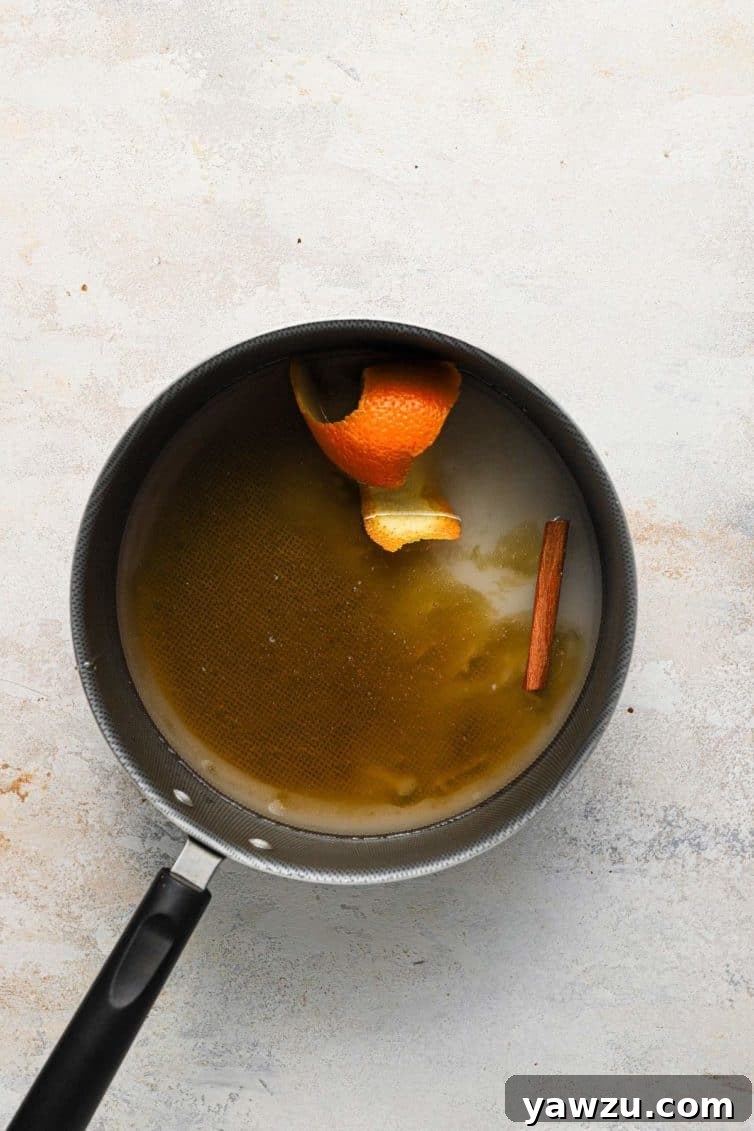
2. Prepare the Nut Filling and Assemble the Baklava Layers
This is where the magic truly begins – the creation of the layers that define Baklava’s incredible texture and taste.
- Preheat Oven: Begin by preheating your oven to 350°F (175°C). This ensures the oven is at the correct temperature for even baking.
- Prepare the Filling: In a food processor, combine the toasted walnuts, ground cinnamon, and ground cloves. Pulse the mixture until the walnuts are processed to a medium-fine ground consistency. Be mindful not to over-process; a texture too fine will result in a pasty filling more akin to a nut roll, while a texture too coarse will prevent the layers from adhering properly and create an uneven distribution. You want a distinct nutty texture that still blends well.
- Melt the Butter: In a small saucepan, gently melt the unsalted butter over very low heat. It’s important to keep the butter warm throughout the assembly process to prevent it from solidifying, making it easier to brush onto the delicate phyllo sheets.
- Assemble the Base Layers: Take a 9×13-inch baking pan and brush its bottom and sides generously with some of the melted butter. Carefully lay one sheet of phyllo dough into the pan. Lightly brush this phyllo sheet with melted butter. Add another phyllo layer, and brush it with more butter. Repeat this process until you have successfully layered 7 sheets of phyllo dough, each meticulously buttered. These form the sturdy, flaky base of your Baklava.
- Spread the First Nut Layer: Gently and evenly spread one-quarter of your prepared nut mixture over the top of the buttered phyllo base. Ensure an even distribution for consistent flavor.
- Add Subsequent Phyllo Layers: Now, repeat the layering and buttering process, but this time, use only 5 sheets of phyllo dough for each section.
- Second Layer of Nuts: Once the 5-sheet phyllo layer is complete and buttered, spread another quarter of the nut mixture evenly over the top.
- Repeat for Remaining Layers: Continue this alternating pattern twice more: layer and butter 5 sheets of phyllo, then top with one-quarter of the nut mixture. This creates multiple distinct layers of nuts and pastry.
- Finish with Top Layers: Conclude the assembly by placing the final 7 layers of phyllo dough, buttering each sheet as before. Ensure the very top sheet is also thoroughly brushed with melted butter; this will contribute to its beautiful golden-brown finish and crispness.
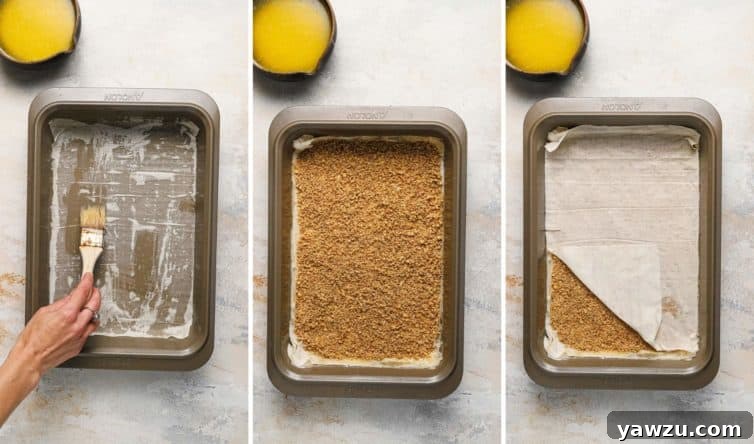
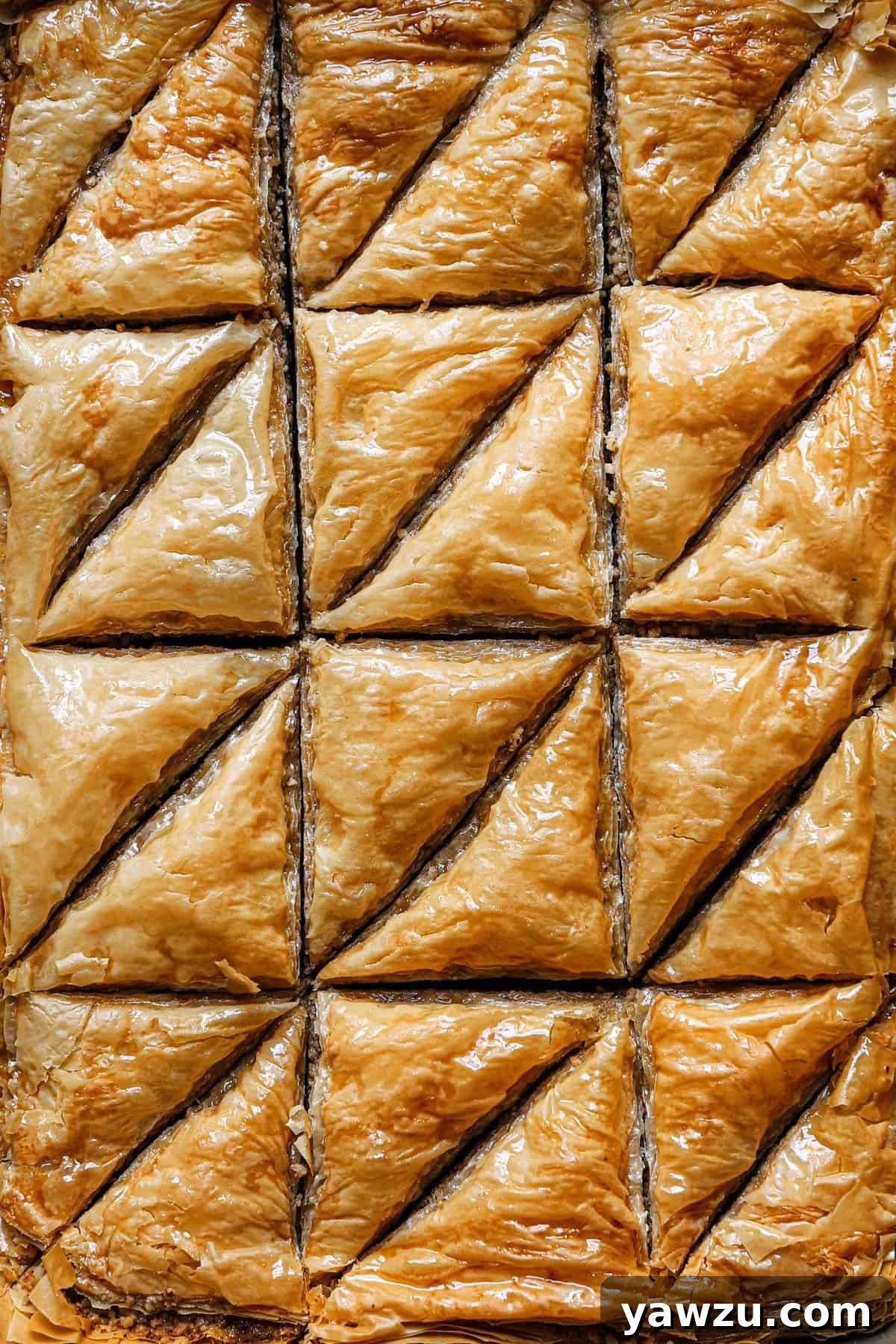
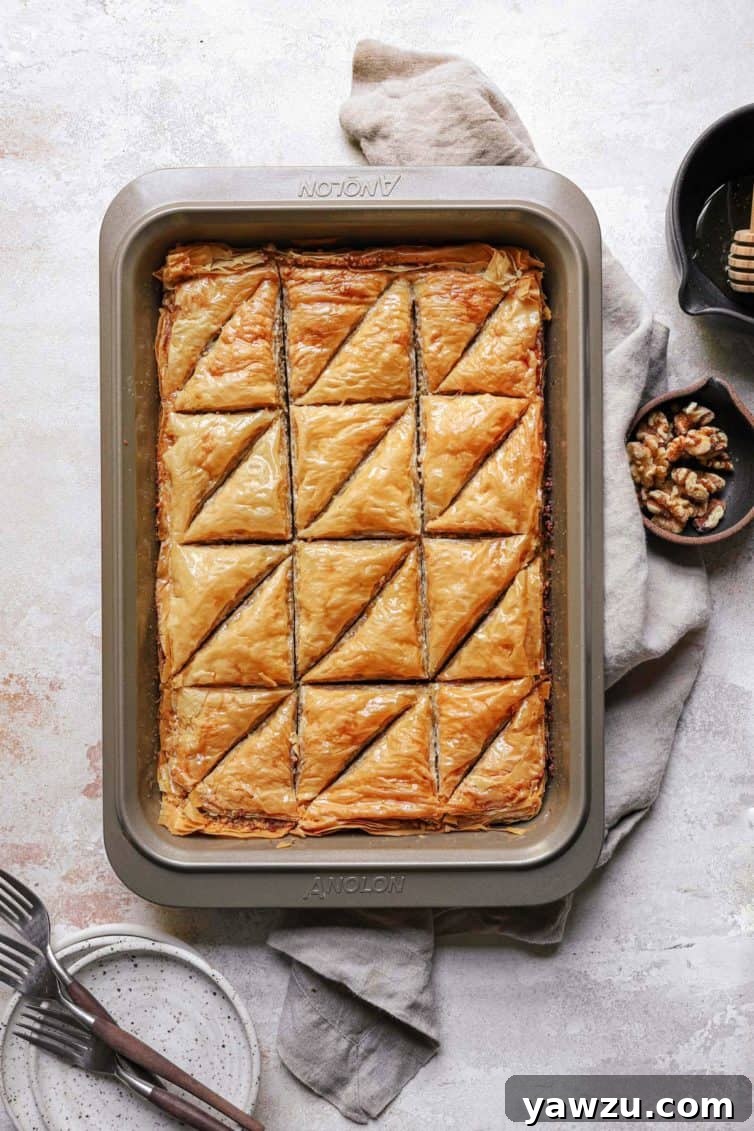
- Precision Cutting: Using a very sharp knife, carefully trim any excess or ragged pieces of phyllo dough that may have crept up the sides of the pan, ensuring neat edges. Then, with steady hands, cut the entire Baklava into 12 even squares. For the classic triangular shape, cut each square diagonally, yielding a total of 24 beautiful Baklava triangles. Cutting before baking is essential as the baked phyllo becomes too brittle to cut cleanly.
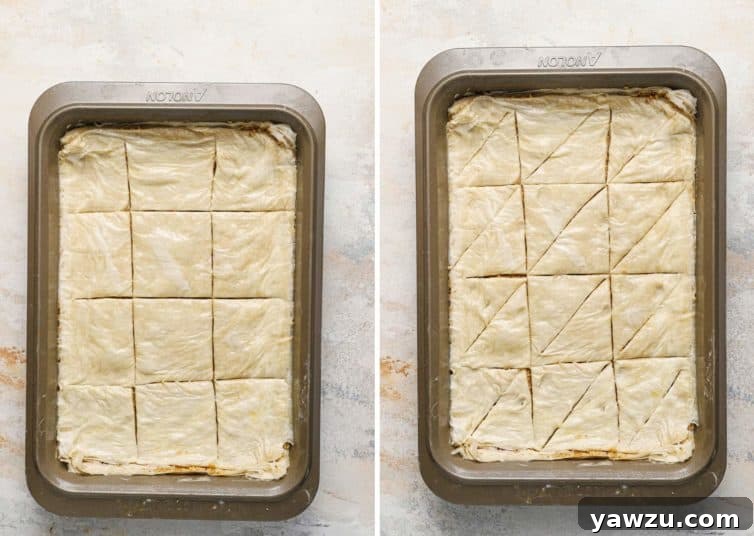
3. Bake to Golden Perfection and Drench with Syrup
The final steps involve the magical transformation in the oven and the crucial drenching with the cooled syrup.
- Bake Baklava: Carefully place the baking pan into your preheated oven. Bake for approximately 50 minutes, or until the Baklava achieves a stunning golden-brown hue on top and along the edges. The aroma filling your kitchen will be incredible!
- Soak with Cooled Syrup: The moment the Baklava emerges from the oven, still sizzling hot, immediately retrieve your completely cooled honey syrup. Remove the cinnamon stick and orange peel from the syrup. Slowly and evenly pour the entire amount of syrup over the hot Baklava. You’ll be delighted to hear a glorious symphony of crackling and sizzling sounds as the hot pastry eagerly absorbs the cool, sweet syrup. This temperature contrast is key for crispness and proper absorption.
- The Waiting Game: Now comes the hardest part: patience. The Baklava needs time for the syrup to fully permeate all the layers and for the flavors to meld. Allow it to sit undisturbed for at least four hours, though for truly optimal results, ideally let it rest overnight at room temperature. This prolonged soaking period transforms the pastry, making it moist, rich, and incredibly flavorful.
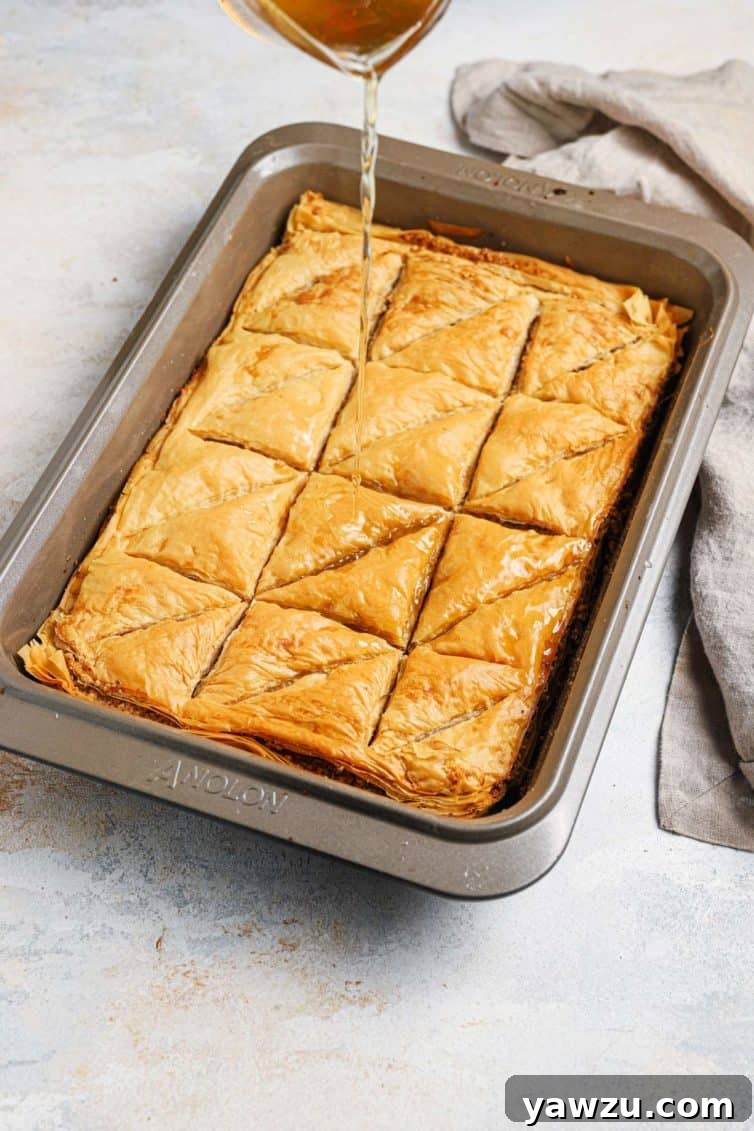
Troubleshooting Common Baklava Challenges
While making Baklava is a straightforward process when following the steps, it’s common to encounter a few questions or minor issues along the way. Here are solutions to some frequently asked Baklava troubleshooting queries:
Why is my Baklava soggy?
Soggy Baklava is usually a result of applying too much butter between the phyllo sheets. Phyllo needs just a thin, even coating of butter per layer – think of it as a light glaze, not a heavy drench. Another common culprit is pouring hot syrup over hot Baklava; ensure your syrup is completely cooled before drenching the freshly baked pastry to achieve that perfect crispy contrast.
Why is my Baklava dry?
Dry Baklava often stems from uneven buttering, particularly on the top layer and around the edges. When brushing your phyllo layers, be meticulous in covering every part of each sheet, especially focusing on the corners and edges of the pan. Any exposed phyllo will dry out and become brittle rather than crispy and flaky. Additionally, ensure the Baklava is fully saturated with the syrup; don’t be shy when pouring!
Can you make Baklava without nuts?
While traditional Baklava is defined by its nut filling, creative variations certainly exist for those with nut allergies or different preferences. I’ve encountered online recipes that substitute nuts with ingredients like toasted sesame seeds, shredded coconut, or even finely chopped dried fruits such as apricots and raisins. While I haven’t personally tried these alternatives and cannot attest to how closely they replicate the classic taste, they offer intriguing possibilities for adapting the recipe.
Can you make Baklava without honey?
Honey is indeed a signature flavor of Baklava, imparting a distinct richness and aroma. However, if you prefer or need to avoid honey, it is possible to adapt the syrup. A simple sugar syrup (made with equal parts sugar and water) can be used as a substitute. You can then enhance this plain syrup with other flavorings like traditional rose water, orange blossom water, or even a splash of vanilla extract to introduce complexity. Agave nectar could also be considered as a sweetener alternative, though it will alter the classic taste profile.
How do I keep my Baklava crispy?
To maintain Baklava’s delightful crispness, proper storage is paramount. Avoid tightly wrapping it in plastic wrap immediately after cooling. Instead, store it at room temperature, loosely covered with a clean tea towel or a sheet of foil that allows for some airflow. This method prevents condensation from building up, which is the primary cause of soggy phyllo dough. The slight exposure to air helps the phyllo retain its flaky texture.
Storing, Freezing, and Making Baklava Ahead of Time
One of the most appealing qualities of Baklava is its remarkable versatility as a make-ahead dessert. In fact, it often tastes even better on the second day, after the spiced honey syrup has had ample time to deeply penetrate and infuse every single nut and phyllo layer. This makes it an ideal choice for entertaining or preparing in advance.
- Storing at Room Temperature: For optimal flaky, crisp texture and flavor development, Baklava is best stored at room temperature. Place it in an airtight container, ensuring it is not tightly sealed, for up to 2 weeks. A loose covering with a paper towel or cheesecloth within the container can help maintain crispness by allowing minimal airflow and preventing moisture build-up.
- Refrigerating: While Baklava can be stored in the refrigerator in an airtight container for up to 2 weeks, be aware that the cold temperature can alter its texture slightly. It may become a little chewier and firmer than when stored at room temperature, and the phyllo might lose some of its initial crispness. Allow it to come to room temperature before serving for the best experience.
- Freezing for Long-Term Storage: Baklava freezes exceptionally well, making it perfect for preparing large batches or saving portions for later. Individually wrap cooled pieces of Baklava tightly in plastic wrap, then place them in freezer-safe Ziploc bags or an airtight freezer container. It can be stored in the freezer for up to 3 months. To serve, thaw at room temperature.
- Making Ahead: As mentioned, Baklava is an outstanding dish to prepare in advance. Its flavors deepen and its textures meld beautifully the longer it’s allowed to rest after the syrup has been poured. Aim to make it at least 24 hours before serving. To ensure it maintains its signature crispness during storage, cover it loosely with a clean paper towel or a piece of cheesecloth rather than a tight lid, which can trap moisture.
Elegant Serving Suggestions for Baklava
Baklava is a truly versatile and impressive dessert that elevates any occasion. Its rich flavor and intricate appearance make it a fantastic addition to a variety of settings, from a festive holiday sweets collection to an elaborate wedding cookie table, or any special celebration. Here are some delightful ways to serve and enhance your homemade Baklava:
- Simple Garnish: For an elegant touch, sprinkle a bit of additional finely ground walnuts, pistachios, or a mix of nuts over the top of each piece just before serving. This adds visual appeal and reinforces the nutty flavor.
- With Creamy Accents: Serve Baklava alongside a small scoop of vanilla bean ice cream. The cool, creamy ice cream provides a wonderful contrast to the warm, sweet pastry. Alternatively, a dollop of light and airy homemade whipped cream offers a delicate counterpoint without overwhelming the Baklava’s rich flavors.
- Traditional Pairings: For a classic experience, enjoy Baklava with a fresh, strong cup of traditional Greek coffee or a warm, aromatic cup of black tea. The slight bitterness of the coffee or tea beautifully balances the sweetness of the pastry, making for a truly authentic indulgence.
- As Part of a Dessert Spread: Arrange Baklava alongside other Mediterranean sweets, fresh fruits, or even a selection of cheeses for a sophisticated dessert platter that caters to various tastes.
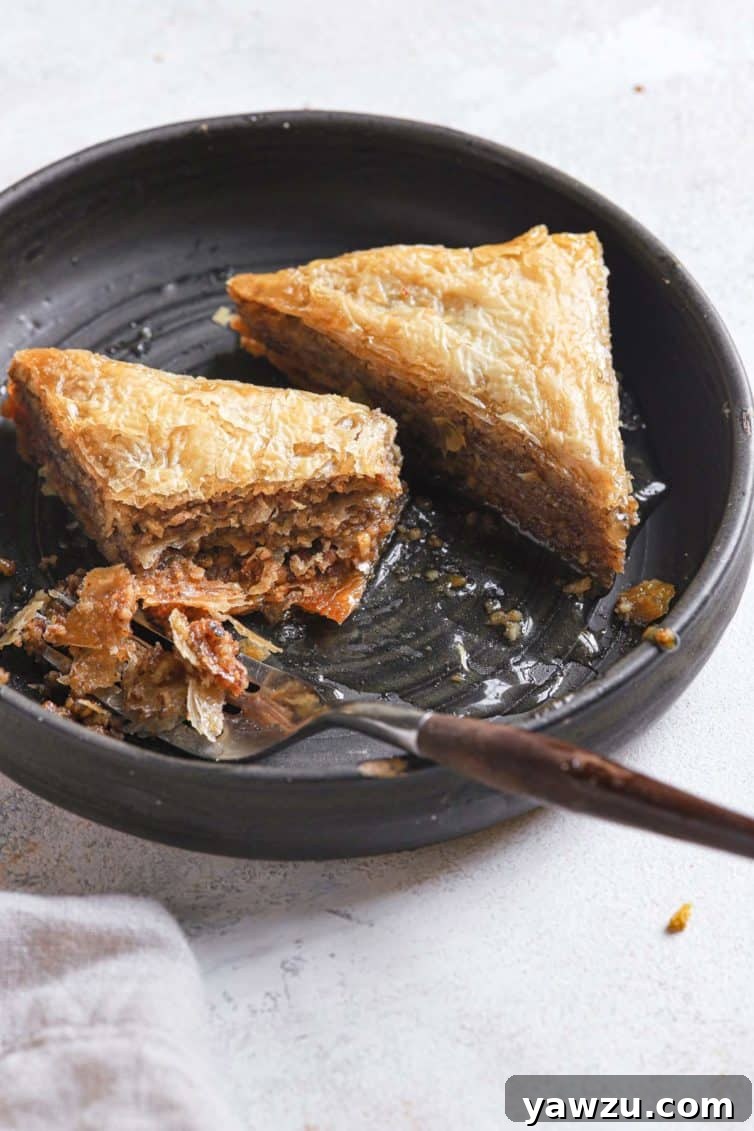
With its crisp, flaky layers of buttery phyllo dough, its robust spiced walnut filling, and its final shimmering cascade of sticky-sweet honey syrup, this Baklava recipe delivers an unforgettable culinary experience. This isn’t just a dessert; it’s a celebration of tradition and flavor. It is truly a classic recipe that every home cook and baker deserves to have stashed away in their cherished recipe collection!
If you try this recipe and fall in love with it, please consider returning to leave a 5-star rating and a review – your feedback helps other aspiring bakers discover this wonderful treat! ❤️️
Classic Baklava Recipe
Yield: 24 pieces
Prep Time: 1 hr 10 mins
Cook Time: 50 mins
Resting time: 4 hrs
Total Time: 6 hrs
A classic recipe for Baklava, the traditional Greek pastry made with ground walnuts and layers of phyllo dough, drizzled with a spiced honey syrup.
4.90 out of 5 stars (based on 29 ratings)
Ingredients
For the Syrup
- 1 cup (250 ml) water
- 1 cup (200 g) granulated sugar
- 1 cup (339 g) honey
- 1 cinnamon stick
- 1 strip orange peel
For the Pastry
- 1 pound (453.59 g) walnuts, toasted
- 1½ teaspoons (1.5 teaspoons) ground cinnamon
- ½ teaspoon (0.5 teaspoon) ground cloves
- 16 oz (453.59 g) package phyllo dough, thawed
- 1½ cups (340.5 g) unsalted butter
Instructions
- Make the Syrup: Combine the water, sugar, honey, cinnamon stick and orange peel in a small saucepan and bring to a boil over medium-high heat. Reduce the heat to low and simmer for 15 minutes. Remove from the heat and let cool completely to room temperature.
- Make the Baklava: Preheat oven to 350 degrees F (175°C).
- Place the walnuts, cinnamon and cloves in a food processor and process until the walnuts are finely ground to a medium-fine consistency.
- Melt the butter in a small saucepan over very low heat, keeping it warm throughout the process to prevent it from solidifying.
- Brush a 9×13-inch pan with melted butter and place one layer of phyllo at the bottom. Brush the phyllo with the melted butter, then add another layer of phyllo, and brush with more butter. Continue this process until you have layered 7 sheets of phyllo for the base.
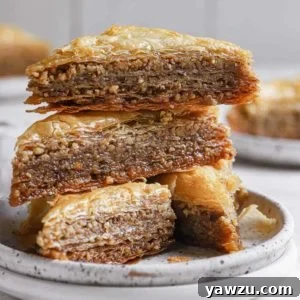
- Gently spread one-quarter of the nut mixture evenly over the top of the phyllo. Repeat the process of layering phyllo sheets and brushing with melted butter, but this time use only 5 sheets of phyllo. Gently spread another one-quarter of the nut mixture over the top of the phyllo. Repeat this twice more, layering and buttering 5 sheets of phyllo and topping each with one-quarter of the nut mixture. Finish off with the final 7 layers of buttered phyllo. Brush the very top sheet generously with melted butter.
- Using a sharp knife, trim any ragged pieces of phyllo dough that have extended up the sides of the pan. Carefully cut the baklava into 12 even squares, and then cut each square diagonally to create 24 triangles.
- Bake and Soak: Place the pan in the preheated oven and bake until golden brown, approximately 50 minutes.
- As soon as the baklava comes out of the oven, remove the cinnamon stick and orange peel from the cooled syrup. Slowly and evenly pour the entire amount of syrup over the hot baklava, ensuring it seeps into all the cracks and crevices, as well as coating the top surface.
- Allow the baklava to sit and absorb the syrup for at least 4 hours before serving. For the best flavor and texture, it is highly recommended to let the baklava rest overnight before cutting and serving. Store baklava at room temperature, covered very loosely with a paper towel or foil until ready to serve. Leftovers should be stored in an airtight container at room temperature or in the refrigerator for up to 2 weeks.
Notes
- Storing: Keep baklava at room temperature in an airtight container for up to 2 weeks to maintain the flaky, crisp texture. Loosely covering it will help prevent sogginess.
- Refrigerate: You can also store it in the refrigerator for up to 2 weeks in an airtight container, but it may become a little chewier and harder than at room temperature.
- Freezing: Wrap individual pieces of baklava in plastic wrap and store in freezer-safe bags in the freezer for up to 3 months.
- Making ahead: This is an excellent dish to make ahead of time, as it’s actually better the longer it’s left to sit before it’s eaten. Covering it with a loose paper towel or a cheesecloth will ensure that it maintains its crispness.
- Nut variations: Other nuts, such as almonds or pistachios, can be substituted for the walnuts, or used in combination.
Nutritional values are based on one serving.
Nutrition Information (per serving)
Calories: 358kcal, Carbohydrates: 32g, Protein: 4g, Fat: 24g, Saturated Fat: 8g, Cholesterol: 30mg, Sodium: 94mg, Potassium: 108mg, Fiber: 1g, Sugar: 20g, Vitamin A: 360IU, Vitamin C: 0.7mg, Calcium: 29mg, Iron: 1.3mg
Author: Michelle Lettrich
Course: Dessert
Cuisine: Greek
Photography by Dee Frances