
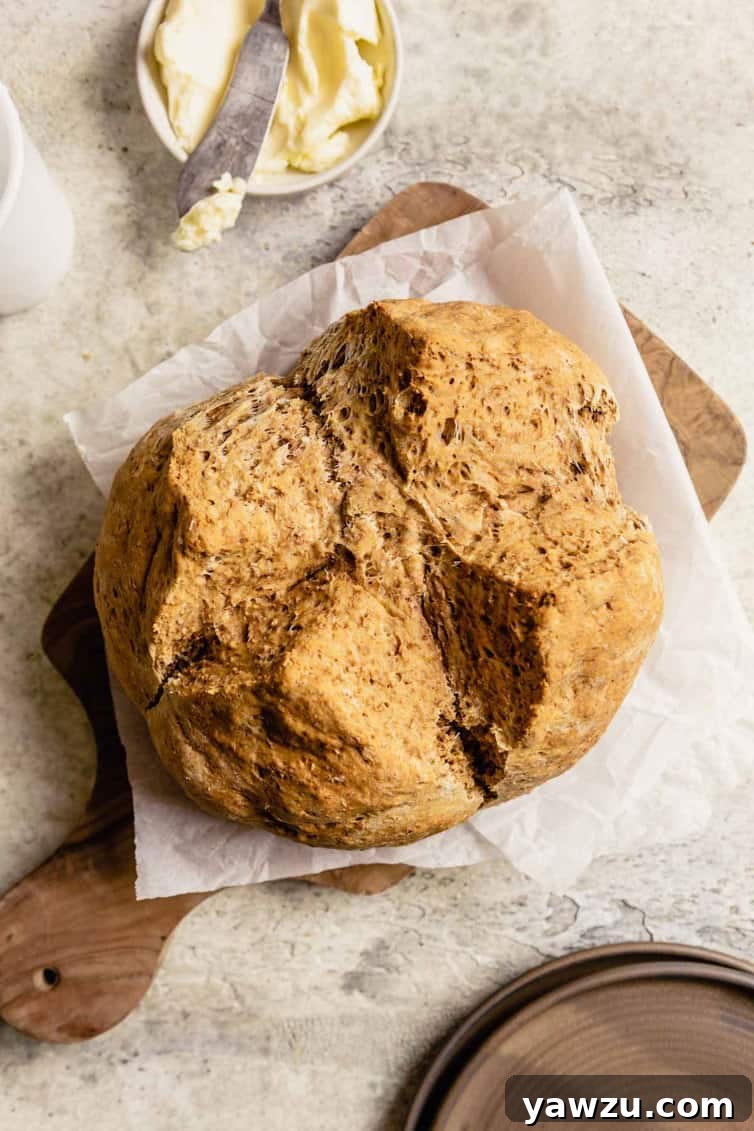
There’s an undeniable comfort in a warm slice of Irish Brown Bread, especially when generously slathered with rich, creamy butter. This traditional bread, a cornerstone of Irish cuisine, is celebrated for its wholesome ingredients, deeply nutty flavor, and wonderfully rustic texture. In less than an hour, you can bake a loaf that’s perfect for dipping into hearty stews, accompanying a morning cup of tea, or simply satisfying those everyday bread cravings. It’s a staple that transcends meals, equally at home on a breakfast table, a lunch spread, or as a festive treat for St. Patrick’s Day.
Discovering the Hearty Charm of Traditional Irish Brown Bread
My culinary journey into Irish baking began years ago with a loaf of Irish Soda Bread. I was instantly captivated by its thick, hearty texture and its deceptively simple, yet profoundly satisfying, flavor. It quickly became a beloved bread in my kitchen, baked countless times since that first delightful encounter. After mastering the classic Irish soda bread, my curiosity naturally led me to explore its darker, equally cherished counterpart: Irish Brown Bread.
The quest for an “authentic” Irish Brown Bread recipe revealed a fascinating landscape of culinary tradition. I found countless variations, each claiming to be the definitive version, often with subtle contradictions in ingredients and methods. This exploration highlighted a beautiful truth: there isn’t one single, universally agreed-upon recipe for Irish Brown Bread. Its authenticity lies in its regional diversity and the use of simple, local ingredients. Ultimately, I settled on a particular version from renowned food writer David Lebovitz, adapted from the esteemed chef-owner of Longueville House in Ireland. This recipe stood out for its unique blend of flours and grains—all-purpose flour providing structure, whole wheat flour lending its characteristic nuttiness, and the addition of wheat bran and wheat germ elevating the texture and depth of flavor. This combination takes the rustic heartiness of the bread to an entirely new level, resulting in an absolutely delicious loaf. I can confidently say I’m now a devoted convert to the brown bread variety of Irish baking – it’s truly exquisite!
What is Irish Brown Bread? A Cultural Staple
For anyone who has traveled through Ireland, the sight and smell of Irish Brown Bread are likely to be fondly familiar. Often referred to simply as “brown bread” or “wheaten bread,” this traditional loaf is a fundamental part of Irish breakfast and lunch tables. Historically, white flour was a luxury, more expensive and harder to come by than readily available wheat. This economic reality meant that brown bread, made predominantly from coarser wholemeal wheat flour, became the everyday bread for most Irish households. It’s a bread born out of necessity and resourcefulness, evolving into a beloved culinary symbol of the nation.
Irish Brown Bread is more than just a food; it’s a testament to Irish heritage and agricultural tradition. Its rich, malty flavor and dense, moist crumb are a direct result of the specific type of wholemeal flour used, often stone-ground, which retains more of the wheat kernel’s bran and germ. This not only imparts a distinctive taste and texture but also a higher nutritional value compared to breads made with refined white flour. It’s a versatile bread, robust enough to stand up to strong flavors, yet tender enough to be enjoyed on its own. Whether served with smoked salmon, Irish cheddar, or simply a generous spread of butter and jam, brown bread truly embodies the spirit of traditional Irish cooking.
Irish Brown Bread vs. Irish Soda Bread: Understanding the Nuances
While often grouped under the umbrella of “soda bread” due to their shared leavening agent (baking soda), Irish Brown Bread and its white flour counterpart, Irish Soda Bread, possess distinct characteristics that set them apart. Understanding these differences is key to appreciating the unique charm of each.
- Flour Composition: The most significant distinction lies in the flour. Irish Brown Bread is primarily made with coarse wholemeal wheat flour, often supplemented with wheat bran or germ, which gives it its characteristic deep, nutty flavor and a denser, more textured crumb. In contrast, traditional Irish Soda Bread relies solely on white all-purpose flour, resulting in a lighter color and a slightly finer texture.
- Flavor Profile: Due to its whole grain content, Irish Brown Bread offers a rich, earthy, and savory taste with subtle hints of molasses or caramel from some recipes. It’s robust and complex. Irish Soda Bread, while also savory, tends to have a milder, sometimes subtly sweet, and creamier flavor, often described as scone-like due to its tender, crumbly interior.
- Texture: Brown bread typically has a denser, more substantial crumb and a wonderfully crisp, almost crackly crust. Its texture is hearty and satisfying. Soda bread, on the other hand, is generally softer and more tender inside, with a slightly less robust crust.
Both breads are quick and easy to make, relying on the reaction between baking soda and buttermilk for their rise, making them excellent choices for yeast-free baking. However, their unique flour combinations create two distinct and equally beloved expressions of Irish baking tradition.
Baking Your Own Authentic Irish Brown Bread: A Simple Pleasure
Crafting your own loaf of Irish Brown Bread at home is a remarkably straightforward process, requiring only a handful of pantry staples. The beauty of this recipe lies in its simplicity and the minimal effort it demands, yielding a loaf with an extra-crisp exterior that encases a dense, yet incredibly tender, interior. The result is an unforgettable slice of bread, bursting with rustic charm and wholesome flavor.
Gathering the Essential Ingredients for a Perfect Loaf
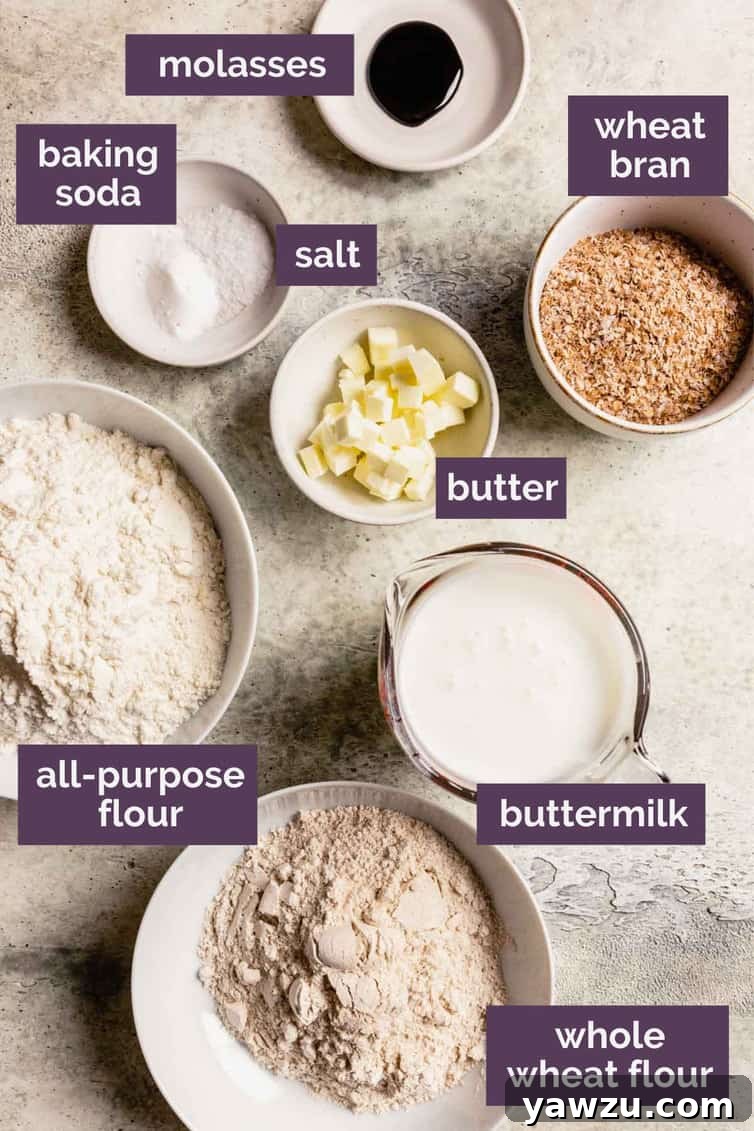
The magic of Irish Brown Bread comes from its humble yet potent ingredients. Here’s what you’ll need to create this delicious, hearty loaf:
- Flour Mixture: This recipe utilizes a powerful trio for unparalleled flavor and texture:
- Whole Wheat Flour: The backbone of brown bread, contributing its signature nutty flavor and dense texture.
- Wheat Bran or Wheat Germ: These additions enhance the rustic texture and boost the nutritional content, deepening the earthy flavor. (You can substitute oat bran if preferred).
- All-Purpose Flour: Provides structure and helps create a balanced crumb, preventing the bread from becoming too heavy.
- Buttermilk: This key ingredient serves multiple purposes. Its acidity reacts with the baking soda to leaven the bread, giving it its rise. It also contributes to the bread’s tender interior and moist crumb, preventing it from drying out during baking.
- Baking Soda: The primary leavening agent. When combined with buttermilk, it creates carbon dioxide bubbles, causing the bread to rise without the need for yeast or proofing time.
- Salt: Essential for enhancing all the other flavors in the bread. Don’t skip it!
- Unsalted Butter: Cold butter, cut into small pieces, is rubbed into the flour mixture, contributing to the bread’s tender texture and richness. Using unsalted butter allows you to control the overall salt content.
- Molasses: A touch of molasses adds a subtle sweetness and contributes to the bread’s characteristic deep brown color and complex, malty flavor.
Step-by-Step Guide to Baking Perfect Irish Brown Bread
Making Irish Brown Bread is surprisingly simple, requiring minimal fuss and delivering maximum flavor. Follow these straightforward steps for a delicious, homemade loaf:
- Preheat and Prepare: Start by preheating your oven to 350°F (175°C). Line a sturdy baking sheet with parchment paper or a silicone baking mat and place it on the center oven rack while the oven preheats. This ensures the dough starts baking on a hot surface, contributing to a crispier crust.
- Combine Flours: In a large mixing bowl, thoroughly whisk together the whole wheat flour and wheat bran (or oat bran/wheat germ). This ensures an even distribution of the hearty grains.
- Whisk Dry Ingredients: In a separate medium bowl, whisk together the all-purpose flour, baking soda, and salt. Then, add this mixture to the wheat flour combination and whisk everything together until well combined.
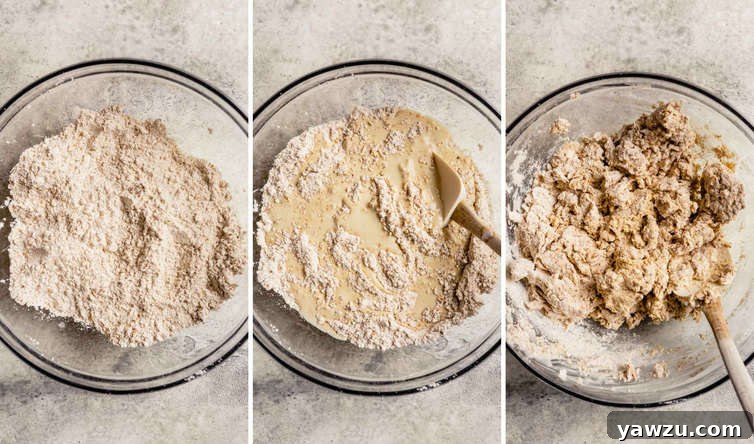
- Incorporate Butter: Add the cold, small pieces of unsalted butter to the dry flour mixture. Using your fingertips or a pastry blender, quickly rub the butter into the flour until it resembles coarse crumbs and the butter pieces are as small as possible. This step helps create a tender crumb.
- Add Liquids and Form Dough: Pour in the buttermilk and molasses. Stir with a wooden spoon until the dough comes together and is uniformly damp. Be careful not to overmix.
- Gentle Kneading: Turn the dough out onto a lightly floured countertop. Gently knead it for just a minute or two, until it forms a smooth, cohesive ball. Over-kneading will develop gluten too much, resulting in a tough bread.
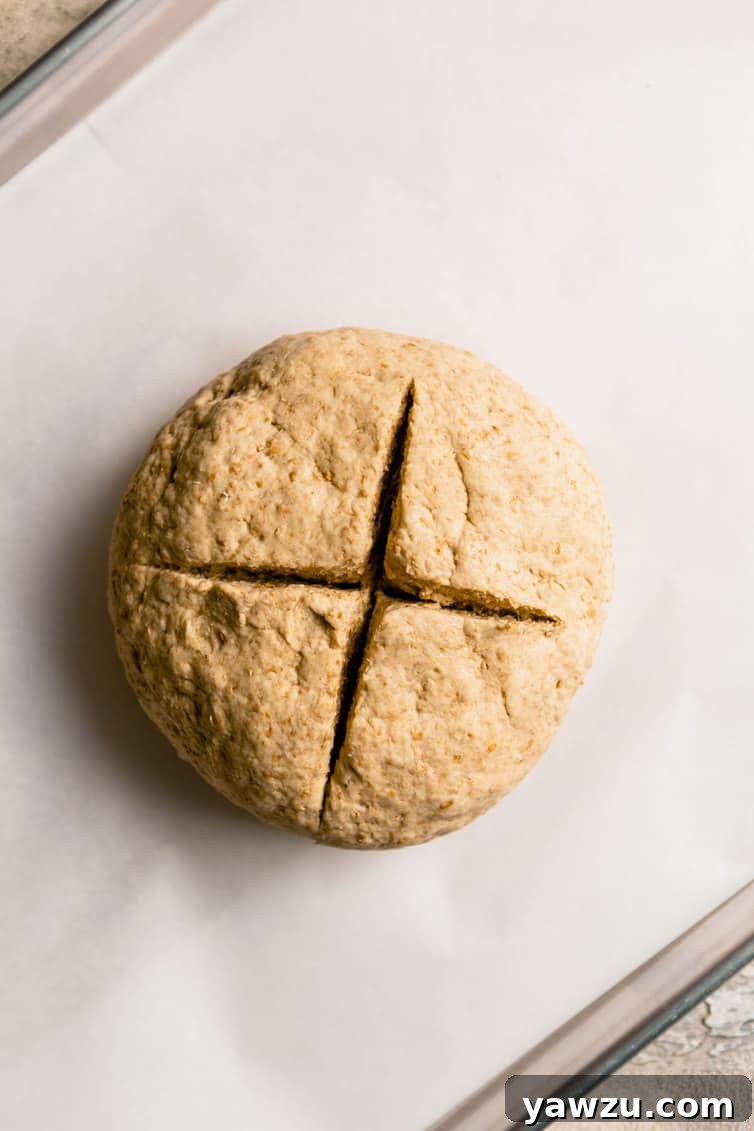
- Score the Loaf: Carefully transfer the dough ball to the hot, prepared baking sheet. Using a sharp serrated knife (or a baker’s lame), slice a cross 1-inch deep into the top of the bread. This traditional scoring helps the bread cook evenly and is said to let the fairies out!
- Bake to Perfection: Place the baking sheet in the preheated oven. Bake for approximately 30-35 minutes, or until the top of the loaf is firm, and when you tap the bottom, it sounds hollow. This hollow sound indicates it’s cooked through.
- Cool Before Serving: Once baked, remove the bread from the oven and transfer it to a wire rack to cool for about 1 hour. Cooling completely allows the internal structure to set and the flavors to fully develop.
Expert Tips for Your Best Loaf
Achieving a perfect loaf of Irish Brown Bread is simple with these additional notes and tips:
- Choosing Your Baking Vessel: While a lined baking sheet works wonderfully, you can also bake this brown bread in a well-seasoned cast-iron skillet. The skillet’s even heat distribution can lead to an exceptionally crispy crust.
- Buttermilk Substitutions: If you find yourself without buttermilk, don’t fret! You can easily make a substitute: pour 1½ tablespoons of lemon juice or white vinegar into a 2-cup measuring cup. Add enough whole or 2% milk to reach the 1½ cup mark. Stir, then let it sit for 5 minutes until it slightly curdles. For this recipe, you’ll then discard ¼ cup to get the correct 1¼ cups measurement needed.
- The Importance of Fresh Baking Soda: Since baking soda is the sole leavening agent, ensure yours is fresh. Old baking soda can result in a dense, flat loaf. Test its freshness by adding a pinch to a spoonful of vinegar; it should bubble vigorously.
- Do Not Overmix: With soda bread, less is more when it comes to mixing. Overworking the dough can develop the gluten too much, leading to a tough rather than tender crumb. Mix just until combined.
Storing and Freezing Your Irish Brown Bread for Lasting Freshness
One of the best things about homemade bread is enjoying it fresh, but proper storage ensures you can savor its goodness for longer:
- Room Temperature Storage: Store freshly baked Irish Brown Bread in an airtight container or a bread bag at room temperature for up to 3 days. This helps maintain its moisture and prevents it from going stale too quickly.
- Freezing for Extended Enjoyment: If you don’t plan to consume the entire loaf right away, freezing is an excellent option. Once the loaf has completely cooled, wrap it tightly in two layers of plastic wrap, followed by a layer of aluminum foil, to prevent freezer burn. It can be frozen for up to 3 months.
- Reheating Instructions: To reheat a frozen loaf, simply remove it from the freezer and let it come to room temperature while still wrapped. Once thawed, unwrap it and pop it into a preheated oven at 350°F (175°C) for 5-10 minutes. This will revive its crust and warm the interior, making it taste freshly baked.
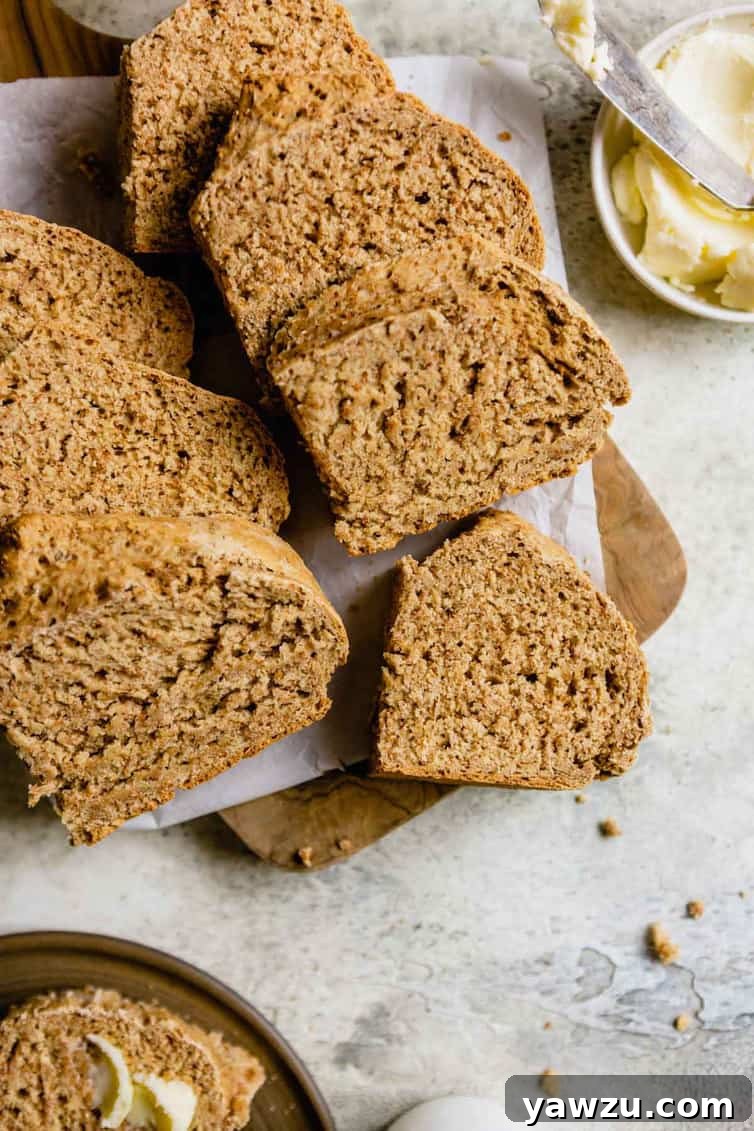
Serving Your Irish Brown Bread: Beyond the Butter
While a warm slice of Irish Brown Bread with a generous smear of good quality Irish butter is a culinary experience in itself, this versatile loaf can elevate a multitude of dishes and occasions. Its robust flavor pairs beautifully with both sweet and savory accompaniments.
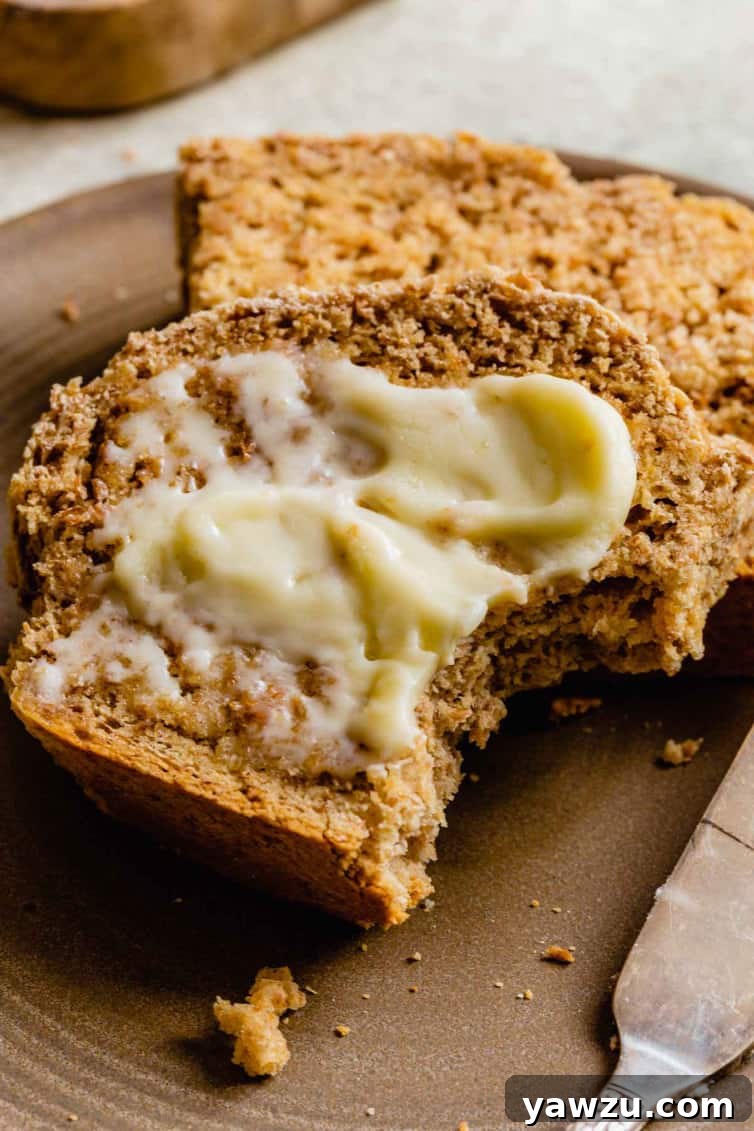
- The Classic Pairing: There’s truly no substitute for a toasted slice topped with real Irish butter. The slight tang of the butter perfectly complements the nutty depth of the bread.
- Hearty Stews and Soups: Its sturdy texture makes it ideal for dipping into comforting bowls of Guinness Beef Stew, a rich lentil soup, or a creamy potato chowder. It’s excellent for soaking up every last drop of flavorful broth.
- Savory Breakfasts: Serve toasted slices alongside traditional Irish breakfast components like scrambled eggs, bacon, sausage, or even Corned Beef Hash.
- Cheese Boards: Irish Brown Bread is a fantastic addition to any cheese board. Its rustic flavor and texture provide a wonderful contrast to creamy cheeses, sharp cheddars, and pungent blues.
- Sweet Delights: Don’t limit it to savory! Spread with homemade jams, marmalade, honey, or even a decadent Bacon Jam for a unique sweet and savory treat.
- Open-Faced Sandwiches: Its sturdy nature makes it perfect for open-faced sandwiches with smoked salmon, cream cheese, or various spreads.
Explore More Delicious Bread Recipes
If you’ve fallen in love with the simplicity and satisfaction of homemade bread, here are a few more recipes to inspire your baking adventures:
- Traditional Focaccia Bread: A delightful Italian flatbread, perfect for dipping in olive oil.
- Rye Soda Bread: Another twist on soda bread, offering a deeper, more earthy flavor.
- English Muffins: Perfect for breakfast sandwiches or simply toasted with butter and jam.
- Jewish Rye Bread Recipe: A classic with a distinctive flavor and chewy texture.
Authentic Irish Brown Bread Recipe
You don’t need the luck of the Irish to make this fantastic Irish Brown Bread recipe! This no-yeast, no-rise-time bread consistently delivers a crisp outside and a tender, moist inside every single time. It’s the only brown bread recipe you’ll ever need, promising homemade goodness with minimal effort.
If you make this Irish Brown Bread Recipe and love it, remember to stop back and give it a 5-star rating – it helps others find the recipe! ❤️️
Irish Brown Bread
Yield: 12 servings (1 loaf)
Prep Time: 10 mins
Cook Time: 35 mins
Total Time: 45 mins
This traditional Irish Brown Bread recipe makes the perfect loaf of bread for a slather of butter or dunking in stew.
Print Recipe
Pin Recipe
Ingredients
- 1⅛ cups (127 g) whole wheat flour
- 1⅓ cups (85 g) wheat bran
- 2 cups (240 g) all-purpose flour
- 1 teaspoon (0.75 teaspoon) baking soda
- ½ teaspoon (0.5 teaspoon) salt
- 2 tablespoons (28 g) unsalted butter, cold and cut into small pieces
- 1¼ cups (300 ml) buttermilk
- 2 tablespoons (1 teaspoon) molasses
Instructions
- Preheat oven to 350 degrees F. Line a baking sheet with parchment paper or a silicone baking mat and put it on the center oven rack.
- Whisk together the whole wheat flour and wheat/oat bran or wheat germ in a large bowl.
- In a medium bowl, whisk together the all-purpose flour, baking soda and salt. Add to the wheat flour mixture and whisk to combine.
- Add the butter pieces and rub them into small pieces with the flour mixture using your fingers or a pastry blender, until as small as possible.
- Stir in the buttermilk and molasses until the dough is uniformly damp. Turn out onto a lightly floured countertop and knead gently, until the dough forms a smooth ball.
- Use a sharp serrated knife (or a lame) to slice a cross deeply into the top of the bread, about 1-inch deep. Place the loaf on the hot baking sheet.
- Bake for about 30 to 35 minutes, or until the loaf is firm on top and when you tap the bottom, feels hollow.
- Remove from the oven and cool on a wire rack for about one hour before serving.
Notes
- Equipment: Rimmed baking sheet or cast iron skillet
- Wheat Bran: You can substitute oat bran or wheat germ, by weight.
- Buttermilk: If you do not have buttermilk and can’t get it, use this substitution: Place 1½ tablespoons lemon juice or white vinegar in a liquid 2-cup measuring cup. Add enough whole or 2% milk to bring the mixture to 1½ cups. Stir it, then let it sit for 5 minutes before using. Discard ¼ cup to get the correct measurement for this recipe.
- Storing: Store fresh baked Irish brown bread in an airtight container at room temperature for up to 3 days after baking.
- Freezing: If you don’t plan on eating your bread right away I suggest freezing the loaf. Wrap the cooled loaf tightly in two layers of plastic wrap and freeze for up to 3 months.
- Reheating: When you are ready to reheat the loaf, remove it from the freezer and allow it to come to room temperature. Pop in the oven and bake at 350°F for 5-10 minutes.
- Recipe adapted from David Lebovitz.
Nutrition Information (per serving):
Calories: 213kcal, Carbohydrates: 45g, Protein: 9g, Fat: 4g, Saturated Fat: 2g, Trans Fat: 1g, Cholesterol: 8mg, Sodium: 194mg, Potassium: 457mg, Fiber: 13g, Sugar: 4g, Vitamin A: 103IU, Calcium: 62mg, Iron: 4mg
Did you make this recipe?
Leave a review below, then snap a picture and tag @thebrowneyedbaker on Instagram so I can see it!
Author: Michelle Lettrich
Course: Bread
Cuisine: Irish
Photography by Lauren Grant.