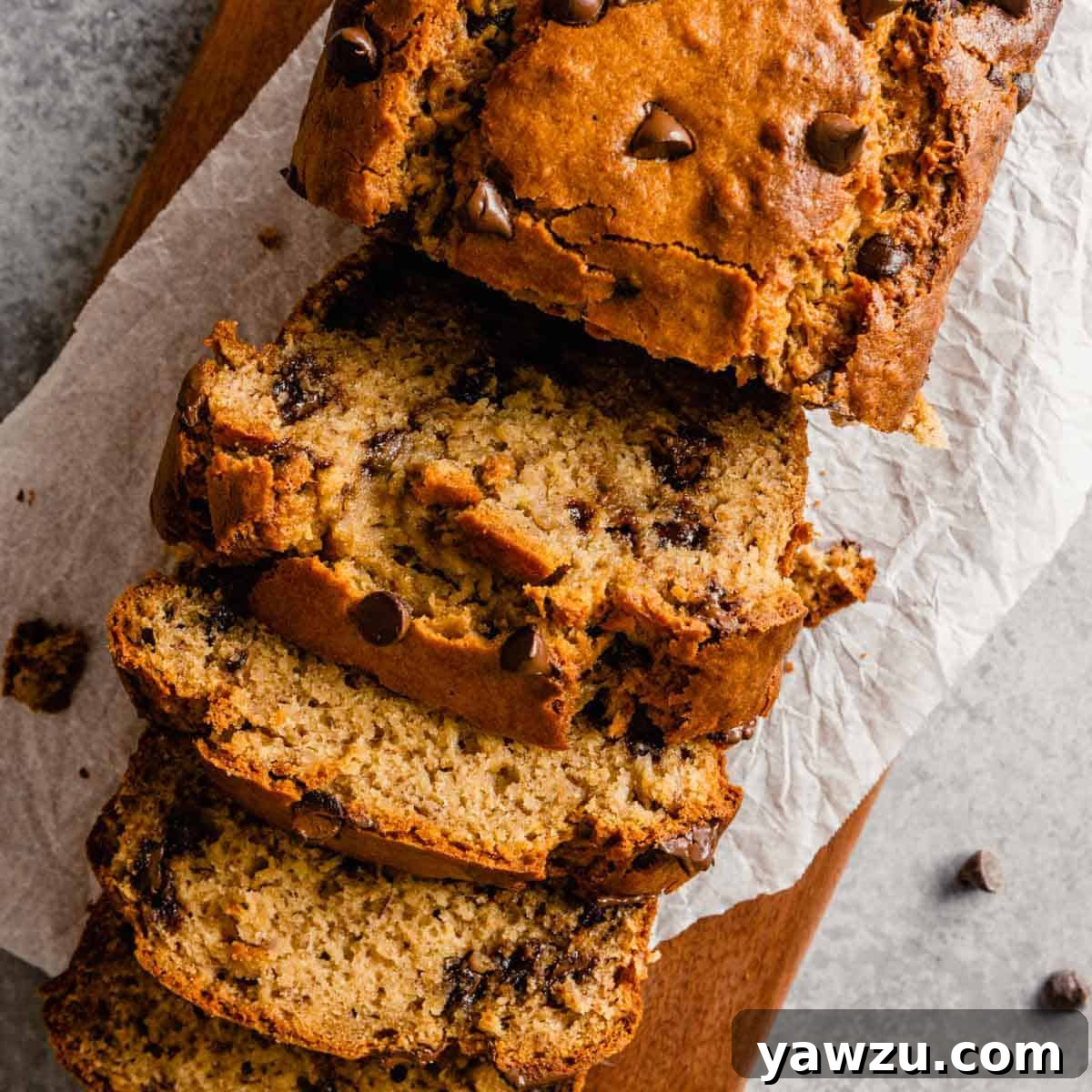
Welcome to the ultimate guide for crafting a truly exceptional Peanut Butter Banana Bread! This recipe delivers a sweet and savory masterpiece, brimming with the comforting flavors of ripe bananas, rich peanut butter, and delightful chocolate chips. Far more than just a quick bread, this creation promises a moist, tender crumb and an unforgettable taste experience that will quickly become a cherished favorite in your kitchen.
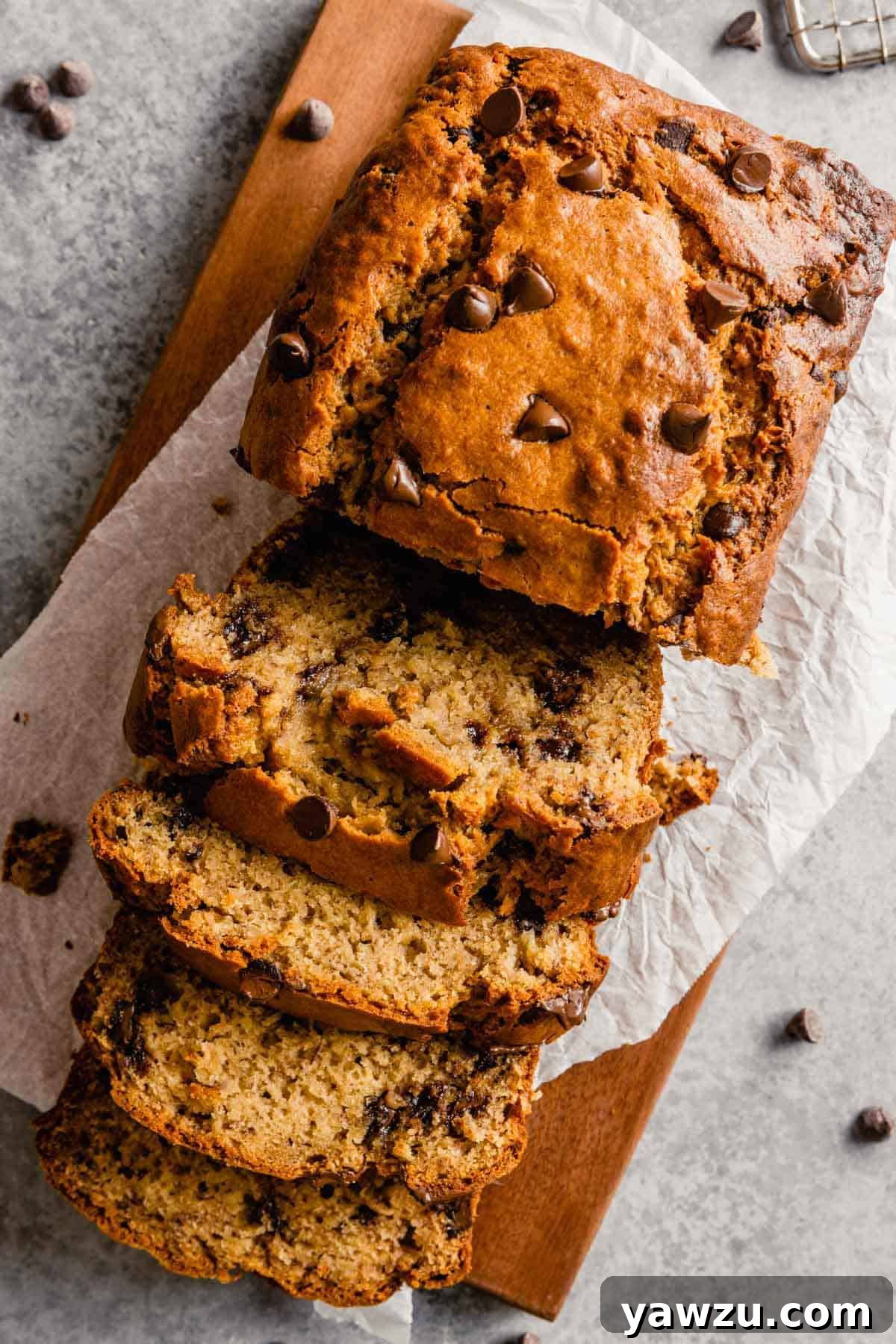
Secrets to the Best Peanut Butter Banana Bread
While many banana bread recipes exist, a few key elements elevate this particular version to a truly “fabulous” status. Understanding these simple baking principles will ensure your loaf is consistently moist, flavorful, and perfectly textured every time.
- Embrace Extremely Ripe Bananas: This is perhaps the most critical component. Don’t be shy about using bananas that are heavily speckled brown, or even mostly black. The riper the banana, the higher its sugar content and the more intense its natural banana flavor. These super-ripe bananas contribute significantly to the bread’s sweetness and its wonderfully moist consistency, eliminating any risk of a dry loaf.
- Utilize Brown Sugar for Richness and Moisture: While granulated sugar provides sweetness, brown sugar adds a deep, caramel-like richness that complements both the banana and peanut butter flavors beautifully. Its molasses content also acts as a humectant, locking in moisture and ensuring your banana bread remains tender for days. This blend of sugars creates a more complex and satisfying flavor profile.
- Avoid Overmixing the Batter: Quick breads, like this banana bread, thrive on a delicate touch. Once you combine the wet and dry ingredients, mix them just until they are incorporated and no streaks of dry flour remain. Overmixing develops the gluten in the flour, leading to a tough, dense bread with air pockets. A gently folded batter results in a wonderfully tender and light texture.
- The Magic of Buttermilk: Buttermilk plays a vital role in tenderizing the batter. Its acidity reacts with the baking soda, creating tiny air bubbles that contribute to a light and fluffy crumb. It also adds a subtle tang that balances the sweetness, enhancing the overall flavor without being overtly sour. If you don’t have buttermilk, a simple homemade substitute can be made by adding a tablespoon of lemon juice or white vinegar to regular milk and letting it sit for 5-10 minutes.
- Creamy Peanut Butter is Key: The choice of peanut butter significantly impacts the texture and flavor. Opt for a creamy, commercial-style peanut butter (like Jif or Skippy) that doesn’t have oil separation. Natural peanut butters, while delicious, can sometimes lead to a greasier or drier bread due to their varying oil content and consistency. The smooth texture of creamy peanut butter blends effortlessly into the batter, ensuring even distribution and a consistent flavor throughout.
Essential Ingredients for Your Loaf
Crafting the perfect peanut butter banana bread begins with a careful selection of high-quality ingredients. Each component plays a specific role in achieving that ideal balance of flavor, moisture, and texture.
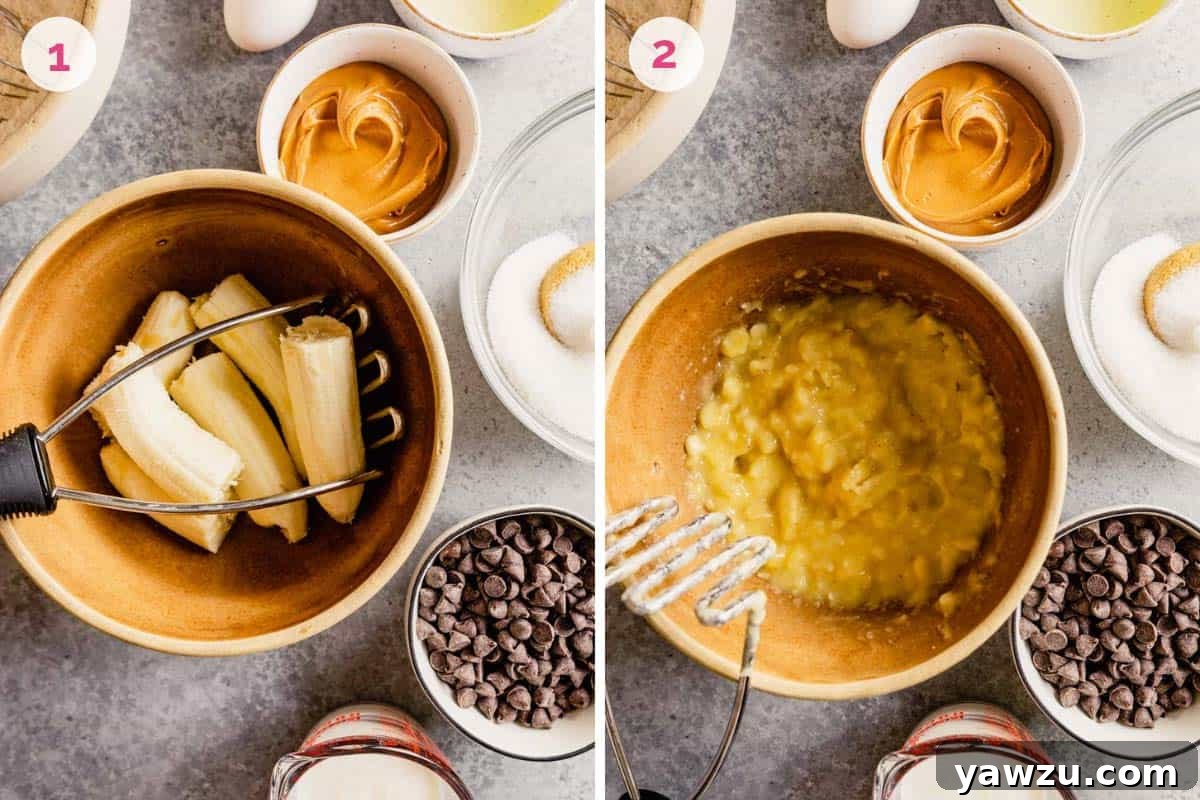
- All-Purpose Flour: This forms the structural foundation of your banana bread. It provides the necessary gluten development to hold the loaf together, resulting in a bread that’s sturdy yet tender.
- Ripe, Mashed Bananas: As highlighted earlier, these are the stars of the show! They contribute natural sweetness, intense banana flavor, and essential moisture. The riper they are, the more pronounced these qualities will be.
- Creamy Peanut Butter: Choose a smooth, creamy variety without oil separation. This ensures it emulsifies beautifully into the batter, imparting its signature nutty flavor and contributing to the bread’s moist texture without making it greasy.
- Granulated Sugar & Light Brown Sugar: This dynamic duo provides balanced sweetness and depth. Granulated sugar offers a clean, sweet taste, while light brown sugar adds a richer, slightly caramel note and additional moisture, crucial for that perfectly tender crumb.
- Buttermilk: This secret ingredient is key for an ultra-moist and tender loaf. Its acidity reacts with the baking soda, creating a lighter texture and a subtle, delightful tang. If you’re out, simply make a quick substitution at home.
- Vegetable Oil: A neutral-flavored oil like vegetable oil (or canola, grapeseed) provides moisture without adding any competing flavors. Unlike butter, oil remains liquid at room temperature, contributing to a consistently moist texture that lasts.
- Large Eggs: Eggs act as a binder, helping to hold the ingredients together and providing structure. They also contribute to the richness and overall texture of the bread.
- Vanilla Extract: A touch of vanilla enhances all the other flavors, adding a warm, aromatic depth that completes the profile of this comforting treat.
- Baking Soda: This leavening agent works with the buttermilk to create rise and a tender crumb, ensuring your bread isn’t too dense.
- Salt: Just a pinch of salt is essential to balance the sweetness and amplify the flavors of the banana and peanut butter, preventing the bread from tasting flat.
- Chocolate Chips: Classic semisweet chocolate chips are always a winner, melting into pockets of deliciousness. However, feel free to experiment with dark, milk, or white chocolate chips, or even a combination, to customize your loaf to perfection.
Exploring Nut Butter Alternatives
Whether you’re catering to dietary restrictions or simply eager to experiment with new flavors, this recipe is incredibly versatile when it comes to nut butters. Here are a few fantastic options to consider:
- SunButter (Sunflower Seed Butter): An excellent choice for a nut-free version, SunButter offers a delicious, slightly earthy flavor. It can be replaced in a 1:1 ratio with peanut butter, making this recipe accessible for those with peanut allergies. Ensure you use a creamy, no-stir variety for the best results.
- Almond Butter or Cashew Butter: For a different nutty profile, creamy almond or cashew butter can be used. Similar to peanut butter, it’s crucial to select a brand that doesn’t have significant oil separation (like Barney Butter) to maintain the desired consistency and avoid an overly greasy loaf. These options lend a milder, slightly sweeter nut flavor.
- Nutella (Hazelnut Spread): Transform your banana bread into a rich, chocolaty dream by using Nutella! This hazelnut cocoa spread adds an indulgent, decadent twist, perfect for chocolate lovers. Again, replace it with peanut butter in a 1:1 ratio for a consistently moist and flavorful result. The hazelnut notes beautifully complement the banana.
Creative Mix-In Combinations
While delicious on its own, this peanut butter banana bread serves as a perfect canvas for additional flavors and textures. Elevate your loaf with these creative mix-in ideas:
- Assorted Nuts: Add a delightful crunch and extra nutty flavor with chopped pecans, walnuts, or even dry-roasted peanuts. Toasting them lightly before adding can enhance their aroma and taste.
- Dried Fruits: For a subtle chewy sweetness, consider stirring in plump raisins, dried cranberries, or finely chopped dried apricots. Raisins, in particular, evoke a classic “peanut butter and jelly” vibe.
- Other Chocolate Variations: Beyond semisweet, try milk chocolate for a sweeter profile, dark chocolate for a more intense cocoa hit, or white chocolate chips for a creamy, vanilla-infused touch. Butterscotch chips are also a fantastic option for a different kind of sweet richness.
- Toasted Coconut Flakes: For a tropical twist and a lovely texture, fold in some toasted shredded coconut. It pairs wonderfully with both banana and peanut butter.
- Salty Bacon Bits: For an adventurous and incredibly delicious savory-sweet contrast reminiscent of an Elvis sandwich, add cooked and crumbled bacon bits. The saltiness of the bacon beautifully cuts through the richness of the bread.
Baking Your Perfect Loaf: Step-by-Step Guide
This peanut butter banana bread is a classic quick bread recipe, meaning it comes together with minimal fuss and no yeast, making it perfect for bakers of all skill levels. The process involves simple steps: whisking dry ingredients, combining wet ingredients, and then gently folding them together. From start to oven, you’re looking at less than 15 minutes of hands-on preparation!
- Step 1: Prepare for Baking: Begin by preheating your oven to 350°F (175°C). Next, lightly grease an 8×4-inch loaf pan. For easy removal, line the pan with a strip of parchment paper, allowing it to overhang on the two longer sides. This creates “handles” for lifting the finished loaf effortlessly.
- Step 2: Combine Dry Ingredients: In a large mixing bowl, whisk together the all-purpose flour, baking soda, and salt. Ensure these dry ingredients are thoroughly combined to guarantee even distribution of leavening and seasoning throughout the bread. Set this bowl aside.
- Step 3: Whisk Wet Ingredients: In a separate, even larger bowl, combine the mashed bananas, creamy peanut butter, granulated sugar, light brown sugar, buttermilk, vegetable oil, eggs, and vanilla extract. Whisk these ingredients together until the mixture is smooth and well-integrated. This liquid foundation is rich in flavor and moisture.
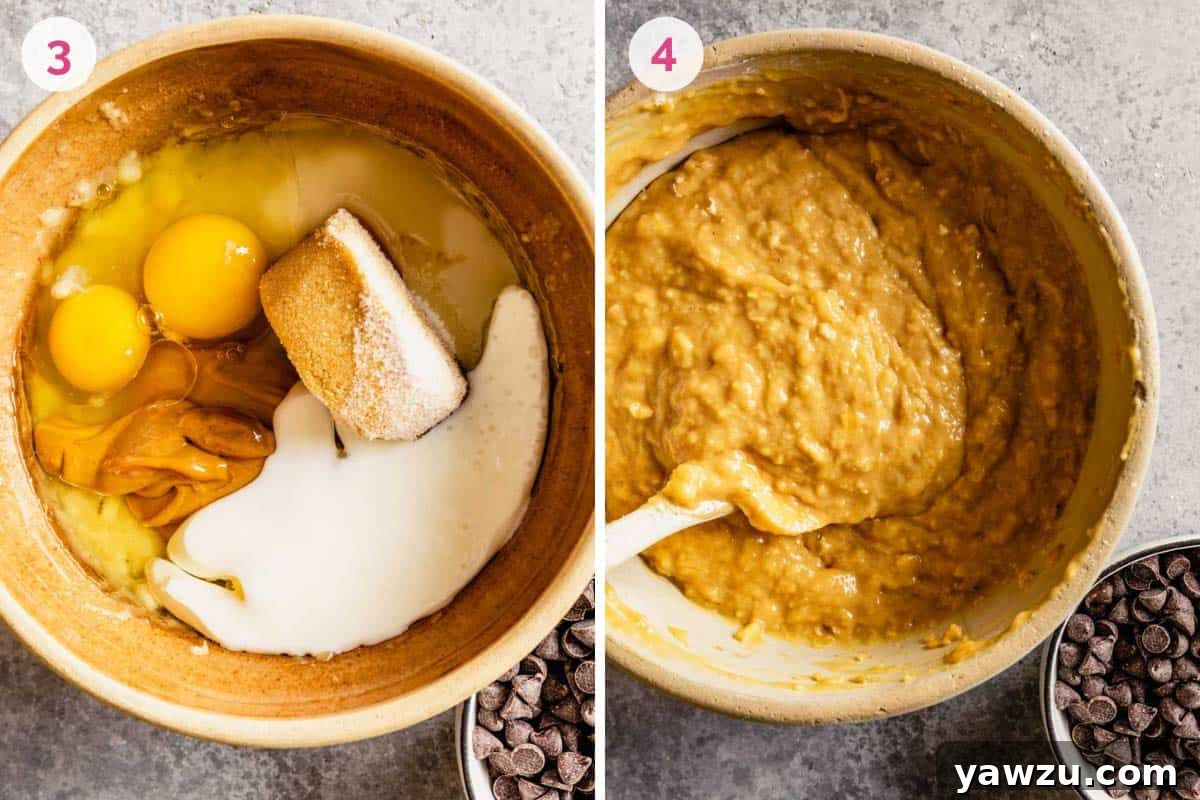
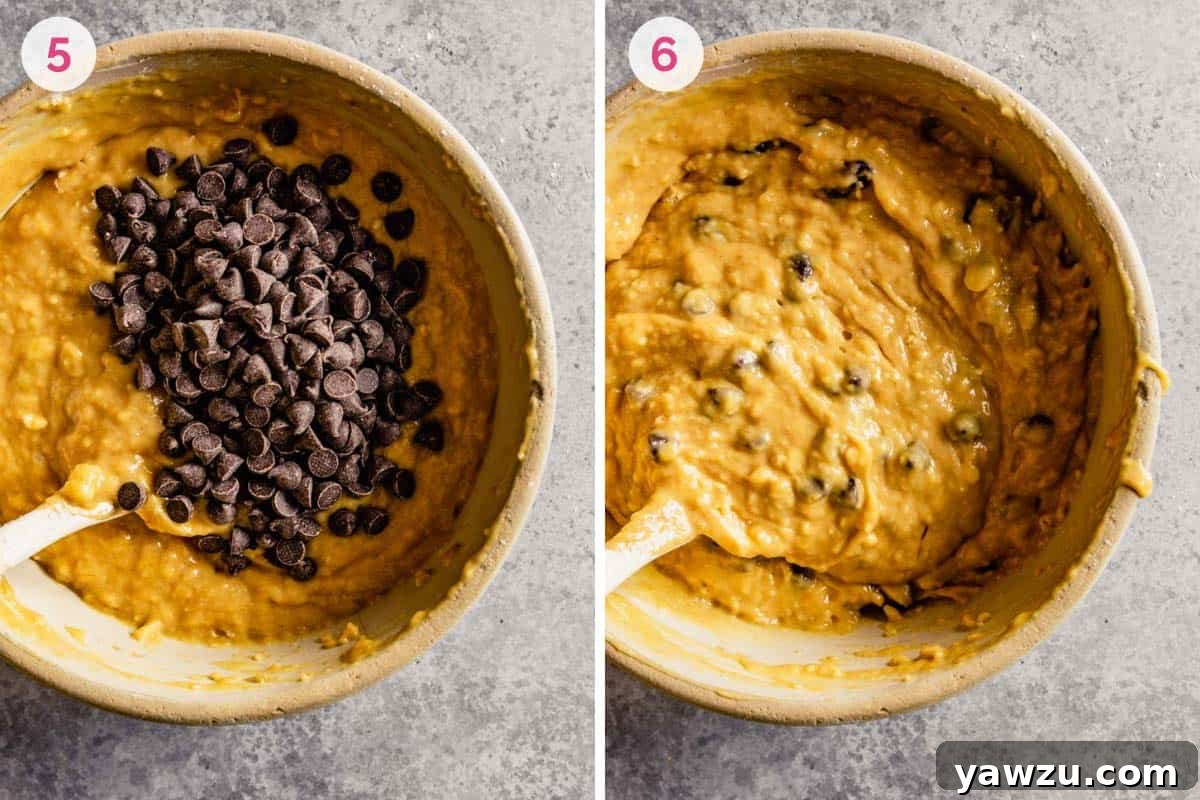
- Step 4: Gently Combine Wet and Dry: Pour the wet ingredient mixture into the bowl with the dry flour mixture. Using a rubber spatula, gently fold the ingredients together. Mix just until everything is combined and you no longer see any pockets of dry flour. Remember the golden rule of quick breads: do not overmix! Overmixing leads to a tough texture. Once combined, gently stir in your chosen chocolate chips, ensuring they are evenly distributed.
- Step 5: Transfer to Pan: Carefully transfer the prepared batter into your lined loaf pan. Use the rubber spatula to gently smooth the top into an even layer, ensuring consistent baking.
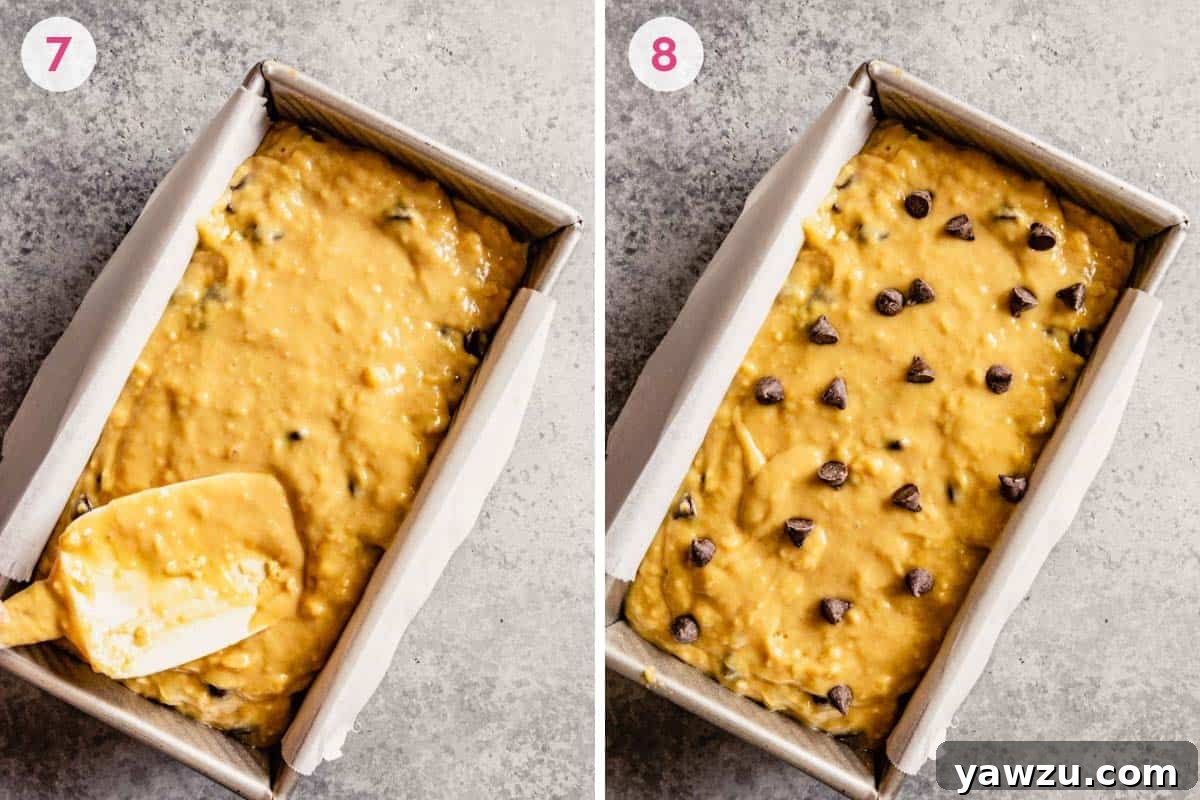
- Step 6: Bake to Perfection: Place the loaf pan in the preheated oven. Bake for approximately 1 hour to 1 hour and 15 minutes. The bread is done when it’s golden brown on top, and a toothpick or thin knife inserted into the center comes out with only a few moist crumbs attached, but no wet batter. If you notice the top browning too quickly before the center is cooked, loosely tent the loaf with aluminum foil for the remainder of the baking time (a common practice around the 45-minute mark).
- Step 7: Cool Completely: Once baked, remove the bread from the oven and let it cool in the pan for about 10-15 minutes. This allows the loaf to set and firm up before handling. After this initial cooling, use the parchment paper overhang to lift the bread out of the pan and transfer it to a wire rack to cool completely. Cooling entirely is crucial for optimal slicing and flavor development.
From Loaf to Portable Muffins
This versatile peanut butter banana bread recipe can easily be adapted into delightful muffins, perfect for a quick breakfast, packed lunches, or convenient on-the-go snacks. Here are the simple adjustments to transform your loaf into individual treats:
- Preheat your oven to a slightly higher temperature of 375°F (190°C). Grease a standard 12-cup muffin tin or line it with cupcake liners.
- Follow all the directions for preparing the batter exactly as described for the loaf.
- Fill each muffin cup two-thirds of the way full with the batter. This ensures they rise beautifully without overflowing.
- Bake for approximately 25 to 30 minutes. Begin checking for doneness around the 25-minute mark by inserting a toothpick into the center of a muffin. It should come out with only a few moist crumbs. Add additional baking time as needed.
- Allow the muffins to cool in the pan for a few minutes before transferring them to a wire rack to cool completely.
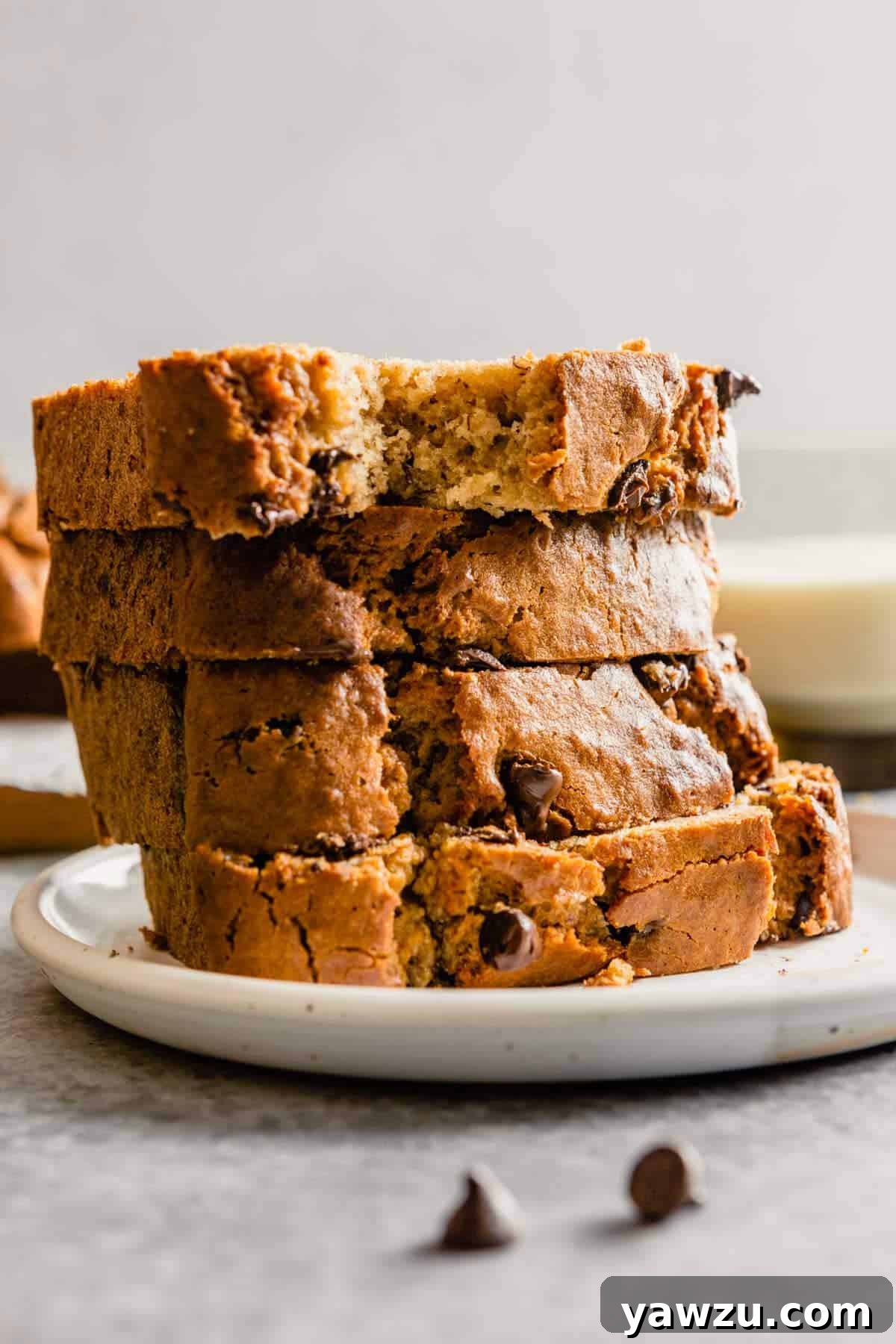
Serving, Storing, and Freezing for Freshness
Once your irresistible peanut butter banana bread is baked, knowing how to serve and preserve it ensures you can enjoy its deliciousness for as long as possible.
- Serving Suggestions: While fantastic on its own, a slice of this banana bread can be enhanced in many ways. Drizzle it with a touch of warm honey or maple syrup for extra sweetness. Smear a slice with a dollop of additional creamy peanut butter or almond butter. For a classic pairing, top it with fresh banana slices. A sprinkle of sea salt can also elevate the flavors, creating a delightful sweet-and-salty contrast. It’s wonderful warm with a scoop of vanilla ice cream, or simply with your morning coffee.
- Storing Your Loaf: To maintain maximum moisture and freshness, wrap your cooled banana bread tightly in plastic wrap. For an extra layer of protection, place the wrapped loaf into an airtight container. Stored at room temperature, it will remain deliciously moist for up to 5 days. For optimal flavor and texture, avoid refrigerating banana bread as it can dry it out.
- Freezing for Later Enjoyment: This banana bread freezes beautifully, making it perfect for meal prep or enjoying a slice whenever a craving strikes. You can freeze the entire loaf or individual slices. To freeze the whole loaf, wrap it tightly in several layers of plastic wrap, then cover it again with aluminum foil. For individual slices, wrap each slice individually in plastic wrap, then place them in a freezer-safe bag or container. It can be stored in the freezer for up to 1 month. When you’re ready to enjoy, simply thaw the bread (still wrapped) at room temperature.
Frequently Asked Questions About Banana Bread
While both feature bananas, the primary distinction lies in their preparation methods and typical texture. Banana bread, a type of quick bread, usually relies on oil (or sometimes melted butter) and mashed bananas for moisture, with minimal mixing to prevent gluten development. It tends to be denser and less sweet, often enjoyed for breakfast or as a snack. Banana cake, on the other hand, is generally made by creaming butter and sugar, resulting in a lighter, fluffier crumb more akin to a traditional cake, and is typically sweeter with frosting.
A cracked top is a very common and completely normal characteristic for quick breads, including banana bread! It usually happens because the top surface of the batter sets and begins to bake faster than the interior of the loaf. As the inside continues to rise and expand during baking, it pushes up against the already-set crust, causing it to crack. It’s an indicator of a well-risen loaf and doesn’t affect the quality or taste in any negative way.
Absolutely, in fact, black or very dark brown bananas are ideal for banana bread! The darker the peel, the riper the banana, meaning it has converted more starch into sugar. This results in maximum sweetness, intense banana flavor, and a softer, more easily mashable texture, all of which contribute to a superior, moist banana bread. However, if the banana smells fermented, moldy, or unpleasant when peeled, it’s best to discard it.
Several factors can lead to a dry loaf of banana bread. The most common culprits include overmixing the batter, which develops gluten and makes the bread tough; baking the loaf for too long or at too high a temperature, which evaporates moisture; using under-ripe bananas that lack sufficient moisture and sweetness; or not allowing the bread to cool completely before slicing, as it continues to set and redistribute moisture as it cools. Always use very ripe bananas, mix gently, bake until just done, and cool properly for the best results.
Yes, absolutely! Many banana bread recipes, including this one, specifically call for oil. Oil provides a consistently moist crumb because it remains liquid at room temperature, unlike butter which solidifies. This contributes to a softer, more tender bread that stays fresh longer. A neutral-flavored oil like vegetable, canola, or grapeseed oil is recommended to let the banana and peanut butter flavors shine.
More Irresistible Banana Recipes
If you’ve fallen in love with the comforting flavor of bananas in baking, here are more delightful recipes to explore and add to your repertoire:
- Refreshing Banana Popsicles
- Decadent Bananas Foster Banana Bread
- Crunchy Banana Macadamia Nut Muffins
- Classic Traditional Southern Banana Pudding
- Simple & Sweet Banana Muffins
- Easy Banana Chocolate Chip Snack Cake
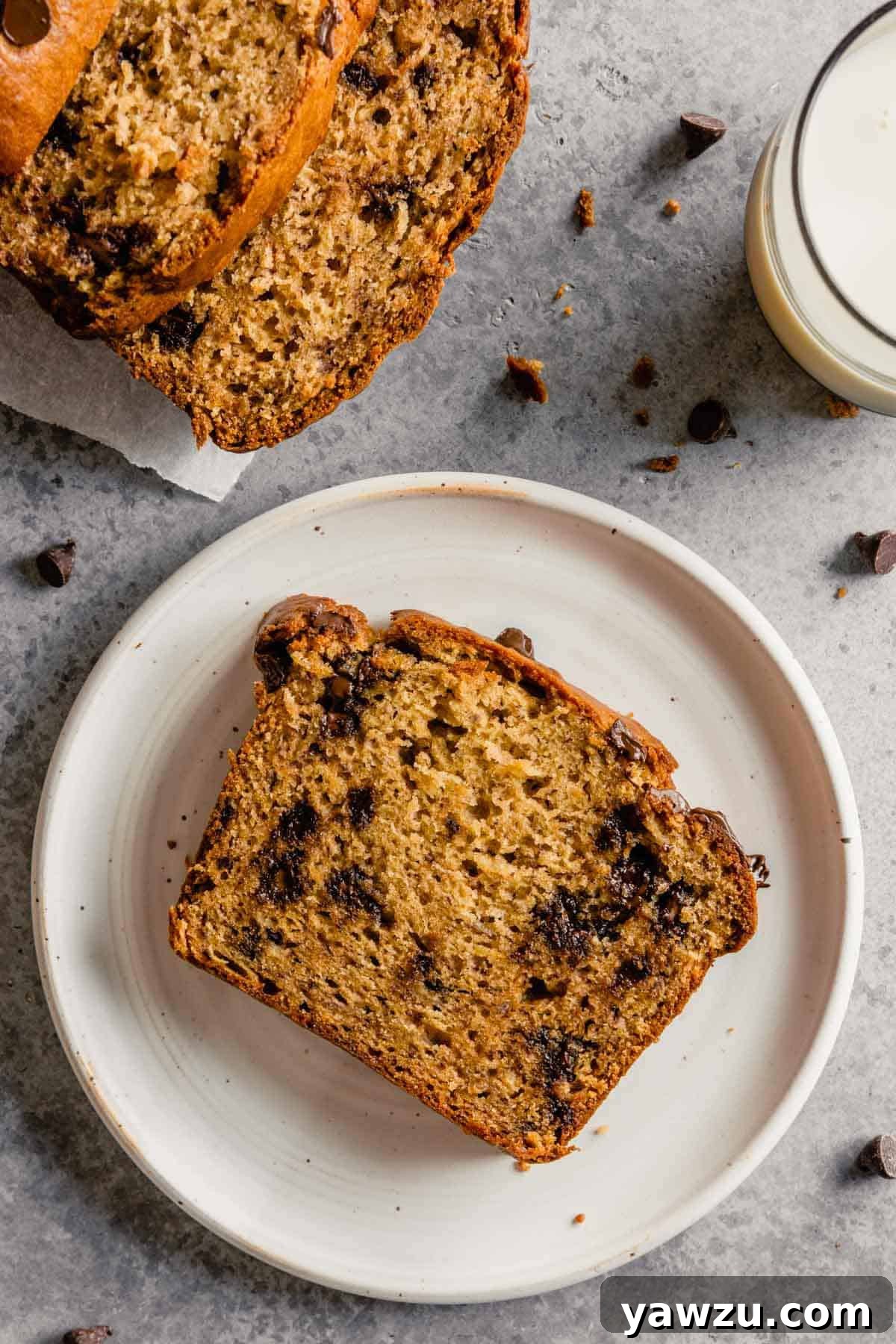
This tender, moist peanut butter banana bread, studded with delightful chocolate chips, truly offers the perfect harmony of salty and sweet. Whether you cherish childhood memories of homemade banana bread or simply adore the classic combination of banana and peanut butter, this particular recipe is a must-try. Its effortless preparation and irresistible flavor make it an instant favorite for breakfast, snack time, or a comforting dessert.
If you try this recipe and love it as much as we do, please consider leaving a 5-star rating below. Your feedback helps others discover this incredible bake and brings a smile to our faces! ❤️
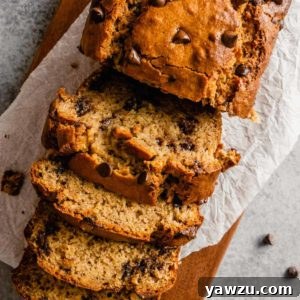
Peanut Butter Banana Bread
12 servings (1 loaf)
15 mins
1 hr 15 mins
1 hr 30 mins
Sink your teeth into an amazingly moist slice of this decadent peanut butter banana bread with chocolate chips!
Average rating: 4.60 out of 5 stars (50 ratings)
Pin Recipe
Ingredients
- 2 cups (250 g) all-purpose flour
- ¾ teaspoon baking soda
- ½ teaspoon salt
- 3 medium bananas, mashed (very ripe)
- ½ cup (129 g) creamy peanut butter
- ½ cup (100 g) granulated sugar
- ½ cup (110 g) light brown sugar
- ⅓ cup (80 ml) buttermilk
- ¼ cup (54.5 ml) vegetable oil
- 2 large eggs
- 2 teaspoons vanilla extract
- 1 cup (180 g) semisweet chocolate chips
Instructions
- Preheat oven to 350°F (175°C). Grease an 8×4-inch loaf pan and then line with parchment paper so that it hangs over the two long sides for easy removal.
- In a large bowl, whisk together the flour, baking soda, and salt; set aside.
- In a separate large bowl, whisk together the mashed banana, peanut butter, granulated sugar, light brown sugar, buttermilk, vegetable oil, eggs, and vanilla extract until smooth.
- Pour the wet ingredients into the flour mixture and fold together with a rubber spatula until completely combined and there are no spots with raw flour. Gently stir in the chocolate chips. Avoid overmixing.
- Transfer the batter to the prepared loaf pan, smoothing the top into an even layer. Bake for 1 hour to 1 hour 15 minutes, or until the loaf is golden brown and a toothpick or thin knife inserted into the center comes out with just a few moist crumbs. If the bread appears to be browning too quickly, loosely tent it with foil.
- Allow the bread to cool in the pan for about 10-15 minutes, then turn it out onto a wire rack to cool completely. The cooled bread should be wrapped tightly in plastic wrap for storage.
Notes
- Equipment: An 8×4-inch loaf pan is recommended for best results.
- Nut Butter Substitutes: For different flavors or a nut-free option, use SunButter, creamy almond butter, cashew butter (ensure no oil separation, Barney Butter is a good choice), or Nutella in a 1:1 ratio.
- Mix-Ins: Get creative with different types of chocolate chips (dark, milk, white), butterscotch chips, chopped nuts (walnuts, pecans, peanuts), raisins, dried cranberries, or even cooked, chopped bacon bits for a savory twist.
- Storing: For optimal moisture, keep your cooled loaf wrapped tightly in plastic wrap and stored in an airtight container at room temperature for up to 5 days.
- Freezing: The whole loaf or individual slices can be frozen for up to 1 month. Wrap tightly in plastic wrap, then cover with foil. Thaw at room temperature while still wrapped.
- Converting to Muffins: Fill standard muffin cups two-thirds full and bake at 375°F (190°C) for 25-30 minutes, or until a toothpick comes out with moist crumbs.
Nutrition Information (per serving)
Calories: 374kcal, Carbohydrates: 50g, Protein: 7g, Fat: 16g, Saturated Fat: 8g, Cholesterol: 28mg, Sodium: 236mg, Potassium: 314mg, Fiber: 3g, Sugar: 27g, Vitamin A: 75IU, Vitamin C: 2.6mg, Calcium: 38mg, Iron: 2.4mg
Did you make this recipe?
We’d love to see it! Leave a review above, then snap a picture and tag @thebrowneyedbaker on Instagram so we can share your delicious creation!
Michelle Lettrich
Bread
American
Photography by Lauren Grant.