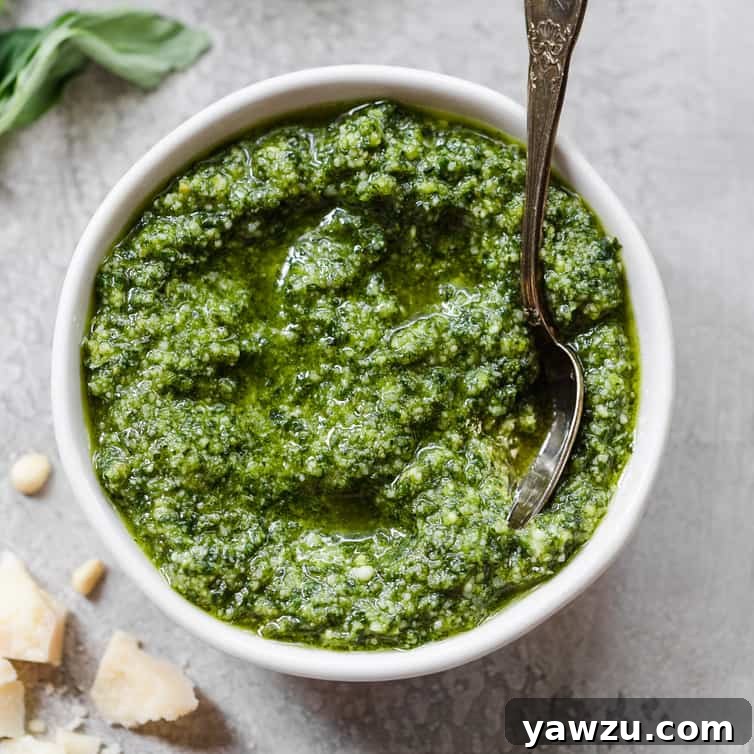
Ultimate 5-Minute Basil Pesto Recipe: Fresh, Flavorful, and Versatile
Transform your fresh basil harvest into a vibrant, aromatic condiment with this incredibly easy 5-minute basil pesto recipe. Crafted with just a handful of wholesome ingredients – fresh basil leaves, fragrant garlic, nutty pine nuts, savory cheese, and premium olive oil – this classic Italian sauce is truly the only recipe you’ll ever need. Whether you’re slathering it on pizzas, tossing it with pasta, spreading it on sandwiches, or elevating grilled meats and vegetables, this homemade pesto will quickly become your go-to for adding a burst of summer flavor to every meal. Say goodbye to store-bought varieties and embrace the unparalleled taste of garden-fresh pesto!
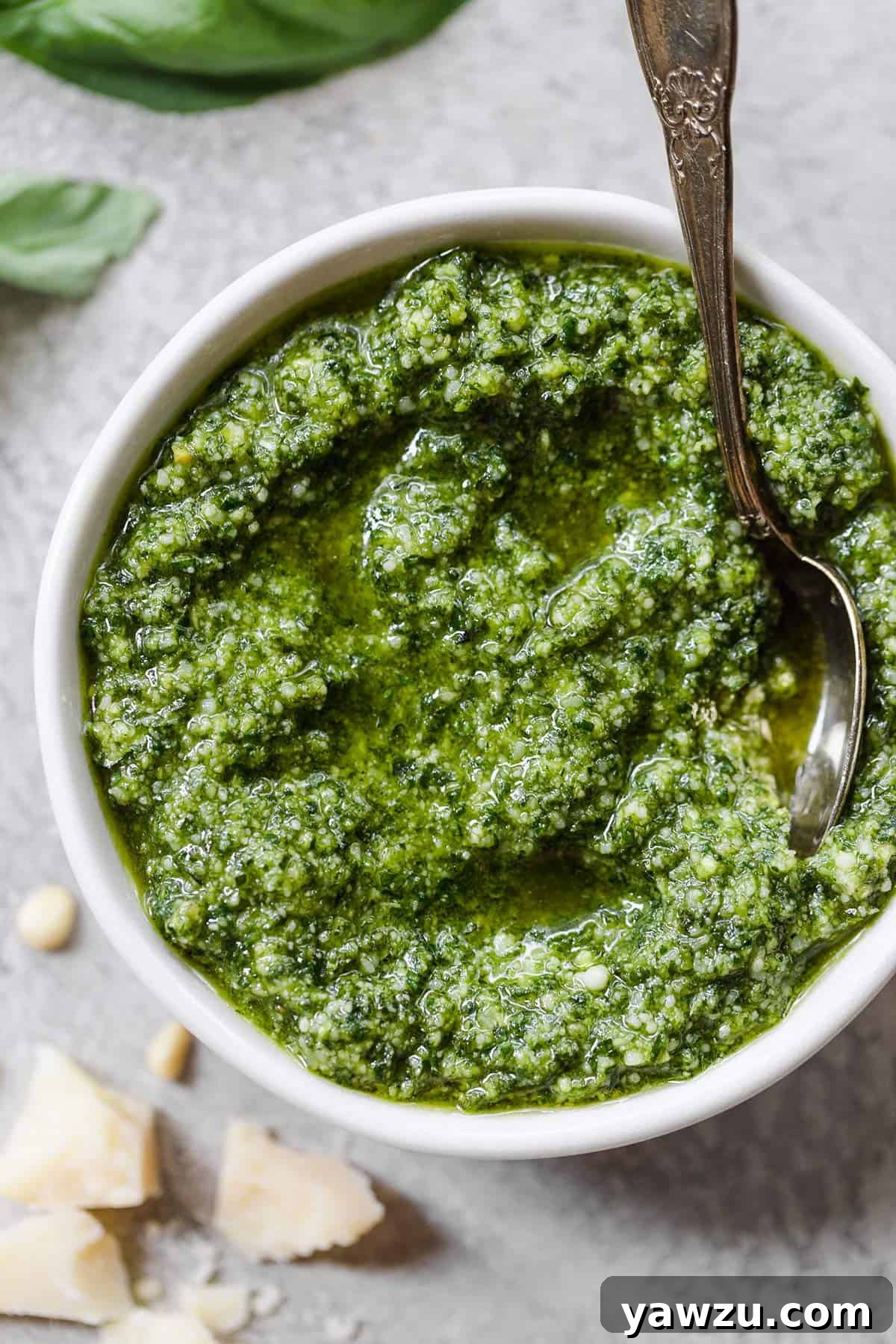
Why Make Your Own Homemade Basil Pesto?
If you’ve ventured into gardening this season, whether in traditional beds or convenient containers, basil likely secured a spot on your planting list. And for good reason! This delightful herb is remarkably easy to cultivate, fills your garden with an intoxicating aroma, and generously rewards you with an abundant yield of its large, earthy leaves. While a simple Caprese salad with fresh mozzarella and garden tomatoes is always a treat, a true basil bounty calls for something more. This is where homemade pesto shines. Beyond its incredible flavor, crafting your own pesto is an experience in culinary satisfaction. It’s significantly fresher than any store-bought alternative, free from unwanted preservatives, and remarkably cost-effective, especially when utilizing your homegrown basil.
The beauty of making basil pesto at home lies in its simplicity and versatility. It’s not just a sauce; it’s a flavor enhancer that can elevate countless dishes. Furthermore, homemade pesto is an excellent candidate for freezing, allowing you to preserve that vibrant taste of summer and enjoy it throughout the year, long after your basil plants have retired for the season. Imagine a cold winter’s day, and you can still bring a taste of sunshine to your plate with a defrosted cube of your own freshly made basil pesto. It’s a rewarding culinary endeavor that promises exceptional taste and convenience.
A Glimpse into Pesto’s Rich History: What is Pesto Alla Genovese?
This verdant, aromatic sauce, traditionally composed of basil, garlic, olive oil, pine nuts, and a hard, salty cheese, holds a distinguished place in Italian culinary history, possibly being one of the oldest Italian sauces. You might encounter it referred to as “Pesto alla Genovese,” a name that pays homage to its birthplace: the picturesque city of Genoa in the Liguria region of Italy. This region, known for its abundant basil, olive groves, and proximity to the sea, provided the perfect environment for the creation of this iconic condiment.
Historically, the preparation of pesto was a labor of love, a true art form. The word “pesto” itself derives from the Italian verb “pestare,” meaning “to pound” or “to crush.” This etymology speaks directly to the traditional method: ingredients were meticulously ground and bruised together using a marble mortar and a wooden pestle. This gentle, yet firm, pounding technique was believed to release the essential oils and flavors of the basil and garlic most effectively, creating a deeply fragrant and vibrant green paste, before the olive oil was slowly incorporated. While the romance of a mortar and pestle endures, thankfully, the advent of modern kitchen appliances like food processors and blenders has made whipping up a batch of fresh pesto quick and effortless, allowing everyone to enjoy this ancient delight without the manual effort.
The Essential Ingredients for Perfect Pesto
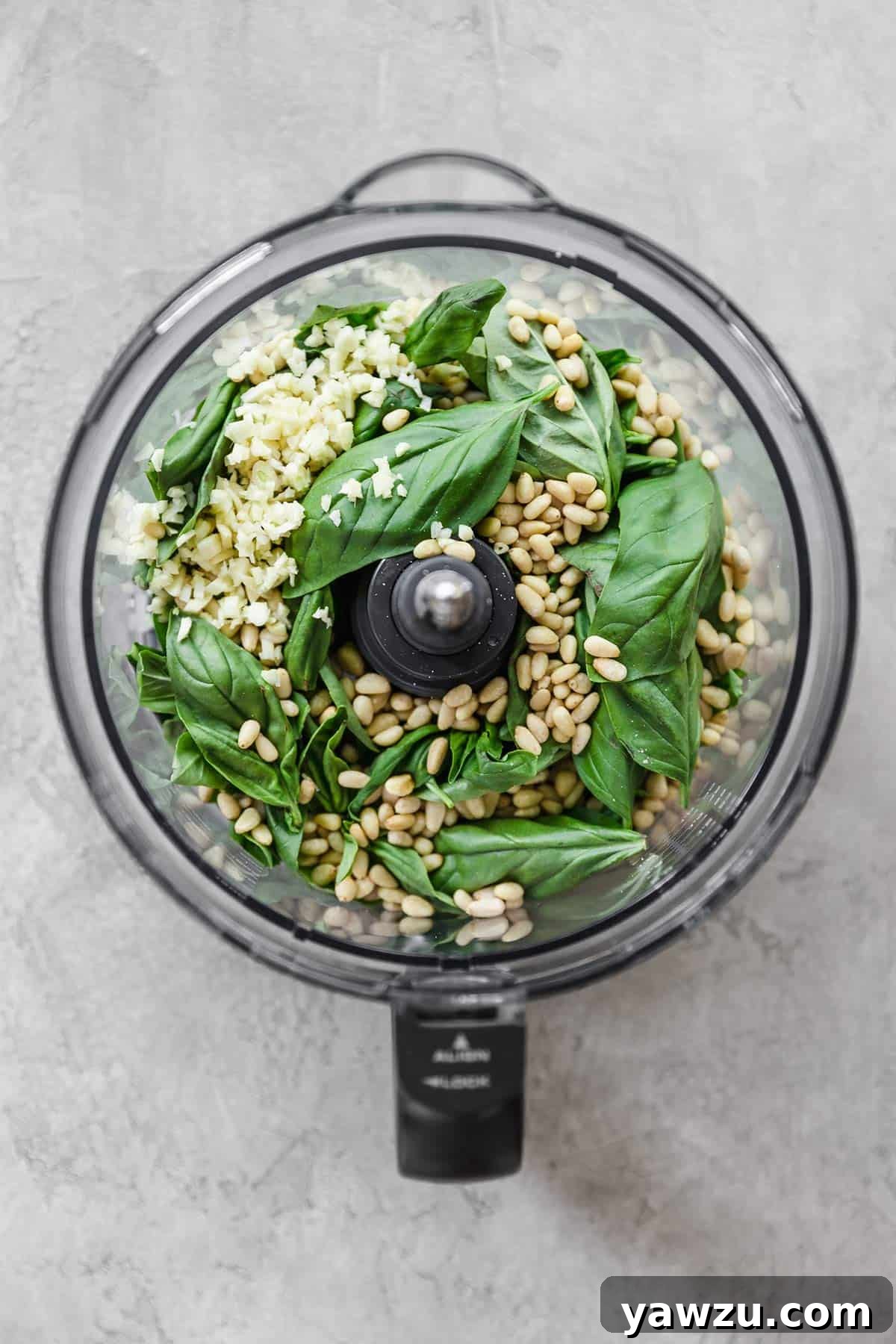
Since this classic basil pesto recipe relies on a simple, short list of raw ingredients, the quality of each component is paramount to achieving a truly exceptional flavor. Each element plays a crucial role in creating the distinctive taste and texture of authentic pesto. Here are our top tips for selecting and preparing the best ingredients for your homemade masterpiece:
Choosing Your Basil: The Heart of the Pesto
- Freshness First: Always opt for the freshest basil leaves you can find. If you’re growing your own, harvest them just before making the pesto for maximum potency.
- Cleanliness is Key: Thoroughly rinse the basil leaves under cool water to remove any dirt or garden debris. Gently pat them completely dry with a paper towel or use a salad spinner to prevent a watery pesto.
- Inspect Carefully: Discard any leaves that are spotted, bruised, or have significant veins, as these can impart a bitter taste or compromise the smooth texture.
- Optimal Quantity: For a vibrant and balanced pesto, aim for about two packed cups of fresh basil leaves per batch.
Nuts for Pesto: Traditional Pine Nuts & Beyond
- Traditional Choice: Pine nuts are the traditional nut used in Pesto alla Genovese. Their buttery flavor and soft texture blend seamlessly into the sauce. While they can be a bit pricey, a small bag stored in the freezer will last you through several batches during pesto season.
- Toasting for Depth: Lightly toasting pine nuts (or any alternative nut) in a dry skillet over medium-low heat for a few minutes until fragrant can significantly enhance their flavor, adding a deeper, nuttier dimension to your pesto. Be careful not to burn them!
- Common Substitutions: If pine nuts are unavailable, or if you prefer a different flavor profile, several other nuts make excellent alternatives:
- Walnuts: Offer a slightly more robust and earthy flavor.
- Almonds: Provide a mild, slightly sweet crunch.
- Pistachios: Add a unique, slightly sweet and vibrant green hue.
- Pecans: Contribute a rich, buttery taste.
- Nut-Free Option: For those with nut allergies or simply seeking a different texture, sunflower seeds are a fantastic nut-free substitute. They offer a similar richness and blend well.
The Garlic Factor: Freshness is Key
- Unleash the Flavor: Fresh garlic is absolutely crucial for the pungent, aromatic kick that defines pesto. It truly catapults the overall flavor of the sauce.
- Avoid Jarred Alternatives: Skip the pre-minced, jarred garlic for pesto. Its flavor is often muted and can have an off-putting tang compared to fresh cloves. Save the jarred stuff for quick stir-fries where its nuances are less critical.
- Quantity Control: Typically, 2-4 cloves of fresh garlic are ideal, depending on their size and your preference for garlic intensity. Start with fewer and add more to taste if desired.
The Liquid Gold: Selecting the Right Olive Oil
- As Important as Basil: The quality of your olive oil is arguably as important as the freshness of your basil. It binds all the ingredients together and significantly contributes to the final taste and texture.
- Extra Virgin is Essential: Always select a good quality extra virgin olive oil. Look for one with a mild, fruity flavor rather than a very robust or peppery one, as a strong olive oil can overpower the delicate basil.
- Gradual Addition: Add the olive oil slowly and gradually to the pesto mixture to emulsify it properly, creating a smooth, creamy sauce.
Cheesy Goodness: Parmesan and Its Cousins
- Authentic Parmesan: Grated Parmesan cheese (Parmigiano-Reggiano) is the traditional choice, lending a salty, nutty, and umami finish to the pesto. It provides a crucial depth of flavor.
- Hard, Salty Alternatives: If Parmesan isn’t available, or you’re experimenting with flavors, other hard, salty Italian cheeses work wonderfully:
- Pecorino Romano: A sheep’s milk cheese, more pungent and saltier than Parmesan. Use slightly less or adjust salt accordingly.
- Asiago: Offers a nutty and slightly sharper flavor, especially aged Asiago.
- Aged Manchego: A Spanish sheep’s milk cheese that can provide a unique, rich flavor profile.
- Cheese-Free Option: For a dairy-free or vegan pesto, nutritional yeast is an excellent substitute. It mimics that savory, nutty, and slightly cheesy flavor without any dairy, making your pesto accessible to more dietary preferences.
The Final Touches: Salt and Pepper
- Enhance and Balance: A pinch of salt and a grind of fresh black pepper are essential for seasoning your pesto, enhancing the flavors of all the other ingredients and bringing them into perfect harmony.
- Taste and Adjust: Add salt and pepper gradually, tasting as you go. Remember that Parmesan cheese is already quite salty, so you might not need as much added salt as you think. Freshly cracked black pepper adds a lovely subtle heat.
Simple Step-by-Step Guide to Making Pesto in Minutes
Making fresh basil pesto in a food processor or blender is incredibly fast and straightforward, transforming a handful of ingredients into a vibrant sauce in under five minutes. Gather all your chosen high-quality ingredients, and let’s dive into this super simple pesto recipe:
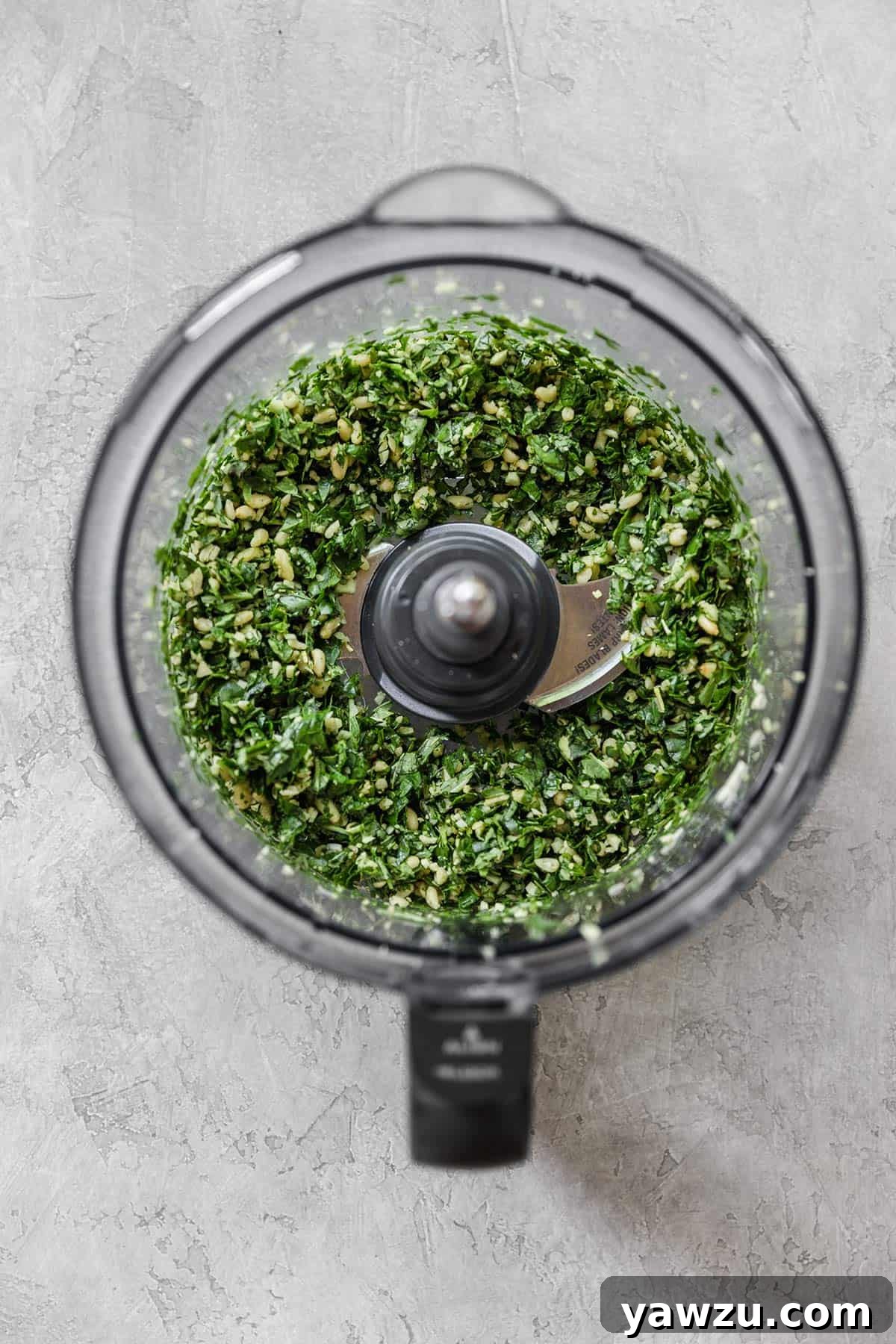
- Pulse the Base Ingredients: In the bowl of your food processor or blender, combine the fresh basil leaves, pine nuts (or your chosen alternative), and peeled garlic cloves. Pulse the mixture about 5 to 7 times. You want the ingredients to be finely chopped, but not yet a paste. This initial pulsing helps to break down the harder ingredients and get the basil going.
- Slowly Stream in Olive Oil: With the machine running continuously (or on a very slow drizzle setting), gradually pour in the olive oil through the feed tube. The oil will begin to emulsify with the pulsed ingredients, creating a smooth, creamy consistency. Once all the oil is added, stop the machine, scrape down the sides of the bowl with a spatula to ensure everything is incorporated, and pulse a few more times to fully blend.
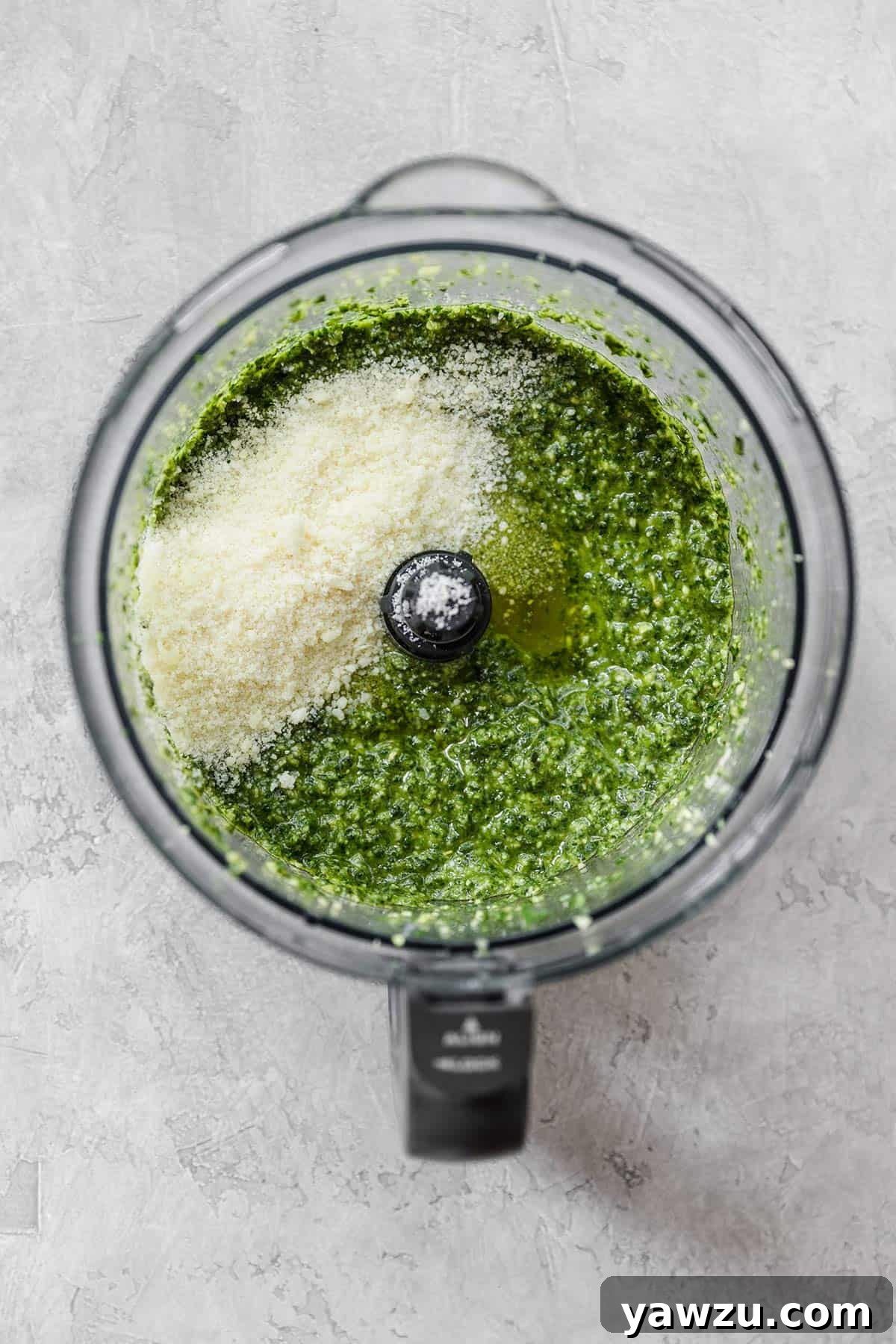
- Incorporate the Cheese: Add the grated Parmesan cheese (or your preferred cheese/nutritional yeast) to the food processor. Pulse a few more times until the cheese is just incorporated into the pesto. Over-blending at this stage can make the pesto too dense or warm the cheese too much, so aim for a quick mix.
- Season to Perfection: Finally, taste your freshly made pesto and season with salt and freshly cracked black pepper to your preference. Remember that Parmesan cheese adds considerable saltiness, so you might not need a significant amount of additional salt. However, a generous dose of cracked black pepper often enhances the overall flavor beautifully. Pulse one last time to mix in the seasonings.
And just like that, in a mere five minutes, you’ve transformed that gorgeous basil you’ve been nurturing since planting into a crazy fresh, intensely flavorful pesto! There’s a profound satisfaction in creating something so delicious and versatile from scratch, especially when it comes from your own garden. It’s a true taste of summer, ready to brighten any dish.
Creative Ways to Enjoy Your Homemade Pesto
The beauty of homemade basil pesto lies in its incredible versatility. Beyond its classic pairing with pasta, this vibrant sauce can elevate a myriad of dishes, adding a fresh, herbaceous kick that’s distinctly summer. Here are numerous delightful ways to incorporate your fresh pesto into your culinary repertoire:
- Pasta Perfection: The most classic use! Toss your pesto with hot or cold pasta, gnocchi, or zoodles for a quick and satisfying meal. Add some cherry tomatoes and fresh mozzarella for a complete dish.
- Pizza Topping: Spread pesto as a base sauce on your pizza instead of traditional tomato sauce. It pairs wonderfully with chicken, portobello mushrooms, fresh tomatoes, and various cheeses.
- Sandwich & Wrap Spread: Ditch the mayonnaise! Slather a generous amount of pesto on your sandwiches, wraps, and paninis for a burst of fresh flavor. It’s fantastic with grilled chicken, turkey, or roasted vegetables.
- Marinade Marvel: Use pesto as a marinade for chicken, fish, shrimp, or tofu before grilling, baking, or pan-frying. It infuses proteins with incredible flavor and helps tenderize them.
- Roasted Vegetable Enhancer: Drizzle pesto over roasted potatoes, asparagus, zucchini, or bell peppers for an added layer of freshness and flavor.
- Soup & Stew Swirl: Stir a spoonful of pesto into a bowl of hot minestrone, tomato soup, or vegetable stew just before serving. It adds a lovely depth and aromatic finish.
- Egg-cellent Addition: Swirl pesto into scrambled eggs, omelets, or frittatas. It’s a simple way to elevate your breakfast or brunch.
- Dip & Dressing Base: Mix pesto with Greek yogurt, cream cheese, or sour cream for a flavorful dip for crackers, crudités, or chips. Thin it with a little more olive oil and lemon juice for a vibrant salad dressing.
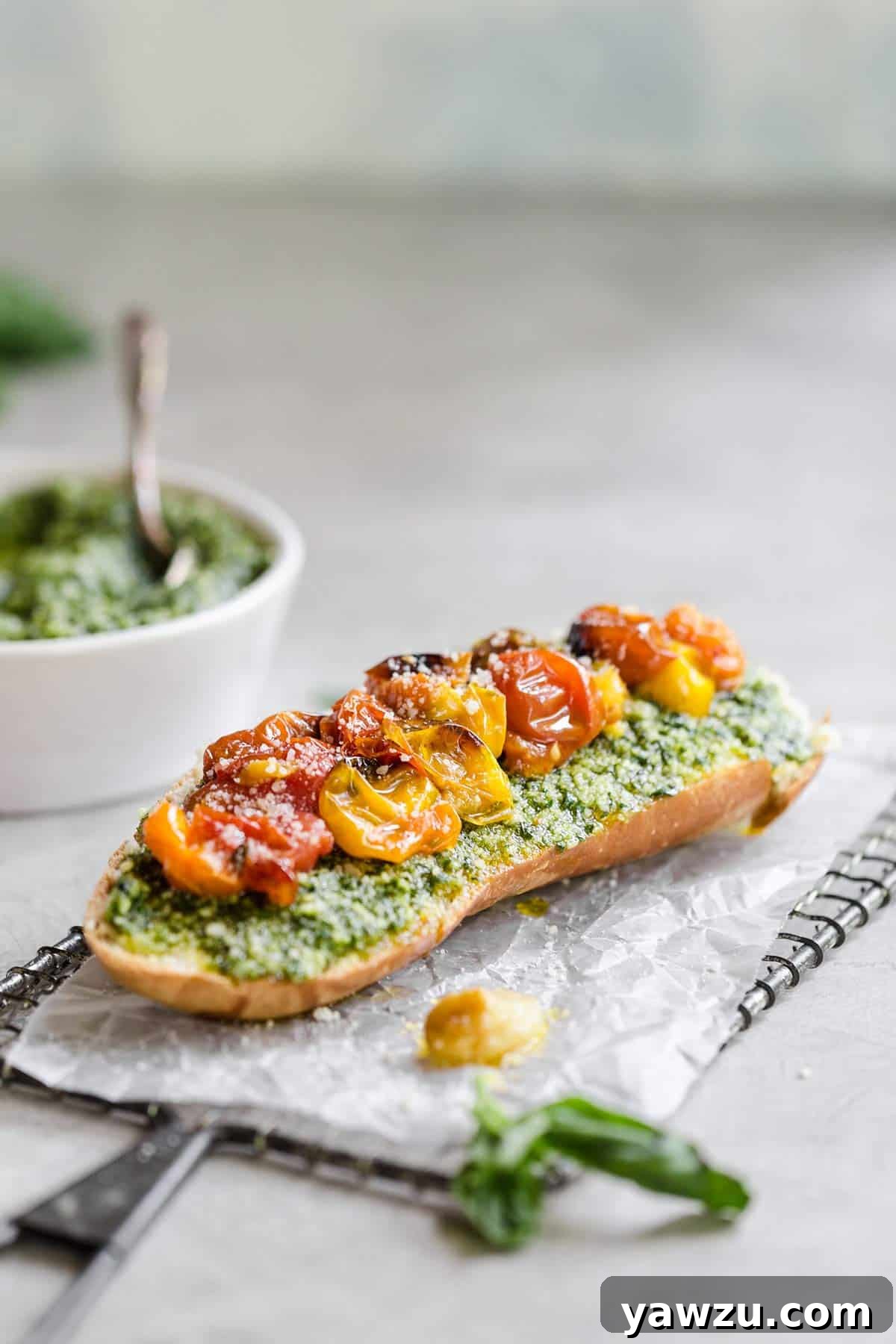
- Bread’s Best Friend: Spread pesto on warm Italian bread, focaccia, or ciabatta. You can also mix it with butter for an amazing pesto butter for garlic bread.
- Caprese Salad Upgrade: Instead of just fresh basil leaves, drizzle a spoonful of pesto over your Caprese salad (tomatoes, fresh mozzarella, basil) for an intensified basil experience.
- Bruschetta Topping: Top toasted baguette slices with pesto, diced tomatoes, and a sprinkle of Parmesan for an irresistible appetizer.
Storing Your Fresh Pesto: Keep it Green and Flavorful
One of the many benefits of homemade pesto is its excellent shelf life and adaptability to freezing, ensuring you can enjoy its vibrant flavors long after you’ve made it. Proper storage is key to maintaining its fresh taste and beautiful green color.
Refrigeration Tips
- Airtight Container: Always store your fresh pesto in an airtight container in the refrigerator. Exposure to air can cause the top layer to oxidize and turn brown.
- Olive Oil Seal: To further prevent oxidation and keep your pesto a vivid green, pour a thin layer of olive oil over the surface of the pesto before sealing the container. This creates a protective barrier.
- Shelf Life: When properly stored, homemade pesto will keep fresh in the refrigerator for up to 1 week. If you notice any discoloration or off-smells, it’s best to discard it.
Freezing for Long-Lasting Freshness
If you find yourself with an abundance of basil (a wonderful problem to have!) and want to enjoy that summer flavor through the colder months, freezing pesto is an excellent solution. It’s incredibly simple and effective, allowing you to stock up for future meals.
- Ice Cube Tray Method: The best and most convenient method for freezing pesto is to spoon it into ice cube trays. This allows you to freeze it in individual, portion-controlled servings that are easy to thaw and use as needed.
- Freeze Solid: Place the filled ice cube trays in the freezer until the pesto cubes are completely solid, typically a few hours or overnight.
- Transfer to Storage: Once frozen, pop the pesto cubes out of the trays and transfer them to a freezer-safe ziplock bag or an airtight freezer container. Label with the date.
- Extended Shelf Life: Frozen pesto can be stored for up to 6 months without significant loss of flavor or quality.
- Thawing and Using:
- For Cooked Dishes: You can often add frozen pesto cubes directly to hot pasta, soups, sauces, or stews. They will melt and incorporate as the dish cooks.
- For Cold Applications: For uses like spreads, dips, or salad dressings, simply transfer the desired number of pesto cubes to the refrigerator overnight to thaw.
Explore More Fresh Summer Recipes
With your homemade basil pesto ready to go, the culinary possibilities are endless! But if you’re looking to continue savoring the bounty of summer produce, here are a few more fresh and flavorful recipes to inspire your next kitchen adventure:
- Garden Fresh Tomato Mozzarella Tart
- Creamy Tomato-Basil Soup with a Pesto Swirl
- Tortellini in Parmesan Cream Sauce with Sun-dried Tomatoes and Spinach
- Zesty Sun-Dried Tomato Dip
The Simple Pesto Recipe You’ll Cherish
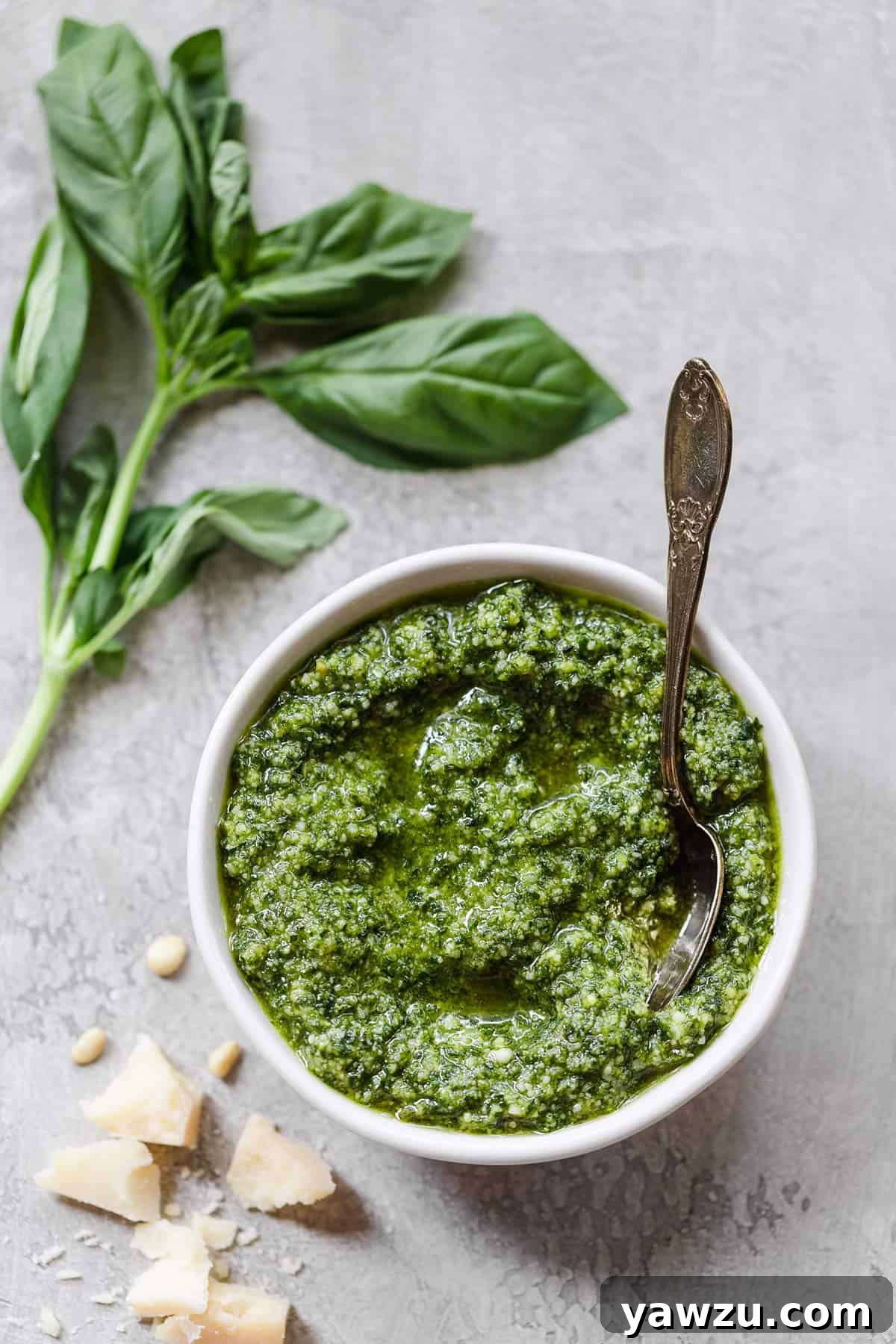
Savor all the glorious flavors of summer with this incredibly fresh and easy basil pesto recipe. Made with just 5 simple ingredients and ready in a flash, you’ll find yourself making this classic Italian condiment all season long. Its vibrant color and unparalleled taste will quickly become a household favorite!
If you whip up this recipe and absolutely adore it, please remember to come back and leave a 5-star rating – your feedback helps other home cooks discover and enjoy this fantastic recipe! ❤️️
Pesto Recipe
A recipe for classic pesto sauce made with fresh basil and only five ingredients; use it for pasta, chicken salad, a spread on sandwiches, or pizza!
Yield: 1 cup
Prep Time: 5 mins
Total Time: 5 mins
Ingredients
- 2 cups (48 g) fresh basil leaves
- ⅓ cup (39 g) pine nuts
- 3 cloves garlic, minced
- ½ cup (108 ml) olive oil
- ½ cup (50 g) Parmesan cheese
Instructions
- In a food processor or blender, pulse together the basil, pine nuts, and garlic 5 to 7 times, until finely chopped.
- With the machine running, slowly drizzle in the olive oil. Scrape down the sides of the machine and add the cheese. Pulse a few more times to blend.
- Season with salt and pepper to taste.
- Serve immediately or store in a covered container in the refrigerator for up to 1 week.
Notes
- You can substitute chopped walnuts, almonds, pistachios, or pecans for the pine nuts. For a nut-free option, use sunflower seeds.
- Pecorino Romano, Asiago, or aged Manchego cheese can be substituted for Parmesan. For a dairy-free option, use nutritional yeast.
- To freeze, spoon the pesto into an ice cube tray and place in the freezer until completely frozen. Remove from the tray and place the cubes in a ziplock freezer bag, and freeze for up to 6 months. You can add to a cooked recipe from frozen, or thaw in the refrigerator overnight.
Nutrition (approximate per batch, as originally given for the full yield)
Calories: 1427kcal, Carbohydrates: 11g, Protein: 23g, Fat: 147g, Saturated Fat: 25g, Cholesterol: 52mg, Sodium: 606mg, Potassium: 392mg, Fiber: 3g, Sugar: 1g, Vitamin A: 2740IU, Vitamin C: 11.5mg, Calcium: 672mg, Iron: 3.7mg
Did you make this recipe?
We’d love to hear from you! Please consider leaving a review below. Also, snap a picture of your creation and tag @thebrowneyedbaker on Instagram so we can see your delicious results!
Author: Michelle Lettrich
Course: Condiment
Cuisine: Italian
Photography by Ari Laing