Greek Custard Pie (Galaktoboureko)
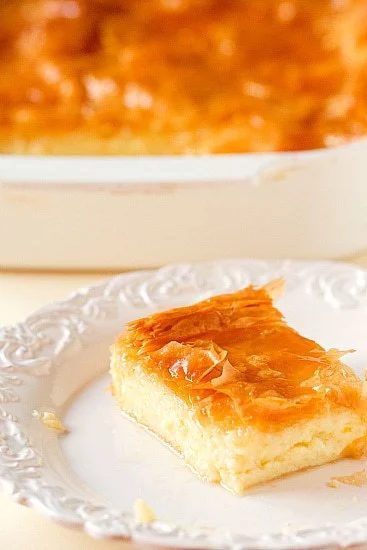
It’s funny, we do so much baking and have a never-ending list of recipes that we want to try and experiment with, but on some days it’s like we hit a total roadblock. We're not sure what we want to make, nothing sounds good to us on that particular day, and we're just sort of stuck. Enter our Chief Culinary Consultant. He’s awesome at thinking outside of the box and coming up with great ideas that often times elude us. So was the case right after New Year’s when we were doing some planning for the month of January and everything was just feeling “eh” to us. We were staring at a mile-long list of food ideas, but wasn’t feeling anything. He hopped on his phone, did some Googling, and started throwing out some new and fresh ideas. We could barely write them down fast enough. One of the ones he threw out was this Greek custard pie. He stumbled upon a recipe for it and after reading the ingredients, knew immediately we would love it. We couldn’t get to the kitchen fast enough for this one, and his intuition was definitely spot-on – we adored this!
In addition to the rich factor, we were excited about our first-ever experiment with an authentic Greek dish in our kitchen. We have always enjoyed traditional Greek foods when eating out, especially spanakopita, moussaka and baklava, and had no doubt we would enjoy this. After checking out numerous recipes online, many of them being similar, we settled on this one because of the back story. The blogger actually ate this at the home of her in-laws in Greece and received the recipe from a cousin. Nothing warms our foodie heart quite like an old-fashioned family recipe.
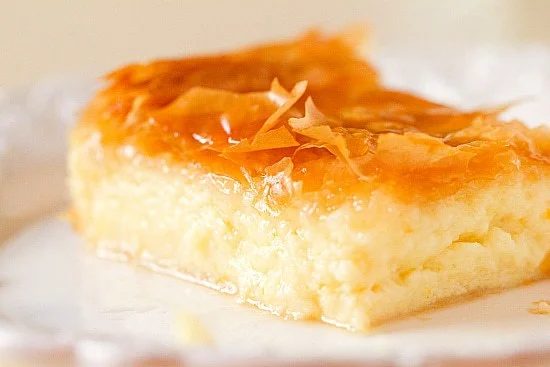
As with any recipe that involves working with phyllo dough, the preparation takes some time but the end product is no doubt well worth it. Layers of crispy, buttery, flaky pastry that is light as air. Absolutely worth it. The custard in this dish actually has a similar flavor to the filling of a sfogliatelle (the Italian pastry that we still have yet to master) – both use semolina as a thickening agent and have a faint citrus undertone. We always keep semolina on hand for dusting our pizza peel when we make from-scratch pizza; we usually find it at a local Italian grocery store.
All-in-all this is not a difficult recipe, but it includes a few steps and layering phyllo dough can be slightly time-consuming. Trust us, it’s a small price to pay for the the wow factor this dessert delivers. For some step-by-step photos of the assembly process, be sure to check out Whipped (link is below the recipe) – she did a great job.
Do you have a favorite Greek recipe (sweet or savory)?
One year ago: Nut Rolls
Four years ago: Banana Muffins
Greek Custard Pie (Galaktoboureko)
Yield: 12 servings A traditional recipe for a Greek sweet pieCustard:
- 6 cups (1.46 l) whole milk
- 1 cup (167 g) fine semolina
- ¾ cup (150 g) granulated sugar, divided
- 1 tablespoon unsalted butter
- 1 teaspoon vanilla extract
- 3 eggs
- Zest of 1 orange
Pie Assembly:
- 1 package phyllo dough, about 12 to 16 sheets
- 1 cup (227 g) unsalted butter
Citrus Syrup:
- 1½ cups (300 g) granulated sugar
- 1 cup (250 ml) water
- ¼ cup (62 ml) orange juice
- ½ teaspoon (0.5 teaspoon) vanilla extract
- Preheat oven to 375 degrees F. Have your pan ready to go - either a 16-inch round cake pan or a 10x13-inch lasagna dish. The phyllo should be room temperature or slightly cooler. Open the package right before using it so the sheets do not dry out.
- Stir the milk, semolina, ½ cup of the sugar, the butter, and vanilla in a large sauce pan over medium heat. Stir the mixture gently but constantly until it becomes thick like pudding. This may take up to 15 minutes or so. Remove the pan from the heat and cool for 5 to 10 minutes. Beat the eggs with the remaining ¼ cup of granulated sugar in a small bowl and then stir it into milk mixture. Stir in the orange zest.
- Melt the butter and begin by brushing the the bottom of your pan with melted butter.
- Layer the bottom of the pan with about half of the phyllo, liberally brushing with butter between each layer. Lightly press the sheets into the sides and corner and let the edges hang over the top; you will fold them over later. (Do not skimp on the butter! You should use half on the bottom layers and half on the top.)
- Pour the slightly cooled custard over the bottom sheets and spread to the sides. Layer the remaining sheets of phyllo on top of the custard as you did the bottom, continuing to brush melted butter between layers until you have used all the phyllo. Then, brush butter on the overlapping sides and roll the edges down creating a “rim” around the edge of the pan. Liberally brush the top and the edge with the rest of your butter.
- Bake until the top is golden brown all over, 30 to 45 minutes. (we suggest checking early and often, as you don't want the phyllo to burn.)
- While the pie is baking, make the syrup. Bring the sugar, water and orange juice to a boil in a small saucepan. Boil for 5 minutes then remove from the heat. Off the heat, stir in the vanilla extract; set aside.
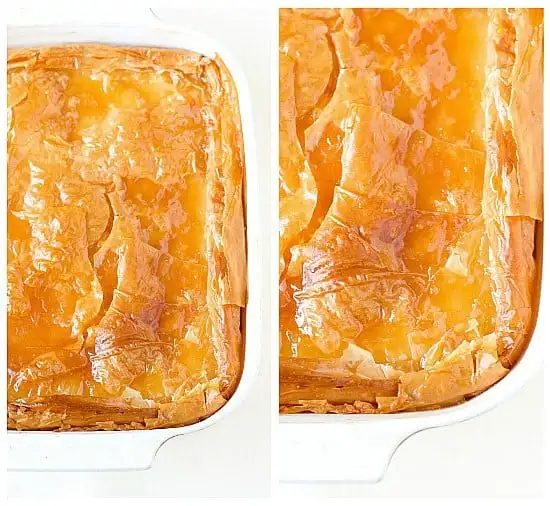
- When you remove the pie from the oven, let it cool for 15 minutes. Then, pour the syrup evenly over the entire pie. Allow the pie to sit for at least 1 hour before serving so the syrup can be absorbed. Store leftover pie in the refrigerator for up to 3 days.
- Yield: 12 servings
- Prep: 1 hour
- Cook: 45 minutes
- Total: 1 hour 45 minutes
Ingredients
Custard:
- 6 cups ( 1.46 l ) whole milk
- 1 cup ( 167 g ) fine semolina
- ¾ cup ( 150 g ) granulated sugar, divided
- 1 tablespoon unsalted butter
- 1 teaspoon vanilla extract
- 3 eggs
- Zest of 1 orange
Pie Assembly:
- 1 package phyllo dough, about 12 to 16 sheets
- 1 cup ( 227 g ) unsalted butter
Citrus Syrup:
- 1½ cups ( 300 g ) granulated sugar
- 1 cup ( 250 ml ) water
- ¼ cup ( 62 ml ) orange juice
- ½ teaspoon ( 0.5 teaspoon ) vanilla extract
Method
- Preheat oven to 375 degrees F. Have your pan ready to go - either a 16-inch round cake pan or a 10x13-inch lasagna dish. The phyllo should be room temperature or slightly cooler. Open the package right before using it so the sheets do not dry out.
- Stir the milk, semolina, ½ cup of the sugar, the butter, and vanilla in a large sauce pan over medium heat. Stir the mixture gently but constantly until it becomes thick like pudding. This may take up to 15 minutes or so. Remove the pan from the heat and cool for 5 to 10 minutes. Beat the eggs with the remaining ¼ cup of granulated sugar in a small bowl and then stir it into milk mixture. Stir in the orange zest.
- Melt the butter and begin by brushing the the bottom of your pan with melted butter.
- Layer the bottom of the pan with about half of the phyllo, liberally brushing with butter between each layer. Lightly press the sheets into the sides and corner and let the edges hang over the top; you will fold them over later. (Do not skimp on the butter! You should use half on the bottom layers and half on the top.)
- Pour the slightly cooled custard over the bottom sheets and spread to the sides. Layer the remaining sheets of phyllo on top of the custard as you did the bottom, continuing to brush melted butter between layers until you have used all the phyllo. Then, brush butter on the overlapping sides and roll the edges down creating a “rim” around the edge of the pan. Liberally brush the top and the edge with the rest of your butter.
- Bake until the top is golden brown all over, 30 to 45 minutes. (we suggest checking early and often, as you don't want the phyllo to burn.)
- While the pie is baking, make the syrup. Bring the sugar, water and orange juice to a boil in a small saucepan. Boil for 5 minutes then remove from the heat. Off the heat, stir in the vanilla extract; set aside.
- When you remove the pie from the oven, let it cool for 15 minutes. Then, pour the syrup evenly over the entire pie. Allow the pie to sit for at least 1 hour before serving so the syrup can be absorbed. Store leftover pie in the refrigerator for up to 3 days.